Cataract Surgery: Lens Options, Vision Goals, and What to Expect

Cataract surgery treats vision loss caused by a cloudy natural lens and usually involves replacing it with an intraocular lens. Lens choice matters because different intraocular lenses are designed for different vision goals, such as distance vision, reduced dependence on glasses, or astigmatism correction.
Key Takeaways
- Cataract surgery treats vision loss caused by a cloudy natural lens and usually involves replacing it with an intraocular lens.
- Lens choice matters because different intraocular lenses are designed for different vision goals, such as distance vision, reduced dependence on glasses, or astigmatism correction.
- Preoperative eye measurements and discussion of daily activities help guide the best lens option for each person.
- Most people go home the same day and recover gradually over several days to weeks.
- Results are usually very good, but outcomes depend on eye health, other eye conditions, and realistic expectations.
Cataract surgery is a common procedure that removes a cloudy natural lens and replaces it with an artificial intraocular lens. Understanding lens options, visual priorities, and the recovery process can help patients make informed decisions with their eye specialist.
Overview of Cataract Surgery
Cataract surgery is performed to remove a cataract, which is a clouding of the eye’s natural lens. As the lens becomes less clear, light cannot pass through it properly, leading to blurred vision, glare, faded colors, and difficulty seeing at night. Surgery restores clarity by removing the cloudy lens and replacing it with a clear artificial lens called an intraocular lens, or IOL.
The procedure is usually recommended when a cataract starts to interfere with daily life. This may include trouble reading, driving, recognizing faces, working, or enjoying hobbies. Cataracts are often age-related, but they can also develop earlier because of diabetes, eye injury, certain medicines such as steroids, or previous eye inflammation.
Modern cataract surgery is usually done as a day procedure under local anesthesia, often with eye drops and mild sedation. It is one of the most commonly performed eye operations worldwide. For many people, it improves vision significantly, although the exact result depends not only on the surgery itself but also on the health of the retina, cornea, optic nerve, and other parts of the eye.
When Surgery Is Considered and Why Vision Goals Matter
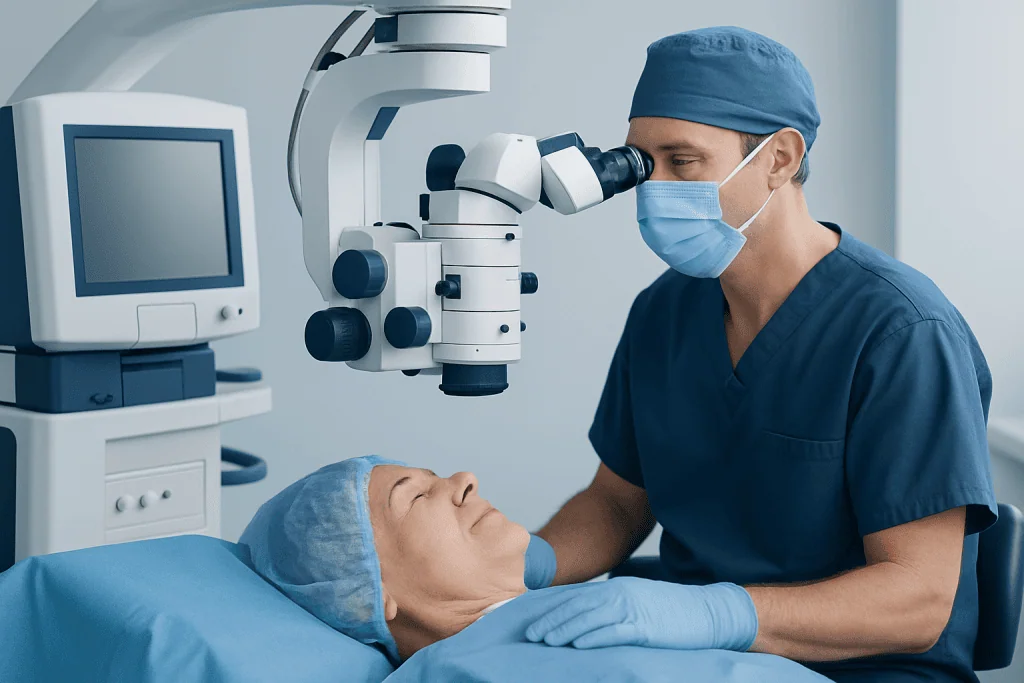
The decision to have cataract surgery is not based only on how the lens looks during an eye examination. It is based mainly on symptoms and how much those symptoms affect everyday life. Some people seek surgery because of glare while driving at night, while others are more concerned about reading, screen use, or doing close work. These differences are important because they help shape treatment planning.
Before surgery, the ophthalmologist will usually ask about the person’s visual priorities. For example, one patient may want the clearest possible distance vision and does not mind wearing reading glasses. Another may prefer greater independence from glasses for a mix of activities, even if visual side effects such as halos are possible with certain premium lenses. Setting these expectations early helps match the lens choice to the person rather than treating every cataract in the same way.
Vision goals also matter because cataract surgery can sometimes be combined with correction of other refractive problems, especially astigmatism. In selected patients, it may reduce dependence on glasses, but it does not guarantee complete freedom from them. A careful discussion with an eye specialist helps patients understand the likely benefits, limitations, and trade-offs of each option.
Lens Options in Cataract Surgery
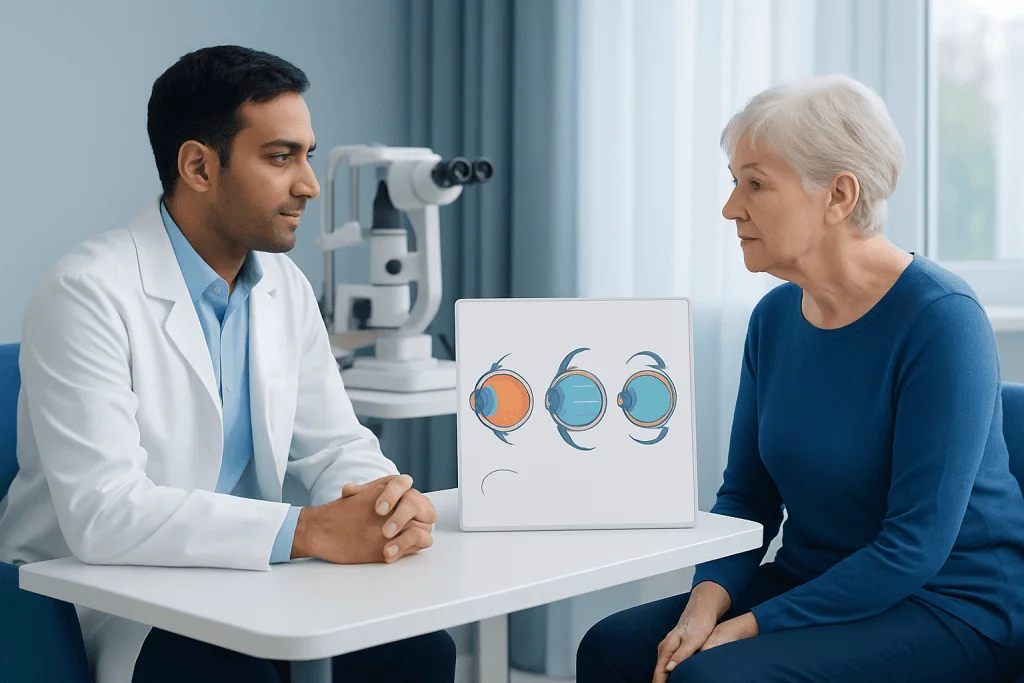
The artificial lens implanted during cataract surgery is chosen before the procedure. A standard monofocal IOL provides clear focus at one main distance, usually far vision. People who choose monofocal lenses commonly still need glasses for reading or other close tasks. Monofocal lenses are widely used and often provide sharp, reliable quality of vision.
Toric IOLs are designed for people with significant astigmatism. They can improve uncorrected distance vision by correcting the irregular curvature of the cornea at the same time the cataract is treated. Multifocal and extended depth of focus lenses aim to provide a broader range of vision, potentially reducing the need for glasses for distance, intermediate, and sometimes near tasks. However, these lenses may not be suitable for everyone, especially if there are other eye conditions or if the person is very sensitive to night glare, halos, or reduced contrast.
The best lens depends on several factors, including corneal shape, pupil characteristics, retinal health, lifestyle, and expectations. For example, people with other eye diseases such as macular degeneration or advanced glaucoma may not be ideal candidates for certain premium lenses. A full eye assessment helps determine which lens type is likely to provide the safest and most satisfying result.
In some cases, the discussion may also include broader refractive planning, especially if the patient hopes to reduce reliance on glasses after surgery. This is one reason cataract treatment is often considered alongside modern eye treatments that focus on both visual clarity and quality of life.
Preoperative Evaluation and How Doctors Plan the Procedure
Before cataract surgery, the eye specialist performs a detailed examination to confirm that the cataract is the main reason for reduced vision and to check for any other eye problems. This evaluation often includes visual acuity testing, a slit-lamp examination, measurement of eye pressure, retinal assessment, and careful review of symptoms. If another eye condition is present, it may affect both the expected result and the choice of lens.
Special measurements are needed to calculate the power of the intraocular lens. These measurements include the length of the eye and the curvature of the cornea. This process, called biometry, is one of the most important steps in cataract surgery planning because it helps determine how the eye will focus after the operation. Small differences in these measurements can affect the need for glasses afterward.
Doctors will also review the patient’s medical history, current medicines, and previous eye surgeries. People who have had laser vision correction, such as laser eye surgery, may need particularly careful lens calculations. The surgeon may ask the patient to stop wearing contact lenses for a period before measurements, since contacts can temporarily change corneal shape and affect accuracy.
At this stage, patients benefit from asking practical questions: What kind of vision is most likely after surgery? Will glasses still be needed? Are both eyes likely to be treated, and if so, how far apart? These conversations help build realistic expectations and support a confident decision.
What Happens During Cataract Surgery
Cataract surgery is usually performed one eye at a time. On the day of surgery, the eye is numbed with drops or local anesthesia, and the patient remains awake but comfortable. A tiny incision is made in the cornea, and the surgeon uses delicate instruments to access the cloudy lens. In most cases, ultrasound energy is used to break the cataract into small pieces, which are then removed. This common method is known as phacoemulsification.
Once the cloudy lens has been removed, the artificial intraocular lens is inserted into the same natural lens capsule. The lens unfolds into position and remains inside the eye permanently. The incision is usually very small and often seals without stitches. The operation itself is generally brief, though the total visit takes longer because of preparation and recovery time.
Patients often notice improved brightness and clarity quite soon, but vision may still be blurry at first as the eye heals. Mild irritation, tearing, light sensitivity, or the feeling that something is in the eye can occur for a short time. These symptoms are usually temporary, but any severe pain or sudden major drop in vision requires urgent medical attention.
Recovery, Results, and Possible Risks
Most people return home the same day and begin using prescribed eye drops to help prevent infection and reduce inflammation. The doctor may advise wearing a protective shield, especially at night, and avoiding rubbing the eye. Many patients can resume light daily activities quickly, but they are usually advised to avoid heavy lifting, swimming, dusty environments, and any activity that could put pressure on the eye during early healing.
Vision often improves over several days, though full stabilization can take a few weeks. If both eyes need treatment, the second operation is commonly scheduled after the first eye has started to recover. Once healing is complete, a final glasses prescription may be checked if needed. Some people achieve very good distance vision without glasses, while others still need spectacles for reading, computer work, or fine detail.
As with any procedure, cataract surgery carries some risks, even though serious complications are uncommon. Potential problems include infection, inflammation, swelling of the cornea or retina, increased eye pressure, lens displacement, retinal detachment, or clouding of the capsule behind the new lens. This later clouding is sometimes called a secondary cataract, although it is not a new cataract. It can often be treated with a simple laser procedure if it affects vision.
Outcomes may also be influenced by existing eye conditions such as diabetic retinal disease, glaucoma, or previous retinal problems. This is why the surgeon discusses expected benefits in the context of the whole eye, not only the cataract itself.
Choosing the Right Option and Questions to Ask
Choosing the right cataract surgery plan is a shared decision between the patient and the ophthalmologist. Rather than asking only which lens is the “best,” it is usually more helpful to ask which lens is the best fit for a person’s own eyes and lifestyle. Someone who drives often at night may prioritize crisp contrast and fewer halos, while someone who values reduced dependence on reading glasses may accept some visual trade-offs.
Useful questions include whether astigmatism correction is appropriate, whether premium lenses are suitable for the eye’s health, and what level of spectacle use is still likely after surgery. Patients may also ask about surgeon experience, anesthesia, timing for the second eye, and what warning signs to watch for during recovery. An informed patient is often better prepared and more satisfied with the process.
For people seeking care abroad or coordinating complex eye treatment, continuity of evaluation, surgery, and follow-up is important. Near the end of the care journey, some international patients choose centers such as Acibadem International, where multidisciplinary specialists and JCI-accredited hospitals evaluate and treat eye conditions including cataracts. When cataract surgery is part of a broader vision plan, a specialist may also discuss related options such as smart lenses when appropriate for the individual case.
When to Contact a Doctor After Surgery
Most recovery symptoms are mild and improve gradually, but patients should know when to seek medical advice. It is sensible to contact the treating team if vision is not improving as expected, if redness is worsening, or if there is increasing discomfort rather than steady recovery. Questions about eye drops, activity restrictions, or temporary visual fluctuations should also be raised with the doctor.
Urgent assessment is important if there is severe pain, a sudden drop in vision, flashes of light, many new floaters, marked swelling, or discharge from the eye. These symptoms do not always mean a serious complication, but they should be checked promptly. Quick treatment can be important if an infection, retinal problem, or pressure rise is developing.
Regular follow-up visits are part of safe cataract care. These appointments allow the doctor to monitor healing, confirm lens position, check eye pressure, and answer questions about the next steps. Even when the early result is excellent, keeping scheduled reviews supports the best long-term outcome.
Frequently asked questions
Is cataract surgery painful?
Cataract surgery is usually not painful because the eye is numbed with drops or local anesthesia. Many people feel pressure or mild awareness during the procedure rather than pain. Mild irritation afterward is common, but severe pain is not expected and should be reported promptly.
How long does cataract surgery take?
The operation itself is often completed within a short time, commonly around 15 to 30 minutes, although the total visit is longer. Preparation, eye drops, and recovery monitoring add extra time. Most patients go home the same day.
Will glasses still be needed after cataract surgery?
Many people still need glasses for some activities after cataract surgery, especially reading or close work. Whether glasses are needed depends on the chosen lens, the presence of astigmatism, and the eye’s natural healing result. The doctor can explain what is realistic for each person.
What is the difference between monofocal and multifocal lenses?
Monofocal lenses are set mainly for one distance, usually far vision, so reading glasses are often still needed. Multifocal lenses are designed to provide vision at more than one distance and may reduce dependence on glasses. However, they are not ideal for everyone and can sometimes cause halos or reduced contrast sensitivity.
How soon can normal activities be resumed?
Light activities are often possible within a day or two, depending on the doctor’s advice and the patient’s comfort. Activities that strain the eye or increase the risk of contamination, such as swimming or heavy lifting, may need to wait longer. Recovery advice should always follow the surgeon’s instructions.
Can cataracts come back after surgery?
The removed cataract does not grow back. However, the thin membrane behind the new lens can become cloudy over time, causing blurry vision similar to the original symptoms. If this happens, it can often be treated with a simple laser procedure.
References
- American Academy of Ophthalmology
- National Eye Institute
- Royal College of Ophthalmologists
- American Society of Cataract and Refractive Surgery
This article is for general information only and is not a substitute for professional medical advice. Please consult a qualified doctor about your individual situation.
Cataract Surgery in Turkey — costs, top hospitals & a free quote
JCI-accredited · board-certified surgeons · reply within 24h
Add us as a Preferred Source to see more of our trusted health content across Google Search, AI Overviews and Discover.

Ophthalmology
Comprehensive eye care from laser vision correction to retina, cornea and cataract surgery.
75 specialists in this unitMore from the Health Library



Related Specialists

Dr. Fatma Kutlusoy Güçlü
Gynecology & Obstetrics
Assoc. Prof. Dr. Ürün Özer Ağırbaş
Psychiatry
Assoc. Prof. Dr. Fatih Aygün
Pediatric Intensive Care Unit
Assoc. Prof. Dr. Emrullah Hayta
Physical Medicine & Rehabilitation