Cerebrovascular Accident — Explained by Medical Evidence, Not Myths

Cerebrovascular accident is another name for stroke. Most strokes are caused by a blocked blood vessel; others are caused by bleeding in the brain.
Key Takeaways
- Cerebrovascular accident is another name for stroke.
- Most strokes are caused by a blocked blood vessel; others are caused by bleeding in the brain.
- Sudden weakness, speech difficulty, facial drooping, vision changes, or severe dizziness need urgent medical attention.
- Risk can often be lowered by controlling blood pressure, diabetes, cholesterol, smoking, and heart rhythm problems.
- Treatment depends on the type of stroke and may include clot-busting medicine, procedures, surgery, and rehabilitation.
A cerebrovascular accident is the medical term for a stroke, which happens when blood flow to part of the brain is blocked or when a blood vessel in the brain bleeds. It is a medical emergency, but fast recognition and treatment can improve recovery and reduce long-term disability.
What a Cerebrovascular Accident Means
A cerebrovascular accident is the medical term for a stroke. In simple terms, it means that part of the brain is suddenly injured because its blood supply is interrupted or because a blood vessel leaks or bursts. Brain cells rely on a constant supply of oxygen and nutrients, so even a short interruption can cause damage.
There are two main types of stroke. An ischemic stroke happens when a clot blocks blood flow in a brain artery. A hemorrhagic stroke happens when a blood vessel ruptures and bleeds into or around the brain. A related condition, a transient ischemic attack, causes stroke-like symptoms for a short time and is often called a “warning stroke,” even though symptoms may fully resolve.
This topic is often surrounded by myths, such as the idea that stroke only affects older adults or that symptoms always include collapse. In reality, stroke can happen at different ages, and symptoms may be subtle at first. Sudden difficulty speaking, weakness on one side, imbalance, numbness, or vision loss can all be signs.
Because a cerebrovascular accident can progress quickly, rapid assessment matters. Emergency teams first determine whether the stroke is caused by blockage or bleeding, because the treatments are different and time-sensitive. Related conditions such as stroke and brain hemorrhage are evaluated with the same urgency.
How Stroke Symptoms Usually Appear
The hallmark of a cerebrovascular accident is that symptoms begin suddenly. A person may feel well one moment and then notice facial drooping, arm or leg weakness, trouble speaking, confusion, or sudden numbness. These changes often affect one side of the body, but not always.
Other possible symptoms include sudden vision loss or double vision, severe dizziness, loss of coordination, trouble walking, a severe headache with no clear cause, or difficulty understanding speech. Hemorrhagic stroke is more likely to cause a sudden intense headache, nausea, vomiting, or reduced consciousness, but symptom patterns can overlap.
A simple way to remember common warning signs is FAST: face drooping, arm weakness, speech difficulty, time to call emergency services. This is helpful, but FAST does not cover every stroke. Posterior circulation strokes, for example, may present more with balance problems, vision symptoms, or severe dizziness.
Symptoms that disappear within minutes should not be ignored. A transient ischemic attack may leave no lasting symptoms, but it can be an important warning that a more serious stroke may follow. Medical evaluation is still needed, even if the person feels normal again.
Why It Happens: Causes and Risk Factors
Most cerebrovascular accidents are ischemic, meaning a blood clot blocks an artery supplying the brain. The clot may form within a narrowed artery in the neck or brain, or it may travel from elsewhere, such as the heart. Irregular heart rhythm, especially atrial fibrillation, is a well-known cause of stroke due to embolism.
Hemorrhagic stroke happens when a weakened blood vessel breaks. Long-standing high blood pressure is a major risk factor because it can damage artery walls over time. Other causes include aneurysms, vascular malformations, blood-thinning medications, and certain bleeding disorders.
Risk factors are often divided into those that can be changed and those that cannot. Non-modifiable factors include age, family history, and a prior stroke or transient ischemic attack. Modifiable factors include high blood pressure, diabetes, high cholesterol, smoking, obesity, physical inactivity, sleep apnea, heavy alcohol use, and poor control of heart disease.
Some strokes occur in younger adults as well. In these cases, doctors may also consider uncommon causes such as artery dissection, autoimmune disease, clotting disorders, migraine with certain complications, or drug-related vessel injury. The exact cause guides both immediate treatment and prevention of future events.
- High blood pressure is one of the most important preventable stroke risks.
- Atrial fibrillation can allow clots to form in the heart and travel to the brain.
- Smoking damages blood vessels and raises the risk of both ischemic and hemorrhagic stroke.
- Previous transient ischemic attack strongly increases the need for evaluation and prevention.
How Doctors Confirm the Diagnosis
Diagnosing a cerebrovascular accident starts with a focused neurological examination and a careful timeline of when symptoms began. Timing matters because some treatments are only suitable during specific windows after symptom onset. Doctors also ask about medications, blood pressure, bleeding risk, and any prior stroke history.
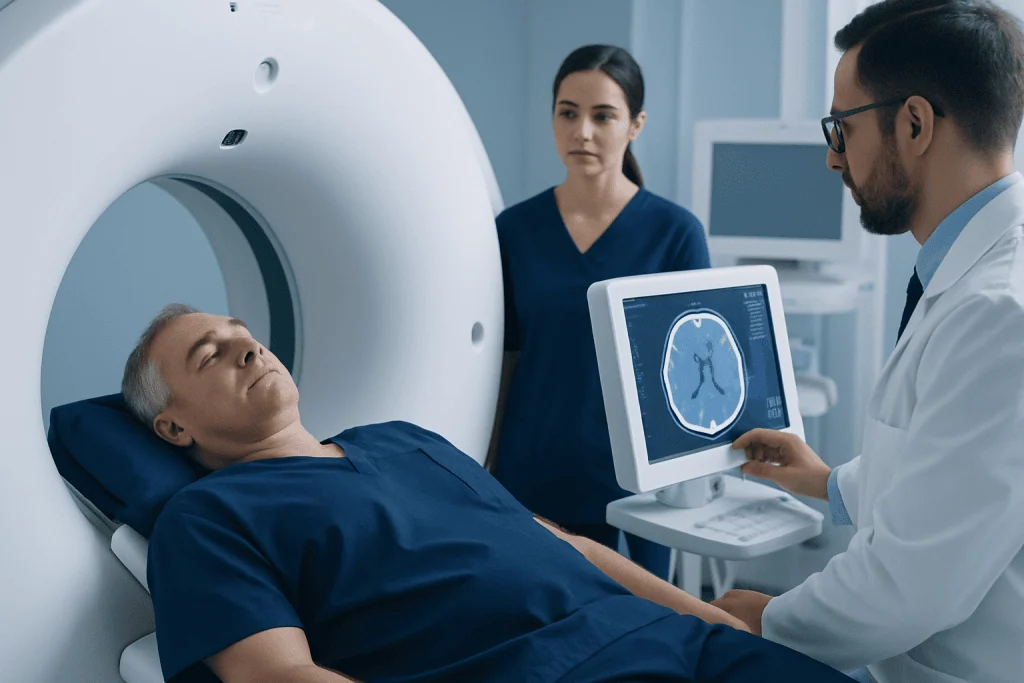
Brain imaging is essential. A non-contrast CT scan is often the first test because it can quickly show whether bleeding is present. MRI can provide more detail in some cases, especially for smaller or early ischemic strokes. Additional imaging of the blood vessels, such as CT angiography or MR angiography, may help identify a blocked artery, narrowing, aneurysm, or vascular malformation.
Blood tests are commonly done to check blood sugar, clotting, kidney function, infection markers, and other factors that may influence treatment choices. An ECG and heart monitoring may look for abnormal heart rhythms, while an echocardiogram can help identify a cardiac source of clots.
Not every sudden neurological symptom is a stroke. Seizures, migraine, low blood sugar, infections, and some balance disorders can mimic it. The goal of the evaluation is not only to confirm stroke, but also to define its type, cause, and safest next steps. In selected cases, advanced neuroradiology evaluation helps guide urgent decision-making.
Treatment: Why Time and Stroke Type Matter
Treatment for a cerebrovascular accident depends first on whether the stroke is ischemic or hemorrhagic. In ischemic stroke, the aim is to restore blood flow quickly and protect brain tissue. In hemorrhagic stroke, the priorities are to control bleeding, reduce pressure in the brain, and manage the underlying cause.
For eligible patients with ischemic stroke, doctors may use clot-dissolving medication if the person arrives within an appropriate time window and has no major contraindications. If a large artery is blocked, some patients may benefit from catheter-based clot removal, often performed by specialists in interventional neuroradiology. These decisions are based on imaging results, symptom severity, timing, and overall medical status.
Hemorrhagic stroke treatment may include careful blood pressure management, reversal of blood-thinning medicines when appropriate, close neurological monitoring, and, in some cases, surgery or other procedures to address bleeding, aneurysms, or pressure on the brain. Some patients need intensive care for observation and support.
After the immediate emergency phase, treatment shifts toward preventing complications and reducing the chance of another stroke. This may include antiplatelet or anticoagulant medication when appropriate, cholesterol-lowering therapy, treatment of diabetes or high blood pressure, and management of carotid artery disease. Recovery commonly involves stroke rehabilitation to support movement, speech, swallowing, and daily function.
Recovery, Rehabilitation, and Daily Life After Stroke
Recovery after a cerebrovascular accident varies widely. Some people recover quickly, while others need longer-term support. The extent of recovery depends on the area of the brain affected, how quickly treatment began, the severity of the stroke, and the person’s overall health.
Rehabilitation usually starts early, often in the hospital, and may continue at home or in a specialized center. A team may include neurologists, physiatrists, physical therapists, occupational therapists, speech and language therapists, rehabilitation nurses, and dietitians. Goals may include improving walking, arm use, swallowing, communication, balance, memory, and independence in daily tasks.
Emotional changes are also common after stroke. Anxiety, depression, fatigue, frustration, and changes in concentration can all affect recovery. Family education and practical support are important, because recovery involves both physical and psychological adjustment.
Safety planning matters when returning home. This may involve fall prevention, medication review, help with driving decisions, and swallowing advice if choking risk is present. Near the end of the care pathway, some international patients may choose evaluation at Acibadem International, where multidisciplinary specialists in JCI-accredited hospitals diagnose and treat stroke-related conditions and coordinate rehabilitation planning.
Prevention and Self-care
Prevention focuses on controlling the factors that damage blood vessels or promote clot formation. For many people, the most important steps are to manage blood pressure, stop smoking, treat diabetes, improve cholesterol levels, maintain a healthy weight, and stay physically active. These measures help lower risk whether or not a person has already had a stroke.
For patients with atrial fibrillation or certain other heart conditions, stroke prevention may also require specific medications to reduce clot formation. People with carotid artery narrowing, sleep apnea, or poorly controlled vascular risk factors may need targeted treatment and closer follow-up. Regular checkups help detect these issues before they lead to an emergency.
Self-care after a stroke includes taking prescribed medicines exactly as directed, attending rehabilitation sessions, keeping follow-up appointments, and learning personal warning signs that need urgent attention. A balanced diet, limited alcohol intake, good sleep, and stress management can support overall vascular health.
It is also helpful to build a stroke action plan at home. Family members should know the warning signs, keep an updated medication list, and understand that sudden neurological symptoms require emergency services rather than waiting for a routine appointment. Preventive care is most effective when it is consistent and individualized.
When to Seek Medical Care
Emergency medical care is needed immediately if a person has sudden facial drooping, arm or leg weakness, trouble speaking, confusion, vision loss, severe dizziness, difficulty walking, or a sudden severe headache unlike usual headaches. Even if symptoms improve within minutes, urgent assessment is still important because this may be a transient ischemic attack or an evolving stroke.
It is safest to call emergency services rather than drive if stroke is suspected. Emergency teams can begin assessment early and route the patient to a facility equipped for rapid brain imaging and stroke treatment. Delays may reduce the number of treatment options available.
Medical follow-up is also important after any cerebrovascular accident or transient ischemic attack, even when symptoms seem mild. Ongoing evaluation helps identify the cause, manage risk factors, and plan rehabilitation or prevention strategies.
People should also contact a doctor promptly if they notice new or worsening symptoms during recovery, such as increased weakness, confusion, falls, trouble swallowing, worsening headaches, or medication side effects. Early communication can help prevent complications and support safer recovery.
Frequently asked questions
Is a cerebrovascular accident the same as a stroke?
Yes. Cerebrovascular accident is the medical term for stroke. It refers to sudden brain injury caused either by blocked blood flow or bleeding in or around the brain.
What is the difference between ischemic and hemorrhagic stroke?
An ischemic stroke happens when a blood clot blocks an artery supplying the brain. A hemorrhagic stroke happens when a blood vessel ruptures and causes bleeding. The distinction is very important because the treatments are different.
Can stroke symptoms go away on their own?
Sometimes symptoms improve quickly, especially in a transient ischemic attack. Even so, this still needs urgent medical assessment because it can be a warning sign of a more serious stroke. Symptoms that come and go should never be ignored.
What is the first thing to do if someone may be having a stroke?
Call emergency services right away and note the time symptoms started, if known. Do not wait to see if the person improves. Rapid medical evaluation can make a major difference in treatment options and outcome.
Can younger adults have a cerebrovascular accident?
Yes, although stroke becomes more common with age, it can also affect younger adults. In younger people, doctors may look for causes such as heart rhythm problems, artery dissection, clotting disorders, autoimmune disease, or uncontrolled vascular risk factors.
Is recovery after stroke always complete?
Recovery varies from person to person. Some people regain function quickly, while others need longer rehabilitation and may have lasting changes. Early treatment, the type of stroke, and the location and size of the brain injury all influence recovery.
References
- World Health Organization
- American Stroke Association
- National Institute of Neurological Disorders and Stroke
- Centers for Disease Control and Prevention
- National Health Service
This article is for general information only and is not a substitute for professional medical advice. Please consult a qualified doctor about your individual situation.
Explore treatments in Turkey — costs, top hospitals & a free quote
JCI-accredited · board-certified surgeons · reply within 24h
Add us as a Preferred Source to see more of our trusted health content across Google Search, AI Overviews and Discover.
Check your numbers in seconds
BMI, calories, due date, blood pressure and 30+ more clinical calculators — free, instant, doctor-reviewed ranges.