Cholesteatoma: A Hidden Ear Growth That Can Damage Hearing

Cholesteatoma is a noncancerous but potentially damaging growth of skin cells behind the eardrum or in the mastoid bone. Common warning signs include ongoing ear discharge, reduced hearing, ear fullness, dizziness, or a history of repeated ear infections.
Key Takeaways
- Cholesteatoma is a noncancerous but potentially damaging growth of skin cells behind the eardrum or in the mastoid bone.
- Common warning signs include ongoing ear discharge, reduced hearing, ear fullness, dizziness, or a history of repeated ear infections.
- An ENT specialist usually diagnoses cholesteatoma with an ear examination, hearing tests, and sometimes CT or MRI imaging.
- Treatment most often involves surgery to remove the growth and reduce the risk of recurrence or complications.
- Regular follow-up is essential because cholesteatoma can return, even after successful treatment.
Cholesteatoma is an abnormal buildup of skin cells deep in the middle ear or mastoid that can quietly damage hearing and nearby structures. Although it is usually noncancerous, early diagnosis and specialist treatment are important to protect ear health.
Overview
Cholesteatoma is an abnormal collection of skin cells that grows in the middle ear, behind the eardrum, or in the mastoid, the air-filled bone behind the ear. Despite its name, it is not a cholesterol problem and it is usually not cancer. However, it can enlarge slowly and press on delicate ear structures, leading to hearing loss, chronic infection, and, in some cases, damage to nearby bone.
The middle ear is a small space that contains the eardrum and the tiny hearing bones that carry sound to the inner ear. When skin cells become trapped in this area, they can build up like a cyst or pouch. Over time, the trapped material may become infected or produce enzymes that erode bone, which is why cholesteatoma should be assessed by an ear, nose and throat specialist.
Many people first notice cholesteatoma because of persistent ear drainage, a blocked-ear feeling, or hearing changes. Some cases develop after repeated ear infections or long-term eustachian tube problems, while others are present from birth. With timely diagnosis and appropriate treatment, doctors can often control the disease, remove the growth, and plan hearing rehabilitation when needed.
Cholesteatoma Symptoms
Cholesteatoma symptoms may be mild at first and can resemble a stubborn ear infection. A person may notice fluid draining from the ear, often with an unpleasant smell, or repeated episodes of discharge that improve briefly and then return. Hearing in the affected ear may gradually become muffled, especially if the growth affects the eardrum or the small hearing bones.
Other symptoms can include a feeling of fullness or pressure in the ear, intermittent earache, ringing in the ear, or balance disturbance. Dizziness is less common but important, because it may suggest that the cholesteatoma is affecting structures close to the inner ear. Children may not describe symptoms clearly, so parents may notice poor hearing, delayed response to speech, frequent ear infections, or drainage from one ear.
Symptoms that may be associated with cholesteatoma include:
- Ongoing or recurrent ear discharge
- Progressive hearing loss in one ear
- A blocked or full sensation in the ear
- Recurrent ear infections despite treatment
- Ear discomfort, tinnitus, or balance symptoms
- Rarely, facial weakness or severe dizziness
Not every person has all of these symptoms. Because cholesteatoma can remain hidden behind the eardrum, an examination by a qualified clinician is important when ear problems persist or keep returning.
Causes and Risk Factors

The most common type of cholesteatoma is acquired, meaning it develops during life. It often occurs when the eustachian tube, which helps equalize pressure between the middle ear and the back of the nose, does not work well. Negative pressure can pull part of the eardrum inward, creating a pocket that traps skin cells and debris. This pocket may slowly enlarge and become a cholesteatoma.
Chronic or repeated middle ear infections can also contribute. In some cases, a hole in the eardrum allows skin from the ear canal to migrate into the middle ear. Previous ear surgery, long-standing eardrum retraction, or trauma can increase risk. Children with frequent ear infections, cleft palate, or other conditions affecting eustachian tube function may be more prone to middle ear problems, including cholesteatoma.
Congenital cholesteatoma is less common and is present from birth. It may be found behind an intact eardrum in a child who has no history of ear discharge or ear surgery. Congenital cases can still affect hearing and may require treatment if the growth expands.
Cholesteatoma is not caused by poor hygiene, and it is not contagious. It is also different from ordinary earwax. Attempting to clean deep inside the ear with cotton swabs or other objects cannot remove a cholesteatoma and may injure the ear canal or eardrum.
Diagnosis
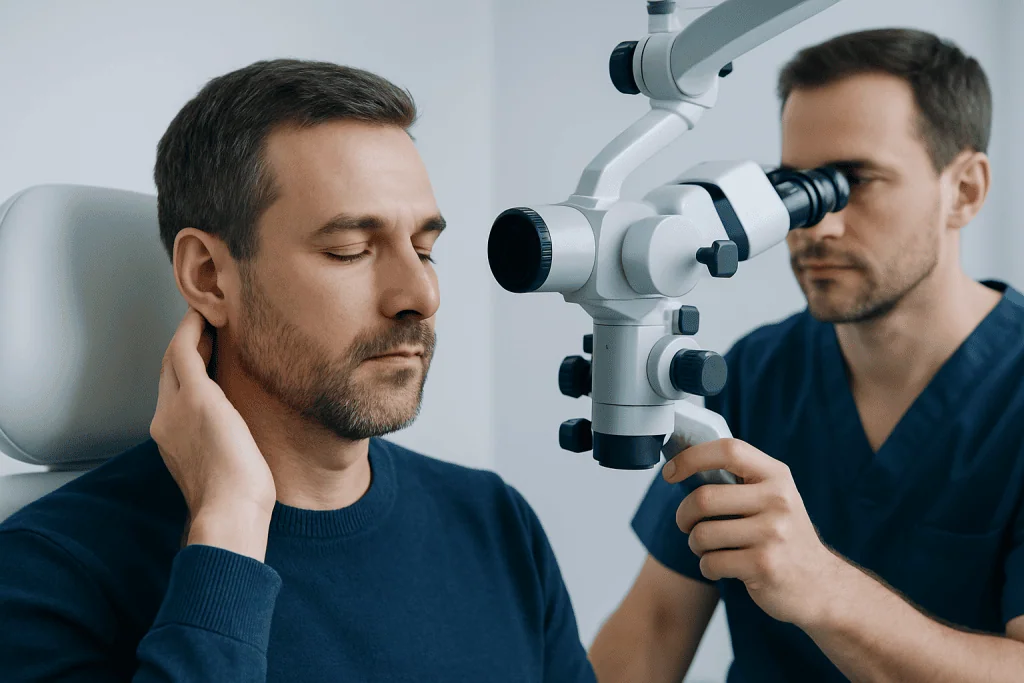
Diagnosis usually begins with a careful medical history and an ear examination by an ENT specialist. The doctor may use an otoscope or a microscope to inspect the ear canal and eardrum. They may look for a retraction pocket, a white keratin-like mass, a perforation, inflammation, or discharge. If drainage is present, gentle cleaning may be needed so the eardrum and middle ear can be seen more clearly.
Hearing tests are commonly recommended. Pure-tone audiometry helps measure the type and degree of hearing loss, while other tests may assess middle ear function. Cholesteatoma often causes conductive hearing loss, which means sound is not conducted efficiently through the eardrum and hearing bones. Sometimes mixed hearing loss may occur if the inner ear is also affected.
Imaging can help define the extent of the disease and support surgical planning. A CT scan of the temporal bone can show the middle ear and mastoid anatomy, including any bone erosion. MRI, particularly diffusion-weighted MRI, may be used in selected cases to help detect cholesteatoma or monitor for recurrence after surgery. The choice of imaging depends on the clinical findings and the doctor’s assessment.
Treatment Options
Cholesteatoma usually does not go away on its own. Ear drops or antibiotics may reduce infection and drainage temporarily, but they do not remove the trapped skin growth. For this reason, the main treatment is typically surgery, performed by an ENT surgeon with experience in ear and mastoid procedures. The goal is to remove the cholesteatoma, create a safe and dry ear, and preserve or improve hearing when possible.
Surgery may involve procedures such as tympanoplasty, mastoidectomy, or a combined approach. Tympanoplasty repairs the eardrum and may reconstruct the hearing bones if they have been damaged. Mastoidectomy removes disease from the mastoid bone behind the ear. The exact surgical plan depends on the size and location of the cholesteatoma, the condition of the eardrum and hearing bones, hearing test results, and whether the person has had previous ear surgery.
In some patients, the surgeon may plan a staged approach, with a second procedure or follow-up imaging to check for residual or recurrent disease. Hearing reconstruction may be done during the first operation or later, depending on safety and the condition of the ear. After surgery, the ear needs time to heal, and follow-up visits are important for cleaning, monitoring, and hearing assessment.
As with any surgery, there are possible risks, including infection, taste disturbance, dizziness, persistent hearing loss, tinnitus, or, rarely, facial nerve injury. The surgeon will explain the benefits and risks in relation to the individual case. Most treatment plans are designed to balance disease control with hearing preservation and long-term ear health.
Prevention and Self-care
Not all cholesteatomas can be prevented, especially congenital cases. However, good management of ear infections, eustachian tube problems, and chronic eardrum retraction can reduce risk in some people. Anyone with repeated ear infections, persistent fluid behind the eardrum, or long-term ear discharge should be evaluated by a doctor rather than relying on repeated short courses of treatment without follow-up.
Self-care focuses on protecting the ear and avoiding actions that may worsen irritation or injury. People should avoid inserting cotton swabs, hairpins, earbuds, or other objects deep into the ear canal. Ear candles are not recommended, as they can cause burns or blockages and do not treat middle ear disease. If there is a known eardrum perforation or ear surgery history, water precautions should be discussed with the treating ENT specialist.
After cholesteatoma surgery, follow-up is part of prevention. The doctor may recommend regular ear checks, hearing tests, and, in some cases, imaging to look for recurrence. Keeping appointments is important because a recurrent cholesteatoma may be easier to treat when detected early. Patients should also report new drainage, hearing changes, dizziness, or pain promptly.
When to See a Doctor
A person should seek medical advice if ear discharge persists for more than a short period, returns repeatedly, has a foul smell, or occurs with hearing loss. An ENT evaluation is also recommended for ongoing ear fullness, repeated ear infections, dizziness, tinnitus, or a visible eardrum problem noted by a primary care doctor. Children should be assessed if they have recurrent ear infections, delayed speech concerns, poor school listening, or unexplained hearing difficulty.
Prompt care is especially important if symptoms include severe dizziness, sudden hearing changes, swelling behind the ear, intense pain, fever, severe headache, or weakness of the face on one side. These symptoms do not always mean a serious complication is present, but they should be checked urgently by a qualified medical professional.
International patients can access assessment and treatment for cholesteatoma through Acibadem International, where multidisciplinary specialists in JCI-accredited hospitals provide ENT evaluation, hearing testing, imaging, surgery, and follow-up planning. The most appropriate treatment should always be decided after a personal examination and discussion with a specialist.
Frequently asked questions
Is cholesteatoma cancer?
Cholesteatoma is usually not cancer. It is an abnormal growth of skin cells trapped in the middle ear or mastoid. Even though it is noncancerous, it can enlarge and damage nearby ear structures, so medical evaluation is important.
Can cholesteatoma go away without surgery?
A true cholesteatoma generally does not disappear on its own. Medicines may help control infection or drainage for a short time, but they do not remove the growth. Surgery is usually recommended to remove the cholesteatoma and reduce the risk of complications.
What happens if cholesteatoma is not treated?
Untreated cholesteatoma may continue to grow and can damage the eardrum, hearing bones, mastoid bone, or nearby structures. This may lead to worsening hearing loss, ongoing infection, dizziness, or other complications. Regular specialist care helps manage the condition before it progresses.
Does cholesteatoma surgery improve hearing?
Hearing may improve after surgery, especially if the eardrum or hearing bones can be repaired successfully. However, the first priority is to remove the disease and create a safe, healthy ear. In some cases, hearing reconstruction is performed later or hearing aids may be recommended.
Can cholesteatoma come back after surgery?
Yes, cholesteatoma can recur or a small residual area can remain after treatment. This is why follow-up visits, hearing tests, and sometimes MRI or second-look surgery are recommended. Early detection of recurrence usually makes management more straightforward.
Is ear discharge always a sign of cholesteatoma?
No, ear discharge can have many causes, including outer ear infection, middle ear infection, eardrum perforation, or skin irritation. However, discharge that is persistent, foul-smelling, or associated with hearing loss should be evaluated by a doctor. An ENT specialist can determine whether cholesteatoma or another condition is present.
References
- American Academy of Otolaryngology-Head and Neck Surgery
- National Institute on Deafness and Other Communication Disorders
- NHS
- Merck Manual Professional Edition
- Cleveland Clinic
This article is for general information only and is not a substitute for professional medical advice. Please consult a qualified doctor about your individual situation.
Oncology care in Turkey — second opinion and treatment plan
JCI-accredited · board-certified surgeons · reply within 24h
Add us as a Preferred Source to see more of our trusted health content across Google Search, AI Overviews and Discover.
Check your numbers in seconds
BMI, calories, due date, blood pressure and 30+ more clinical calculators — free, instant, doctor-reviewed ranges.

Related Treatments
Related Conditions
More from the Health Library



Related Specialists

Prof. Dr. Nazim Korkut
Otorhinolaryngology
Prof. Dr. Hasan M. Tanyeri
Ear Nose & Throat
Prof. Dr. Güler Berkiten
Otorhinolaryngology
Assoc. Prof. Dr. A. Erdem Kilavuz
Ear Nose & Throat