

Colonic vs Enema: Key Differences and How Doctors Tell Them Apart

A colonic and an enema both introduce fluid through the rectum, but they differ in volume, purpose, setting, and medical use. Doctors do not usually need to “diagnose” a colonic or an enema; they assess the symptoms or condition that led a person to consider one.
Key Takeaways
- A colonic and an enema both introduce fluid through the rectum, but they differ in volume, purpose, setting, and medical use.
- Doctors do not usually need to “diagnose” a colonic or an enema; they assess the symptoms or condition that led a person to consider one.
- Enemas may be medically recommended in selected situations, while routine colon cleansing is generally not necessary for health.
- Persistent constipation, rectal bleeding, severe pain, vomiting, fever, or weight loss should be assessed by a clinician.
- Treatment depends on the cause and may include diet changes, medicines, tests, or specialist care rather than bowel cleansing alone.
Colonic vs enema is a common point of confusion, but they are not the same. A colonic usually refers to a larger-volume colon irrigation procedure, while an enema uses a smaller amount of fluid placed into the rectum, often for constipation relief or bowel preparation.
Colonic vs enema at a glance
In simple terms, a colonic usually means colon hydrotherapy or colonic irrigation, where a larger volume of water is introduced into the colon through a tube placed in the rectum. An enema uses a smaller amount of liquid inserted into the rectum, most often to relieve constipation, prepare for an examination, or deliver medication.
Although people sometimes use these terms as if they were interchangeable, clinicians usually think about them differently. An enema is a recognized medical tool in certain settings. A colonic is more often discussed as a wellness or cleansing practice rather than a routine medical treatment.
The table below highlights the main differences.
- Purpose: Enema: constipation relief, bowel prep, or medication delivery; Colonic: broader colon cleansing or irrigation
- Fluid volume: Enema: smaller amount; Colonic: larger amount over a longer session
- Area reached: Enema: mainly rectum and lower colon; Colonic: intended to flush more of the colon
- Typical setting: Enema: home or medical setting, depending on type; Colonic: usually provided in a dedicated clinic or wellness setting
- Medical role: Enema: established use in selected situations; Colonic: not routinely needed for general health
- Potential risks: Both can cause discomfort; colonics may carry added concerns such as dehydration, bowel irritation, infection risk, or rarely injury
What each one is used for
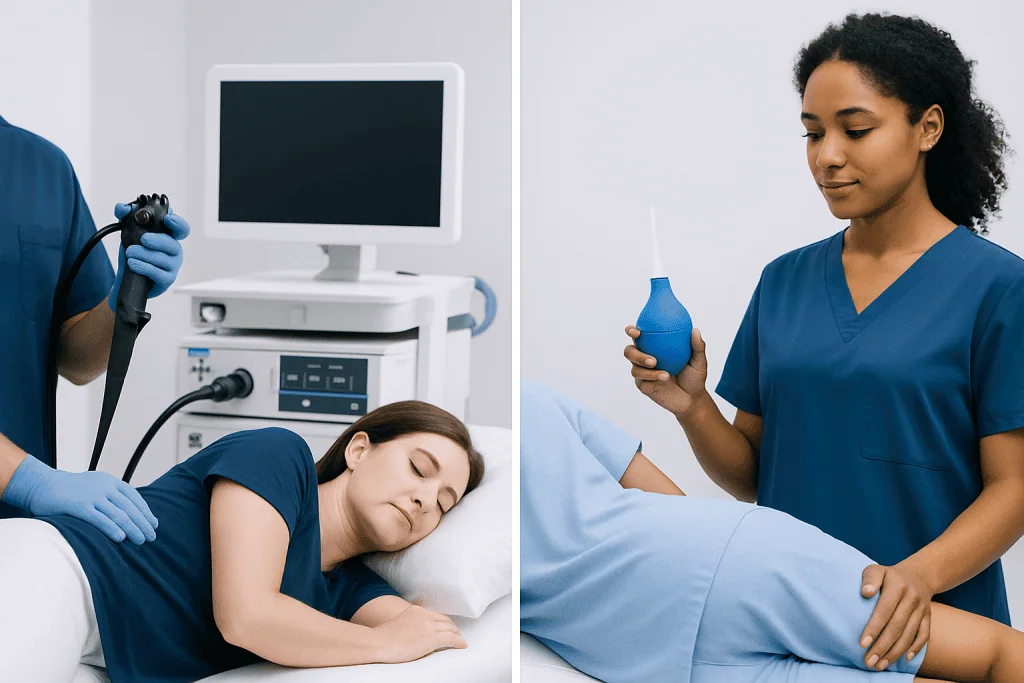
An enema may be recommended when stool is difficult to pass, when the lower bowel needs to be emptied before a test or procedure, or when medication needs to be delivered directly into the rectum or colon. For example, some enemas are used before imaging or endoscopic procedures, and others may be used in certain inflammatory bowel conditions under medical guidance.
A colonic is typically promoted as a way to cleanse the bowel. However, the digestive tract normally clears waste on its own, and the colon does not usually need routine flushing. For many people with digestive symptoms, a medical evaluation is more helpful than repeated cleansing because the underlying issue may be constipation, irritable bowel syndrome, pelvic floor dysfunction, or another condition that needs targeted care.
It is also important to separate these practices from bowel preparation used before procedures such as colonoscopy. Medical bowel prep follows a specific plan designed for safety and effectiveness. That is different from self-directed cleansing or wellness colonics.
How doctors tell them apart in practice

When a patient asks about colonic vs enema, the clinician usually begins by clarifying what was actually done or what the patient is considering. The key details are the amount of fluid used, how long the process lasted, who administered it, whether there were additives, and why it was used. In most cases, the distinction becomes clear from the history alone.
If a person already had a procedure and now has symptoms, the doctor will ask when the symptoms began, whether there was pain during the procedure, and whether there has been bleeding, fever, bloating, weakness, or trouble passing stool or gas afterward. These clues help the clinician decide whether the issue is simple irritation, worsening constipation, dehydration, infection, or a more urgent complication.
Doctors are usually less focused on the label and more focused on the reason behind it. For example, someone using frequent enemas may actually have chronic constipation, medication-related bowel slowing, or irritable bowel syndrome. Someone seeking repeated colonics may be trying to manage bloating, incomplete emptying, or abdominal discomfort that deserves proper assessment.
A physical examination may include checking hydration, abdominal tenderness, bowel sounds, and the anal and rectal area when appropriate. A digital rectal exam can help identify stool in the rectum, fissures, hemorrhoids, or muscle coordination problems that may affect bowel movements.
Symptoms and warning signs that guide diagnosis
The symptoms matter more than the cleansing method itself. Constipation can mean infrequent bowel movements, hard stool, straining, a feeling of blockage, or a sense that the bowel does not empty completely. Bloating, cramping, and mild discomfort may occur with either constipation or after bowel cleansing.
Certain warning signs prompt a broader evaluation. These include blood in the stool, black stool, ongoing vomiting, fever, significant abdominal swelling, severe or worsening pain, unexplained weight loss, new constipation in an older adult, or symptoms that continue despite self-care. These features can point to conditions that should not be managed with repeated enemas or colonics alone.
Clinicians also look for contributing factors such as low fluid intake, low-fiber eating patterns, inactivity, pregnancy, recent surgery, opioid or iron use, thyroid disease, diabetes, nerve disorders, and pelvic floor dysfunction. In some people, constipation overlaps with conditions such as Crohn's disease or other intestinal disorders, which is why symptom patterns and medical history are so important.
Tests a clinician may use
Not everyone needs testing. If constipation is mild, recent, and clearly related to diet, hydration, travel, or a medication, a doctor may start with conservative treatment. But if symptoms are persistent, unexplained, or associated with red flags, tests may be needed to identify the cause.
Common tests can include blood tests to look for anemia, thyroid problems, inflammation, or metabolic causes. Stool testing may be used in some cases. Imaging may help if obstruction or another structural problem is suspected.
Depending on age, symptoms, and risk factors, a specialist may recommend endoscopy such as a colonoscopy to examine the large intestine. Some patients also benefit from anorectal function testing or transit studies if chronic constipation seems related to muscle coordination or slow bowel movement rather than simple stool hardness.
If digestive symptoms are broad or persistent, referral to gastroenterology care can help guide diagnosis and long-term management. The goal is to find the reason for the symptoms, not just repeat temporary bowel emptying.
What to do for each situation
If a person is considering an enema for occasional constipation, it is generally best to first review whether simpler measures might help, such as more fluids, gradually increasing fiber, regular physical activity, and a toilet routine that allows enough time without straining. Some people need a doctor’s advice before using an enema, especially if they are older, pregnant, have kidney or heart disease, or have inflammatory bowel problems.
If a clinician recommends an enema, the exact type and instructions matter. Using enemas too often can irritate the rectum and may make normal bowel habits harder to re-establish. Medical guidance is especially important if constipation is recurring, painful, or associated with bleeding.
If a person is considering a colonic for bloating, constipation, or a feeling of “toxins,” it is sensible to pause and ask whether the symptom could have a more specific explanation. Routine colon cleansing is not usually needed for digestive health, and repeated procedures may expose the bowel to unnecessary irritation or fluid shifts. In many cases, targeted treatment for constipation, food intolerance, pelvic floor dysfunction, or another gastrointestinal issue is safer and more effective.
Treatment may include lifestyle changes, prescription or nonprescription medicines, and sometimes specialist procedures. If symptoms suggest an underlying disorder, the next step may be evaluation through a gastroenterology assessment rather than bowel irrigation.
Prevention and self-care for healthier bowel habits
For many people, bowel symptoms improve with everyday habits rather than cleansing routines. Drinking enough fluids, eating fiber-rich foods, staying physically active, and responding to the urge to have a bowel movement can support more regular stool passage. Fiber is best increased gradually to reduce gas and discomfort.
It can also help to review medications and supplements with a clinician, since some commonly contribute to constipation. A consistent bathroom routine, especially after meals, may support the natural gastrocolic reflex. Using a footstool to improve body position during bowel movements may also make passing stool easier for some people.
People with frequent bloating or alternating constipation and diarrhea should avoid assuming they need colon cleansing. Symptoms may reflect food sensitivity, stress-related gut-brain interaction, or conditions such as ulcerative colitis in some cases. Self-care is useful, but persistent symptoms deserve a professional review.
Near the end of the care pathway, some patients benefit from multidisciplinary support. Acibadem International’s multidisciplinary specialists and JCI-accredited hospitals diagnose and treat digestive conditions for international patients when further evaluation is needed.
When to seek medical care
Medical advice is appropriate if constipation lasts more than a few weeks, keeps returning, or does not improve with simple measures. It is also wise to speak with a clinician before using enemas repeatedly or before having a colonic if there is a history of bowel disease, prior intestinal surgery, significant hemorrhoids, kidney disease, or heart problems.
Urgent medical care is needed for severe abdominal pain, persistent vomiting, inability to pass stool or gas, heavy rectal bleeding, faintness, fever, or marked abdominal swelling. These symptoms can signal a blockage, significant dehydration, infection, or another problem that should not be managed at home.
Anyone who develops pain, bleeding, or fever after a bowel cleansing procedure should be evaluated promptly. The safest approach is to treat the underlying cause of bowel symptoms rather than relying on repeated cleansing as a long-term solution.
Frequently asked questions
Is a colonic the same as an enema?
No. Both involve fluid entering through the rectum, but a colonic generally uses a larger volume over a longer period to irrigate more of the colon, while an enema uses a smaller amount, usually for constipation relief, bowel prep, or medication delivery.
Which is safer, a colonic or an enema?
Safety depends on the person’s health, the reason for use, and how the procedure is performed. Medically indicated enemas have established uses, while routine colonics are generally not necessary and may carry added risks such as dehydration, irritation, or, rarely, injury.
Can colonics help chronic constipation?
A colonic may temporarily empty the bowel, but it does not address the cause of chronic constipation. Long-term improvement usually depends on identifying contributors such as diet, medications, slow transit, or pelvic floor problems.
When should constipation be checked by a doctor?
A doctor should assess constipation that is persistent, keeps returning, or is associated with pain, bleeding, vomiting, weight loss, or a major change in bowel habits. Medical review is also important if self-care and occasional remedies are not helping.
Do healthy people need colon cleansing?
In general, no. The colon normally clears waste on its own, and routine cleansing is not considered necessary for general health. If someone feels bloated or constipated often, evaluation is usually more helpful than repeated cleansing.
Can using enemas too often be a problem?
Yes. Frequent enema use can irritate the rectum and may interfere with normal bowel habits in some people. Repeated need for enemas is a sign that the underlying problem should be reviewed with a clinician.
References
- National Institute of Diabetes and Digestive and Kidney Diseases
- American College of Gastroenterology
- Mayo Clinic
- Cleveland Clinic
- National Health Service
This article is for general information only and is not a substitute for professional medical advice. Please consult a qualified doctor about your individual situation.
Persistent digestive symptoms? Get evaluated in Turkey
JCI-accredited · board-certified surgeons · reply within 24h
Add us as a Preferred Source to see more of our trusted health content across Google Search, AI Overviews and Discover.

More from the Health Library



Related Specialists

Dr. Hamdi Tüfekçi
Anesthesiology
Assoc. Prof. Dr. Murat Urkan
General Surgery
Prof. Dr. Yaman Tokat
General Surgery
Dr. Büşra Nur Enez Baş
Acibadem Life Clinical Service