Colour of Eyes Chart: An Evidence-Based Guide for Patients
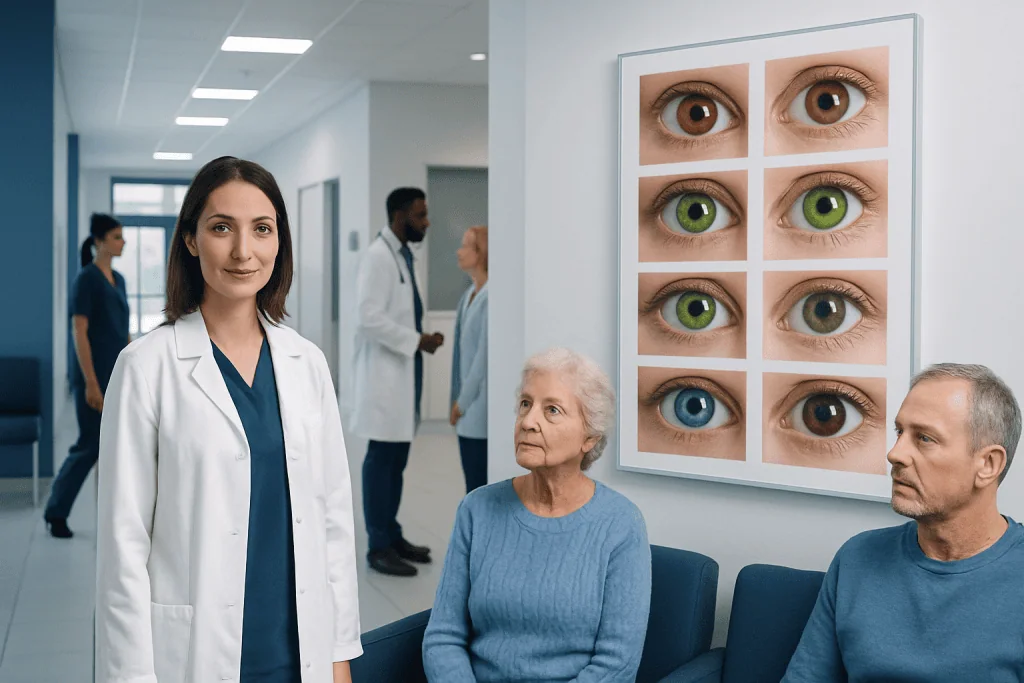
A colour of eyes chart describes visible iris shades, but eye color exists on a spectrum rather than in rigid categories. Most eye color differences come from genetics, melanin in the iris, and the way light scatters through eye tissue.
Key Takeaways
- A colour of eyes chart describes visible iris shades, but eye color exists on a spectrum rather than in rigid categories.
- Most eye color differences come from genetics, melanin in the iris, and the way light scatters through eye tissue.
- Eye color can appear to change with lighting, clothing, pupil size, age, and photographs, even when the iris itself has not changed.
- A new or uneven change in one eye’s color can sometimes signal an eye condition and should be assessed by a doctor.
- Heterochromia may be harmless, but sudden or acquired heterochromia needs medical evaluation.
- Routine eye examinations are the best way to check whether a color change is normal or related to eye disease.
A colour of eyes chart is a simple way to describe common iris shades such as brown, hazel, green, blue, gray, and amber. It can help patients understand why eyes look different, what influences eye color, and when a change in color may need medical attention.
What a Colour of Eyes Chart Shows
A colour of eyes chart is a visual guide that groups the most common iris shades, usually including brown, dark brown, hazel, green, blue, gray, and amber. For most people, it answers a practical question: how eye color is described and why one person’s eyes may appear different from another’s. It is mainly a descriptive tool, not a test of health, personality, or vision quality.
Eye color is more complex than a single label. The iris contains varying amounts of melanin, and the way light reflects and scatters through its layers can change the visible shade. This is why two people both described as having “brown eyes” may still have clearly different tones, patterns, or depth of color.
Charts are useful because they give a shared vocabulary. A patient may use one when talking with an eye doctor, documenting a family trait, or noticing whether an eye looks different over time. Still, a chart cannot replace an examination if there is a sudden change, discomfort, or a difference between the two eyes that was not present before.
Common Eye Colors and How They Are Usually Described
Most colour of eyes charts begin with brown, which is the most common eye color worldwide. Brown eyes contain more melanin in the iris, which absorbs more light and produces a darker appearance. Shades may range from very deep brown to lighter brown with golden or reddish undertones.
Hazel eyes often include a mix of brown, gold, and green, sometimes with a ring of one color around the pupil and another toward the outer iris. Green eyes usually have less melanin than brown eyes and may appear especially vivid in certain lighting. Blue and gray eyes generally have less iris pigment, and their appearance is strongly influenced by how light scatters within the iris.
Amber eyes are less common and tend to have a warm golden, copper, or honey tone. Some people also have visible variations within the same iris, such as central heterochromia, where the area around the pupil differs in color from the outer iris.
- Brown: deep brown to light brown
- Hazel: mixed brown, green, and gold tones
- Green: green with yellow or gray undertones
- Blue: light to dark blue shades
- Gray: cool gray or blue-gray appearance
- Amber: golden, copper, or honey colored
What Determines Eye Color
Genes are the main reason one person has a different eye color from another. Eye color inheritance is influenced by multiple genes, not just one. This means children may have eye colors that resemble one parent, both parents, or other relatives, and the final shade is not always easy to predict from family appearance alone.
Melanin is the pigment that plays the central role in eye color. More melanin in the iris usually produces darker shades, while less melanin is associated with lighter shades. The distribution of pigment also matters, which is why some irises have rings, flecks, or mixed tones rather than a single flat color.
Light scattering is another key factor. Blue and gray eyes do not usually contain blue or gray pigment in the same way a brown iris contains more melanin. Instead, the structure of the iris changes how light is reflected, creating those visible colors. This is one reason eye color can seem different in photographs, sunlight, or indoor lighting.
Age can also influence eye color appearance, especially in infancy and early childhood. Some babies are born with lighter eyes that gradually darken as melanin develops. In adults, the basic natural eye color is usually stable, although its appearance may still vary with lighting and pupil size.
Why Eye Color May Look Different at Different Times
Many people feel their eyes “change color,” but in most cases the iris itself has not truly changed. Surrounding light, clothing, makeup, camera settings, and contrast with skin tone can make the same eyes look bluer, greener, darker, or warmer from one moment to the next. This is especially common in hazel, green, blue, and gray eyes.
Pupil size can also alter the way the iris looks. In bright light, the pupil becomes smaller, making more of the iris visible and sometimes emphasizing flecks or rings in its pattern. In dim light, the pupil widens and the eye may seem darker overall.
Normal aging may subtly affect the appearance of the eyes as well. The iris can look slightly duller over time, and changes in the cornea, lens, or surrounding tissues may influence how color is perceived. However, a distinct new discoloration, cloudiness, or a noticeable difference in one eye should not be assumed to be normal aging.
If there is concern about a true color change, an eye specialist may examine the iris and other parts of the eye to rule out conditions such as glaucoma or inflammation. In some situations, imaging or a detailed eye exam helps determine whether the change is only visual or reflects a medical issue.
When Eye Color Changes Can Be a Medical Sign
A stable eye color is usually normal, but a new or progressive change can sometimes be linked to an eye condition. One example is heterochromia, where the two eyes are different colors or one iris contains distinctly different zones of color. Congenital heterochromia can be harmless, but acquired heterochromia should be evaluated, especially if it develops later in life.
Changes in color may also occur with inflammation, injury, bleeding inside the eye, certain medications, or pigment-related disorders. A white or cloudy appearance in the pupil area is different from iris color and can be associated with lens or retinal problems that need prompt attention. Yellowing of the whites of the eyes is also different from iris color and may point to a broader medical issue rather than an eye-color variation.
Rarely, eye color changes may be associated with problems involving the iris, drainage structures, or internal eye pressure. Conditions affecting the front or back of the eye can also cause blurred vision, pain, light sensitivity, or floaters along with a change in appearance. In these cases, the concern is not the color itself but the underlying reason for the change.
An ophthalmologist may use a slit-lamp exam, pressure testing, and sometimes a comprehensive eye examination to assess the cause. If inflammation or retinal involvement is suspected, further evaluation may be needed, sometimes alongside tests used in the assessment of retinal detachment or other vision-threatening conditions.
How Doctors Evaluate Eye Color Concerns
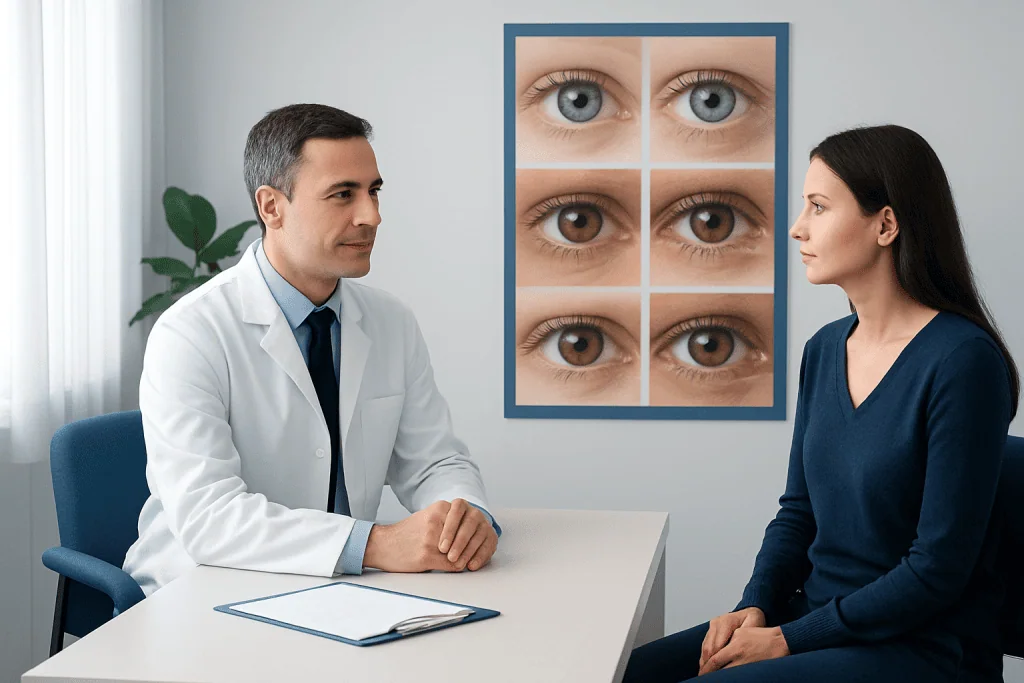
When a patient asks about a colour of eyes chart in a medical setting, the doctor will usually go beyond the chart itself. The key questions are whether the color difference has always been present, whether only one eye is affected, and whether there are other symptoms such as pain, blurred vision, redness, flashes, or sensitivity to light.
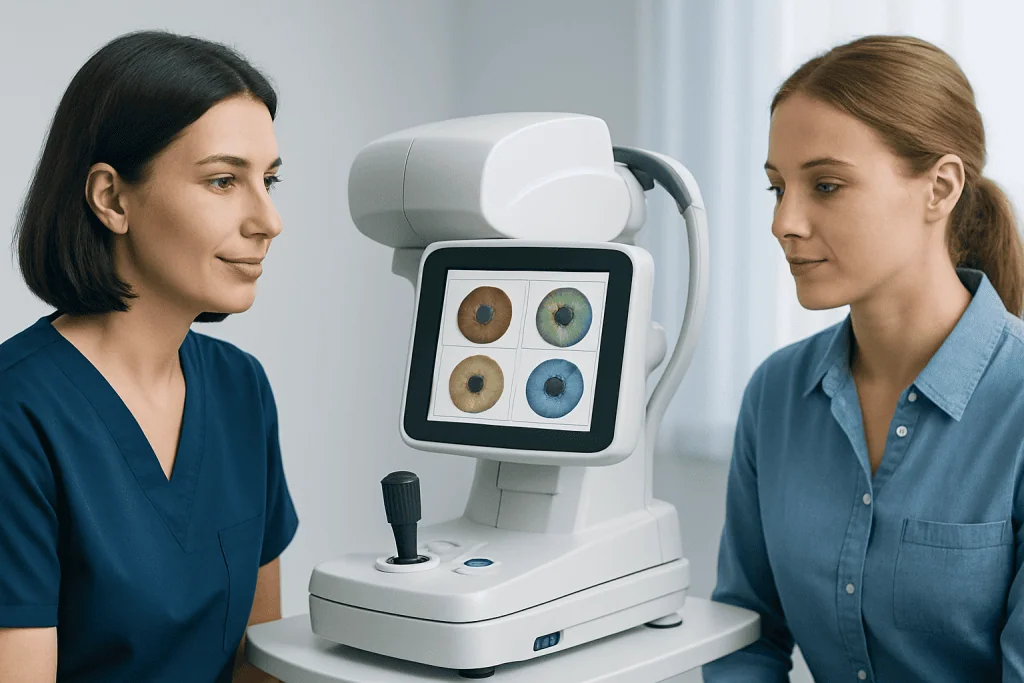
A routine eye exam often includes visual acuity testing, pupil assessment, and inspection of the iris with magnification. The doctor may look for pigment changes, inflammation, trauma, cataract, or signs of increased eye pressure. If there is a concern about disease inside the eye, dilating drops may be used so the retina and optic nerve can be examined more fully.
Additional tests depend on the findings. Some patients may need pressure measurements, retinal imaging, or tests of the front drainage angle. Where appropriate, treatment planning may include approaches used in glaucoma treatment or other specialist eye care, but management always depends on the exact diagnosis rather than the eye color alone.
Prevention, Self-Care, and Eye Safety
Natural eye color usually does not need treatment, but eye health still benefits from daily care. Protecting the eyes from ultraviolet light with quality sunglasses may reduce long-term damage to the eye’s surface and internal structures. Eye protection is also important during sports, home repairs, and any activity with a risk of injury.
Regular eye checks are especially helpful for people with a family history of eye disease, diabetes, autoimmune conditions, or past eye injuries. Patients should avoid using cosmetic or decorative contact lenses without proper fitting and supervision, since these can irritate the eye or increase the risk of infection.
It is also useful to note what is normal for each eye. A clear photograph taken in good light can sometimes help a person recognize whether a visible change is new. However, self-monitoring should not replace professional assessment if symptoms appear or if one eye begins to look different from the other.
For international patients needing specialist assessment, Acibadem International’s multidisciplinary teams in JCI-accredited hospitals diagnose and treat a wide range of eye conditions. When clinically appropriate, care may include advanced evaluation and procedures such as cataract surgery or other ophthalmic treatments tailored to the underlying cause.
When to Seek Medical Care
Medical care is advisable if eye color changes suddenly, if one eye becomes noticeably different from the other, or if the change is accompanied by blurred vision, eye pain, redness, flashes, floaters, or light sensitivity. These symptoms do not always mean a serious problem, but they deserve prompt assessment because some causes can affect vision if left untreated.
Urgent care is particularly important after an eye injury or if there is a white, gray, or cloudy appearance where the pupil should look dark. Parents should also arrange an eye evaluation if a child develops a new difference in eye color, abnormal light reflex in photographs, or visual behavior that seems unusual.
If there is uncertainty, it is safest to speak with an ophthalmologist or qualified doctor rather than relying only on online charts or photographs. A colour of eyes chart can describe appearance, but only an examination can confirm whether the eyes are healthy.
Frequently asked questions
What is a colour of eyes chart used for?
A colour of eyes chart is used to describe visible iris shades in a consistent way. It can help patients identify whether eyes are brown, hazel, green, blue, gray, amber, or mixed in appearance, but it is not a diagnostic tool by itself.
Can eye color naturally change over time?
Yes, eye color can appear to change, especially in infancy as melanin develops and in different lighting conditions throughout life. In adults, the basic natural eye color is usually stable, so a sudden or one-sided change should be checked by a doctor.
Why do hazel eyes look different in different light?
Hazel eyes often contain a mix of colors and variable pigment distribution, so they are especially sensitive to lighting and contrast. Clothing, sunlight, indoor light, and pupil size can all make hazel eyes look greener, browner, or more golden.
Is heterochromia dangerous?
Not always. Some people are born with heterochromia and have no eye disease at all, but if heterochromia appears later in life or is accompanied by other symptoms, it should be medically assessed.
Do blue eyes contain blue pigment?
Usually, blue eye appearance is mainly related to low melanin levels and the way light scatters within the iris. This is different from darker eyes, where more melanin directly contributes to the visible color.
Can a colour of eyes chart tell anything about personality or health?
No reliable medical evidence shows that eye color predicts personality traits. A chart can help describe appearance, but health questions depend on symptoms, eye examination findings, and a person’s medical history.
References
- American Academy of Ophthalmology
- National Eye Institute
- NHS
- MedlinePlus
- Mayo Clinic
This article is for general information only and is not a substitute for professional medical advice. Please consult a qualified doctor about your individual situation.
Explore treatments in Turkey — costs, top hospitals & a free quote
JCI-accredited · board-certified surgeons · reply within 24h
Add us as a Preferred Source to see more of our trusted health content across Google Search, AI Overviews and Discover.

More from the Health Library

Brilinta: A Complete Medical Overview

Women Multivitamin: A Complete Medical Overview

Pickled Turnips — Explained by Medical Evidence, Not Myths

Black Hair Dye: A Complete Medical Overview

Cold Compress for Fever Blister: An Evidence-Based Guide for Patients