Coronary Artery Disease Without Chest Pain: Hidden Symptoms That Still Matter

Coronary artery disease may be present even when there is no chest pain. Shortness of breath, unusual fatigue, nausea, sweating, or jaw, back, or arm discomfort can be warning signs.
Key Takeaways
- Coronary artery disease may be present even when there is no chest pain.
- Shortness of breath, unusual fatigue, nausea, sweating, or jaw, back, or arm discomfort can be warning signs.
- People with diabetes, older age, and some women are more likely to have atypical or less obvious symptoms.
- Diagnosis may include a physical exam, ECG, stress testing, cardiac imaging, and blood tests.
- Treatment focuses on lifestyle changes, medicines, and sometimes procedures to improve blood flow and reduce heart risk.
- Urgent care is needed for sudden severe symptoms such as breathlessness, fainting, or discomfort spreading to the arm or jaw.
Coronary artery disease does not always cause the classic symptom of chest pain. In some people, reduced blood flow to the heart appears as subtle or unusual symptoms that are easy to overlook but still deserve prompt medical attention.
Overview
Coronary artery disease without chest pain refers to reduced blood flow in the heart’s arteries that does not produce the classic symptom many people expect. Coronary artery disease develops when fatty deposits, called plaque, narrow or harden the coronary arteries. This can limit oxygen delivery to the heart muscle during activity, stress, or even at rest.
Many people associate heart disease only with crushing chest pressure. In reality, symptoms can be mild, vague, or felt in other parts of the body. Some people notice breathlessness, sudden tiredness, indigestion-like discomfort, nausea, or pain in the jaw, back, shoulder, or arm instead of pain in the chest.
This pattern is sometimes called silent or atypical coronary artery disease. “Silent” does not mean harmless. It means the warning signs may be less obvious, which can delay diagnosis and treatment. Recognizing hidden symptoms matters because early care can lower the risk of heart attack, heart failure, and other complications.
Hidden symptoms that still matter

When coronary artery disease does not cause chest pain, symptoms may seem unrelated to the heart at first. They often appear with physical exertion, emotional stress, cold weather, or after a heavy meal, when the heart needs more oxygen. In some cases, symptoms improve with rest.
Common hidden symptoms include:
- Shortness of breath during activity or when lying flat
- Unusual tiredness or reduced exercise tolerance
- Nausea, indigestion, bloating, or upper abdominal discomfort
- Cold sweats or unexplained sweating
- Dizziness, lightheadedness, or near-fainting
- Discomfort in the jaw, neck, back, shoulder, or one or both arms
- A feeling of pressure, tightness, or burning that is not clearly centered in the chest
- Palpitations or an awareness of the heartbeat
Symptoms can be subtle and may come and go. A person may simply feel “not right” or notice that ordinary tasks, such as walking uphill or climbing stairs, suddenly feel harder than usual. Because these signs can mimic stomach, lung, muscle, or stress-related problems, they are sometimes dismissed.
Any new, unexplained symptom pattern that recurs with effort or stress should be discussed with a doctor, especially in someone with cardiovascular risk factors. People with known heart attack risk should be particularly cautious about atypical symptoms.
Why chest pain may be absent
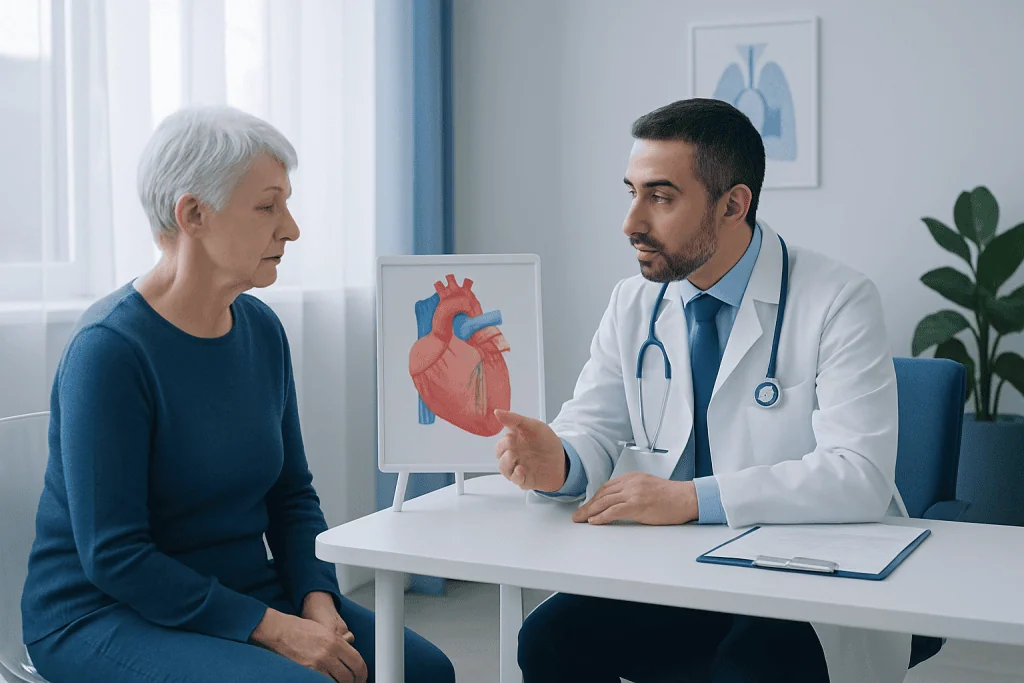
There are several reasons why coronary artery disease may not cause noticeable chest pain. Some people experience reduced blood flow in a way that mainly affects breathing, energy level, or nearby nerves, leading to symptoms in the back, jaw, or arm rather than in the center of the chest.
Diabetes is an important reason. Long-term high blood sugar can affect nerves and reduce pain perception, so a person may have ischemia, meaning low blood flow to the heart muscle, without the expected discomfort. Older adults may also describe less typical symptoms such as weakness, confusion, or shortness of breath.
Women can be more likely than men to report atypical symptoms, including fatigue, sleep disturbance, nausea, or discomfort in the neck or upper back. This does not mean men cannot have hidden symptoms; they can. It means doctors look at the whole symptom pattern rather than relying on chest pain alone.
Sometimes the narrowing builds gradually, and the body adapts for a time. In other cases, symptoms are absent until the disease becomes advanced or an acute event occurs. That is why prevention, risk assessment, and regular medical follow-up are important.
Causes and risk factors
The main cause of coronary artery disease is atherosclerosis, the gradual buildup of plaque inside the coronary arteries. Plaque is made of cholesterol, inflammatory cells, and other substances. Over time, the arteries become narrower and less flexible, making it harder for blood to reach the heart muscle.
Several factors increase the chance of developing coronary artery disease:
- High blood pressure
- High LDL cholesterol or low HDL cholesterol
- Diabetes or insulin resistance
- Smoking or tobacco exposure
- Older age
- Family history of early heart disease
- Overweight or obesity
- Physical inactivity
- Chronic stress
- Unhealthy eating patterns high in salt, sugar, and saturated fats
- Kidney disease, sleep apnea, or other chronic conditions
Risk factors often work together. For example, diabetes, high blood pressure, and high cholesterol can quietly damage arteries over many years. A person may feel well until circulation is significantly reduced. Some people first come to medical attention because of fatigue or shortness of breath, only to learn they have underlying coronary disease.
Other heart conditions can produce similar symptoms, including heart failure and heart rhythm disorders. Because symptom overlap is common, a proper evaluation is the safest way to identify the cause.
How doctors diagnose it
Diagnosis begins with a medical history and physical examination. A doctor asks about symptoms, when they happen, what triggers them, and whether they improve with rest. Risk factors such as diabetes, smoking, family history, and high blood pressure are also reviewed carefully.
Tests may include an electrocardiogram to look for electrical changes in the heart, blood tests to check for signs of heart strain or damage, and an echocardiogram to assess heart structure and pumping function. If symptoms suggest reduced blood flow during activity, doctors may recommend a stress test, sometimes combined with imaging.
In some cases, coronary CT angiography or conventional coronary angiography is used to look directly at the coronary arteries. These tests can help show how much narrowing is present and guide treatment decisions. When a blocked artery is suspected, coronary angiography may help define the problem clearly.
Because hidden symptoms can have non-cardiac causes as well, doctors may also evaluate the lungs, digestive system, blood count, thyroid function, or medication side effects. The goal is not only to confirm coronary artery disease but also to rule out other conditions that can look similar.
Treatment options
Treatment depends on symptom severity, the amount of artery narrowing, overall heart function, and the person’s general health. For many people, treatment starts with risk reduction and medication. This may include medicines to lower cholesterol, control blood pressure, improve blood flow to the heart, prevent clots, and manage diabetes when present.
Lifestyle change is a core part of treatment. Stopping smoking, following a heart-healthy eating plan, staying physically active within medical guidance, managing weight, and improving sleep can all help reduce symptoms and slow disease progression. Cardiac rehabilitation may also be recommended after certain cardiac events or procedures.
Some people need a procedure to restore blood flow. This may involve opening a narrowed artery with a balloon and stent through coronary angioplasty, or surgery such as coronary artery bypass grafting when several vessels are affected or blockage is complex. The most appropriate option depends on detailed test results and specialist assessment.
Near the end of the care pathway, some patients seek evaluation at specialized centers. Acibadem International’s multidisciplinary specialists and JCI-accredited hospitals diagnose and treat coronary artery disease for international patients, with treatment plans tailored to the individual’s condition and risk profile.
Prevention and self-care
Even when symptoms are mild or absent, prevention remains essential. The same healthy habits that protect against a first heart problem also help prevent progression in people already diagnosed with coronary artery disease. Small, steady changes are often more sustainable than sudden extreme measures.
Helpful self-care steps include:
- Keeping blood pressure, blood sugar, and cholesterol under control
- Taking prescribed medications exactly as directed
- Eating more vegetables, fruits, whole grains, beans, fish, and healthy fats
- Limiting tobacco, excess alcohol, highly processed foods, and trans fats
- Getting regular physical activity after medical clearance
- Maintaining a healthy weight and waist size
- Managing stress through relaxation, counseling, or mindfulness practices
- Attending regular follow-up visits and recommended heart testing
It also helps to track symptoms. If shortness of breath, fatigue, or jaw or arm discomfort appears with exertion, noting the timing, duration, and triggers can support diagnosis. People with diabetes should be especially alert to subtle changes because warning pain may be reduced.
Anyone with established coronary disease should know their emergency plan and ask their doctor which symptoms require urgent attention. Self-care is valuable, but it does not replace professional evaluation when new or concerning symptoms appear.
When to see a doctor
A doctor should evaluate unexplained shortness of breath, unusual fatigue, dizziness, nausea with exertion, or discomfort in the jaw, arm, shoulder, neck, or upper back, especially if symptoms are recurrent or linked to activity. Medical review is also important when a person with heart risk factors notices a sudden drop in exercise tolerance or new swelling, palpitations, or weakness.
Urgent medical care is needed for severe breathlessness, fainting, cold sweats, sudden nausea, or pressure or discomfort that spreads to the arm, back, jaw, or neck, even if chest pain is absent. A heart attack can occur without classic chest symptoms. It is safer to seek emergency help than to wait and see.
People with known coronary artery disease should not assume a change in symptoms is minor. Worsening breathlessness, symptoms at rest, or more frequent episodes can suggest unstable disease and should be assessed promptly. Early evaluation improves the chance of timely, effective treatment.
Frequently asked questions
Can coronary artery disease really happen without chest pain?
Yes. Coronary artery disease can cause reduced blood flow to the heart without the typical symptom of chest pain. Some people notice shortness of breath, fatigue, nausea, sweating, or discomfort in the jaw, back, neck, or arm instead.
Who is more likely to have hidden heart symptoms?
People with diabetes, older adults, and many women are more likely to have atypical or less obvious symptoms. However, anyone can have coronary artery disease without chest pain, so new unexplained symptoms should not be ignored.
Is shortness of breath a sign of heart disease?
It can be. Shortness of breath, especially during activity or when it appears together with fatigue, sweating, or upper-body discomfort, may be related to reduced blood flow to the heart. It can also have other causes, which is why medical evaluation is important.
How is silent coronary artery disease found?
Doctors usually begin with a history, physical exam, and tests such as an ECG, blood tests, and sometimes an echocardiogram or stress test. If needed, imaging of the coronary arteries can help show whether significant narrowing is present.
Can lifestyle changes help if there is no chest pain?
Yes. Lifestyle changes are important whether symptoms are obvious or subtle. Stopping smoking, improving diet, staying active, managing blood pressure and diabetes, and taking prescribed medicines can all lower risk and slow disease progression.
When should someone seek emergency care?
Emergency care is needed for severe shortness of breath, fainting, sudden cold sweats, spreading discomfort in the jaw or arm, or any symptom that suggests a possible heart attack. It is important not to wait for chest pain if other warning signs are present.
References
- World Health Organization
- American Heart Association
- National Heart, Lung, and Blood Institute
- European Society of Cardiology
- Centers for Disease Control and Prevention
This article is for general information only and is not a substitute for professional medical advice. Please consult a qualified doctor about your individual situation.
Heart care in Turkey — expert evaluation and treatment
JCI-accredited · board-certified surgeons · reply within 24h
Add us as a Preferred Source to see more of our trusted health content across Google Search, AI Overviews and Discover.
Check your numbers in seconds
BMI, calories, due date, blood pressure and 30+ more clinical calculators — free, instant, doctor-reviewed ranges.