Cross Eye Operation: An Evidence-Based Guide for Patients

A cross eye operation usually means strabismus surgery to reposition or adjust one or more eye muscles. Surgery can improve eye alignment, and in some patients it also supports binocular vision and reduces double vision.
Key Takeaways
- A cross eye operation usually means strabismus surgery to reposition or adjust one or more eye muscles.
- Surgery can improve eye alignment, and in some patients it also supports binocular vision and reduces double vision.
- Not everyone with crossed eyes needs surgery first; glasses, patching, prisms, or vision treatment may be part of care.
- Evaluation by an ophthalmologist is important because the cause, timing, and best treatment differ in children and adults.
- More than one procedure is sometimes needed over time, especially if the eye turn changes or returns.
A cross eye operation is surgery for strabismus, a condition in which the eyes do not line up properly. It works by adjusting the eye muscles to improve alignment and may help vision, depth perception, head posture, and day-to-day comfort.
What a Cross Eye Operation Is
A cross eye operation is an evidence-based treatment for strabismus, often called crossed eyes or squint. In strabismus, the eyes point in different directions because the muscles and nerve signals that control eye movement are not working together in a balanced way. Surgery does not remove the eye or operate on the inside of the eyeball; instead, it adjusts the outer eye muscles so the eyes can line up more accurately.
For many patients, the goal of surgery is not only cosmetic. Better alignment can support binocular vision, reduce or prevent double vision in some cases, improve an abnormal head position, and make eye contact easier in daily life. In children, timely treatment may also help protect visual development when strabismus is linked with amblyopia, sometimes called a “lazy eye.”
A cross eye operation is one part of a broader treatment plan. Depending on the cause and age of the patient, an ophthalmologist may also recommend glasses, prisms, patching, eye drops, or treatment for an underlying eye or neurological condition. If readers want background on the condition itself, strabismus is the medical term doctors use for crossed eyes.
Who May Need Surgery and What Symptoms Matter
People seek care for crossed eyes for different reasons. In babies and children, parents may notice one eye turning inward, outward, upward, or downward. In adults, symptoms can be more noticeable and may include double vision, eyestrain, headaches, trouble reading, poor depth perception, or the need to tilt or turn the head to keep vision single.
Not every eye turn means surgery is needed right away. Some children first need a detailed refraction test and glasses, especially when farsightedness contributes to an inward turn. Others may need amblyopia treatment before surgery because the brain may start to favor one eye. In adults, a new eye misalignment may reflect many possible causes, from long-standing childhood strabismus to thyroid eye disease, nerve palsy, trauma, or age-related changes.
Symptoms that often prompt consideration of a cross eye operation include a persistent eye turn, difficulty with eye contact, double vision that does not improve with simpler measures, or a head posture that strains the neck. The surgeon also considers how often the misalignment occurs, whether it is stable or changing, and how it affects function as well as appearance.
Why Crossed Eyes Happen: Causes and Risk Factors

Strabismus can begin in infancy, childhood, or adulthood. In many children, the exact cause is not a single disease but rather a problem in how the brain and eye muscles coordinate movement. Family history can increase the chance of strabismus, and some children have it together with refractive errors such as farsightedness. Premature birth, developmental disorders, and certain neurological conditions can also raise risk.
In adults, crossed eyes may arise from long-standing strabismus that becomes more noticeable over time, or from a newer problem affecting eye movement control. Causes can include diabetes-related or vascular nerve palsies, thyroid eye disease, prior eye surgery, head injury, stroke, or disorders of the muscles or nerves. Sometimes the misalignment is small and mainly causes double vision; in other cases, the turning is obvious.
Understanding the cause matters because surgery planning depends on it. A person with thyroid eye disease may need a different pathway of care than a child with accommodative esotropia. Likewise, a patient with a nerve palsy may need observation first if spontaneous improvement is possible. That is why a careful diagnosis comes before decisions about a cross eye operation.
How Doctors Evaluate Before a Cross Eye Operation
Assessment starts with a full eye examination. The ophthalmologist measures visual acuity in each eye, checks for amblyopia, examines eye movements, and measures the direction and size of the misalignment at distance and near. Refraction testing is important because glasses alone can significantly improve certain types of strabismus.
Doctors also ask when the turning began, whether it is constant or intermittent, and whether double vision is present. In adults especially, the timing can provide clues to the cause. If the misalignment is sudden, painful, associated with drooping of the eyelid, severe headache, weakness, or other neurological symptoms, the doctor may arrange urgent additional evaluation before discussing surgery.
Further testing is guided by the individual case. Some patients need prism measurements, binocular vision assessment, retinal examination, or imaging if there is concern about an orbital or neurological problem. When surgery is likely, the surgeon explains which muscles may be adjusted and what degree of correction is realistic. This step-by-step evaluation helps patients make informed decisions and sets clear expectations for recovery and results.
How Strabismus Surgery Is Performed
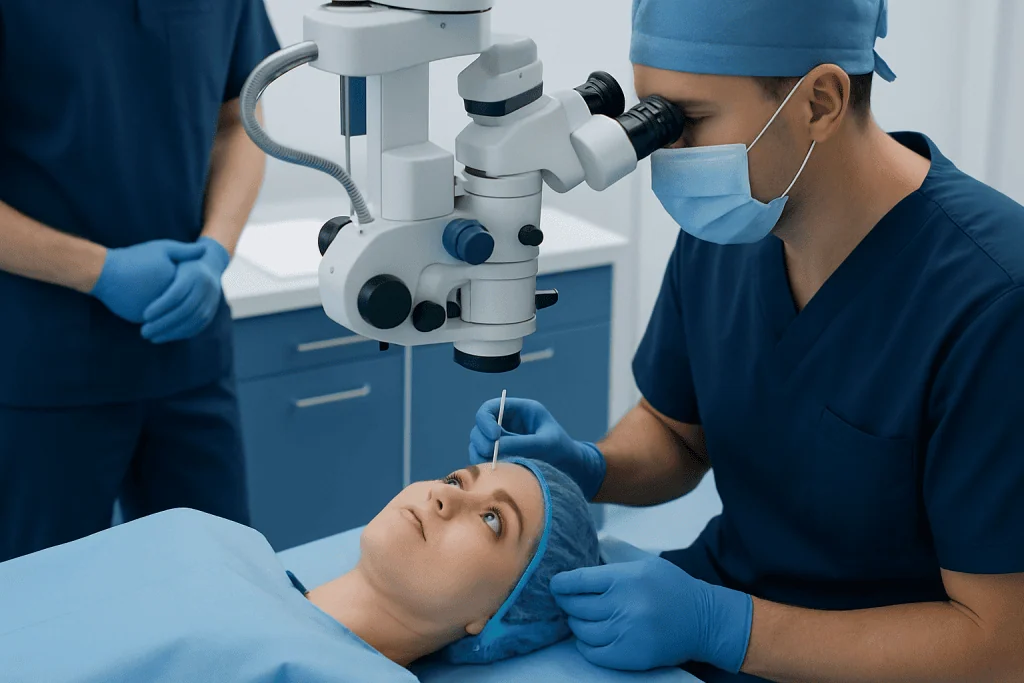
A cross eye operation typically involves tightening, loosening, or repositioning one or more of the extraocular muscles on the surface of the eye. Common techniques include recession, in which a muscle is moved slightly backward to weaken its pull, and resection or plication, which strengthens a muscle by shortening or folding it. The surgeon chooses the plan based on the type and amount of eye deviation.
The operation is often done as day surgery. Children usually have general anesthesia, while adults may have general anesthesia or another anesthetic approach depending on the center and the case. The eye itself is not removed, and the surgery is performed through the conjunctiva, the thin tissue covering the white of the eye. In selected adults, adjustable sutures may be used so alignment can be fine-tuned shortly after surgery.
Many patients are reassured to learn that the aim is careful muscle balance rather than “forcing” the eyes into place. Even so, healing responses vary, and perfect alignment cannot be guaranteed in every case. Some people need more than one operation over time. Readers looking for a general overview of strabismus surgery may find it helpful to discuss specific techniques with their ophthalmologist.
Benefits, Risks, and Recovery After Surgery
The benefits of a cross eye operation depend on the individual. Many patients gain better eye alignment and improved facial symmetry. Some also experience less double vision, improved depth perception, more comfortable reading, or a reduction in abnormal head posture. In children, surgery may support visual development when combined with amblyopia treatment and proper refractive correction.
As with any surgery, there are risks. These can include undercorrection or overcorrection, persistent or new double vision, scarring, infection, bleeding, anesthesia-related complications, or the need for another operation later. Serious vision-threatening complications are uncommon, but patients should understand that eye alignment surgery is a precise procedure that still has normal surgical uncertainties.
Recovery is usually gradual over days to weeks. Redness, mild soreness, watering, and a scratchy sensation are common at first. The ophthalmologist may prescribe drops or ointment and advise avoiding swimming, rubbing the eyes, or heavy exertion for a period of time. Follow-up visits are important because alignment can change as the eye muscles heal. In some patients, additional support such as prisms, glasses, or amblyopia treatment remains part of long-term care.
When a broader ophthalmology team is needed, Acibadem International’s multidisciplinary specialists and JCI-accredited hospitals diagnose and treat eye alignment disorders for international patients. Depending on the cause of misalignment, some patients may also need a full eye examination or assessment for related conditions such as amblyopia.
Prevention, Self-Care, and Setting Realistic Expectations
There is no single way to prevent all forms of crossed eyes because causes vary widely. Still, early eye checks are important, especially for children with a family history of strabismus, premature birth, developmental concerns, or obvious eye turning. Adults should not ignore new double vision or a change in eye alignment, since early evaluation may identify a treatable cause.
Self-care before and after surgery is mainly about supporting treatment rather than replacing it. Wearing prescribed glasses, using prisms if advised, following patching plans for amblyopia, and attending follow-up appointments all matter. After surgery, using medicines exactly as prescribed and protecting the eyes during healing can help recovery go smoothly.
Expectations should be realistic and individualized. Surgery often improves alignment significantly, but it may not fully restore normal binocular vision in every patient, especially if strabismus has been present for a long time. Some patients need staged treatment or repeat surgery. A clear discussion with the surgeon about goals, likely benefits, and possible limitations is one of the most important parts of care.
When to Seek Medical Care
Medical care is important whenever crossed eyes are noticed in a child or adult, even if the problem seems mild or comes and goes. Early assessment can help protect vision in children and can identify whether adults need treatment for an underlying cause. A routine appointment is appropriate for a long-standing or intermittent misalignment that is not causing sudden symptoms.
Urgent assessment is needed if eye misalignment starts suddenly, especially when it is accompanied by double vision, drooping of the eyelid, severe headache, eye pain, facial weakness, numbness, confusion, trouble speaking, or recent head injury. These features can point to a neurological or vascular problem that needs prompt attention.
After a cross eye operation, patients should contact their doctor if they develop worsening pain, marked swelling, fever, discharge, decreasing vision, or persistent vomiting. These symptoms do not always mean a serious complication, but they deserve timely medical review.
Frequently asked questions
Is a cross eye operation the same as strabismus surgery?
Yes. Cross eye operation is a common patient term for strabismus surgery, which adjusts the muscles on the outside of the eye to improve alignment. Doctors usually use the term strabismus when discussing diagnosis and treatment planning.
Can crossed eyes be treated without surgery?
Sometimes, yes. Depending on the cause, treatment may include glasses, prisms, patching, or observation before surgery is considered. Surgery is usually recommended when misalignment persists, affects function, or is unlikely to improve enough with non-surgical care alone.
Does strabismus surgery improve vision?
It mainly improves eye alignment, but that can also help visual function in some patients. Benefits may include better binocular use, less double vision, improved depth perception, or a more natural head position. The exact visual outcome depends on age, cause, and how long the misalignment has been present.
Is a cross eye operation painful?
Most patients have mild to moderate discomfort rather than severe pain. Redness, soreness, and a gritty feeling are common for a short time after surgery. The surgeon usually recommends medicines and eye drops to help with healing and comfort.
How long does recovery take after a cross eye operation?
Many people return to light daily activities within several days, but full healing and stabilization of alignment can take weeks. The white of the eye often stays red for a period after surgery. Follow-up visits are important because alignment may change as healing progresses.
Can the eyes become crossed again after surgery?
Yes, recurrence can happen. Eye alignment may change over time because of healing patterns, growth, underlying disease, or the natural course of strabismus. Some patients need glasses, prisms, or another surgery later to maintain the best possible alignment.
References
- American Academy of Ophthalmology
- American Association for Pediatric Ophthalmology and Strabismus
- National Eye Institute
- Royal College of Ophthalmologists
- Mayo Clinic
This article is for general information only and is not a substitute for professional medical advice. Please consult a qualified doctor about your individual situation.
Joint and spine care in Turkey — expert assessment & treatment
JCI-accredited · board-certified surgeons · reply within 24h
Add us as a Preferred Source to see more of our trusted health content across Google Search, AI Overviews and Discover.