Dental bridge Risks & Side Effects Explained by Surgeons

Most dental bridge risks are mild and manageable: short-term tooth sensitivity, gum soreness, and food trapping under the bridge. Less often, supporting teeth develop decay, gum disease, or the bridge loosens or breaks. See your dentist if pain persists, the bite feels uneven, or the bridge feels loose.
Key Takeaways
- Most people tolerate a dental bridge well, but temporary sensitivity and mild gum tenderness can occur after preparation and fitting.
- A traditional bridge requires shaping adjacent teeth, which can increase their long-term risk of decay, nerve irritation, or fracture.
- Good daily cleaning around and beneath the bridge is essential to help prevent plaque buildup, bad breath, gum disease, and decay.
- Persistent pain, swelling, a loose bridge, bite changes, or fever should be assessed promptly by a dentist.
- The best bridge type depends on the location of the missing tooth, health of nearby teeth and gums, bite forces, and overall oral health.
Wondering what could go wrong after you get a dental bridge? It’s a fair question, and the honest answer is reassuring: dental bridge risks are generally manageable when the bridge is carefully planned, fitted, and maintained. The side effects people notice most often are temporary sensitivity, gum irritation, and food trapping. Less commonly, decay or gum disease can develop around the supporting teeth, or the bridge itself can loosen or become damaged.
Overview: What Are Dental Bridge Risks?
A dental bridge replaces one or more missing teeth by joining an artificial tooth, called a pontic, to nearby supporting teeth or to dental implants. Dental bridge risks are usually manageable, but they should be understood before treatment. The most common concerns are short-term tooth sensitivity, mild gum soreness, difficulty cleaning beneath the bridge, and future decay or gum disease around the supporting teeth.
In a conventional bridge, the teeth on either side of a gap are reshaped to hold crowns. This can provide a stable, natural-looking replacement, but it also means healthy tooth structure may need to be removed. Over time, supporting teeth can develop decay, cracks, nerve inflammation, or gum problems, particularly if oral hygiene is difficult or the bridge no longer fits properly.
A bridge is not a removable denture, and it is not always the same thing as an implant-supported restoration. Your dentist can talk you through whether a fixed bridge, implant treatment, or another option suits you best. For a fuller overview of planning and treatment, see dental bridge treatment.
How a Dental Bridge Works and Who May Be a Candidate

A traditional fixed bridge usually has a replacement tooth in the gap and crowns that attach to the teeth beside it. Other designs include cantilever bridges, supported from one side, resin-bonded bridges that are attached more conservatively to the back of a nearby tooth, and implant-supported bridges. Each design has different benefits, limitations, and potential risks.
A person may be a candidate when they have a missing tooth or teeth, healthy enough gums, and suitable neighboring teeth or implants to provide support. The dentist also considers bite alignment, jawbone health, teeth grinding, active decay, gum disease, and the ability to keep the area clean. Treating active oral disease first can reduce the likelihood of later complications.
A bridge may not be the best choice when supporting teeth are weak, mobile, severely decayed, or affected by significant periodontal disease. People who clench or grind their teeth may need additional protection, such as a night guard, because repeated heavy forces can chip porcelain, loosen cement, or fracture a supporting tooth.
What Happens During the Procedure
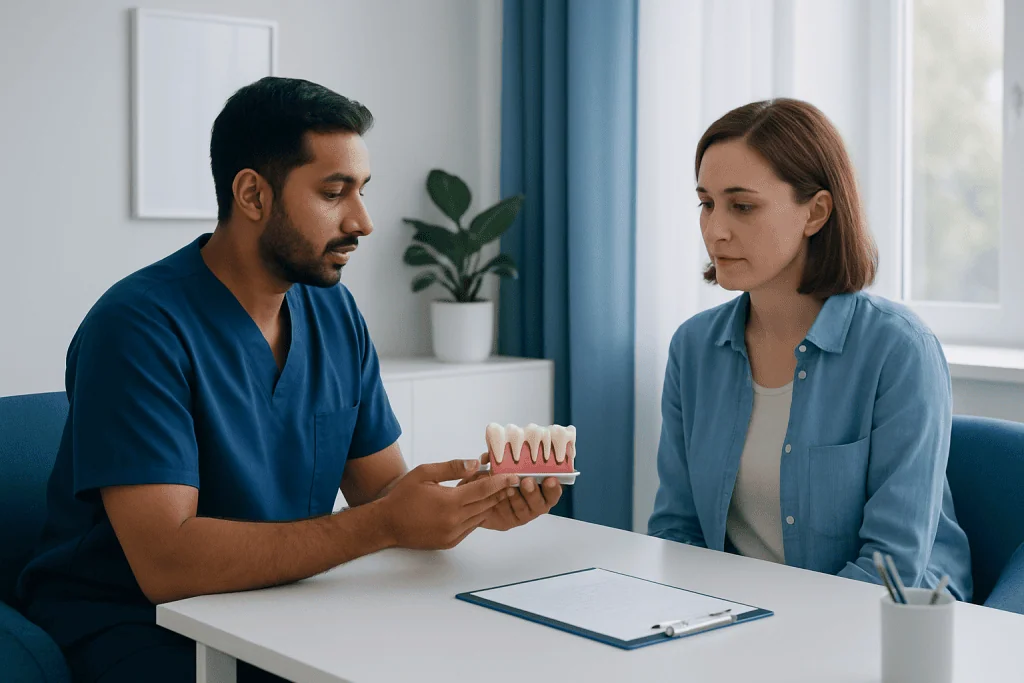
Planning begins with an examination of the teeth, gums, bite, and missing-tooth space. X-rays or other dental imaging may be used to assess roots, bone, infection, and the condition of potential supporting teeth. The dentist discusses the restoration design, materials, expected maintenance, and alternatives before proceeding.
For a conventional bridge, local anesthetic is usually used while the supporting teeth are shaped. Impressions or digital scans are then taken to create the bridge. A temporary bridge may be placed to protect prepared teeth and maintain appearance and function while the final restoration is made.
At a later visit, the final bridge is checked for fit, contact with neighboring teeth, gum contour, color, and bite. It may be cemented or otherwise secured after adjustments. If the bite feels high or uneven, say so straight away. An early adjustment can spare you soreness and take excess pressure off the bridge and your jaw muscles.
Benefits and Possible Side Effects
A well-designed bridge can restore the appearance of a smile, improve chewing and speech, help maintain spacing between teeth, and reduce drifting or tilting into the gap. It may also distribute chewing forces more evenly than leaving a space untreated. The expected benefit depends on the bridge design, oral health, and regular follow-up care.
Short-term side effects can include sensitivity to cold, heat, air, or pressure in the prepared teeth. Some people notice minor gum tenderness, increased saliva, or an unfamiliar feeling when chewing during the first days or weeks. These effects often improve as the mouth adapts and the gums settle.
Less common but important complications can include prolonged nerve irritation in a supporting tooth, requiring root canal treatment; porcelain chipping; cement failure; cracking of a support tooth; or discomfort from an incorrect bite. Allergic reactions to dental materials are rare, but anyone with known material allergies should tell the dental team before treatment.
- Temporary sensitivity or tenderness after tooth preparation
- Food collecting beneath the pontic or around crowns
- Gum inflammation, bleeding, or recession if plaque accumulates
- Decay at crown margins or beneath a bridge
- Bridge loosening, fracture, wear, or bite-related discomfort
Long-Term Risks: Supporting Teeth, Gums, and Bridge Failure
The key long-term dental bridge risk is that the restoration depends on the health of its supporting teeth and surrounding gums. Crown edges can collect plaque if cleaning is incomplete, allowing cavities to form where the bridge meets the tooth. You may not notice decay early on, which is exactly why regular dental examinations, and X-rays when appropriate, matter.
Gum disease can also develop around a bridge if bacteria and plaque are not removed effectively. Signs may include bleeding while brushing, persistent bad breath, swelling, gum recession, or a change in how the bridge feels. Advanced gum disease can weaken the support for the bridge and may eventually lead to loss of a supporting tooth.
A bridge can also fail because of ordinary wear, biting hard objects, injury, or repeated grinding. Failure does not always mean the bridge must be replaced immediately, but a dentist should assess chips, cracks, looseness, or changes in bite. Early care may help prevent further damage to the restoration or the teeth beneath it.
Recovery, Daily Care, and Reducing Risk
Recovery after bridge preparation is usually brief. Mild sensitivity or gum tenderness may last for several days, while adaptation to chewing can take a little longer. During this period, softer foods and avoiding very sticky, hard, or chewy foods may be more comfortable. Once the bridge feels natural, most people can return to a normal varied diet while still avoiding habits such as biting ice or opening packages with teeth.
Cleaning under the replacement tooth is especially important because a toothbrush alone may not reach this area. A dentist or dental hygienist may recommend floss threaders, special bridge floss, interdental brushes, or an oral irrigator as part of an individual cleaning routine. Brushing twice daily with fluoride toothpaste and attending routine professional cleanings support long-term oral health.
People who grind their teeth, have a dry mouth, smoke, or have diabetes may need more tailored preventive care. A night guard may be advised for clenching or grinding. Avoiding tobacco and controlling conditions that affect gum health can also reduce complications. Your care plan should be worked out with a qualified dentist and shaped around your own mouth.
When to Seek Medical Care
Contact a dentist promptly if there is persistent or worsening tooth pain, swelling of the gum or face, pus, fever, a loose bridge, a broken restoration, or a sudden change in bite. These symptoms can indicate infection, damage to a supporting tooth, or a problem with the bridge that needs professional assessment.
Bleeding gums, ongoing bad breath, pain when chewing, sensitivity that does not improve, or food repeatedly becoming trapped around the bridge should also be discussed with a dental professional. These concerns may be caused by plaque buildup, gum inflammation, decay, or fit issues, and early treatment is usually simpler.
Severe facial swelling, difficulty swallowing, difficulty breathing, or spreading infection requires urgent medical attention. Acibadem International’s multidisciplinary specialists and JCI-accredited hospitals can assess dental concerns and coordinate care for international patients when needed.
Frequently asked questions
Are dental bridge risks common?
Most dental bridges are tolerated well, especially when they are properly planned and cared for. The more common issues are temporary sensitivity, mild gum irritation, and food trapping. Longer-term risks such as decay, gum disease, or bridge damage are more likely when cleaning and follow-up care are inadequate.
Can a dental bridge damage adjacent teeth?
A conventional bridge requires nearby teeth to be reshaped for crowns, which permanently removes some enamel and tooth structure. These teeth can later develop sensitivity, decay, cracks, or nerve problems, although careful planning and maintenance help reduce these risks. Less invasive bridge designs or implant-based options may be considered in selected cases.
How long does sensitivity last after a dental bridge?
Mild temperature or pressure sensitivity often settles within days to a few weeks after preparation or fitting. Sensitivity that becomes severe, disrupts sleep, persists, or is accompanied by swelling should be assessed by a dentist. It may indicate a bite issue, inflammation of the tooth nerve, or another problem requiring treatment.
Can food get stuck under a dental bridge?
Yes. The artificial tooth portion of a bridge does not sit exactly like a natural tooth, so food debris can collect beneath it. Daily use of bridge floss, floss threaders, interdental brushes, or other tools recommended by a dental professional can help keep the area clean.
What are signs that a dental bridge is failing?
Possible signs include looseness, a crack or chip, pain during chewing, a changed bite, persistent bad taste or odor, bleeding gums, or sensitivity near a supporting tooth. A bridge can sometimes be repaired or recemented, but it should be examined promptly. Avoid trying to glue or adjust it at home.
Can a dental bridge cause gum disease?
A bridge doesn’t cause gum disease on its own, but it can create spots where plaque is harder to reach. If plaque remains around the crown edges or beneath the pontic, gum inflammation and periodontal disease may develop. Consistent home cleaning and professional dental visits are important for prevention.
This article is for general information only and is not a substitute for professional medical advice. Please consult a qualified doctor about your individual situation.
Dental Bridge in Turkey — costs, top hospitals & a free quote
7 JCI-accredited hospitals · board-certified surgeons · reply within 24h
Add us as a Preferred Source to see more of our trusted health content across Google Search, AI Overviews and Discover.

Medically reviewed by the Acıbadem International Medical Board — August 24, 2026
See our medical review board →
Update history
- PublishedAugust 21, 2026
- Medical review approvedAugust 24, 2026
- Last content updateAugust 24, 2026
References2
- Dental Health (MedlinePlus) — medlineplus.gov
- Gum Disease (MedlinePlus) — medlineplus.gov
Dental & Oral Health
Full-scope dental care from implants and aesthetics to oral and maxillofacial surgery.
151 specialists in this unitOral & Dental Health Specialists at Acibadem





Related Treatments
More from the Health Library

Halitosis: Early Signs, Risk Factors, and How It Is Treated

Pulpitis Is Inflammation of the Nerve Inside a Tooth

A Tooth Abscess Needs Dental Treatment to Heal

Burning Mouth Syndrome: Early Signs, Risk Factors, and How It Is Treated

Enamel Erosion Cannot Be Reversed, but It Can Be Slowed