

Dental Implants Cost: What Affects the Total Price

Dental implants cost includes evaluation, imaging, surgery, materials, and the final restoration. The number of implants and whether treatment is for one tooth or a full arch strongly affect the total price.
Key Takeaways
- Dental implants cost includes evaluation, imaging, surgery, materials, and the final restoration.
- The number of implants and whether treatment is for one tooth or a full arch strongly affect the total price.
- Extra procedures such as tooth extraction, sinus lift, or bone grafting can increase cost.
- Implant material, restoration type, and clinic technology may change the price.
- A clear written treatment plan helps patients compare costs accurately and understand what is included.
Dental implants cost can vary widely because the total price reflects much more than the implant itself. The number of teeth being replaced, bone health, materials, planning, and any extra procedures all influence the final treatment cost.
Overview: Why Dental Implants Cost More Than a Single Fee
Dental implants are designed to replace missing teeth with a structure that mimics a natural tooth root and a visible replacement tooth. Because treatment happens in stages, the cost is usually not one simple number. It often includes the consultation, dental examination, imaging, surgical placement of the implant, healing visits, and the final crown, bridge, or denture attached to the implant.
The total cost also depends on the patient’s mouth, jawbone, and long-term treatment goals. A straightforward single implant in a healthy jaw is very different from rebuilding multiple missing teeth or restoring a full arch. In some cases, extra steps are needed before implants can be placed safely and securely, and these steps become part of the final price.
For this reason, comparing dental implants cost between clinics is only meaningful when the same type of treatment is being discussed. One estimate may include imaging, temporary teeth, anesthesia, and follow-up care, while another may not. A detailed treatment plan helps patients understand what they are paying for and why.
Main Factors That Affect Dental Implants Cost
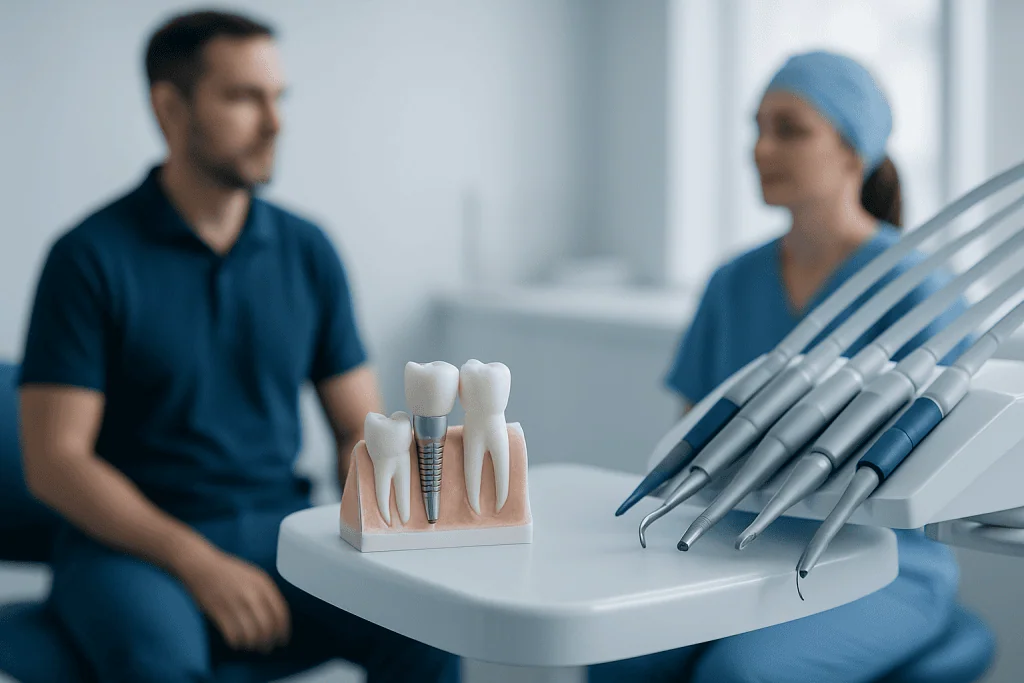
The number of implants is one of the biggest cost factors. Replacing one missing tooth may require a single implant and crown, while replacing several teeth may involve multiple implants, an implant-supported bridge, or a full-arch system. Full-mouth reconstruction is generally more complex and more costly than treatment for a single tooth.
Bone quality and gum health are also important. If the jawbone is too thin or too soft, the dentist may recommend preparatory procedures such as dental bone grafting to create a more stable foundation. Treating gum disease, active infection, or damaged teeth before implant surgery can add to the overall price, but these steps help protect the long-term success of the implant.
Materials and laboratory work matter as well. Implant brand, implant material, abutment type, and the material used for the visible tooth restoration can all influence cost. A custom-made crown, bridge, or denture often requires skilled laboratory work, and highly aesthetic restorations may involve more planning and detail.
Technology can also change the final fee. Digital scans, 3D planning, surgical guides, and advanced techniques may increase upfront costs, but they can improve precision and help the team plan treatment more accurately. In complex cases, a dentist may recommend a more specialized implant approach such as dental implant treatment or full-arch options like All-on-4 treatment.
Single Tooth, Multiple Teeth, and Full-Arch Treatment

A single missing tooth is often the simplest implant scenario, but even then the cost can vary. The dentist will look at bone level, the condition of nearby teeth, the bite, and whether a temporary tooth is needed during healing. The final crown for a front tooth may require especially careful color and shape matching, which can affect the total cost.
When several teeth are missing, treatment options may differ. Some patients need one implant for each missing tooth, while others may benefit from a bridge supported by fewer implants. The most suitable approach depends on spacing, bone support, and functional needs, not only on price.
For patients missing most or all teeth in one jaw, full-arch systems may be considered. In these cases, a fixed prosthesis can sometimes be supported by a limited number of implants, such as All-on-6 treatment. Although this type of care may seem expensive initially, it can be more efficient than replacing each tooth individually and may reduce the number of surgeries needed.
Procedures That May Add to the Total Price
Many patients need more than implant placement alone. A damaged tooth may need extraction before the implant can be considered. If infection is present, treatment may need to be delayed until the area is healthy. If a tooth can still be saved, the dentist may discuss alternatives such as endodontic treatment instead of extraction and implant placement.
Bone grafting and sinus lift procedures are common reasons for added cost. When teeth have been missing for a long time, the jawbone may shrink. In the upper back jaw, the sinus cavity may leave limited bone height for an implant. Building adequate support first can improve the chance of a stable and lasting result.
Temporary restorations can also be part of the plan. Some patients need a provisional tooth or temporary denture while the implant heals. Others may require sedation, special surgical guides, or additional visits for bite adjustments. These are important details to ask about when reviewing a treatment estimate.
- Possible added costs may include extractions
- 3D imaging or CT scans
- Bone grafting or sinus lift procedures
- Temporary crowns, bridges, or dentures
- Sedation or anesthesia support
- Follow-up visits and maintenance care
How Dentists Evaluate and Quote Implant Treatment
A proper implant quote begins with a full dental assessment. This usually includes a medical history review, oral examination, and imaging such as panoramic X-rays or 3D scans. The dentist assesses gum health, bone volume, bite forces, and the position of nearby structures such as nerves and sinuses. This planning stage is essential because safe placement depends on anatomy as much as on the missing tooth itself.
The final estimate should explain each component of care. Patients can ask whether the quoted price includes the implant fixture, abutment, final crown or bridge, temporary teeth, imaging, medications, and follow-up visits. A written plan makes it easier to compare clinics fairly and to avoid confusion about hidden or separate fees later on.
It is also reasonable to ask about timelines. Some implant treatments are completed over several months because the implant needs time to fuse with the bone. Others may involve immediate temporary teeth. The length and complexity of treatment can influence both cost and convenience, especially for patients traveling for care.
Balancing Cost, Quality, and Long-Term Value
The lowest quote is not always the best value. Implant treatment depends on careful diagnosis, good surgical technique, high-quality materials, and well-designed restorations. Paying attention to these factors may help reduce the risk of complications, repair costs, or replacement treatment in the future.
Long-term value includes function, comfort, and maintenance needs. Well-planned implants can help support chewing, preserve jawbone, and avoid some of the limitations of removable dentures. For some patients, alternatives such as a dental bridge may cost less initially, but they have different benefits, limitations, and maintenance requirements.
Clinic standards and experience also matter. Patients may wish to ask about the dentist’s implant experience, the type of imaging and planning used, the laboratory that makes the restorations, and how aftercare is organized. Near the end of the decision process, some international patients choose centers such as Acibadem International, where multidisciplinary specialists in JCI-accredited hospitals evaluate and treat dental implant cases in a coordinated way.
How to Prepare Financially and What to Ask
Patients often find it helpful to prepare a list of questions before the consultation. Asking what is included in the price can prevent misunderstandings and support better planning. It may also be useful to ask whether treatment is staged, whether extra procedures are likely, and what maintenance visits will be needed after the final restoration is placed.
A practical question is whether the treatment plan includes alternatives. In some cases, a dentist may offer implant-supported solutions, a bridge, or removable options depending on oral health and budget. Understanding the pros and cons of each option can help patients make a choice that feels sustainable over time.
Good aftercare is part of the investment. Implants still need brushing, flossing or other interdental cleaning, and regular professional checks. Although implants cannot develop tooth decay, the surrounding tissues can become inflamed if oral hygiene is poor, which may threaten the implant and create new treatment costs.
When to See a Dentist About Missing Teeth
It is a good idea to see a dentist soon after losing a tooth or learning that a tooth may not be restorable. Early evaluation may preserve more treatment options because bone can gradually shrink after tooth loss. Acting sooner can also help protect the bite and reduce stress on neighboring teeth.
Patients should also arrange an evaluation if they have loose dentures, trouble chewing, jaw discomfort, or concerns about their smile and speech. These issues do not always mean implants are necessary, but they deserve assessment. A dentist can explain whether implants are appropriate, what preparation is needed, and what the likely cost range will be.
Anyone with ongoing gum disease, smoking history, uncontrolled medical conditions, or previous dental infections should mention this during the consultation. These factors do not always prevent implant treatment, but they may influence timing, planning, healing, and overall cost. Personalized advice from a qualified dental professional is the safest way to understand the true price of care.
Frequently asked questions
Why do dental implants cost so much?
Dental implants cost more than a simple filling or extraction because treatment involves detailed planning, surgery, healing time, and a custom-made final tooth replacement. The total price often includes imaging, materials, laboratory work, and follow-up care, not only the implant itself.
Is the crown included in dental implants cost?
Sometimes it is, and sometimes it is quoted separately. Patients should ask whether the estimate includes the implant fixture, abutment, and final crown or bridge so they can compare prices accurately.
What makes full-mouth implants more expensive than a single implant?
Full-mouth treatment is more complex and usually requires more planning, more materials, and a larger prosthesis. Some patients also need extractions, bone grafting, or full-arch systems, which can increase the overall cost.
Can bone grafting increase the total dental implant price?
Yes. If the jawbone is not strong or thick enough to support an implant, bone grafting may be needed before or during treatment. This adds time, materials, and surgical care, which increases the final cost.
Are cheaper dental implants always a good option?
Not necessarily. A lower price may reflect fewer included services, different materials, or less complex planning. Patients often benefit from focusing on the full treatment plan, provider experience, and aftercare rather than price alone.
How can patients compare dental implant quotes fairly?
The best way is to compare written treatment plans line by line. Patients should check whether imaging, temporary teeth, bone grafting, anesthesia, and follow-up visits are included, because these details can change the total price significantly.
References
- American Dental Association
- National Institute of Dental and Craniofacial Research
- European Association for Osseointegration
- Mayo Clinic
This article is for general information only and is not a substitute for professional medical advice. Please consult a qualified doctor about your individual situation.
Dental Implants in Turkey — costs, top hospitals & a free quote
JCI-accredited · board-certified surgeons · reply within 24h
Add us as a Preferred Source to see more of our trusted health content across Google Search, AI Overviews and Discover.

Dental & Oral Health
Full-scope dental care from implants and aesthetics to oral and maxillofacial surgery.
158 specialists in this unitRelated Treatments
More from the Health Library



Related Specialists

Assoc. Prof. Dr. Ferit Bayram
Oral & Dental Health
Assoc. Prof. Dr. Yeliz Çavuşoğlu Yüce
Oral & Dental Health
Assoc. Prof. Dr. Mutlu Keskin
Oral & Dental Health
Prof. Dr. Ülkü Noyan
Oral & Dental Health