

Dental Insurance Plans: What International Patients Should Check Before Treatment Abroad

Insurance coverage for dental care abroad is often limited and may vary by treatment type, country, and provider network. Patients should check annual maximums, waiting periods, exclusions, and pre-authorization requirements before booking treatment.
Key Takeaways
- Insurance coverage for dental care abroad is often limited and may vary by treatment type, country, and provider network.
- Patients should check annual maximums, waiting periods, exclusions, and pre-authorization requirements before booking treatment.
- Detailed treatment plans, cost estimates, X-rays, and invoices are often needed for reimbursement claims.
- Coverage for implants, cosmetic procedures, and complex restorative work is commonly restricted or excluded.
- A clear follow-up plan is important in case adjustments, complications, or urgent dental issues arise after returning home.
Dental insurance plans may reduce out-of-pocket costs for care abroad, but benefits often depend on the type of treatment, the clinic, and the policy rules. Before traveling, international patients should review coverage details carefully so they can make informed, practical decisions about treatment and payment.
Overview: why insurance details matter before dental treatment abroad
Many people explore dental care in another country for access, timing, or treatment options. However, dental insurance plans do not always work the same way outside a patient’s home country. A policy that covers routine care at home may offer limited reimbursement abroad, require extra paperwork, or exclude some procedures entirely.
Before traveling, patients benefit from understanding exactly what their insurer defines as covered dental treatment. This is especially important for larger care plans such as crowns, root canal treatment, bridges, or dental implants. Insurance decisions are often based not only on diagnosis, but also on whether the treatment is considered medically necessary, preventive, restorative, or cosmetic.
Checking the policy in advance can help prevent unexpected costs and delays. It also allows patients to compare treatment plans, ask the clinic for the right documents, and decide whether a destination, provider, or procedure fits their insurance requirements. A little preparation can make the process clearer and more manageable.
What types of dental care are usually covered
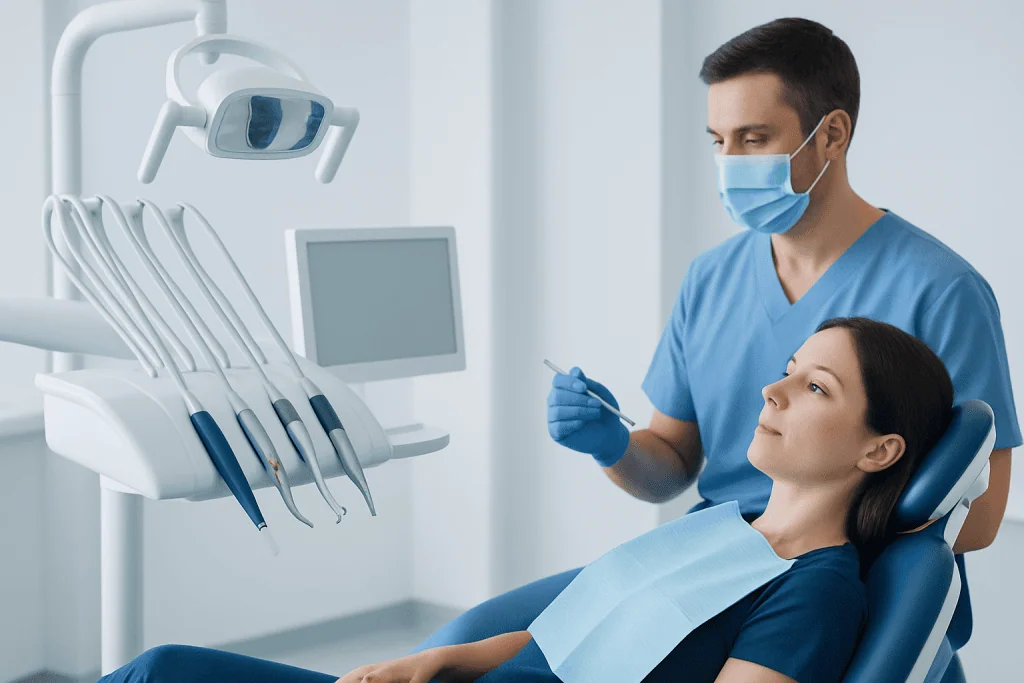
Coverage depends on the individual policy, but dental benefits are often grouped into preventive, basic, and major services. Preventive care may include exams, cleaning, and routine X-rays. Basic care often includes fillings and some forms of root canal treatment, while major services may include crowns, bridges, dentures, or oral surgery.
Even when a service is listed in the policy, reimbursement may not be full. Some insurers pay a percentage of the allowed amount rather than the total clinic fee. If the clinic is outside the insurer’s network or located abroad, the patient may need to pay upfront and submit a claim later for possible reimbursement.
Some treatments are more likely to have limits or exclusions. These often include purely aesthetic procedures such as tooth whitening, certain forms of cosmetic dentistry, and high-cost reconstructions. In addition, implant-related treatment, bone grafting, or full-mouth rehabilitation may be covered only in specific situations, or not at all.
- Preventive care: often the simplest to claim, but may still require itemized receipts
- Basic restorative care: often partly covered, depending on diagnosis
- Major restorative care: may have annual caps, waiting periods, or documentation rules
- Cosmetic care: often excluded unless linked to function or trauma
Key policy details international patients should review

One of the most important steps is reading the benefits summary and, if possible, the full policy wording. Patients should look for whether treatment outside their home country is covered at all. Some plans reimburse international care only for emergencies, while others allow planned treatment but under stricter conditions.
Annual maximums are another practical issue. Dental insurance plans often set a yearly limit on what the insurer will pay. For complex treatment, this maximum may cover only part of the total cost. Patients should also check waiting periods, especially for major restorative care. A plan may not pay for crowns, bridges, or implants until the patient has held the policy for a certain length of time.
Exclusions and frequency limits are also common. For example, a policy may cover one crown on a tooth only after certain criteria are met, or replace dentures only after several years. It may also cover lower-cost alternatives rather than the exact treatment chosen. Reviewing these details early helps patients understand what the insurer may approve and what they may need to fund themselves.
- Is planned dental treatment abroad covered or only emergencies?
- What is the annual maximum benefit?
- Are there waiting periods for major procedures?
- Does the plan pay a percentage or a fixed allowance?
- Are there exclusions for implants, cosmetic work, or pre-existing conditions?
- Are there network rules or approved-provider requirements?
Pre-authorization, paperwork, and reimbursement requirements
Many insurers require pre-authorization for costly or extensive dental care. This means the insurer reviews the proposed treatment before it is performed. Without this step, a patient may complete treatment and later learn that the claim does not meet the policy rules. If pre-authorization is available, it is often wise to request it before booking travel.
To support approval or reimbursement, the insurer may ask for clinical records. These can include a written treatment plan, diagnosis, charting, X-rays, photographs, and an itemized estimate showing each procedure separately. Clinics that provide organized documentation can make this process much easier for international patients, especially for comprehensive plans involving general dentistry and restorative care.
After treatment, patients usually need detailed invoices, proof of payment, and clinical notes. Documents may need to include procedure codes, the dentist’s details, dates of treatment, and the currency used. It is sensible to ask the insurer in advance exactly which forms and supporting papers are needed, and whether certified translations are required for documents issued in another language.
Treatments that often need extra caution: implants, cosmetic work, and full-mouth plans
Some dental treatments deserve especially careful insurance review because they are commonly limited, questioned, or excluded. Implant care is a frequent example. A policy may exclude implants while covering a less expensive alternative such as a removable denture or standard bridge. It may also separate the implant fixture, abutment, crown, scans, and grafting into different benefit categories.
Patients considering bone grafting, sinus lift procedures, or full-arch reconstruction should ask how each stage is classified. A plan involving dental bone grafts or full-arch options may involve surgical and restorative components billed separately. This can affect both approval and reimbursement.
Cosmetic and aesthetic procedures also need careful attention. Insurers often distinguish between care that improves appearance and care that restores function. In some cases, treatment after trauma, severe wear, infection, or structural damage may be easier to justify than elective aesthetic changes alone. If there is any uncertainty, a clinical report explaining the functional need may be helpful.
For complex plans, patients may want to ask whether the insurer covers staged treatment over multiple visits. This matters when care cannot be completed in one trip and requires provisional restorations, healing periods, or later adjustments.
Practical questions to ask the clinic before traveling
Insurance preparation works best when the patient and clinic communicate clearly. Before confirming treatment abroad, patients should ask for a written treatment plan, estimated timeline, and an itemized cost breakdown. This helps the insurer understand what is proposed and helps the patient compare covered and non-covered portions.
It is also useful to ask whether the clinic can provide imaging, periodontal records, and procedural documentation in a format accepted by insurers. For care that may involve restoration after damage or decay, such as dental fillings or more advanced repair, good records support continuity of care once the patient returns home.
Patients should also ask about aftercare and warranties in practical rather than promotional terms. If a crown needs a minor adjustment or a temporary restoration breaks after travel, who will provide follow-up? Is an urgent visit at home likely to be reimbursed? Understanding these details can reduce stress and help patients plan realistic costs and timelines.
- Can the clinic provide a diagnosis, treatment plan, and itemized estimate before travel?
- Will records include X-rays, photos, and procedure details needed for insurance?
- How many visits are likely to be needed?
- What follow-up care may be necessary after returning home?
- Who should the patient contact if there is pain, swelling, or a fit problem later?
Travel, follow-up care, and self-protection after treatment
Dental care abroad should be planned with recovery time in mind. Patients should avoid scheduling major work immediately before a long flight or important event, especially if there may be temporary soreness, swelling, or the need for short-term review. A little flexibility in the travel schedule can be helpful if an adjustment is needed before going home.
It is wise to keep copies of all records, images, invoices, and contact information. Patients should know what symptoms are expected and what signs would need prompt review, such as severe or worsening pain, swelling, fever, bleeding that does not settle, or trouble biting properly. Good communication between the treating dentist abroad and the home dentist can support safe follow-up.
Some patients also consider separate travel insurance or medical travel cover, but this should not be assumed to replace dental insurance plans. Travel policies may cover cancellations, emergencies, or complications in limited situations, yet they often exclude planned treatment costs. Reading both policies closely is the safest approach.
Near the end of the planning process, patients may wish to choose clinics with established international patient coordination and multidisciplinary dental teams. Acibadem International’s multidisciplinary specialists and JCI-accredited hospitals diagnose and treat dental conditions for international patients, and clear documentation can be an important part of cross-border care planning.
When to seek professional advice before making a decision
Patients should contact their insurer whenever the treatment plan is expensive, staged, or medically complex. A direct conversation can clarify benefits more reliably than assumptions based on general policy summaries. Asking for written confirmation of coverage terms is often helpful.
A dental opinion is also important when there is pain, infection, advanced gum disease, tooth fracture, or uncertainty about the best treatment option. Problems that seem cosmetic at first may involve deeper structural or periodontal issues. In some cases, a second opinion can help patients understand whether a less invasive approach is possible.
If there is active swelling, fever, trauma, or difficulty eating, the condition may need prompt assessment rather than travel planning alone. Emergency problems should be evaluated by a qualified dentist as soon as possible. For non-urgent care, careful planning, realistic budgeting, and early insurance checks can make treatment abroad more straightforward.
Frequently asked questions
Do dental insurance plans usually cover treatment abroad?
Some do, but coverage is often limited and depends on the policy. Many plans cover only emergency dental care outside the home country, while others may reimburse planned treatment if certain rules are followed. Patients should confirm this directly with their insurer before making travel arrangements.
Will insurance pay for dental implants done in another country?
It may, but implant treatment is commonly limited or excluded. Some insurers cover only part of the treatment or pay for a lower-cost alternative instead. Patients should ask how the implant, crown, imaging, and any grafting procedures are classified under their plan.
Why is pre-authorization important for dental treatment abroad?
Pre-authorization allows the insurer to review the proposed treatment before care begins. This can help patients understand whether a procedure is likely to be covered and what documentation is required. It does not always guarantee final payment, but it can reduce the risk of unexpected claim denial.
What documents are usually needed to submit a dental insurance claim?
Insurers often ask for an itemized invoice, proof of payment, and a written treatment plan. They may also request X-rays, photographs, charting, and the treating dentist’s details. Asking the insurer for a checklist before travel can help avoid missing paperwork.
Are cosmetic dental procedures covered by insurance?
Purely cosmetic procedures are often not covered. However, if a treatment also restores function or repairs damage caused by decay, trauma, or structural problems, partial coverage may sometimes be possible. The insurer usually decides this based on clinical documentation.
What should patients do if they need follow-up care after returning home?
They should keep copies of all treatment records and share them with their local dentist if follow-up is needed. It is also helpful to ask the treating clinic in advance how post-treatment questions or concerns will be handled. Patients should seek prompt dental review if they develop severe pain, swelling, fever, or problems with biting or fit.
References
- World Health Organization
- American Dental Association
- Centers for Disease Control and Prevention
- National Institute of Dental and Craniofacial Research
- FDI World Dental Federation
This article is for general information only and is not a substitute for professional medical advice. Please consult a qualified doctor about your individual situation.
Explore treatments in Turkey — costs, top hospitals & a free quote
JCI-accredited · board-certified surgeons · reply within 24h
Add us as a Preferred Source to see more of our trusted health content across Google Search, AI Overviews and Discover.

Dental & Oral Health
Full-scope dental care from implants and aesthetics to oral and maxillofacial surgery.
158 specialists in this unitRelated Treatments
More from the Health Library



Related Specialists

Assoc. Prof. Dr. Ferit Bayram
Oral & Dental Health
Dt. Alara Naz Kenir
Oral & Dental Health
Dt. Gonca Katmer
Oral & Dental HealthDt. Doğa Baysal
Oral & Dental Health