Derma Roller: What Patients Need to Know
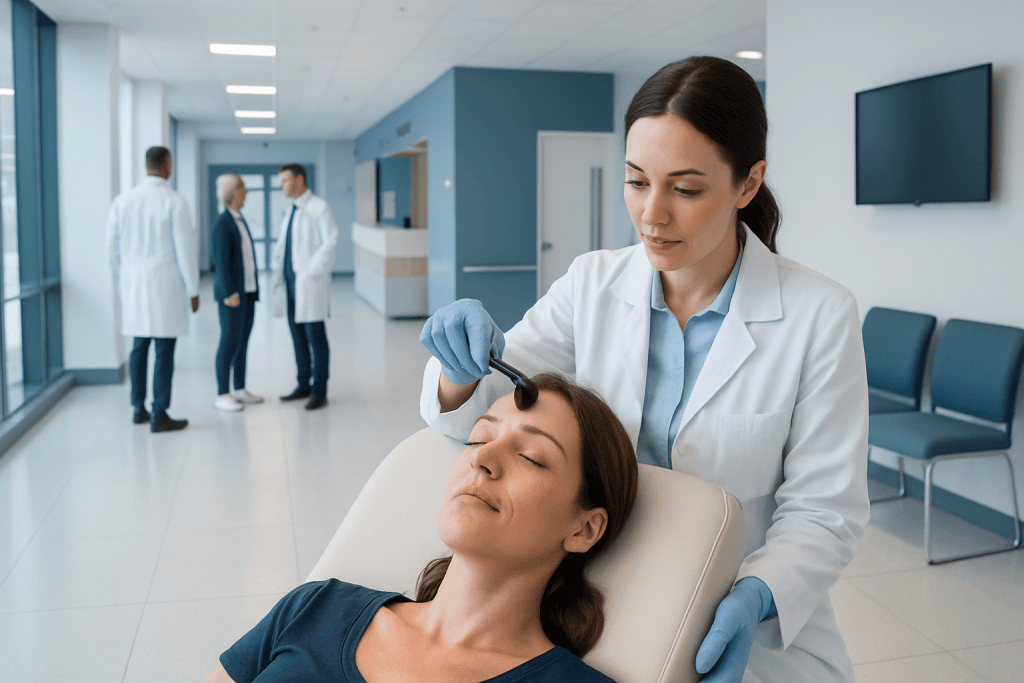
A derma roller is a form of microneedling that can support skin renewal when used appropriately. Professional microneedling is generally safer and more controlled than at-home use, especially for darker skin tones, active acne, or deeper scars.
Key Takeaways
- A derma roller is a form of microneedling that can support skin renewal when used appropriately.
- Professional microneedling is generally safer and more controlled than at-home use, especially for darker skin tones, active acne, or deeper scars.
- Poor hygiene, overly aggressive rolling, or using the wrong needle length can cause irritation, infection, and worsening pigmentation.
- Derma rollers are not suitable for everyone, including people with active skin infections, inflamed acne, eczema flares, or a tendency to form keloids.
- A dermatologist can help decide whether microneedling, chemical peels, laser treatments, or other options are more appropriate.
A derma roller is a handheld microneedling device covered with very small needles that create controlled micro-injuries in the skin. It may help improve skin texture, mild acne scars, and the appearance of fine lines, but results and safety depend on needle length, skin type, hygiene, and whether a trained clinician is involved.
Overview: What a Derma Roller Does
A derma roller is a small handheld device fitted with many fine needles. When it is moved across the skin, it creates tiny punctures in the upper layers. This process is a basic form of microneedling and is intended to stimulate the skin’s repair response, including new collagen formation.
Patients most often ask about a derma roller for smoother texture, mild acne scars, enlarged pores, and early fine lines. Some also use it as part of hair or scalp routines, although skin and scalp concerns should be assessed carefully before treatment. The expected changes are usually gradual rather than immediate, and several sessions may be needed.
It is important to know that a derma roller is not the same as medical microneedling performed in a clinic. In professional settings, devices are more precise, needle depths can be adjusted, and the skin is assessed before treatment. That can make a meaningful difference in both safety and results.
Who May Benefit and What Results to Expect
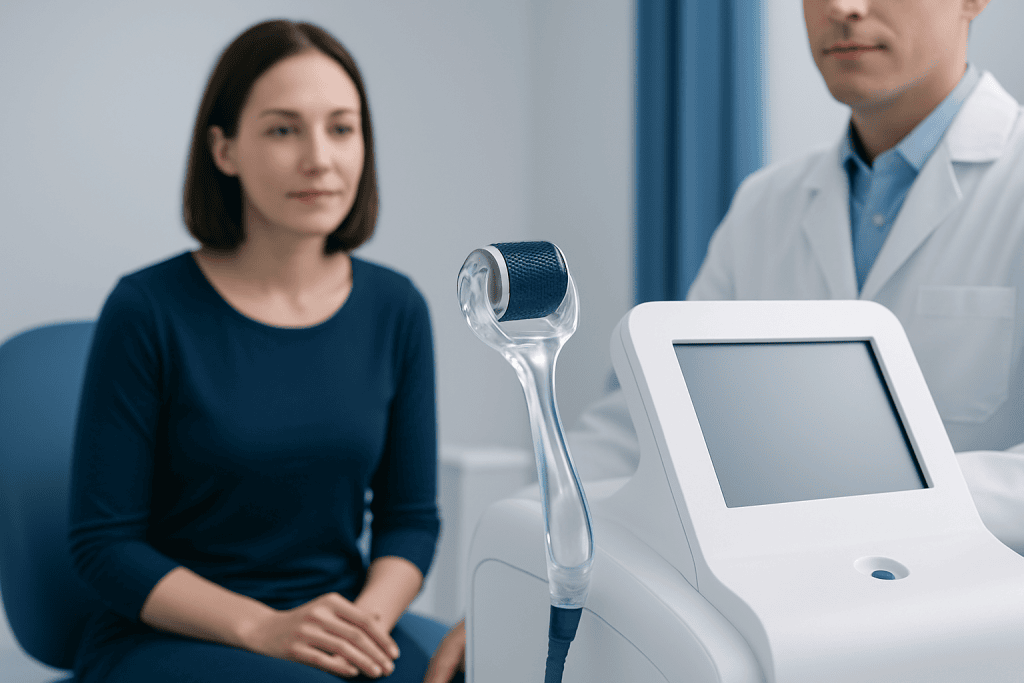
For selected patients, a derma roller may modestly improve skin texture and the look of superficial acne marks. It may also help some people with fine lines or uneven tone when combined with a suitable skincare routine. However, it is less effective for deep scars, marked skin laxity, or conditions caused by ongoing inflammation.
Results depend on the concern being treated, the needle length, the regularity of treatment, and the person’s skin healing response. Most patients need patience: collagen remodeling takes time, so improvements often appear over weeks to months rather than days. It is also common to see some temporary redness after treatment.
A careful assessment matters because not every concern is best treated with a roller. For example, patients with persistent acne may need treatment for acne first, while those with significant textural changes may benefit more from specialist procedures. In some cases, clinic-based microneedling treatment is more appropriate than trying an at-home device.
Potential Risks, Side Effects, and Who Should Avoid It

Even though a derma roller is widely discussed as a home skincare tool, it still creates small skin injuries. Common short-term effects include redness, sensitivity, mild swelling, dryness, and a stinging feeling when products are applied afterward. These effects are usually temporary, but they can be more intense if the skin barrier is already irritated.
More important risks include infection, prolonged inflammation, skin tearing, and post-inflammatory hyperpigmentation, especially if the device is not cleaned correctly or is used too aggressively. Repeated use over active breakouts, rashes, or infected skin may spread irritation and worsen the underlying problem. Sharing devices should never occur.
A derma roller is generally not advised for people with active acne cysts, rosacea flares, eczema, psoriasis plaques, open wounds, cold sores, fungal infection, or a tendency to form <a href="https://acibademinternational.com/diseases/keloid-scars/”>keloid scars. Patients using isotretinoin, blood-thinning medicines, or treatments that increase skin sensitivity should speak with a doctor before any microneedling approach. Those with persistent pigmentation concerns may need a tailored plan, particularly if they have darker skin tones and are at higher risk of discoloration after inflammation.
At-Home Use vs Professional Microneedling
The main difference between at-home derma rollers and professional microneedling is control. A clinician can choose the correct depth, maintain sterile technique, and decide whether the skin is suitable for treatment that day. This is especially important for acne scarring, pigmentation disorders, and sensitive skin conditions.
At-home devices are usually marketed with shorter needles and lower intensity. Even so, incorrect use can still lead to complications. Pressing too hard, repeating sessions too frequently, or using a roller on unclean skin can damage the skin barrier rather than support healing.
Professional care may also combine microneedling with other evidence-based skin therapies after assessing the patient’s goals. Depending on the problem, a dermatologist may discuss chemical peel treatment or laser treatment as alternatives or complementary options. Patients with scar-prone or reactive skin often benefit from this more individualized approach.
How to Use a Derma Roller More Safely
Patients who are considering at-home use should first read the manufacturer’s instructions carefully and avoid improvised methods. The skin should be clean, makeup-free, and free from active inflammation or infection. The device must be disinfected as directed before and after each use, stored properly, and replaced when worn.
It is generally safer to use gentle pressure and avoid over-treating the same area. Rolling too frequently does not improve results and can increase irritation. Immediately afterward, the skin may feel more sensitive, so harsh exfoliants, retinoids, strong acids, fragranced products, and direct sun exposure are best avoided until the skin has settled.
Aftercare matters as much as the treatment itself. A simple, non-irritating moisturizer and daily sun protection can help support recovery. Patients should stop using the device and seek medical advice if they develop increasing pain, pus, marked swelling, fever, a spreading rash, or darkening of the skin that does not fade.
- Do not use on active acne, eczema flares, cuts, or infected skin.
- Do not share a derma roller with anyone else.
- Do not apply strong active products right after rolling unless advised by a clinician.
- Do not expect instant results; skin remodeling takes time.
How Doctors Evaluate Skin Concerns Before Recommending Treatment
When a patient seeks advice about a derma roller, a doctor usually starts by identifying the exact skin concern. Acne scars, melasma, enlarged pores, redness, and fine lines can look similar to patients but may need very different treatments. A proper diagnosis helps avoid wasting time on a method that is unlikely to help.
The assessment often includes skin type, history of sensitivity, tendency toward scarring, current medications, and recent use of treatments such as retinoids or isotretinoin. Doctors also ask about cold sores, autoimmune skin conditions, and past pigmentation changes after irritation. These details can change whether microneedling is suitable.
For some patients, treating the underlying condition first is the priority. For example, active eczema or inflamed acne can become more irritated with a roller. In a specialist setting, treatment plans may include skincare changes, prescription medicines, or procedures that are matched to the patient’s skin tone, medical history, and goals.
When to Seek Medical Care
Medical advice is a good idea before using a derma roller if the patient has a chronic skin condition, frequent breakouts, unusual moles, recurrent cold sores, a history of keloids, or significant pigmentation concerns. Professional guidance is also sensible for anyone considering microneedling around the eyes or on large facial areas.
After treatment, prompt medical evaluation is warranted if redness becomes progressively worse instead of improving, or if there is severe pain, bleeding, pus, fever, crusting, or signs of infection. A doctor should also assess any persistent darkening, patchy lightening, or new scarring.
Patients who want a structured opinion on whether microneedling is the right option may benefit from seeing a dermatologist or plastic surgeon. Near the end of the treatment journey, some patients also seek care at centers such as Acibadem International, where multidisciplinary specialists in JCI-accredited hospitals evaluate and treat skin concerns for international patients.
Frequently asked questions
What is a derma roller used for?
A derma roller is mainly used to create controlled micro-injuries in the skin as a form of microneedling. Patients may use it for mild acne scars, uneven texture, enlarged pores, and early fine lines, but outcomes vary and deeper concerns often need professional treatment.
Is a derma roller safe to use at home?
It can be safe for some people when used carefully, on suitable skin, and with strict hygiene. However, at-home use still carries risks such as irritation, infection, and pigmentation changes, so it is not appropriate for everyone.
How long does it take to see results from a derma roller?
Results are usually gradual because collagen remodeling takes time. Some patients notice smoother skin after several weeks, while visible improvement in texture or mild scarring may take longer and often requires repeated sessions.
Can a derma roller make acne worse?
Yes, it can worsen active acne if used over inflamed breakouts or cysts. It may spread irritation, increase inflammation, and raise the risk of infection or post-inflammatory pigmentation, which is why active acne should be assessed and treated first.
Who should not use a derma roller?
People with active skin infections, eczema flares, psoriasis plaques, rosacea flares, open wounds, cold sores, or a tendency to form keloids should generally avoid it unless a doctor advises otherwise. It may also be unsuitable for patients using certain medications that affect skin healing or sensitivity.
Is professional microneedling better than a derma roller?
Professional microneedling is usually more precise and safer because a clinician can control needle depth, assess the skin properly, and maintain sterile technique. It is often a better option for deeper scars, complex skin concerns, or patients at higher risk of pigmentation changes.
References
- American Academy of Dermatology
- British Association of Dermatologists
- National Health Service
- Mayo Clinic
- U.S. Food and Drug Administration
This article is for general information only and is not a substitute for professional medical advice. Please consult a qualified doctor about your individual situation.
Explore treatments in Turkey — costs, top hospitals & a free quote
JCI-accredited · board-certified surgeons · reply within 24h
Add us as a Preferred Source to see more of our trusted health content across Google Search, AI Overviews and Discover.

More from the Health Library



Related Specialists

Dr. Özden Çamurdan
Radiology
Prof. Dr. Refik Erdim
Cardiology
Assoc. Prof. Dr. Ahmet Küçükçelebi
Aesthetic Plastic & Reconstructive Surgery
Prof. Dr. Tevfik Fikret Çermik
Nuclear Medicine