Deviated Septum vs Nasal Polyps: How Doctors Tell the Difference

A deviated septum is a structural shift in the wall between the nostrils, while nasal polyps are soft growths that develop from inflamed nasal lining. Both conditions may cause congestion, mouth breathing, snoring, and reduced smell, so symptoms alone do not always confirm the cause.
Key Takeaways
- A deviated septum is a structural shift in the wall between the nostrils, while nasal polyps are soft growths that develop from inflamed nasal lining.
- Both conditions may cause congestion, mouth breathing, snoring, and reduced smell, so symptoms alone do not always confirm the cause.
- Doctors often use nasal examination and nasal endoscopy to see whether blockage is due to anatomy, inflammation, or both.
- Treatment depends on the diagnosis and may include medicines for inflammation, surgery for anatomy, or combined care when both problems are present.
- Persistent one-sided blockage, repeated sinus infections, nosebleeds, or symptoms that do not improve should be assessed by an ENT specialist.
Deviated septum and nasal polyps can both cause a blocked nose, but they are different conditions and are diagnosed in different ways. Doctors usually tell them apart by combining symptoms, a physical examination, and sometimes nasal endoscopy or imaging.
Overview: two different causes of a blocked nose
Many people use the term “blocked nose” to describe several different problems, but the underlying cause matters because treatment is not the same. In the comparison of deviated septum vs nasal polyps, one condition is mainly structural and the other is mainly inflammatory. A deviated septum happens when the thin wall of cartilage and bone that separates the two nasal passages is off-center or bent. Nasal polyps are soft, painless growths that arise from the lining of the nose or sinuses, usually after long-term inflammation.
Because both can narrow the nasal passages, they may produce very similar day-to-day symptoms. A person may notice stuffiness, trouble breathing through the nose, snoring, disturbed sleep, pressure in the face, or a reduced sense of smell. It is also possible for both conditions to exist at the same time, which can make symptoms stronger and diagnosis less obvious without a detailed examination.
Doctors do not rely on symptoms alone to tell the difference. Instead, they look at the pattern of symptoms, whether one side is worse than the other, whether allergies or chronic sinus inflammation are present, and what the inside of the nose looks like on examination. This careful approach helps guide the right treatment plan and avoids unnecessary medications or procedures.
What is a deviated septum?
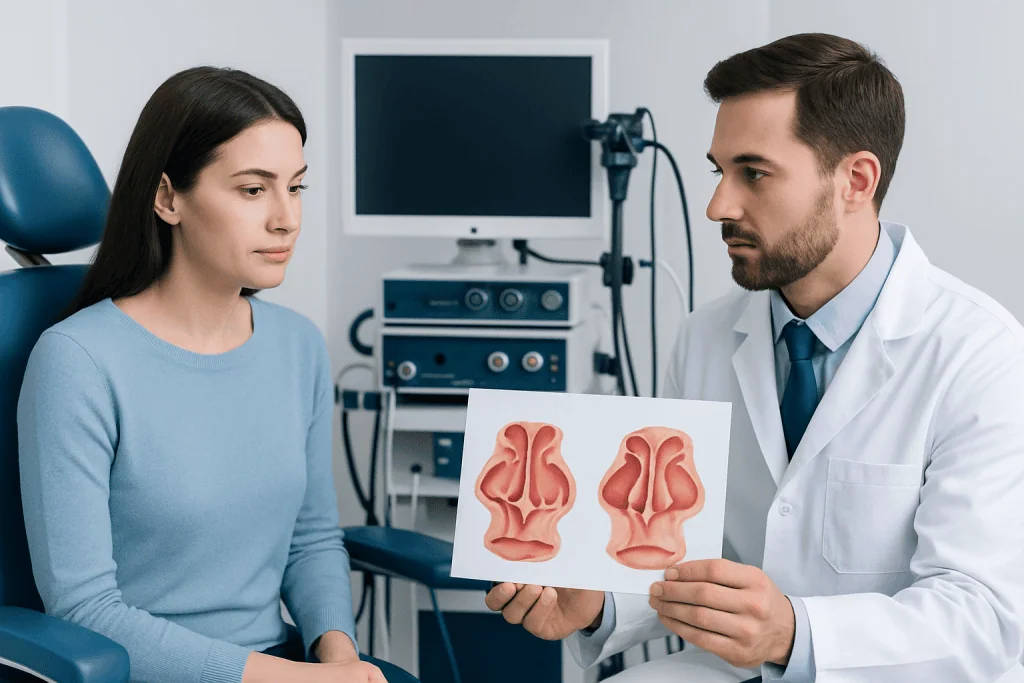
The nasal septum is the partition that divides the nose into right and left air passages. In many people it is not perfectly straight, and a mild deviation may cause no symptoms at all. A deviated septum becomes medically important when the bend is significant enough to narrow airflow, contribute to recurrent sinus problems, or interfere with sleep and daily comfort.
A deviated septum may be present from birth or may develop after an injury to the nose, including sports injuries, falls, or accidents. Some people first notice symptoms in adolescence or adulthood as the nose grows or after swelling from allergies makes a narrow passage feel even tighter. The blockage is often more noticeable on one side, although both sides can feel affected because of airflow changes and swelling in surrounding tissues.
Septal deviation can also be associated with other structural issues, such as enlargement of the turbinates, which are normal structures inside the nose that help warm and humidify air. When these tissues are also swollen, breathing can become even more difficult. In some cases, a doctor may discuss correction with septoplasty if symptoms are persistent and clearly linked to the deviated septum.
What are nasal polyps?

Nasal polyps are benign, grape-like swellings of the nasal or sinus lining. They are not tumors and they do not usually cause pain when touched, but they can interfere with airflow and drainage. Polyps are most often linked to chronic inflammation, especially in people with chronic rhinosinusitis, asthma, allergies, aspirin sensitivity, or other conditions that keep the nasal lining irritated over time.
Unlike a deviated septum, which is a fixed structural change, nasal polyps are part of an inflammatory process. They may start small and grow gradually, sometimes in both nasal passages. Because they often develop high in the nasal cavity or inside the sinuses, a person may not be able to see them by simply looking in the mirror. Doctors may evaluate them further in the context of nasal polyps or related chronic sinus disease.
Polyps can block airflow, reduce smell, contribute to facial pressure, and make sinus infections more likely. Some people mainly notice a long-lasting “stuffy” feeling that does not improve much with standard cold remedies. Since treatment often focuses on reducing inflammation, medical therapy is commonly tried first, and some patients later need endoscopic sinus surgery when symptoms remain severe or keep returning.
Symptoms: how they can overlap and differ
The reason these conditions are often confused is that both can cause chronic nasal obstruction. People with either problem may report congestion, mouth breathing, snoring, poor sleep, postnasal drip, and a feeling that the nose never fully clears. Recurrent sinus infections can happen with both as well, especially if normal sinus drainage is impaired.
There are, however, symptom patterns that can offer clues. A deviated septum often causes blockage that feels more obvious on one side, and some people say breathing changes depending on which side they lie on. Nosebleeds, dryness, crusting, or whistling may also occur if airflow is turbulent. By contrast, nasal polyps often cause a more diffuse or bilateral feeling of blockage and are especially associated with reduced or lost sense of smell.
Polyps are also more likely when chronic sinus inflammation is present. A history of asthma, allergy symptoms, facial pressure, thick nasal discharge, or repeated sinus problems may point in that direction. Still, these clues are not enough for a firm diagnosis, which is why direct examination is so important.
- Symptoms more suggestive of deviated septum: one-sided blockage, nasal dryness, crusting, nosebleeds after irritation, trauma history.
- Symptoms more suggestive of nasal polyps: reduced smell, long-term sinus inflammation, bilateral congestion, facial pressure, asthma or aspirin sensitivity.
- Symptoms that may occur in both: snoring, mouth breathing, sinus infections, poor sleep, and persistent stuffiness.
How doctors tell the difference
Diagnosis begins with a medical history. An ENT doctor asks when symptoms started, whether they are constant or seasonal, whether one side is more blocked, and whether there is a history of nasal injury, allergies, asthma, recurrent sinus infections, or previous nasal surgery. These details help narrow the likely cause, but the clearest answers usually come from examining the nose directly.
During a physical examination, the doctor may look into the nose with a lighted instrument to assess the septum, swelling, discharge, and visible growths. A deviated septum may appear as a bend or ridge narrowing one nasal passage. Nasal polyps often look like pale, smooth, soft swellings arising from the lining of the nose. Because small or deeper polyps may not be easy to see, many ENT specialists use nasal endoscopy for a better view.
Nasal endoscopy uses a thin instrument with a camera or light source to examine the inside of the nasal passages and the openings of the sinuses. It helps distinguish fixed structural narrowing from inflammatory tissue and can also show whether both problems are present together. In some cases, a CT scan of the sinuses is ordered, especially when chronic sinus disease is suspected, surgery is being considered, or symptoms are unusually severe. Imaging can help assess sinus blockage, the extent of polyps, and related anatomy.
If allergy-related inflammation seems important, the doctor may also recommend allergy assessment. This does not diagnose a deviated septum or polyps by itself, but it may explain ongoing swelling that worsens symptoms. A careful diagnosis matters because successful treatment often depends on addressing all contributing factors, not only the most obvious one.
Treatment options for each condition
Treatment is based on the cause, symptom severity, and impact on daily life. For a deviated septum, medications may ease associated swelling from allergies or irritation, but they do not straighten the septum itself. Saline rinses, allergy treatment, or nasal sprays may help some people breathe more comfortably if swelling is adding to the blockage. When symptoms remain troublesome and are clearly linked to septal deviation, surgery may be recommended to improve airflow.
For nasal polyps, treatment usually begins with medicines aimed at reducing inflammation. Doctors commonly use saline irrigation and prescribed anti-inflammatory nasal sprays, and sometimes short courses of other medications when needed. If polyps are large, recurrent, or linked to extensive sinus disease, procedural treatment may be considered. In appropriate patients, nasal polyp surgery or other sinus procedures can help restore airflow and drainage.
Some patients have both a deviated septum and chronic sinus inflammation with polyps. In that situation, treatment may combine medical therapy and surgery so that both structure and inflammation are addressed. The doctor explains the expected benefits, possible limitations, and the importance of follow-up care, since inflammation can persist even after a procedure.
People should avoid self-diagnosing based only on internet photos or symptoms. The best treatment plan depends on what the doctor actually sees in the nose, whether smell loss is present, and whether there are related conditions such as allergies, asthma, or chronic sinusitis.
Self-care, prevention, and daily symptom management
Not every cause can be prevented. A deviated septum caused by natural growth or previous injury cannot usually be avoided after it has occurred, although protecting the nose during contact sports and using seat belts can reduce injury risk. Nasal polyps cannot always be prevented either, but managing the inflammation that contributes to them may lower the chance of ongoing symptoms or recurrence.
Simple daily measures can help many people feel better. Saline nasal rinses can support mucus clearance and reduce irritants inside the nose. It also helps to manage allergies carefully, avoid tobacco smoke and other irritants, and keep indoor air comfortably humidified if the environment is very dry. People who notice symptoms worsening at work or during certain seasons may benefit from discussing trigger control with a doctor.
Good control of related conditions is also important. Asthma, allergic rhinitis, and chronic sinus problems can all affect the nasal lining and make obstruction worse. Following the treatment plan for these conditions may improve breathing and sleep quality, even if a structural issue is also present.
Near the end of the evaluation process, some people seek care in specialized centers. Acibadem International’s multidisciplinary specialists and JCI-accredited hospitals diagnose and treat ear, nose, and throat conditions for international patients when advanced assessment or treatment is needed.
When to see a doctor
It is sensible to see a doctor if nasal blockage lasts for several weeks, keeps returning, affects sleep, or makes it hard to exercise or carry out daily activities. Medical review is especially important when over-the-counter measures do not help, or when congestion is accompanied by repeated sinus infections, persistent facial pressure, or a clear reduction in the sense of smell.
Certain features deserve more prompt evaluation. These include frequent nosebleeds, symptoms mainly on one side, ongoing pain, a visible mass, or worsening symptoms after a facial injury. While these signs do not always mean a serious problem, they should be assessed rather than ignored.
An ENT specialist can determine whether the problem is a deviated septum, nasal polyps, chronic sinus inflammation, or a different condition entirely. Early diagnosis can make treatment more effective and may help prevent ongoing discomfort, sleep disruption, and repeated infections.
Frequently asked questions
Can a deviated septum and nasal polyps happen at the same time?
Yes. A person can have a structural narrowing from a deviated septum and also have inflammatory swelling or polyps. When both are present, symptoms may be stronger and treatment may need to address each problem separately.
Is loss of smell more common with nasal polyps or a deviated septum?
Loss or reduction of smell is more strongly associated with nasal polyps, especially when they are linked to chronic sinus inflammation. A deviated septum can affect airflow and indirectly influence smell, but marked smell loss is usually a stronger clue toward polyps or sinus disease.
Can doctors diagnose the difference without a scan?
Often, yes. Many cases can be diagnosed with a medical history, nasal examination, and nasal endoscopy. A CT scan is usually reserved for unclear cases, suspected chronic sinus disease, or planning for surgery.
Do nasal sprays fix a deviated septum?
No. Nasal sprays cannot straighten the septum itself. They may reduce swelling around the septum and improve breathing somewhat, but a true structural deviation only changes with surgery if treatment is needed.
Are nasal polyps dangerous?
Nasal polyps are usually benign and not dangerous in themselves. However, they can significantly affect breathing, smell, sleep, and sinus drainage, so they should be assessed and treated when persistent or troublesome.
When is surgery considered for these conditions?
Surgery is considered when symptoms are persistent, quality of life is affected, and medical treatment is not enough. For a deviated septum, surgery may help open the nasal passage; for nasal polyps, surgery may be used when inflammation and blockage remain severe or keep coming back.
References
- American Academy of Otolaryngology–Head and Neck Surgery
- National Health Service
- Mayo Clinic
- National Institute of Allergy and Infectious Diseases
- Merck Manual
This article is for general information only and is not a substitute for professional medical advice. Please consult a qualified doctor about your individual situation.
Explore treatments in Turkey — costs, top hospitals & a free quote
JCI-accredited · board-certified surgeons · reply within 24h
Add us as a Preferred Source to see more of our trusted health content across Google Search, AI Overviews and Discover.

Otorhinolaryngology (ENT)
Care for ear, nose, throat and head-and-neck conditions, including hearing and balance disorders.
126 specialists in this unit