Diabetic Cataract: An Evidence-Based Patient Guide

Diabetes can raise the likelihood of cataracts and may contribute to earlier lens clouding. A cataract affects the eye’s natural lens, while diabetic retinopathy damages blood vessels in the retina; both can occur together.
Key Takeaways
- Diabetes can raise the likelihood of cataracts and may contribute to earlier lens clouding.
- A cataract affects the eye’s natural lens, while diabetic retinopathy damages blood vessels in the retina; both can occur together.
- Blurred vision, glare, faded colors and frequent prescription changes can be signs of cataract, but an eye examination is needed to identify the cause.
- Stable diabetes management and regular dilated retinal examinations support eye health before and after cataract surgery.
- Cataract surgery replaces the cloudy lens with an artificial intraocular lens and is considered when vision interferes with daily life.
- New flashes, floaters, a curtain-like shadow, sudden vision loss or eye pain require urgent medical assessment.
A diabetic cataract is a cataract that develops in a person with diabetes, often earlier or progressing more quickly when blood glucose has been poorly controlled. Cataracts cannot be cleared with medication or reversed once formed, but cataract surgery is a well-established treatment when vision is affected.
Diabetic Cataract: Overview
A diabetic cataract refers to clouding of the natural lens in an eye affected by diabetes. Cataracts are common with aging, but diabetes can increase their likelihood, and some people develop them at a younger age or notice faster visual change. The lens normally focuses light onto the retina. When it becomes cloudy, images reaching the retina are less clear.
High blood glucose can alter the lens environment and cause temporary changes in its shape and clarity. Long-term metabolic changes may also contribute to cataract formation. This does not mean every person with diabetes will develop cataracts, and a cataract does not necessarily mean diabetes is poorly managed. A comprehensive eye examination can clarify whether blurred vision is due to cataract, a changing glasses prescription, diabetic retinal disease, or another cause.
Clinicians may document a diabetic cataract code for medical records and billing systems, but coding practices vary by healthcare setting and should be determined by the treating clinician or coding professional. The more important clinical issue is identifying the type and severity of lens clouding and checking the retina and optic nerve carefully.
Is There Such a Thing as Diabetic Cataracts?
Yes. The term is commonly used when cataracts occur in a person with diabetes or when diabetes is considered a contributing risk factor. In rare situations of very high, prolonged blood glucose, younger people may develop rapidly changing lens opacities sometimes described in clinical literature as “snowflake” cataracts. Most cataracts in adults with diabetes, however, are the same common age-related types seen in the general population, with diabetes adding to the overall risk.
The phrase should not imply that every cloudy lens is caused solely by diabetes. Age, smoking, long-term corticosteroid use, ultraviolet exposure, eye injury, previous eye surgery, radiation exposure and family history can also influence cataract development. An ophthalmologist evaluates the whole eye and the person’s medical history rather than assigning a single cause in every case.
Evidence-based clinical practice guidance for eye care in people with diabetes emphasizes regular retinal screening, attention to vision changes, and coordinated management of blood glucose, blood pressure and cholesterol. These measures are especially important because cataract and diabetes-related retinal disease may coexist.
What Does a Diabetic Cataract Look Like?

From the outside, a cataract often cannot be seen in its early stages. As it becomes more advanced, a clinician may observe a gray, white or yellowish cloudiness behind the pupil during an eye examination. People usually notice changes in the quality of vision rather than a visible change in the eye.
Typical symptoms include blurred or hazy vision, greater sensitivity to bright light or glare, halos around lights, poorer night driving vision, colors appearing less vivid, double vision in one eye, and needing brighter light to read. A person with diabetes may also experience fluctuating blur when glucose levels change, even without a cataract. This is why a new glasses prescription is often delayed until blood glucose is reasonably stable.
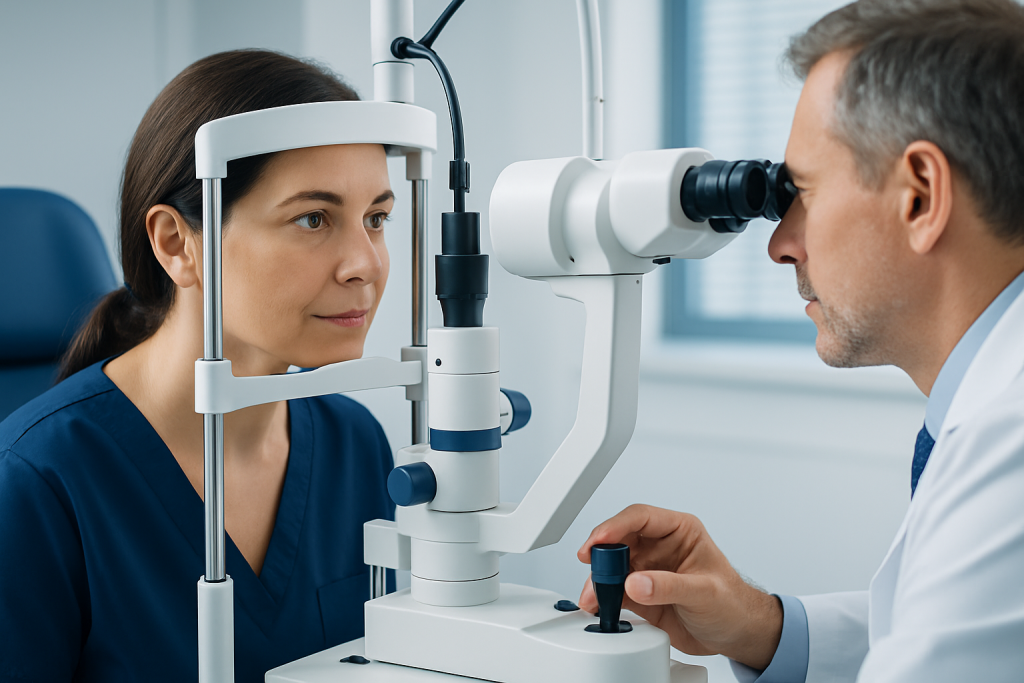
A dilated examination and slit-lamp examination allow the eye specialist to look at the lens in detail. Visual testing, refraction and retinal imaging may also be used to assess how much of the vision change is related to the cataract and whether diabetic eye disease is present.
Diabetic Cataract vs Diabetic Retinopathy
Diabetic cataract and diabetic retinopathy affect different parts of the eye. A cataract is clouding of the lens, which sits near the front of the eye. Diabetic retinopathy involves damage to small blood vessels in the retina, the light-sensitive layer at the back of the eye. Both may reduce vision, but they require different assessment and treatment plans.
Cataract-related blur often develops gradually and may cause glare or reduced color contrast. Diabetic retinopathy may cause no early symptoms, which is why regular dilated eye examinations matter. When it advances, it can cause blurred or distorted central vision, floaters, dark areas, or sudden visual loss from bleeding or retinal complications.
It is possible to have both conditions at the same time. Before diabetic cataract removal, the ophthalmologist evaluates the retina carefully because untreated macular edema or proliferative retinopathy may affect the expected visual outcome. Depending on the findings, retinal treatment may be recommended before, during planning for, or after cataract surgery.
The “4-2-1 rule” in diabetic retinopathy is a clinical guideline used to identify severe nonproliferative diabetic retinopathy. It refers to hemorrhages and microaneurysms in all four retinal quadrants, venous beading in two or more quadrants, or intraretinal microvascular abnormalities in one or more quadrants. It is not a home test; it is assessed by an eye professional using retinal examination or imaging and may indicate a need for closer retinal follow-up.
Can Cataracts From Diabetes Be Reversed?
Established cataracts cannot be reversed with eye drops, supplements, diet changes or diabetes medicines. Improving glucose control can reduce short-term vision fluctuations related to changing lens hydration and supports overall eye health, but it does not remove a mature lens opacity. Claims that a product can dissolve cataracts should be discussed with an eye doctor before use.
In the early stages, updated glasses, improved lighting, anti-glare measures and magnifying aids may help a person function more comfortably. Surgery is usually considered when the cataract interferes with reading, work, driving, self-care, hobbies, or when the cloudy lens makes it difficult to monitor or treat retinal disease.
Keeping diabetes, blood pressure and lipids managed according to an individual care plan remains valuable. It can help reduce the risk of diabetes-related eye complications and allows the eye team to plan surgery when the eye and general health are as stable as possible.
Diabetic Cataract Removal: How Surgery Works
Cataract surgery removes the cloudy natural lens and replaces it with a clear artificial intraocular lens, also called an IOL. The most common method is phacoemulsification. Through a very small incision, the surgeon uses ultrasound energy to break up the cloudy lens and gently removes it, while preserving the lens capsule that supports the new IOL.
Candidacy is based on symptoms and eye health rather than the cataract’s appearance alone. The ophthalmologist considers how vision affects daily activities, the health of the retina and cornea, the presence of glaucoma or macular edema, medication use, and whether diabetes is reasonably stable. An eye measurement appointment helps select an IOL and discuss realistic vision goals, including whether glasses may still be needed.
On the day of surgery, numbing drops and sometimes mild sedation are used. The procedure is generally performed as day surgery. After lens removal and IOL placement, most small incisions close without stitches. Prescription eye drops, protective instructions and follow-up visits help prevent infection and inflammation and allow the care team to monitor eye pressure and retinal health.
Benefits may include clearer vision, less glare and improved ability to perform daily tasks. Risks are uncommon but include infection, bleeding, inflammation, raised eye pressure, retinal swelling, retinal detachment, IOL-related issues and the need for additional treatment. Diabetes-related retinal disease can limit the amount of vision improvement even when cataract surgery itself is technically successful.
Recovery, Prevention and Self-Care
Many people notice visual improvement within days after cataract surgery, although vision may continue to settle over several weeks. Recovery differs when there is diabetic retinopathy, macular edema, corneal disease or another eye condition. The surgeon will advise when it is safe to resume work, driving, exercise, swimming and other activities.
During recovery, patients should use prescribed drops exactly as directed, avoid rubbing or pressing on the eye, and attend scheduled follow-up visits. Temporary light sensitivity, mild irritation and blurred vision can occur early on. Worsening pain, increasing redness, a rapid drop in vision, new flashes or many floaters should be reported promptly.
Cataracts cannot always be prevented, but eye health can be supported by attending regular diabetes and eye appointments, not smoking, using ultraviolet-protective eyewear outdoors, eating a balanced diet, and following an individualized plan for glucose, blood pressure and cholesterol. These measures are also important for reducing the risk or progression of diabetic retinal complications.
Acibadem International’s multidisciplinary specialists and JCI-accredited hospitals assess cataract and diabetes-related eye conditions for international patients, with care coordinated between ophthalmology and diabetes teams when appropriate.
When to Seek Medical Care
People with diabetes should arrange a prompt eye assessment for persistent blurred vision, worsening glare, difficulty with daily activities, or a noticeable change in vision that does not settle as blood glucose becomes more stable. Regular dilated eye examinations are important even when vision seems normal, because diabetic retinopathy may not cause symptoms in its early stages.
Urgent same-day medical assessment is needed for sudden loss of vision, a curtain or shadow across vision, many new floaters, flashes of light, severe eye pain, marked redness, headache with nausea, or an eye injury. These symptoms are not typical signs of a simple cataract and can indicate conditions requiring rapid treatment.
Before considering surgery, patients should tell the eye team about diabetes medicines, blood thinners, allergies, prior eye injections or laser treatment, and any history of glaucoma or retinal disease. Coordinated communication with the clinician managing diabetes can help ensure safe perioperative planning.
Frequently asked questions
How does diabetes cause cataracts?
Diabetes can alter the balance of glucose and fluids within the lens and may contribute to long-term changes in lens proteins. These effects can increase cataract risk, particularly when blood glucose has been elevated over time. Cataracts also have other risk factors, including aging, so diabetes is not always the only cause.
Can diabetes make vision blurry without a cataract?
Yes. Changing blood glucose levels can temporarily change the shape and hydration of the eye’s lens, causing fluctuating blur. Diabetic retinopathy, macular edema, dry eye and refractive changes can also affect vision. Persistent or sudden changes should be assessed by an eye professional.
What is the 4-2-1 rule in diabetic retinopathy?
The 4-2-1 rule helps clinicians identify severe nonproliferative diabetic retinopathy. It describes retinal findings in four quadrants, venous beading in two or more quadrants, or intraretinal microvascular abnormalities in at least one quadrant. A trained clinician determines these findings during retinal examination or imaging.
Is cataract surgery safe for people with diabetes?
Cataract surgery is commonly performed in people with diabetes, but planning should include a careful retinal evaluation. Diabetic retinopathy or macular edema can affect recovery and final visual results. Good communication between the eye surgeon and diabetes care team helps address individual risks.
How long is recovery after diabetic cataract removal?
Many people experience improvement in the first few days, and vision often stabilizes over several weeks. Recovery may take longer if there is retinal swelling, diabetic retinopathy or another eye condition. Follow-up appointments are important because they allow the surgeon to identify and manage complications early.
Will cataract surgery cure diabetic retinopathy?
No. Cataract surgery treats the cloudy lens, while diabetic retinopathy affects retinal blood vessels. Retinopathy may need monitoring, injections, laser treatment or other care depending on its type and severity. Removing a cataract can make it easier for the specialist to examine and treat the retina.
References
- American Academy of Ophthalmology
- American Diabetes Association
- National Eye Institute
- International Council of Ophthalmology
- World Health Organization
This article is for general information only and is not a substitute for professional medical advice. Please consult a qualified doctor about your individual situation.
Explore treatments in Turkey — costs, top hospitals & a free quote
JCI-accredited · board-certified surgeons · reply within 24h
Add us as a Preferred Source to see more of our trusted health content across Google Search, AI Overviews and Discover.
Check your numbers in seconds
BMI, calories, due date, blood pressure and 30+ more clinical calculators — free, instant, doctor-reviewed ranges.