Digital Dentistry for Dental Implants: How 3D Planning Improves Accuracy

3D planning helps dentists evaluate bone, nerves, and sinus anatomy before implant placement. Digital workflows can improve the accuracy and predictability of dental implant treatment.
Key Takeaways
- 3D planning helps dentists evaluate bone, nerves, and sinus anatomy before implant placement.
- Digital workflows can improve the accuracy and predictability of dental implant treatment.
- Surgical guides may help place implants in the planned position with less guesswork.
- Not every patient needs the same technology; the best plan depends on bone quality, gum health, and treatment goals.
- A full assessment, including oral health and medical history, remains essential even with advanced digital tools.
Digital dentistry for dental implants uses 3D imaging, computer-based planning, and guided techniques to help dentists place implants with greater precision. This approach can improve fit, efficiency, and treatment predictability while supporting safer, more personalized care.
Overview: What Digital Dentistry Means for Dental Implants
Digital dentistry for dental implants refers to the use of advanced imaging, computer software, and guided techniques to plan and place implants more precisely. Instead of relying only on traditional impressions and two-dimensional X-rays, dentists can use digital scans to build a detailed three-dimensional view of the mouth, jawbone, and surrounding structures. This helps them make more informed decisions before treatment begins.
A dental implant is a small artificial tooth root, usually made of titanium or another biocompatible material, that is placed into the jawbone to support a crown, bridge, or full-arch restoration. Successful implant treatment depends on placing the implant in the right position, at the right angle, and with enough support from healthy bone and gums. Digital tools are designed to support these goals and reduce uncertainty during planning.
Modern digital workflows may include cone beam computed tomography, also called CBCT, intraoral scanning, virtual treatment planning, and custom surgical guides. In some centers, these technologies may also work alongside robot-assisted dental technology for selected cases. The exact combination depends on the patient’s needs and the clinic’s approach.
Digital methods do not replace the skill of the dentist or oral surgeon. Rather, they enhance clinical judgment by providing clearer information. For many patients, this can mean a smoother process from diagnosis to the final restoration supported by dental implants.
How 3D Planning Improves Accuracy
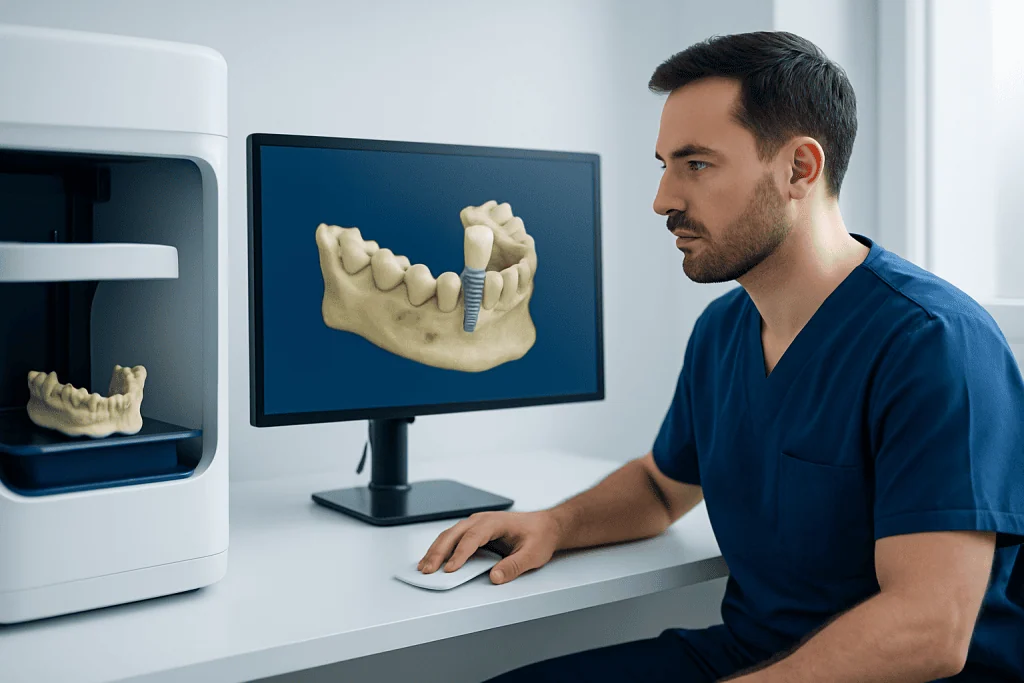
The main advantage of 3D planning is that it allows the dental team to see important anatomy in detail before surgery. A three-dimensional scan shows the width, height, and shape of the jawbone. It also helps identify nearby structures such as nerves, tooth roots, and the maxillary sinus in the upper jaw. This information supports safer planning and helps avoid placing an implant too close to sensitive areas.
Virtual planning software allows the dentist to choose the ideal implant size, depth, and angle on a computer before the procedure. The planned position is based not only on available bone, but also on how the final tooth should look and function. This is important because implants should support a natural bite and a restoration that is comfortable to clean and maintain.
When needed, a custom surgical guide can be made from the digital plan. This guide fits over the teeth or gums and helps direct the instruments during surgery. Guided implant surgery can reduce guesswork and improve consistency, especially in complex cases or when multiple implants are being placed. It may also help shorten chair time in some situations.
Accuracy matters because even small differences in implant position can affect the long-term result. Poorly positioned implants may create aesthetic concerns, make cleaning difficult, or complicate the fit of the final crown or bridge. By planning ahead in three dimensions, the dental team can better align the surgical and restorative parts of treatment.
The Digital Implant Workflow: Step by Step
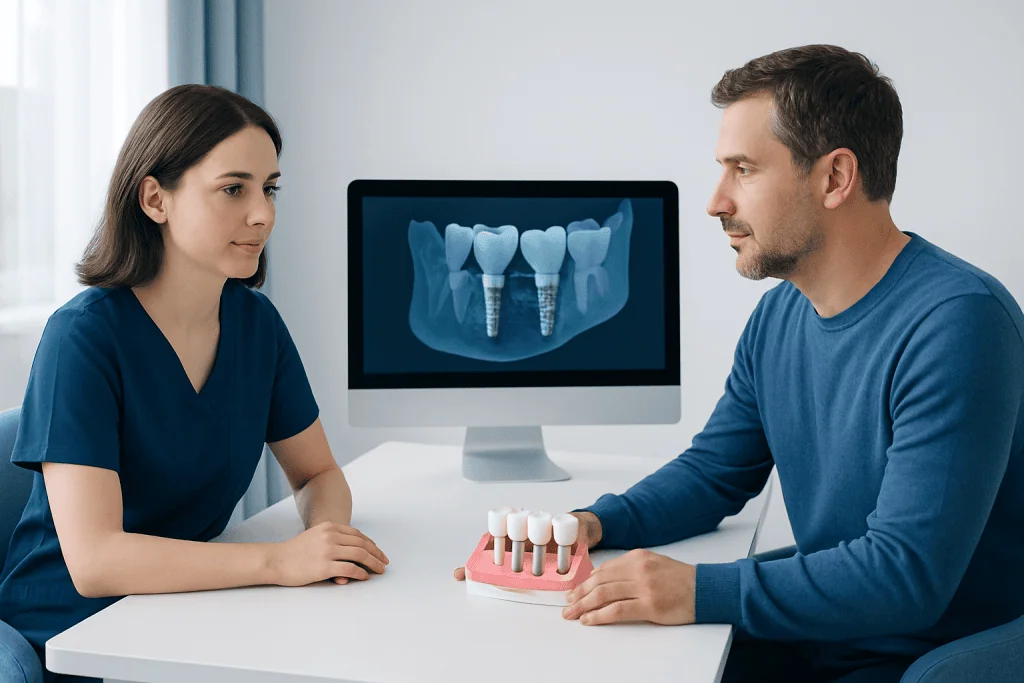
Digital implant treatment often begins with a consultation and full oral examination. The dentist reviews the patient’s goals, medical history, medications, gum health, and the condition of nearby teeth. Any active dental problems, such as decay or infection, usually need attention first. In some cases, treatment through general dentistry care is recommended before implant surgery proceeds.
Next, the patient may have a CBCT scan and an intraoral digital scan. The CBCT provides a 3D image of the bone and anatomy below the gums, while the intraoral scanner captures the visible surfaces of the teeth and soft tissues. These digital records can be combined in planning software to create a detailed virtual model of the mouth.
The dentist then plans the implant position according to the desired final restoration. If the bone is too thin or too low in volume, additional procedures may be discussed first. For example, some patients benefit from dental bone grafts to create a more stable foundation for implant placement. Once the plan is finalized, a surgical guide may be fabricated.
After implant placement, the healing phase allows the implant to integrate with the bone. The final restoration, such as a crown or a bridge, is then designed and fitted. In many practices, digital impressions are also used for the restorative stage, which can improve efficiency and support a precise fit for implant-supported dental crowns.
Who May Benefit Most from Digital Implant Planning
Many patients having implants can benefit from digital planning, but it may be especially valuable in more demanding situations. These include cases with limited bone volume, implants near important anatomical structures, multiple missing teeth, or full-arch restorations. It is also often useful when aesthetics are a high priority, such as replacing front teeth where angle and position strongly affect appearance.
Patients who have had tooth loss for a long time may have reduced bone volume because the jawbone naturally shrinks after a tooth is lost. Three-dimensional imaging helps measure this bone loss more accurately than standard two-dimensional images. This can improve planning and help determine whether extra procedures are needed before implant surgery.
Digital workflows may also be helpful for people who want a more coordinated restorative plan. When implants are placed with the final teeth in mind, the result may be easier to clean, more comfortable, and better aligned with the bite. This approach is especially relevant in full-mouth solutions such as All-on-4 treatment or All-on-6 treatment for carefully selected patients.
Even so, digital planning is not a guarantee of success on its own. Good outcomes still depend on healthy gums, adequate healing, excellent oral hygiene, and regular follow-up care. A patient-centered plan is always more important than using technology for its own sake.
Benefits and Limitations of Digital Dentistry for Implants
Digital tools offer several practical benefits. They can improve visualization, support more accurate implant positioning, and allow better communication between the surgical and restorative teams. Digital records can also make it easier to explain the plan to patients, because the anatomy and proposed treatment can be shown clearly on screen.
For some patients, guided procedures may mean a less invasive approach, smaller incisions, or more efficient surgery. In certain cases, this can lead to less postoperative swelling or discomfort, although recovery varies from person to person. Digital impressions may also be more comfortable than traditional impression materials for some people.
At the same time, digital dentistry has limitations. Image quality can be affected by movement, metal restorations, or technical factors. Surgical guides must be carefully designed and properly fitted to work as intended. In addition, the technology does not remove the need for experienced clinical judgment during surgery, since real-life anatomy may differ slightly from the virtual plan.
Cost, access, and case complexity also matter. Some patients can be treated successfully with simpler methods, while others benefit from a fully digital workflow. The best approach is one chosen by a qualified dental professional after a full evaluation, rather than assuming one technique is ideal for everyone.
Safety, Preparation, and Recovery
Preparation for implant treatment usually includes checking gum health, reviewing medical conditions, and discussing habits that affect healing, such as smoking. Conditions like uncontrolled diabetes, active gum disease, or poor oral hygiene may increase the risk of complications and may need to be addressed before implant placement. If gum support is a concern, the dentist may also assess related issues such as gum recession.
CBCT imaging uses radiation, but the dose is generally lower than that of conventional medical CT scans and is selected carefully when the information is expected to improve planning. Dentists aim to use imaging appropriately and only when clinically justified. Patients who are pregnant or who have other concerns should discuss imaging safety with their dental team.
After implant surgery, recovery instructions usually include keeping the area clean, avoiding pressure on the implant site, following dietary guidance, and attending scheduled follow-up visits. Some discomfort, swelling, or minor bleeding can be expected for a short time, but symptoms should gradually improve. Good healing is essential before the final restoration is attached.
Long-term care is just as important as the surgery itself. Patients need regular dental checkups and professional cleaning, along with daily brushing and flossing or other recommended cleaning tools. Dental implants do not get cavities, but the surrounding gums and bone can still become inflamed if plaque builds up.
When to Speak with a Dentist
A person should consider a dental consultation if they have one or more missing teeth, a loose denture, or difficulty chewing because of gaps in the mouth. An evaluation is also useful if a tooth is expected to be removed and the patient wants to understand replacement options early. Timely planning may help preserve bone and simplify later treatment.
It is also important to seek care for symptoms that could affect implant success, such as bleeding gums, persistent mouth pain, swelling, or signs of infection. Existing gum disease should be treated before implants are placed whenever possible. If there is concern about ongoing gum inflammation, a dentist may look for related conditions such as bleeding gums and recommend treatment first.
Patients considering digital implant treatment may wish to ask practical questions during the consultation, including whether 3D imaging is needed, whether a surgical guide is planned, what kind of restoration will be attached, and what alternatives exist. Understanding the full process can help set realistic expectations and support informed decisions.
Near the end of the planning process, some patients seek care at centers with multidisciplinary teams that include prosthodontists, oral and maxillofacial surgeons, periodontists, and radiology support. Acibadem International’s multidisciplinary specialists and JCI-accredited hospitals diagnose and treat dental implant cases for international patients, with treatment plans tailored to individual clinical needs.
Frequently asked questions
What is digital dentistry for dental implants?
It is the use of digital imaging and computer-based tools to plan and carry out implant treatment. This may include 3D scans, intraoral scanning, virtual planning software, and guided surgery. The goal is to improve precision and support a better fit for the final tooth replacement.
How does a 3D scan help with implant placement?
A 3D scan shows the jawbone and nearby anatomy in much greater detail than a standard two-dimensional image. It helps the dentist assess bone volume, identify nerves or sinus spaces, and choose the most suitable implant position. This can support safer and more predictable treatment planning.
Is guided implant surgery always necessary?
No. Some implant cases can be managed successfully without a surgical guide, depending on the anatomy and complexity of treatment. A dentist will decide whether guided surgery is helpful based on the patient’s needs, the location of the implant, and the restorative plan.
Does digital implant planning make treatment less painful?
Digital planning itself does not remove discomfort, but it may help make surgery more efficient and precise. In some cases, a guided approach can allow a less invasive technique. Recovery experiences still vary, and patients should follow their dentist’s aftercare instructions carefully.
Can digital dentistry be used if there is bone loss?
Yes, and it can be especially useful in that situation. Three-dimensional planning helps measure the amount and shape of remaining bone and can show whether a bone graft or another preparatory procedure may be needed. This helps create a more personalized treatment plan.
Are digital impressions better than traditional impressions?
Digital impressions can be more comfortable for some patients because they do not require impression trays filled with material. They also provide detailed images that can support restorative planning. However, the best method depends on the case and the clinician’s judgment.
How long do dental implants last when planned digitally?
Digital planning can improve accuracy, but long-term success still depends on many factors, including bone support, gum health, oral hygiene, and regular follow-up care. Implants can last many years when they are well planned and properly maintained. A dentist can explain the expected outlook for an individual case.
References
- American Dental Association
- International Team for Implantology
- European Association for Osseointegration
- National Institute of Dental and Craniofacial Research
- American Academy of Implant Dentistry
This article is for general information only and is not a substitute for professional medical advice. Please consult a qualified doctor about your individual situation.
Digital Dentistry in Turkey — costs, top hospitals & a free quote
JCI-accredited · board-certified surgeons · reply within 24h
Add us as a Preferred Source to see more of our trusted health content across Google Search, AI Overviews and Discover.

Dental & Oral Health
Full-scope dental care from implants and aesthetics to oral and maxillofacial surgery.
151 specialists in this unitRelated Treatments
More from the Health Library



Related Specialists

Assoc. Prof. Dr. Ferit Bayram
Oral & Dental Health
Assoc. Prof. Dr. Yeliz Çavuşoğlu Yüce
Oral & Dental Health
Assoc. Prof. Dr. Mutlu Keskin
Oral & Dental Health
Prof. Dr. Ülkü Noyan
Oral & Dental Health