Do You Need Annual Eye Exams after Cataract Surgery: Procedure, Recovery and Results

Most people benefit from a comprehensive eye examination every year after cataract surgery, unless their ophthalmologist recommends a different schedule. Cataract surgery replaces the cloudy natural lens with an artificial intraocular lens; it does not prevent other eye conditions.
Key Takeaways
- Most people benefit from a comprehensive eye examination every year after cataract surgery, unless their ophthalmologist recommends a different schedule.
- Cataract surgery replaces the cloudy natural lens with an artificial intraocular lens; it does not prevent other eye conditions.
- Vision often improves within days, but full stabilization may take several weeks and can vary by eye health and lens type.
- New flashes, many floaters, a curtain-like shadow, increasing pain or sudden loss of vision require urgent assessment.
- Follow-up care, prescribed drops and protecting the eye during early healing support a safe recovery.
Do you need annual eye exams after cataract surgery? In most cases, yes. Once postoperative visits are complete and the eye has healed, regular yearly eye examinations remain important for monitoring vision, eye pressure, the retina and conditions that can develop independently of cataracts.
Do you need yearly eye exams after cataract surgery?
Yes, most people should continue to have yearly eye examinations after cataract surgery. The operation removes the cloudy natural lens and replaces it with an artificial intraocular lens (IOL), but it does not stop age-related or other eye conditions from developing. A comprehensive examination allows an ophthalmologist to check vision, eye pressure, the retina, the optic nerve and the position of the implanted lens.
Early follow-up visits after surgery are more frequent and are scheduled by the surgical team. After the eye is stable, annual care is commonly appropriate for adults with healthy eyes. Some people need examinations more often, including those with glaucoma, diabetes, retinal disease, high eye pressure, significant dry eye, a previous retinal tear or complex cataract surgery.
Regular visits can also identify posterior capsule opacification, sometimes called a “secondary cataract.” This is a clouding of the thin membrane behind the implanted lens, not a return of the original cataract. It may cause gradually blurred or hazy vision months or years after surgery and can usually be treated with a brief laser procedure when clinically indicated.
How cataract surgery works and who may benefit
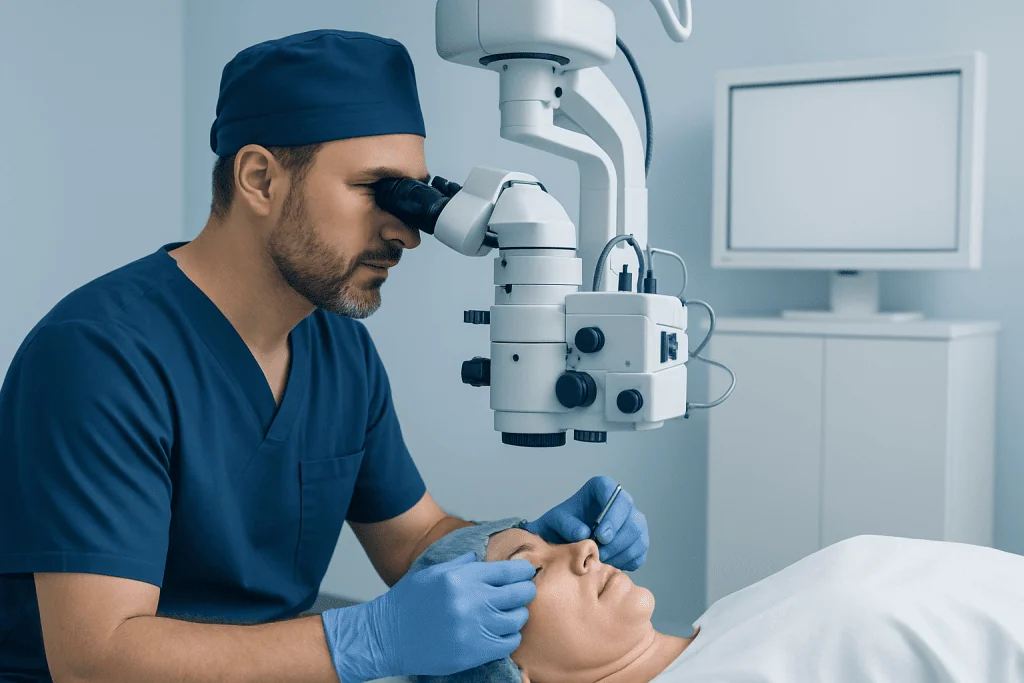
A cataract is a clouding of the eye’s natural lens. It can make vision blurred, faded, less sharp in dim light or more sensitive to glare. Cataracts often develop with aging, although they may also be associated with eye injury, certain medicines, diabetes, previous eye inflammation or some inherited conditions.
Cataract surgery is considered when lens clouding affects everyday activities such as reading, driving, work, recognizing faces or moving around safely. The decision is based on how symptoms affect the individual rather than on a single measurement of cataract severity. An ophthalmologist also considers the health of the cornea, retina and optic nerve, as these structures influence the visual result.
Before surgery, the eye is measured to help select an IOL. Lens options may be designed primarily for distance vision or may reduce dependence on glasses at more than one range. No lens option can guarantee freedom from glasses, and the best choice depends on eye health, lifestyle needs and the person’s priorities. Cataract surgery planning includes a discussion of expected benefits, limitations and follow-up care.
The procedure: step by step

Cataract surgery is usually performed as an outpatient procedure, meaning the person normally goes home the same day. The eye is typically numbed with drops or local anesthesia, and medication may be offered to help the patient feel relaxed. The person remains awake in many cases but should not feel pain during the operation.
In the most common method, called phacoemulsification, the surgeon makes a very small incision at the edge of the cornea. Ultrasound energy breaks up the cloudy lens, and the lens material is gently removed. The folded artificial lens is then inserted through the small opening and placed in the natural lens capsule, where it unfolds and remains in position.
The procedure itself is often short, though preparation and recovery time at the clinic take longer. Usually, one eye is treated at a time. If both eyes need surgery, the second procedure is commonly planned after the first eye has recovered enough for the surgeon to assess its early outcome.
How long after cataract surgery can you see good again?
Many people notice clearer or brighter vision within the first few days after cataract surgery. However, vision can be temporarily blurred because of normal early swelling, dryness, light sensitivity or adjustment to the new lens. It is common for vision to fluctuate during the first days and weeks.
For uncomplicated surgery, vision often becomes more consistent over several weeks. Some people recover faster, while others require more time, particularly if they have corneal disease, glaucoma, diabetic eye disease, macular degeneration or a more complex procedure. The ophthalmologist will assess healing at planned postoperative appointments and advise when visual activities, including driving, can be resumed safely.
New glasses may be prescribed once vision and the eye surface have stabilized, often several weeks after surgery. Even with an advanced IOL, glasses may still be helpful for certain tasks. The final result depends not only on the cataract removal but also on the health of the rest of the eye.
How long does it take for the lens to settle after cataract surgery?
The implanted intraocular lens is positioned in the lens capsule during surgery and is generally stable soon afterward. The surrounding eye tissues continue to heal over the following weeks, and subtle changes in the capsule or refraction can occur as the eye settles. For this reason, surgeons often wait until the postoperative period is stable before finalizing a glasses prescription.
Most uncomplicated eyes reach a more stable visual state within about four to six weeks, although the timeline is individual. Certain lens types, pre-existing eye conditions and postoperative inflammation can affect how quickly vision settles. The person should attend all scheduled reviews so that the surgeon can confirm lens position, manage inflammation and measure visual progress.
It is uncommon for an IOL to shift significantly after routine cataract surgery, but symptoms such as new double vision, marked changes in vision or a sensation that vision has suddenly become distorted should be reported promptly. These symptoms need an eye examination because they can have several possible causes.
How do I know if my cataract surgery was successful?
Successful cataract surgery usually means the cloudy lens has been removed safely, the eye has healed without significant complications and vision has improved to the level expected from the overall health of the eye. Many people report brighter colors, reduced glare and clearer distance or near vision, depending on the lens selected and whether glasses are used.
The clearest measure is the postoperative examination. The ophthalmologist checks visual acuity, the cornea, eye pressure, the surgical incision, inflammation, the retina and the IOL position. A person may have a technically successful operation yet still have limits to vision from conditions such as glaucoma, retinal disease or optic nerve damage.
Temporary irritation, mild redness, watery eyes and sensitivity to light can occur early in recovery. These symptoms should generally improve rather than worsen. A gradual decline in vision months or years later does not necessarily mean surgery has failed; it may relate to posterior capsule opacification, a new glasses need or another eye condition that can be assessed and managed.
Recovery, benefits and possible risks
After surgery, patients are usually given eye drops to reduce inflammation and lower the risk of infection. They should use them exactly as directed, avoid rubbing or pressing on the eye, and follow the surgeon’s advice about bathing, swimming, lifting, exercise and eye protection. A protective shield may be advised while sleeping during the early recovery period.
The main benefit of cataract surgery is improved clarity of vision when cataract is the main cause of visual impairment. It may also improve contrast, reduce glare and support safer participation in everyday activities. Results differ between individuals, and surgery cannot reverse vision loss caused by unrelated disease of the retina, optic nerve or brain.
Serious complications are uncommon but can include infection inside the eye, retinal detachment, swelling in the central retina, raised eye pressure, bleeding, corneal swelling or problems with IOL position. Discussing personal risks before surgery is especially important for people with diabetes, glaucoma, high myopia, previous eye surgery or retinal disease.
Acibadem International’s multidisciplinary specialists and JCI-accredited hospitals provide assessment and treatment for international patients who need cataract care and ongoing ophthalmic follow-up.
When to seek medical care
Planned postoperative appointments are an essential part of cataract surgery recovery, even if vision seems to be improving. Patients should contact their ophthalmologist sooner than scheduled if they have worsening redness, increasing pain, persistent nausea, a noticeable reduction in vision or discharge from the eye. These symptoms should not be managed by simply waiting for the next routine visit.
Urgent same-day eye care is needed for sudden vision loss, a curtain or shadow across vision, new flashes of light, a sudden shower of floaters, severe pain or rapidly increasing light sensitivity. These symptoms can indicate problems that need prompt evaluation. The person should follow local emergency guidance if an eye specialist cannot be reached.
Between appointments, protecting general eye health remains helpful. People should manage diabetes and blood pressure, wear ultraviolet-protective eyewear outdoors when appropriate, avoid smoking and seek regular eye examinations. Anyone with a personal history of glaucoma or retinal disease should follow the more frequent monitoring schedule recommended by their eye specialist.
Frequently asked questions
Do you need annual eye exams after cataract surgery?
Most people should have a comprehensive eye examination once a year after they complete their scheduled postoperative care. Annual examinations help monitor vision and identify conditions such as glaucoma, retinal disease or posterior capsule opacification. People with diabetes, glaucoma or other eye conditions may need visits more often.
Do you need yearly eye exams after cataract surgery?
Yes, yearly exams are usually recommended even when vision feels stable. Cataract surgery corrects a cloudy lens, but it does not protect against other eye diseases that may develop later. An ophthalmologist can recommend a personalized schedule based on the person’s health and eye history.
How do I know if my cataract surgery was successful?
Improved clarity, brightness and reduced glare are common signs of a good result, but the postoperative examination provides the most reliable assessment. The ophthalmologist checks healing, visual acuity, eye pressure and the position of the artificial lens. Final vision also depends on the condition of the retina, optic nerve and cornea.
How long after cataract surgery can you see good again?
Many people notice vision improvement within a few days, although temporary blur and fluctuation are common early on. Vision often becomes more stable over several weeks, and some eyes take longer to heal. Pre-existing eye conditions can affect both the speed and degree of recovery.
How long does it take for the lens to settle after cataract surgery?
The artificial lens is normally stable soon after placement, while the eye continues healing over the next several weeks. Visual measurements often become more stable within four to six weeks after uncomplicated surgery. The surgeon will determine when it is appropriate to prescribe final glasses, if needed.
Can cataracts come back after surgery?
The natural lens that caused the cataract does not grow back. However, the capsule behind the artificial lens can become cloudy months or years later, causing symptoms similar to cataract blur. This condition is often treatable with a laser procedure after an eye examination.
References
- American Academy of Ophthalmology
- National Eye Institute
- National Health Service
- Mayo Clinic
This article is for general information only and is not a substitute for professional medical advice. Please consult a qualified doctor about your individual situation.
Cataract Surgery in Turkey — costs, top hospitals & a free quote
JCI-accredited · board-certified surgeons · reply within 24h
Add us as a Preferred Source to see more of our trusted health content across Google Search, AI Overviews and Discover.

Ophthalmology
Comprehensive eye care from laser vision correction to retina, cornea and cataract surgery.
75 specialists in this unitMore from the Health Library



Related Specialists

Prof. Dr. Tufan Bilgin
Gynecology & Obstetrics
Prof. Dr. Hacer Kuzu Okur
Pulmonology
Dyt. Merve Gizem Bahçıvan Ayla
Nutrition & Diet
Merve Güvendi
Physical Medicine & Rehabilitation