Do You Really Need Spine Surgery: Procedure, Recovery and Results

Most people with back pain do not need spine surgery, especially when symptoms improve with time and non-surgical care. Surgery is usually considered for confirmed nerve compression, spinal instability, progressive weakness, severe disability, or certain urgent neurological symptoms.
Key Takeaways
- Most people with back pain do not need spine surgery, especially when symptoms improve with time and non-surgical care.
- Surgery is usually considered for confirmed nerve compression, spinal instability, progressive weakness, severe disability, or certain urgent neurological symptoms.
- The best outcomes occur when symptoms, examination findings, and imaging results point to the same treatable spinal cause.
- Recovery varies by procedure, overall health, surgical approach, and the type of work or activity a person plans to return to.
- All spine operations carry risks, but careful selection, experienced surgical care, and rehabilitation can reduce avoidable complications.
Spine surgery is not necessary for most back or neck pain, but it can be an appropriate option when a clearly identified spinal problem causes persistent pain, weakness, loss of function, or nerve-related symptoms despite non-surgical treatment. A careful diagnosis, realistic goals, and shared decision-making help patients determine whether the potential benefits outweigh the risks.
Do You Really Need Spine Surgery?
Do you really need spine surgery? Usually, surgery is considered only when a specific spinal condition is clearly linked to symptoms and appropriate non-surgical treatment has not provided enough relief. It may be recommended sooner when there is progressive muscle weakness, spinal instability, severe nerve compression, or loss of bowel or bladder control.
Back and neck pain are common, and many episodes improve with guided activity, physical therapy, medicines when appropriate, and time. Scans can show age-related changes such as disc bulges or arthritis even in people without pain, so an imaging result alone does not determine whether surgery is needed.
The central question is not simply whether an MRI looks abnormal. It is whether surgery can safely address the cause of a person’s symptoms and improve a meaningful goal, such as walking farther, reducing leg pain, restoring strength, or preventing neurological decline. A spine specialist can help compare continued non-surgical care with an operation in the context of the individual’s health and preferences.
How a Spine Surgery Decision Is Made
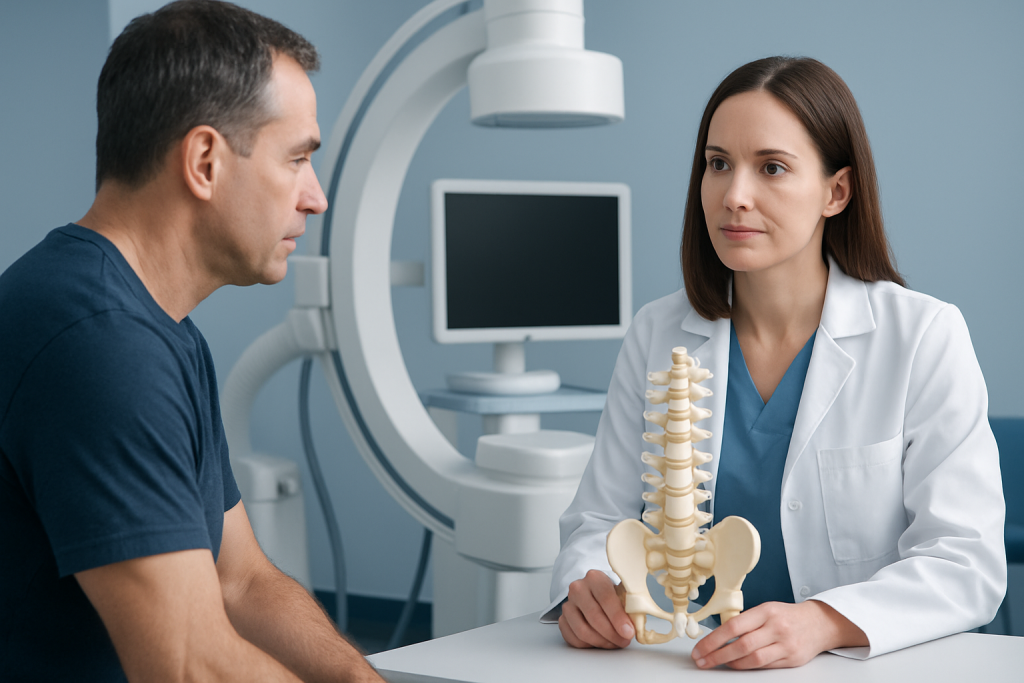
A careful decision begins with a detailed history and physical examination. The clinician considers where pain travels, whether there is numbness or weakness, how symptoms affect daily life, and whether movements or positions make them better or worse. Neurological testing may assess reflexes, sensation, muscle strength, balance, and walking.
Imaging may include X-rays, MRI, or CT scans. These tests can identify problems such as a herniated disc, spinal stenosis, vertebral slippage, fracture, deformity, infection, or tumor. In some situations, nerve testing or diagnostic injections may offer additional information. The aim is to confirm that the finding on imaging matches the person’s symptoms and examination.
Before recommending surgery, clinicians generally review non-surgical options such as tailored physiotherapy, activity modification, pain-management strategies, weight management when relevant, and selected injections. These treatments are not simply delays; they may resolve symptoms or clarify whether an operation is likely to help. A second opinion can also be useful when surgery is elective or when more than one procedure is being considered.
- Symptoms should have a plausible, identifiable spinal cause.
- The expected benefit should match the patient’s most important goals.
- Non-surgical care should have been adequate unless urgent treatment is needed.
- General health, bone quality, smoking status, and recovery support should be assessed.
Procedures, Candidacy, and What Happens During Surgery

Spine surgery is a broad term rather than one operation. A discectomy or microdiscectomy removes disc material pressing on a nerve, often to relieve sciatica from a disc herniation. Decompression procedures, such as laminectomy, create more space around compressed nerves in spinal stenosis. Spinal fusion joins two or more vertebrae when instability, deformity, or certain degenerative conditions make stabilization necessary.
In selected cases, surgeons may use minimally invasive techniques through smaller incisions. These approaches may reduce muscle disruption for some procedures, but they are not automatically better for every spinal problem. The most suitable approach depends on the location of the condition, the number of spinal levels involved, anatomy, prior surgery, and the goals of treatment. Patients considering surgery for a disc problem may wish to learn more about spine surgery options.
On the day of surgery, the patient receives anesthesia and is positioned carefully to protect pressure points and nerves. The surgeon makes an incision, confirms the correct spinal level using imaging, performs the planned decompression, disc removal, stabilization, or other repair, and closes the incision. Some operations are day procedures, while larger fusions or complex reconstructions may require a hospital stay.
Not every person with back pain is a candidate for an operation. Surgery is less likely to help when pain has no clear anatomical source, when symptoms are mainly widespread or non-mechanical, or when the expected structural correction does not match the main problem. Mental wellbeing, sleep, work demands, and expectations also matter because they influence recovery and how pain is experienced.
Benefits, Risks, and Expected Results
The potential benefit of spine surgery depends on the procedure and diagnosis. For example, surgery can be particularly effective at relieving leg pain caused by nerve compression from a disc herniation or spinal stenosis. It may also prevent worsening neurological problems in people with progressive weakness or significant spinal instability. Relief of long-standing numbness, chronic back pain, or nerve damage may be less predictable.
Common short-term effects can include incision pain, tiredness, stiffness, and temporary limits on lifting or bending. Possible surgical complications include bleeding, infection, blood clots, reactions to anesthesia, spinal fluid leakage, nerve injury, persistent symptoms, or the need for further surgery. Fusion may also involve delayed or incomplete bone healing, and surgery at one spinal level can place additional stress on nearby levels over time.
Is spinal surgery worth the risk? It may be worth the risk when the likely benefit is meaningful, the diagnosis is well established, symptoms are significantly limiting life, and non-surgical care has not been sufficient. It is a personal decision rather than a universal answer. A surgeon should explain what surgery is expected to improve, what it may not change, the alternatives, and the risks that apply to the individual procedure.
Good preparation can improve the likelihood of a smoother recovery. This may include stopping smoking, optimizing diabetes or other chronic conditions, maintaining appropriate nutrition, discussing medications, and arranging help at home. Patients should feel comfortable asking why a particular procedure is recommended and whether a less invasive or non-surgical option is reasonable.
Recovery Timeline and Managing Pain
How painful is spinal surgery recovery? Pain after spine surgery is expected, but it is usually managed with a personalized plan that may include prescribed medicines, ice or heat when advised, positioning, and gradual movement. The intensity and duration vary substantially: a limited decompression often has a faster recovery than a multi-level fusion, while pre-existing pain, anxiety, sleep, and general health can affect the experience.
Many patients begin standing and walking with support on the day of surgery or the following day, depending on the procedure and medical guidance. During the first days to weeks, the focus is usually wound care, safe mobility, short walks, and avoiding movements or lifting that the surgeon has restricted. Pain often improves gradually rather than disappearing immediately.
Over the following weeks, activity is increased step by step. Physiotherapy may help rebuild movement, core strength, endurance, balance, and confidence. Return to desk-based work may happen earlier than return to physically demanding work, but timelines differ. Fusion healing and recovery after complex surgery may take several months or longer.
Patients should follow their surgical team’s instructions rather than comparing recovery with another person’s experience. New or worsening weakness, fever, wound redness or drainage, severe uncontrolled pain, swelling in a leg, chest pain, or breathing difficulty should be reported promptly. Sudden bowel or bladder changes require urgent medical assessment.
How Serious Is L4 L5 Surgery?
How serious is L4 L5 surgery? Surgery at the L4-L5 level is a significant medical procedure, but its seriousness varies with the operation being performed. A microdiscectomy or decompression at L4-L5 is generally less extensive than a fusion involving L4-L5, while revision surgery or multi-level reconstruction is more complex and may involve a longer recovery.
L4-L5 is a commonly affected area of the lower back because it carries substantial movement and load. A disc herniation or narrowing at this level can irritate nerves that contribute to pain, tingling, numbness, or weakness in the buttock, leg, or foot. Surgery may be considered when these symptoms are persistent and disabling, especially if weakness is progressing or nerve compression is clear.
The surgeon evaluates more than the spinal level. Important factors include whether there is instability, whether symptoms come from one or several levels, bone quality, prior operations, medical conditions, and the person’s daily activities. Discussing the exact procedure, expected recovery, and alternative treatments is the best way to understand the seriousness of an individual L4-L5 operation.
Regret, Long-Term Outlook, and When to Seek Medical Care
What is the regret rate for back surgery? There is no single reliable regret rate for back surgery because outcomes vary by diagnosis, procedure, follow-up period, and how researchers define satisfaction or regret. Some people are disappointed if back pain continues, if recovery takes longer than expected, or if surgery improves leg symptoms more than back symptoms. This is why clear expectations and a diagnosis that matches symptoms are essential.
A realistic goal may be improved function or relief of nerve-related leg pain rather than a completely pain-free back. Patients can reduce the chance of avoidable disappointment by discussing expected benefits, limitations, rehabilitation, and the possibility of ongoing symptoms before surgery. Continuing healthy movement, rehabilitation, smoking cessation, and follow-up care can support long-term results.
When to seek medical care: A medical review is appropriate for back or neck pain that is severe, persistent, recurring, associated with leg or arm symptoms, or affecting sleep, walking, work, or daily activities. Urgent assessment is needed for new loss of bowel or bladder control, numbness around the genitals or buttocks, rapidly worsening weakness, major trauma, fever with severe spinal pain, or pain in a person with known cancer or significant infection risk.
Acibadem International’s multidisciplinary specialists and JCI-accredited hospitals diagnose and treat spinal conditions for international patients. A consultation can help clarify whether symptoms may be managed without surgery or whether a procedure is likely to provide a meaningful benefit.
Frequently asked questions
Can spine surgery be avoided?
In many cases, yes. Back and neck symptoms often improve with time, appropriate movement, physical therapy, medicines when suitable, and other non-surgical care. However, surgery may be appropriate when there is progressive weakness, significant nerve compression, spinal instability, or persistent disabling symptoms despite treatment.
How long should someone try non-surgical treatment before spine surgery?
The timeline depends on the diagnosis and severity of symptoms. For non-urgent problems, a clinician often recommends a period of structured non-surgical treatment before considering surgery. Progressive neurological weakness or symptoms suggesting serious nerve compression may require more urgent assessment.
Will spine surgery eliminate all back pain?
No operation can guarantee complete pain relief. Surgery tends to be most predictable when it targets a defined problem, such as nerve compression causing leg pain or weakness. Mechanical back pain, long-standing nerve symptoms, and pain from several sources may improve less completely.
Is a second opinion appropriate before back surgery?
Yes, especially when surgery is elective, a fusion is proposed, several procedures are possible, or the diagnosis is uncertain. A second specialist can review symptoms, examination findings, imaging, and non-surgical options. It can help a patient make a more informed and confident decision.
What should patients ask a spine surgeon before agreeing to surgery?
Useful questions include what condition is causing the symptoms, what the operation is designed to improve, and what may not improve. Patients should also ask about alternatives, major risks, expected restrictions, recovery milestones, rehabilitation, and the likelihood of needing further treatment.
Can a herniated disc heal without surgery?
Many herniated discs improve without an operation, and symptoms can settle as inflammation reduces and the body adapts or reabsorbs part of the disc material. Surgery may be considered if severe leg pain remains disabling, weakness develops or progresses, or bowel and bladder symptoms occur. A clinician can assess the urgency based on the individual symptoms and examination.
References
- National Institute for Health and Care Excellence
- American Academy of Orthopaedic Surgeons
- American Association of Neurological Surgeons
- National Institute of Neurological Disorders and Stroke
- North American Spine Society
This article is for general information only and is not a substitute for professional medical advice. Please consult a qualified doctor about your individual situation.
Spine Surgery in Turkey — costs, top hospitals & a free quote
JCI-accredited · board-certified surgeons · reply within 24h
Add us as a Preferred Source to see more of our trusted health content across Google Search, AI Overviews and Discover.