Does Vsp Pay for LASIK Eye Surgery: Procedure, Recovery and Results

LASIK is commonly treated as an elective procedure, so standard VSP benefits often do not cover the full cost. Some VSP plans may provide LASIK discounts through affiliated or participating providers.
Key Takeaways
- LASIK is commonly treated as an elective procedure, so standard VSP benefits often do not cover the full cost.
- Some VSP plans may provide LASIK discounts through affiliated or participating providers.
- A comprehensive eye assessment is needed to confirm whether LASIK is appropriate and safe for an individual.
- Vision often improves within days, but complete healing and stable visual quality can take several months.
- LASIK can reduce dependence on glasses or contact lenses, but it cannot guarantee perfect vision or prevent age-related vision changes.
Most VSP vision plans do not pay for LASIK as a standard medical benefit because the procedure is usually considered elective. However, some plans include access to member discounts or preferred pricing through participating refractive-surgery providers, so plan documents and the insurer should be checked before making arrangements.
Does VSP Pay for LASIK Eye Surgery?
Most VSP plans do not pay for LASIK eye surgery as a standard covered benefit because LASIK is generally considered an elective refractive procedure. In other words, it is intended to reduce dependence on glasses or contact lenses rather than treat an urgent eye disease. Coverage can vary by employer, plan type, location, and any added vision benefits.
Some VSP members may be eligible for discounts, negotiated rates, or access to participating LASIK providers. These arrangements are not the same as insurance coverage and may have eligibility rules. The most reliable way to understand benefits is to review the plan’s evidence of coverage, contact VSP directly, and ask the chosen clinic to confirm whether it participates in a relevant program before scheduling surgery.
LASIK is one form of laser vision correction. It reshapes the cornea, the clear front surface of the eye, so that light focuses more accurately on the retina. A refractive-surgery consultation can help determine whether LASIK eye surgery or another approach is suitable for the person’s eye health, prescription, lifestyle, and visual goals.
How LASIK Works and Who May Be a Candidate
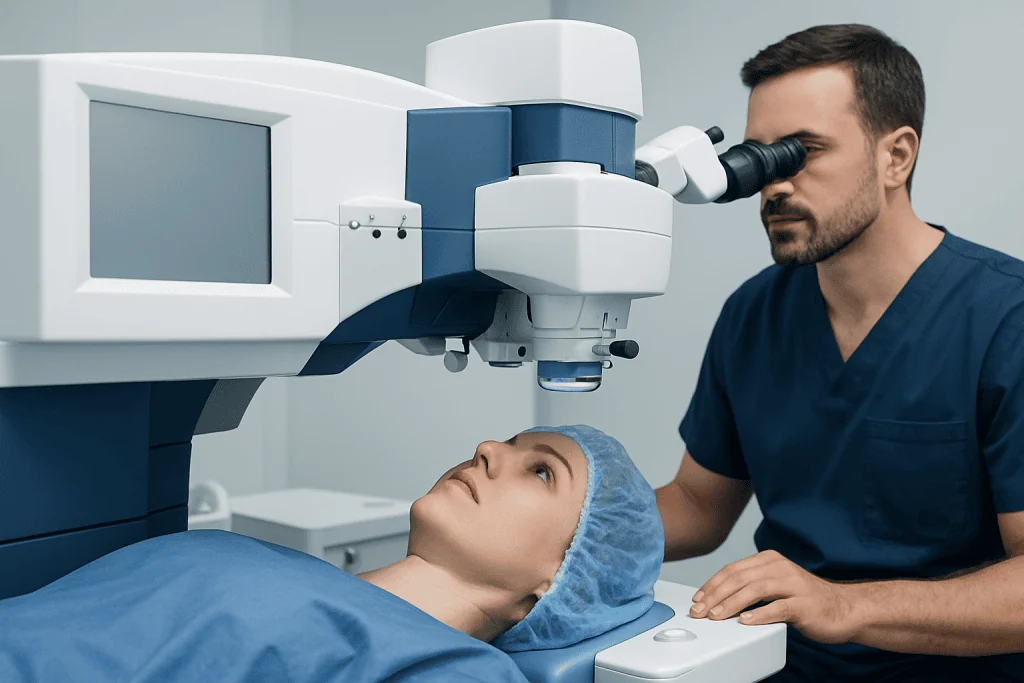
LASIK uses a precisely programmed laser to reshape corneal tissue. For nearsightedness, the central cornea is flattened; for farsightedness, the shape is adjusted to increase focusing power; and for astigmatism, uneven curvature is regularized. The aim is to improve uncorrected distance vision, although reading glasses may still be needed later in life.
During a suitability assessment, an ophthalmologist or refractive surgeon measures the prescription, corneal thickness and shape, pupil size, tear production, and overall eye health. They also review medical history, medications, and expectations. A stable glasses or contact lens prescription is usually important because changing refraction can affect the predictability of results.
LASIK may not be the best choice for everyone. Thin or irregular corneas, significant dry eye, uncontrolled diabetes, active eye inflammation or infection, certain corneal disorders, pregnancy, breastfeeding, and unstable prescriptions may require treatment, a delay, or consideration of another procedure. People with keratoconus or suspected corneal weakening need particularly careful specialist evaluation.
- Adults with stable refractive error may be potential candidates.
- Healthy corneas and adequate corneal thickness are important.
- Realistic expectations are essential: LASIK aims to reduce reliance on corrective lenses, not promise perfect vision.
- Alternative options may include surface laser procedures, implantable lenses, or continued use of glasses and contact lenses.
LASIK Procedure: What Happens Step by Step

LASIK is usually performed as an outpatient procedure, often with both eyes treated on the same day. Before surgery, the eyes are numbed with anesthetic drops. The patient remains awake, and the surgical team provides instructions throughout the procedure. A device helps keep the eyelids open, and a fixation light helps the patient maintain eye position.
The surgeon creates a thin corneal flap using a femtosecond laser or, less commonly, a mechanical device. The flap is gently lifted, and an excimer laser removes a carefully calculated amount of corneal tissue. The flap is then repositioned, where it adheres naturally without stitches. The laser portion itself generally takes only seconds, although preparation and positioning take longer.
Vision may be blurry immediately afterward, and temporary burning, watering, light sensitivity, or a gritty sensation can occur as the anesthetic wears off. Patients should arrange for someone else to take them home and should follow the prescribed eye-drop schedule carefully. The treating team will provide individualized advice on work, exercise, swimming, eye makeup, and driving.
Recovery Timeline and Follow-Up Care
Many people notice clearer vision within the first day or two after LASIK, but early vision can fluctuate. Mild discomfort, glare, halos around lights, dry eye symptoms, and sensitivity to light are relatively common during the initial healing period. Protective shields may be recommended while sleeping, especially during the first nights, to avoid rubbing the eyes.
Follow-up appointments allow the surgeon to monitor healing, vision, corneal flap position, and eye pressure. Antibiotic and anti-inflammatory drops are often used for a limited period, while lubricating drops may be needed for longer. Attending scheduled reviews is important even when vision seems to be improving normally.
How long is full recovery from LASIK? Functional vision commonly returns quickly, often within several days, but full recovery is not identical for every person. The surface of the eye, tear film, and visual quality may continue to stabilize over several weeks to months. Dryness and night-vision symptoms can take longer to settle, particularly in people who had dry eye before surgery.
People should avoid rubbing their eyes and follow their clinician’s guidance before returning to contact sports, swimming pools, hot tubs, and dusty environments. Promptly reporting pain, a marked reduction in vision, increasing redness, or discharge helps ensure that uncommon complications are assessed without delay.
Expected Results, Benefits, and Possible Risks
The main potential benefit of LASIK is reduced dependence on glasses or contact lenses for distance activities. Many suitable candidates achieve useful uncorrected vision after treatment, but outcomes depend on the original prescription, corneal measurements, healing response, age, and other eye conditions. Some people still use glasses for specific tasks, such as night driving or fine visual work.
Is LASIK 100% success rate? No procedure has a 100% success rate, and LASIK cannot guarantee that every person will achieve perfect vision or remain free from glasses throughout life. A small residual prescription may remain, and some people may need an enhancement procedure if the eye has healed appropriately and enough corneal tissue remains. The clinician can explain likely outcomes based on individual measurements rather than making universal promises.
Potential side effects include dry eyes, glare, halos, starbursts, fluctuating vision, and reduced contrast sensitivity, especially early in recovery. Less common but more serious complications can include infection, inflammation, flap-related problems, corneal irregularity, or loss of best-corrected vision. Careful screening, experienced surgical care, and adherence to follow-up instructions help reduce risk, although they cannot eliminate it entirely.
What Happens 10 Years After LASIK?
What happens 10 years after LASIK? Many people continue to have stable improvement in distance vision years after surgery. However, LASIK does not stop the natural aging of the eye. Presbyopia, the gradual loss of near focusing ability that commonly develops from the 40s onward, can lead to a need for reading glasses even when distance vision remains clear.
Eyes can also experience prescription changes over time, particularly with aging, hormonal changes, cataract development, or some health conditions. In some cases, a small amount of refractive error may return. Whether an enhancement is appropriate depends on corneal health, the amount of remaining corneal tissue, the stability of vision, and the cause of the change.
Regular eye examinations remain important after LASIK. Laser vision correction does not prevent cataracts, glaucoma, retinal conditions, or other eye diseases. It is helpful to tell all future eye-care professionals about prior LASIK because it can affect certain eye measurements used in cataract surgery planning.
When to Seek Medical Care
After LASIK, mild irritation and blurred vision can be expected early on, but severe pain is not typical. A person should contact their surgical team promptly if they develop worsening pain, a sudden or substantial change in vision, increasing redness, sensitivity to light that is getting worse, persistent discharge, or an injury to the eye. These symptoms need timely clinical assessment.
Before considering LASIK, anyone with persistent eye discomfort, frequent contact lens intolerance, changing vision, diabetes, autoimmune disease, or a family history of corneal disease should arrange a comprehensive eye examination. An ophthalmologist can identify conditions that may need treatment first or may make another vision-correction option safer.
Acibadem International’s multidisciplinary specialists and JCI-accredited hospitals assess and treat eye conditions for international patients. A consultation can provide individualized guidance on eligibility, alternatives, recovery planning, and long-term eye health.
Frequently asked questions
What does VSP cover for LASIK?
VSP coverage for LASIK depends on the individual plan. Standard vision benefits commonly do not pay for elective LASIK surgery, but some plans provide discounts or access to participating providers. Members should check their plan documents and verify benefits with VSP and the surgical clinic.
Does insurance usually cover LASIK eye surgery?
Medical insurance and vision plans often do not cover LASIK because it is usually considered elective. Exceptions may exist when a plan has a specific refractive-surgery benefit or discount program. Coverage decisions should always be confirmed directly with the insurer.
How long is full recovery from LASIK?
Many people see well enough for daily activities within a few days, though vision may fluctuate initially. Full stabilization of healing, tear production, and visual quality may take weeks to several months. Follow-up care helps the surgeon monitor recovery.
Is LASIK 100% success rate?
No. LASIK has the potential to substantially reduce dependence on glasses or contacts in suitable candidates, but it cannot guarantee perfect vision for every person. Some individuals may have residual prescription, dry eye symptoms, night-vision effects, or a need for glasses for some activities.
What happens 10 years after LASIK?
Many people retain good distance vision for years after LASIK. However, age-related near-vision changes, cataracts, and natural prescription shifts can still occur. Regular eye examinations remain important after laser vision correction.
Can LASIK correct both nearsightedness and astigmatism?
LASIK can often treat nearsightedness, farsightedness, and astigmatism when corneal measurements and prescription range are appropriate. The exact suitability depends on the individual eye examination. A refractive surgeon can discuss expected results and alternatives.
References
- American Academy of Ophthalmology
- U.S. Food and Drug Administration
- National Eye Institute
- American Society of Cataract and Refractive Surgery
This article is for general information only and is not a substitute for professional medical advice. Please consult a qualified doctor about your individual situation.
Eye Surgery in Turkey — costs, top hospitals & a free quote
JCI-accredited · board-certified surgeons · reply within 24h
Add us as a Preferred Source to see more of our trusted health content across Google Search, AI Overviews and Discover.

Ophthalmology
Comprehensive eye care from laser vision correction to retina, cornea and cataract surgery.
74 specialists in this unit