Eczema Around Eyes: What Patients Need to Know

Eczema around eyes usually affects the thin eyelid skin and can cause itching, dryness, redness, scaling, and swelling. Common triggers include cosmetics, skincare products, soaps, allergens, and rubbing the eyes.
Key Takeaways
- Eczema around eyes usually affects the thin eyelid skin and can cause itching, dryness, redness, scaling, and swelling.
- Common triggers include cosmetics, skincare products, soaps, allergens, and rubbing the eyes.
- Because the skin around the eyes is sensitive, treatment should be guided by a qualified doctor rather than self-medicating with strong creams.
- Persistent, painful, oozing, or vision-related symptoms need prompt medical assessment.
Eczema around eyes is inflammation of the delicate skin on or near the eyelids. It commonly causes itching, dryness, redness, and irritation, and it often improves when triggers are identified and the skin is treated gently and appropriately.
Overview: what eczema around eyes means
Eczema around eyes refers to irritation and inflammation of the skin on the eyelids or in the surrounding area. Patients often notice itchy, dry, red, flaky, or swollen skin. The condition may be related to atopic eczema, allergic contact dermatitis, irritant contact dermatitis, or less commonly other skin conditions that can look similar.
The skin around the eyes is thinner and more sensitive than skin elsewhere on the body. That is why even small amounts of fragrance, makeup, cleansers, nail products transferred by touch, or environmental allergens can trigger symptoms. The area may sting or burn as well as itch, and repeated rubbing can worsen the irritation.
Although eczema around eyes is usually not dangerous, it can be uncomfortable and disruptive. A careful diagnosis matters because some infections, eyelid inflammation disorders, and allergic reactions can mimic eczema. In many cases, symptoms improve with gentle skin care, trigger avoidance, and treatment recommended by a doctor.
How it looks and feels
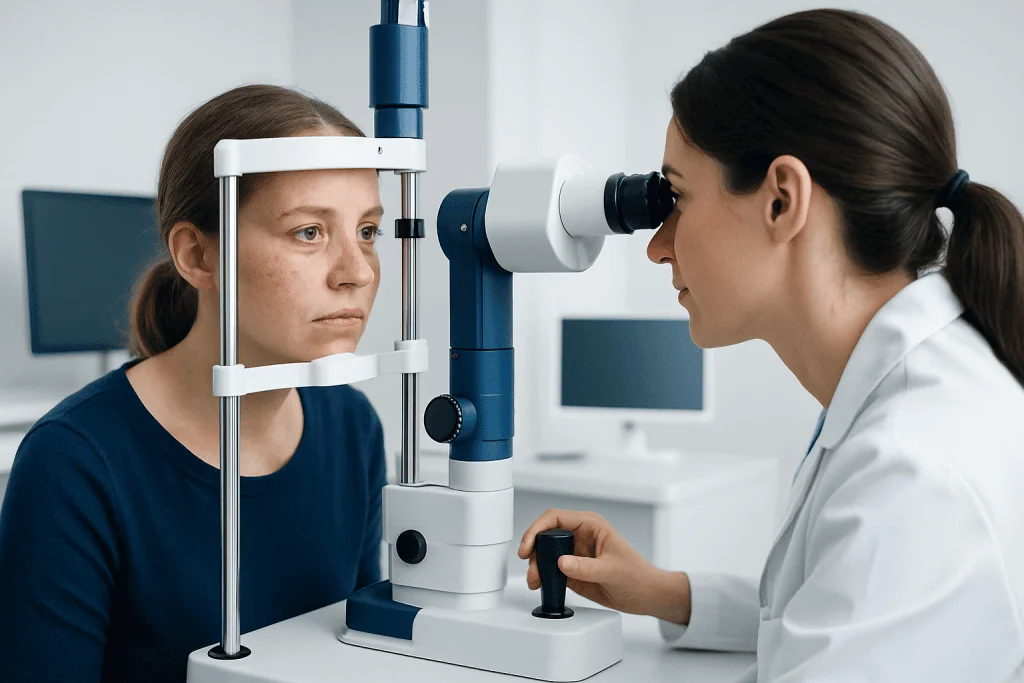
Symptoms can affect one or both eyes and may come and go. Some patients develop mild dryness and irritation, while others have more noticeable redness, scaling, and puffiness. The skin may appear wrinkled, thickened, or cracked if inflammation has been present for a longer time.
Common symptoms include:
- Itching around the eyelids or corners of the eyes
- Dry, rough, or flaky skin
- Redness or darker discoloration depending on skin tone
- Swelling of the eyelids
- Burning or stinging
- Sensitivity to skincare, makeup, or cleansers
- Crusting or weeping in more irritated cases
Some patients also have eczema on other parts of the body, hay fever, or asthma, which can support an atopic tendency. Others develop symptoms only after exposure to a new product or substance. If the eye itself becomes red, painful, or sensitive to light, the problem may not be simple eczema and should be assessed by a clinician.
Why eczema develops around the eyes

Eczema around eyes has several possible causes. One common cause is atopic dermatitis, a long-term inflammatory skin condition linked to a weakened skin barrier and a tendency toward allergies. In these patients, the eyelids may flare during periods of stress, seasonal allergy symptoms, weather changes, or exposure to irritants.
Another frequent cause is contact dermatitis. This happens when the skin reacts to a product or substance that touches the area directly or is transferred from the hands. Typical triggers include eye makeup, makeup remover, facial cleansers, moisturizers, sunscreen, shampoo, nail polish, hair dye, fragrances, preservatives, and some topical medications. Even products labeled natural or gentle can cause irritation or allergy in sensitive skin.
Less often, symptoms that resemble eczema may be linked to seborrheic dermatitis, blepharitis, psoriasis, or an infection. Because the treatment approach differs, diagnosis is important when symptoms persist or keep returning. Patients with recurring rashes may benefit from specialist evaluation in dermatology to look more closely at possible triggers and similar conditions.
Risk factors and everyday triggers
Certain factors can make eyelid eczema more likely. A personal or family history of eczema, asthma, or allergic rhinitis increases the chance of sensitive, reactive skin. Dry climates, cold weather, indoor heating, and air pollution may also worsen the skin barrier and trigger flares.
Daily habits often contribute. Frequent rubbing, washing the face with harsh cleansers, using exfoliating acids or retinoids near the eyes, and switching products often can all irritate the area. Contact lens solution, false eyelash glue, eyebrow or eyelash tinting products, and hand creams transferred by touch are also possible causes.
Allergens in the environment may play a role too. Pollen, dust mites, pet dander, and mold can provoke itchy eyes and lead to rubbing, which then aggravates the skin. In some patients, the main issue is not one dramatic exposure but the repeated effect of multiple small irritants over time.
How doctors diagnose eczema around eyes
Diagnosis usually begins with a detailed history and skin examination. A doctor will ask when the rash started, whether it is itchy or painful, what products are used around the eyes and hair, whether there is a history of allergies or eczema, and whether the patient has eye symptoms such as discharge or changes in vision.
The pattern and appearance of the rash can provide important clues, but diagnosis is not based on appearance alone. If the condition is recurrent, a clinician may suspect allergic contact dermatitis and ask the patient to stop likely triggers one by one or consider referral for patch testing. Patch testing can help identify substances such as fragrances, preservatives, metals, or cosmetic ingredients that cause delayed allergic reactions.
When the eye itself may be involved, or when there is concern about infection or another eyelid disorder, additional assessment may be needed. In selected cases, coordinated evaluation in eye diseases or a visit to an ophthalmology specialist helps protect eye health while the skin problem is treated.
Treatment options and why the eye area needs extra care
Treatment depends on the cause, severity, and whether the problem is mainly eczema, contact dermatitis, or another condition. The first step is often to remove likely triggers and simplify the skincare routine. This may mean temporarily stopping eye makeup, fragranced products, active ingredients, or recently introduced cosmetics until the skin settles.
Doctors may recommend gentle emollients to restore the skin barrier and reduce dryness. Because the eyelids are very delicate, medicated creams used on the body may not be suitable around the eyes. A clinician may prescribe short-term, low-potency anti-inflammatory treatment or a non-steroidal topical medicine when appropriate, balancing symptom relief with the need to protect the thin eyelid skin.
If allergy is suspected, treatment may also include strategies to reduce exposure to allergens and manage associated itching. When there are signs of infection, significant swelling, or a condition affecting the eye surface, treatment changes accordingly. Patients with persistent or difficult symptoms may benefit from specialist-led dermatology treatment or, when the eyes are directly affected, ophthalmology assessment. Acibadem International’s multidisciplinary specialists and JCI-accredited hospitals diagnose and treat this condition for international patients.
Self-care, prevention, and skin-friendly habits
Prevention focuses on protecting the skin barrier and minimizing triggers. Patients are often advised to wash the face with lukewarm water and a mild, fragrance-free cleanser or to rinse with water alone if cleansing products sting. A simple, non-irritating moisturizer recommended by a clinician can help reduce dryness and support healing.
Helpful habits include avoiding rubbing or scratching, keeping nails short, and pausing cosmetic products during a flare. It is often wise to avoid perfume, harsh exfoliants, essential oils, and anti-aging products close to the eyelids unless a doctor says they are appropriate. New products should be introduced one at a time so any trigger is easier to identify.
Patients who suspect a product-related rash may find it useful to keep a symptom diary listing skincare, makeup, hair products, and flare timing. Managing associated allergies, improving indoor air quality, and treating underlying skin conditions can also reduce recurrences. If symptoms return repeatedly, formal allergy testing may be more helpful than repeated trial and error at home.
When to seek medical care
Medical care is advisable if eczema around eyes does not improve after a short period of gentle self-care, keeps returning, or interferes with daily life. A proper diagnosis can prevent ongoing exposure to triggers and reduce the risk of complications such as skin cracking, infection, or chronic thickening of the eyelid skin.
Prompt assessment is especially important if there is severe swelling, pus, honey-colored crusting, significant pain, fever, or spreading redness. Eye symptoms such as blurred vision, light sensitivity, a very red eye, pain inside the eye, or difficulty opening the eyelids should be evaluated urgently because these features may suggest a problem beyond eczema.
Young children, people with known allergies, and patients already using medicated creams near the eyes should also seek medical guidance rather than continuing self-treatment. The goal is not only to calm the rash, but also to identify the cause and choose treatment that is safe for the sensitive eye area.
Frequently asked questions
Is eczema around eyes the same as an eye infection?
No. Eczema around eyes affects the skin of the eyelids and surrounding area, while an eye infection usually involves germs and may cause pus, marked pain, or a very red eye. Because symptoms can overlap, a doctor should assess persistent, worsening, or unclear cases.
What commonly triggers eczema around eyes?
Common triggers include cosmetics, makeup removers, facial cleansers, sunscreens, fragrances, shampoos, nail products transferred by touch, and environmental allergens. Rubbing the eyes and using harsh skincare products can also worsen symptoms.
Can patients use regular eczema cream on the eyelids?
Not always. The eyelid skin is very thin and sensitive, so products that are safe on the body may be too strong or irritating near the eyes. It is best to use only treatments recommended by a qualified doctor for this area.
How long does eyelid eczema take to improve?
Improvement depends on the cause and whether triggers are removed. Mild cases may settle within days to a couple of weeks with gentle care and appropriate treatment, while recurrent or allergic cases can take longer to fully control.
Can makeup be worn during a flare?
It is usually better to avoid makeup and other potential irritants during an active flare. This gives the skin barrier time to recover and helps identify whether a product is contributing to the problem.
When is eczema around eyes an emergency?
Urgent medical care is needed if there is severe swelling, significant pain, fever, pus, spreading redness, or symptoms involving the eye itself such as blurred vision or light sensitivity. These signs can point to infection or another condition that needs prompt treatment.
References
- American Academy of Dermatology
- National Eczema Association
- American Academy of Ophthalmology
- National Institute of Allergy and Infectious Diseases
- British Association of Dermatologists
This article is for general information only and is not a substitute for professional medical advice. Please consult a qualified doctor about your individual situation.
Eczema in Turkey — costs, top hospitals & a free quote
JCI-accredited · board-certified surgeons · reply within 24h
Add us as a Preferred Source to see more of our trusted health content across Google Search, AI Overviews and Discover.

More from the Health Library

Copper Bracelet: What Patients Need to Know

What is the ginseng? A Doctor-Reviewed Answer

Calf Stretch Stretch: What Patients Need to Know

Agonist: What Patients Need to Know

Semaglutide: An Evidence-Based Guide for Patients