Eczema Types: A Complete Medical Overview

Eczema types differ by trigger, body location, appearance, and age group affected. Atopic dermatitis is the most common form, but contact dermatitis and seborrheic dermatitis are also frequent.
Key Takeaways
- Eczema types differ by trigger, body location, appearance, and age group affected.
- Atopic dermatitis is the most common form, but contact dermatitis and seborrheic dermatitis are also frequent.
- Treatment usually combines skin-barrier care, trigger avoidance, and anti-inflammatory medicines when needed.
- A doctor may diagnose eczema from the history and skin exam, and patch testing can help identify allergic contact triggers.
- Medical care is important if eczema is severe, infected, widespread, painful, or not improving with basic skin care.
Eczema types are different forms of dermatitis that cause inflamed, itchy, and irritated skin, but they do not all behave the same way. Recognizing the main patterns—such as atopic, contact, dyshidrotic, seborrheic, nummular, and stasis eczema—can help guide diagnosis, treatment, and day-to-day skin care.
Overview: what eczema types are
Eczema types refer to a group of skin conditions that cause inflammation, dryness, itching, and a weakened skin barrier. The medical term often used is dermatitis. Although people may use “eczema” as one single diagnosis, it actually includes several related conditions with different causes, body patterns, and triggers.
The most commonly recognized eczema types are atopic dermatitis, contact dermatitis, dyshidrotic eczema, seborrheic dermatitis, nummular eczema, and stasis dermatitis. Some people have one form only, while others may have overlap. For example, a person with naturally sensitive, dry skin may also develop an allergic reaction to a skincare ingredient.
This distinction matters because the best treatment depends on the type. A rash caused by metal allergy is managed differently from eczema linked to a chronic skin-barrier problem or poor circulation in the legs. Understanding the pattern helps patients and doctors move beyond temporary symptom control and identify what is driving flare-ups.
Main eczema types and how they differ
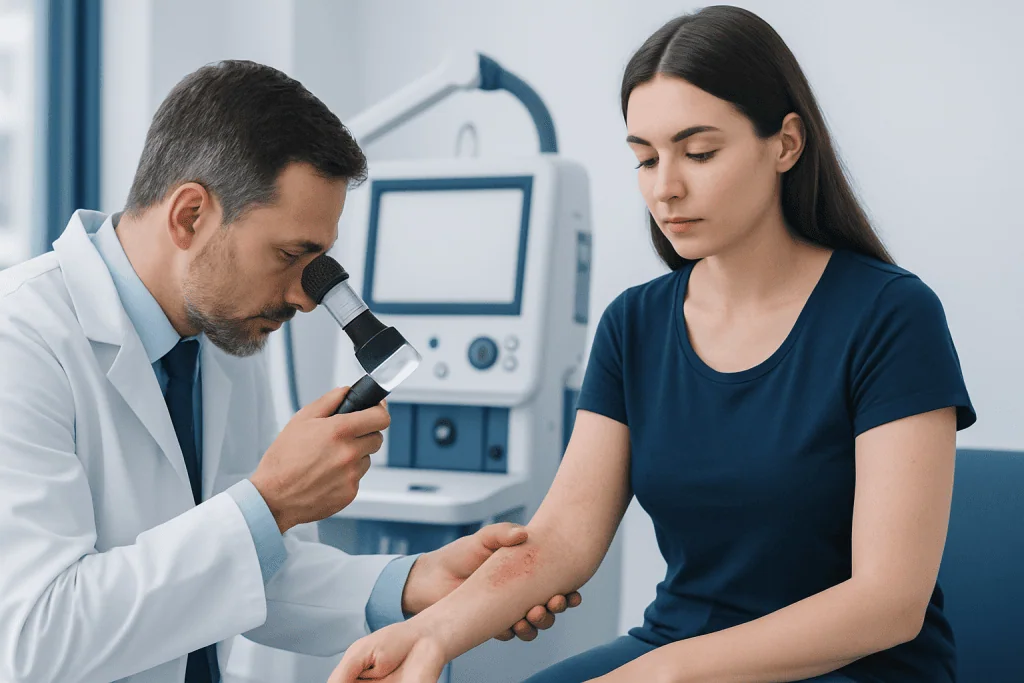
Atopic dermatitis is the most common eczema type. It often begins in childhood, though adults can develop it too. It is linked to a combination of genetics, immune system activity, and a skin barrier that loses moisture easily. It tends to affect the face, neck, hands, inner elbows, and behind the knees, and it commonly occurs alongside asthma, hay fever, or other allergic conditions.
Contact dermatitis happens when the skin reacts to an outside substance. This can be irritant contact dermatitis, caused by repeated exposure to soaps, detergents, cleaning products, or friction, or allergic contact dermatitis, caused by an immune reaction to substances such as nickel, fragrances, preservatives, hair dye, or rubber chemicals. The rash usually appears where the skin touched the trigger.
Dyshidrotic eczema causes small, very itchy blisters, usually on the fingers, palms, and soles. It may flare with sweating, stress, heat, metal exposure, or a history of atopy. Seborrheic dermatitis affects oil-rich areas such as the scalp, eyebrows, sides of the nose, chest, and ears. It often causes flaky, greasy, or scaly patches and can overlap with dandruff.
Nummular eczema appears as coin-shaped patches, often on the arms or legs, and may follow very dry skin, irritation, or minor skin injury. Stasis dermatitis occurs most often on the lower legs when poor venous circulation leads to swelling, skin inflammation, and discoloration. In some patients, doctors may also consider other skin conditions that can resemble eczema, such as psoriasis or fungal infections, including psoriasis.
Symptoms and common flare patterns

Across all eczema types, itching is one of the most common symptoms. The skin may feel dry, rough, tight, sore, or sensitive. Depending on the type and stage, eczema can look red, pink, brown, purple, or grayish, and skin changes may appear different across skin tones. In darker skin, inflammation may be less obviously red and can leave temporary light or dark marks after a flare settles.
Acute flares may cause redness, swelling, oozing, crusting, or tiny blisters. Longer-term or repeated eczema can lead to thickened skin, scaling, cracking, and accentuated skin lines from chronic scratching. Sleep disturbance is also common because itching often becomes worse in the evening or at night.
Pattern helps identify the eczema type. Hand eczema may suggest irritant or allergic contact dermatitis, especially in people who wash hands frequently or work with chemicals. Scalp flaking points more toward seborrheic dermatitis, while lower-leg swelling and rash can suggest stasis dermatitis. Coin-shaped plaques support nummular eczema, and small itchy vesicles on palms and soles are more typical of dyshidrotic eczema.
- Dryness and rough patches
- Itching that can be mild to intense
- Redness or color change
- Scaling, flaking, or crusting
- Cracks, soreness, or burning
- Blisters or oozing in some types
Causes and risk factors
Eczema does not have one single cause. In many patients, it develops from a combination of skin-barrier weakness, immune system overreaction, genetics, and environmental exposure. When the skin barrier is less effective, moisture escapes more easily and irritants can enter more readily. This can make the skin more reactive to everyday triggers.
Risk factors differ by subtype. Atopic dermatitis is more likely in people with a family history of eczema, asthma, or allergies. Contact dermatitis is associated with repeated exposure to irritants or allergens, especially in occupations involving wet work, cleaning products, hair chemicals, metals, adhesives, or healthcare glove use. Dyshidrotic eczema may be linked to sweating, stress, and metal sensitivity.
Climate and habits also matter. Cold, dry weather can worsen dryness, while heat and sweating may provoke itching or blisters. Fragranced products, harsh soaps, wool, smoke, and emotional stress are common flare triggers. Stasis dermatitis is strongly connected to leg swelling and chronic venous insufficiency, and seborrheic dermatitis is influenced by skin oil, yeast on the skin, and individual susceptibility.
Because several skin disorders can resemble one another, careful assessment is important. Conditions such as dermatitis in its broader forms, fungal infections, acneiform eruptions, and rosacea-like inflammation can enter the discussion depending on the location and appearance of the rash.
How eczema is diagnosed
Doctors usually diagnose eczema by taking a medical history and examining the skin. They ask about where the rash appears, how long it lasts, what products or activities seem to trigger it, whether symptoms change with seasons, and whether there is any personal or family history of allergy or asthma. This clinical pattern often provides the clearest clues.
Tests are not always needed, but they can be helpful in certain situations. Patch testing may be recommended when allergic contact dermatitis is suspected, especially if eczema affects the hands, eyelids, face, or neck, or if it continues despite standard treatment. Skin swabs may be taken if infection is suspected, and occasionally a skin biopsy is used to rule out another condition.
Diagnosis also involves identifying severity and complications. The doctor may look for signs of bacterial infection, widespread inflammation, sleep disruption, or thickened skin from chronic scratching. When a rash is unusual, persistent, or resistant to treatment, referral to a dermatologist can help confirm the specific eczema type and refine treatment.
Treatment options for different eczema types
Treatment usually starts with restoring the skin barrier and reducing inflammation. Regular use of moisturizers is a core part of care for nearly every eczema type. Thick, fragrance-free emollients help seal in moisture and protect the skin from irritants. During active flares, doctors may prescribe anti-inflammatory creams or ointments, commonly topical corticosteroids or non-steroidal prescription medicines, depending on the body area and severity.
Type-specific treatment is also important. Contact dermatitis improves when the trigger is identified and avoided. Seborrheic dermatitis often responds to medicated shampoos or topical antifungal and anti-inflammatory treatments. Dyshidrotic eczema may need more intensive hand and foot care, while stasis dermatitis requires attention to leg swelling and circulation. Some patients with severe or widespread disease may benefit from phototherapy or advanced dermatology treatment under specialist supervision.
If scratching has led to broken skin or infection, treatment may also address bacterial overgrowth. In more persistent cases, doctors may consider systemic medicines that calm inflammation throughout the body. Care plans are individualized based on age, eczema type, body site, severity, and whether there are other conditions such as allergies or asthma.
When the diagnosis is uncertain or the rash overlaps with another inflammatory skin disorder, specialist assessment can be valuable. Depending on symptoms, a clinician may also evaluate related conditions or skin sensitivities through allergy testing.
Prevention and self-care for long-term control
Good daily skin care can reduce flares even when eczema cannot be permanently cured. Short, lukewarm showers are usually better tolerated than long, hot baths. A gentle, fragrance-free cleanser should be used only where needed, followed by moisturizer while the skin is still slightly damp. This routine helps support the skin barrier and reduce water loss.
Trigger management is another key step. Patients may be advised to avoid fragranced products, harsh detergents, rough fabrics, and known allergens such as certain metals or cosmetics. Gloves can help protect the hands during cleaning or frequent wet work, though they should be used sensibly to avoid sweat buildup. Keeping nails short may reduce skin injury from scratching.
Lifestyle measures can also help. Managing stress, limiting overheating, and choosing breathable clothing may reduce itching and flare frequency. For stasis dermatitis, leg elevation and treatment of venous problems are important. For infants and children, skin-care routines often need to be simple and consistent so that treatment remains practical and sustainable for the family.
Near the end of the care pathway, some patients benefit from multidisciplinary support, particularly if eczema is severe, recurrent, or affecting quality of life. Acibadem International’s multidisciplinary specialists at JCI-accredited hospitals diagnose and treat skin conditions for international patients when more detailed evaluation is needed.
When to seek medical care
Medical advice is important if a rash is new, spreading, very painful, or not improving with gentle skin care and over-the-counter moisturizers. A doctor should also assess eczema that is interfering with sleep, school, work, or daily activities. Early evaluation may help prevent complications such as infection, thickened skin, or repeated uncontrolled flares.
Prompt care is especially important if the skin becomes warm, swollen, increasingly tender, crusted with yellow fluid, or associated with fever, because these can suggest infection. People with extensive hand eczema, severe itching, recurring eyelid rash, or lower-leg rash with swelling may need targeted treatment and investigation of the underlying cause.
Children, older adults, and people with chronic medical conditions may need closer follow-up. A dermatologist or qualified doctor can clarify the eczema type, identify triggers, and recommend a plan that is safe for the patient’s age, skin location, and overall health.
Frequently asked questions
What are the main eczema types?
The main eczema types are atopic dermatitis, contact dermatitis, dyshidrotic eczema, seborrheic dermatitis, nummular eczema, and stasis dermatitis. They all cause skin inflammation, but they differ in triggers, appearance, body location, and treatment approach.
Which eczema type is most common?
Atopic dermatitis is generally considered the most common type of eczema. It often begins in childhood and is linked to dry, sensitive skin, allergies, and a family history of atopic conditions.
Can a person have more than one type of eczema?
Yes, some people can have overlapping eczema types. For example, a person with atopic dermatitis may also develop contact dermatitis from soaps, cosmetics, or metals that irritate the skin or trigger allergy.
How can someone tell eczema apart from psoriasis or a fungal rash?
These conditions can look similar, so a clinical assessment is often needed. Doctors look at the pattern, body location, scaling, itch, personal history, and sometimes use tests such as patch testing, swabs, or a biopsy if the diagnosis is unclear.
Is eczema contagious?
No, eczema is not contagious and cannot be passed from one person to another by touch. It is an inflammatory skin condition related to barrier function, immune response, and triggers rather than an infection itself.
What helps prevent eczema flare-ups?
Consistent moisturizing, gentle skin care, and avoiding known triggers are the main preventive steps. Depending on the eczema type, this may also include reducing contact with irritants, managing stress, controlling sweating, or treating leg swelling.
This article is for general information only and is not a substitute for professional medical advice. Please consult a qualified doctor about your individual situation.
Eczema in Turkey — costs, top hospitals & a free quote
JCI-accredited · board-certified surgeons · reply within 24h
Add us as a Preferred Source to see more of our trusted health content across Google Search, AI Overviews and Discover.

More from the Health Library

Holistic Healing for Inflammation: An Evidence-Based Guide for Patients

Diastema: What Patients Need to Know

Less Lymphocytes: What Patients Need to Know

Carbamide Peroxide: An Evidence-Based Guide for Patients

Cavity Nose: What Patients Need to Know