Epididymal Hypertension Treatment: How It Works, Results and What to Expect

Epididymal hypertension is a temporary discomfort linked with prolonged sexual arousal, not a dangerous buildup of semen. There is no medical procedure or antibiotic treatment for uncomplicated epididymal hypertension.
Key Takeaways
- Epididymal hypertension is a temporary discomfort linked with prolonged sexual arousal, not a dangerous buildup of semen.
- There is no medical procedure or antibiotic treatment for uncomplicated epididymal hypertension.
- Symptoms often improve within minutes to hours after arousal decreases, with or without orgasm.
- Sudden severe pain, swelling, nausea, fever, or pain that does not improve needs urgent medical assessment.
- Epididymitis is a separate inflammatory condition that may require testing and targeted treatment.
Epididymal hypertension, sometimes called “blue balls,” is temporary testicular or scrotal discomfort that can occur after prolonged sexual arousal without orgasm. Epididymal hypertension treatment is usually simple: stopping stimulation, allowing arousal to settle, and using comfort measures while remaining alert for symptoms that could indicate another cause of testicular pain.
Overview: What Is Epididymal Hypertension Treatment?
Epididymal hypertension treatment usually does not involve a procedure, prescription medicine, or urgent intervention. The condition refers to temporary aching, heaviness, pressure, or mild pain in the testicles or scrotum after sustained sexual arousal, particularly when orgasm does not occur. The discomfort generally settles as blood flow and muscle tension return to their usual state.
Despite the common nickname “blue balls,” the scrotum does not literally turn blue because of trapped semen, and ejaculation is not medically required to prevent harm. Stopping sexual activity, taking time to relax, and using simple comfort measures are typically enough. Importantly, no person is obligated to continue sexual activity or have an orgasm to relieve another person’s discomfort.
Testicular pain has many possible causes, and not all pain after arousal is epididymal hypertension. Persistent, severe, one-sided, or recurrent pain should be assessed by a clinician, particularly because urgent conditions such as testicular torsion can have similar early symptoms.
How It Works: Why Arousal Can Cause Testicular Discomfort
During sexual arousal, blood flow increases to the genitals and pelvic muscles may tighten. When arousal remains high for a prolonged period, some people experience temporary pressure or aching in the testicles, lower abdomen, groin, or pelvic area. This is thought to relate mainly to temporary vascular congestion and muscular tension rather than injury or a blockage in the epididymis.
The epididymis is a small coiled tube behind each testicle where sperm mature and are stored. Although its name is used in “epididymal hypertension,” the term does not mean that the epididymis is infected, permanently stretched, or damaged. It is also not the same as inflammation of the epididymis, known as epididymitis.
Arousal may resolve through orgasm, but it can also settle without orgasm as the body relaxes. Gentle movement, distraction, a change of focus, and time can help the nervous system and circulation return to baseline. The expected course is short-lived, and ongoing symptoms should not automatically be attributed to arousal.
Who May Experience It and What Else Can Cause Similar Pain?

Epididymal hypertension can occur in adolescents and adults who have testicles. It may be more noticeable after extended sexual stimulation, repeated interruption of arousal, or anxiety that keeps attention focused on physical sensations. Individual experiences vary: some people never experience it, while others may have occasional discomfort.
There is no specific test for epididymal hypertension. A clinician considers the timing, pattern, and severity of symptoms while checking for other explanations. These can include muscle strain, inguinal hernia, urinary tract problems, kidney stones, varicocele, hydrocele, prostatitis, epididymitis, and testicular torsion.
Epididymitis is different from temporary arousal-related discomfort. It commonly causes gradually increasing pain and tenderness, often with swelling, warmth, urinary symptoms, fever, or discharge. It may result from a sexually transmitted infection or bacteria from the urinary tract and needs medical evaluation rather than self-diagnosis.
What to Expect: Practical Steps and Recovery Timeline
For uncomplicated epididymal hypertension, the first step is to stop sexual stimulation and allow the body to settle. A person may choose to rest, take a warm shower or bath if this feels soothing, use a cool compress wrapped in cloth for short periods, wear supportive underwear, or do light activity such as walking. Slow breathing and shifting attention away from symptoms may also reduce tension.
There is no need to force ejaculation or continue sexual contact. Masturbation or consensual sexual activity may relieve symptoms for some people, but it is a personal choice rather than a medical requirement. If pain is mild and there are no warning signs, an over-the-counter pain reliever may be considered if it is safe for the individual; a pharmacist or clinician can advise when there are medical conditions or regular medications to consider.
Symptoms commonly improve within minutes to several hours. A brief period of residual sensitivity can occur, but the pain should continue to lessen rather than worsen. If discomfort remains significant into the next day, keeps returning without a clear trigger, or affects daily life, a urology or primary care assessment is appropriate.
Benefits, Limits and Risks of Self-Care
The main benefit of conservative care is that it supports natural resolution without unnecessary treatment. Rest, comfort measures, and time are low-risk for most people. They can also help distinguish a transient arousal-related symptom from pain that persists and needs investigation.
The important limitation is that self-care cannot safely rule out other causes of scrotal pain. Antibiotics do not treat epididymal hypertension and should only be used when prescribed for a diagnosed infection. Similarly, invasive treatment is not indicated for temporary discomfort caused by arousal.
The greatest risk is delaying evaluation of a different condition. Testicular torsion, in which the spermatic cord twists and reduces blood supply to a testicle, is a medical emergency. Sudden, intense one-sided pain, a high-riding testicle, swelling, nausea, or vomiting should be treated as urgent regardless of recent sexual activity.
How Long Does It Take for Epididymal Hypertension to Go Away?
Epididymal hypertension usually goes away within minutes to a few hours once sexual arousal decreases. The timeline varies with the intensity and duration of arousal, pelvic muscle tension, stress, and individual sensitivity. It should not cause worsening pain over time or symptoms that last for days.
Rest, gentle movement, supportive underwear, and a warm or cool compress may make the discomfort easier to tolerate while it resolves. Ejaculation can be one way symptoms settle, but it is not necessary for recovery and should never be treated as an expectation from a partner.
If pain is still present after several hours, is not clearly improving by the next day, or occurs with swelling, fever, urinary changes, nausea, or a lump, medical assessment is recommended. These features are not typical of simple epididymal hypertension.
Is Epididymitis 100% Curable?
Epididymitis is often treatable, especially when the cause is identified early and the recommended treatment is completed. However, it is not accurate to promise that it is “100% curable” in every situation. Recovery can depend on whether infection, urinary obstruction, trauma, medication effects, or another condition is involved.
When bacterial infection is suspected, a clinician may arrange urine and sexual health testing and prescribe appropriate antibiotics. Pain relief, rest, scrotal support, and follow-up can also be part of care. Sexual partners may need testing or treatment when a sexually transmitted infection is diagnosed.
Symptoms can take days to begin improving and sometimes several weeks to completely settle. Untreated or recurrent inflammation may lead to complications, so ongoing pain, swelling, or fever should be reviewed. A clinician can clarify whether symptoms fit epididymitis and discuss appropriate urology care.
Is Edging for 2 Hours Healthy?
Edging, or intentionally delaying orgasm, is not inherently harmful for most people when it is comfortable, consensual, and does not cause distress. However, two hours of prolonged arousal may increase the chance of temporary genital aching, pelvic muscle tension, skin irritation, fatigue, or frustration. There is no health requirement to edge for any particular length of time.
A person should stop if they develop pain, numbness, swelling, dizziness, emotional discomfort, or pressure to continue. Adequate lubrication, avoiding excessive friction, taking breaks, and communicating clearly with a partner can reduce irritation and discomfort. Prolonged edging should not be used as a reason to ignore significant testicular pain.
If someone regularly experiences pelvic or testicular pain with sexual activity, it may be helpful to discuss this with a doctor. Assessment can identify contributing factors such as pelvic floor tension, infection, or another urological condition.
How Bad Is Epididymal Hypertension?
Epididymal hypertension is usually mild to moderate, temporary, and not dangerous. People may describe a dull ache, heaviness, pressure, or sensitivity in the testicles or lower pelvis. Although it can be uncomfortable, it does not cause infertility, permanent testicular damage, or a dangerous accumulation of semen.
The severity of pain alone cannot always identify the cause. A person should not assume that severe pain is epididymal hypertension, especially if it starts suddenly or is limited to one side. Testicular pain deserves caution because some urgent conditions need prompt treatment to protect testicular health.
For people with repeated concerns about genital, urinary, or reproductive health, a qualified urologist can provide a confidential assessment. Acibadem International’s multidisciplinary specialists and JCI-accredited hospitals support international patients who need evaluation and treatment for urological symptoms.
When to Seek Medical Care
Urgent medical care is needed for sudden severe testicular or scrotal pain, especially on one side; pain with nausea or vomiting; rapidly developing swelling; a testicle that appears higher than usual; or pain after an injury. These symptoms can occur with testicular torsion or other urgent conditions and should not be managed at home.
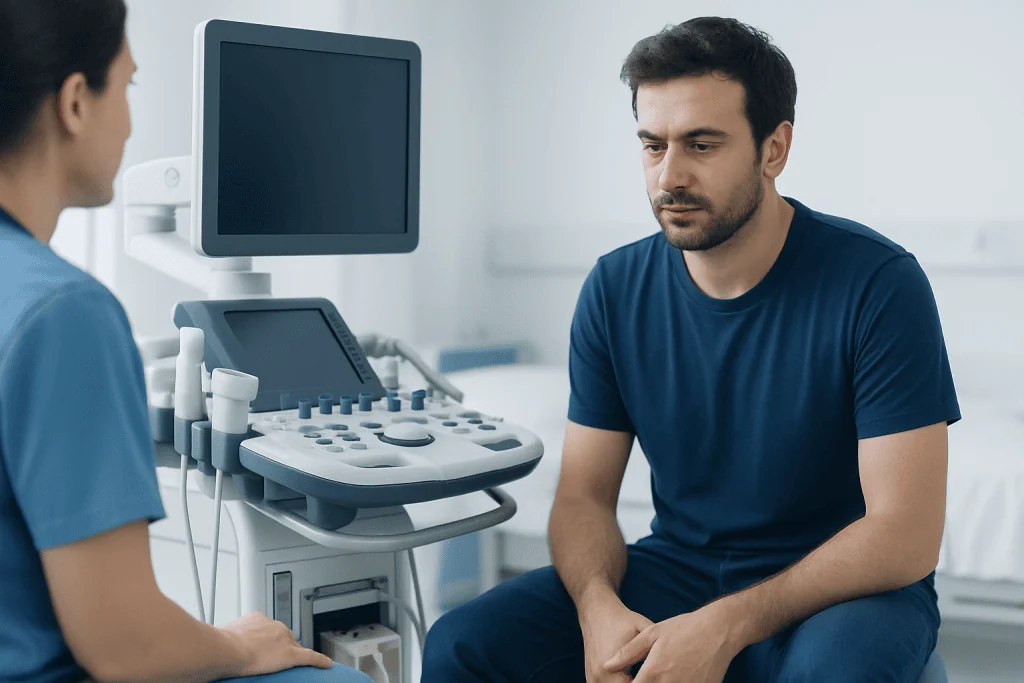
Medical advice is also important for fever, chills, burning or difficulty with urination, blood in the urine, penile discharge, a new scrotal lump, redness or warmth of the scrotum, or pain that continues beyond several hours or does not improve by the next day. A clinician may perform an examination, urine tests, sexual health tests, and, when appropriate, ultrasound imaging.
People who have recurrent pain, fertility concerns, or known urinary tract problems can benefit from planned urological review. Early assessment helps ensure that treatment is directed at the actual cause rather than assuming all post-arousal discomfort is epididymal hypertension.
Frequently asked questions
Does epididymal hypertension need medical treatment?
Usually, no. It generally improves with time after arousal stops, along with simple comfort measures such as rest, supportive underwear, and a warm or cool compress. Medical assessment is needed if pain is severe, persistent, worsening, or accompanied by swelling, fever, nausea, or urinary symptoms.
Can epididymal hypertension cause infertility?
No evidence suggests that temporary epididymal hypertension causes infertility or permanent harm to the testicles. It is not thought to be caused by trapped semen. Persistent pain or fertility concerns should still be discussed with a qualified clinician.
Can someone get blue balls without sexual contact?
Yes. The discomfort can happen after any form of prolonged sexual arousal, including arousal without physical contact. It can also occur after interrupted stimulation, but not everyone experiences it.
Should a partner have sex to relieve epididymal hypertension?
No. A partner is never responsible for relieving another person’s physical discomfort through sexual activity. Symptoms can settle without orgasm, and sexual activity should always be voluntary, comfortable, and consensual.
How can epididymal hypertension be distinguished from testicular torsion?
Epididymal hypertension is generally a mild to moderate ache that follows prolonged arousal and improves over a short period. Testicular torsion often causes abrupt, severe one-sided pain and may include swelling, nausea, vomiting, or an unusually positioned testicle. Because symptoms can overlap, sudden or severe testicular pain requires urgent medical evaluation.
Can antibiotics treat blue balls?
No. Antibiotics do not treat epididymal hypertension because it is not a bacterial infection. Antibiotics may be used for epididymitis only when a clinician suspects or confirms an infection and prescribes an appropriate treatment.
References
- American Urological Association
- Centers for Disease Control and Prevention
- National Institute of Diabetes and Digestive and Kidney Diseases
- NHS
- Mayo Clinic
This article is for general information only and is not a substitute for professional medical advice. Please consult a qualified doctor about your individual situation.
Hypertension in Turkey — costs, top hospitals & a free quote
JCI-accredited · board-certified surgeons · reply within 24h
Add us as a Preferred Source to see more of our trusted health content across Google Search, AI Overviews and Discover.