

Essential Tremor: Diagnosis, Medication Options, and When DBS Is Considered

Essential tremor typically appears during movement or when holding a posture, rather than mainly at rest. A neurologist diagnoses essential tremor by medical history and examination, while tests may be used to rule out other causes.
Key Takeaways
- Essential tremor typically appears during movement or when holding a posture, rather than mainly at rest.
- A neurologist diagnoses essential tremor by medical history and examination, while tests may be used to rule out other causes.
- Medication options may include propranolol, primidone, or other medicines depending on symptoms and individual health factors.
- Deep brain stimulation may be considered when tremor remains disabling despite well-tried medical treatment.
- Lifestyle changes such as reducing caffeine, managing stress, and using adaptive tools can support daily function.
Essential tremor is a common movement disorder that usually causes shaking during action, such as writing, eating, or holding objects. Diagnosis is mainly clinical, and many people improve with practical adjustments, medication, and, in carefully selected cases, deep brain stimulation.
Overview
Essential tremor is a neurological movement disorder that causes rhythmic shaking, most often in the hands and arms. It is typically an action tremor, meaning it becomes noticeable when a person uses the affected body part, such as when drinking from a cup, writing, using utensils, or holding the arms outstretched. It can also involve the head, voice, jaw, or, less commonly, the legs.
Although essential tremor can be frustrating, it is not the same condition as Parkinson disease. Parkinson tremor often appears at rest and is usually accompanied by other signs such as stiffness, slowness of movement, and changes in walking. Essential tremor most often affects movement precision and daily tasks rather than causing a broad decline in neurological function.
The word essential in essential tremor historically meant that the tremor was not linked to another known disease. Today, doctors understand it as a distinct movement disorder with variable severity. Some people have mild tremor for many years, while others develop symptoms that interfere with work, eating, personal care, hobbies, or social confidence.
Symptoms and How Essential Tremor Feels
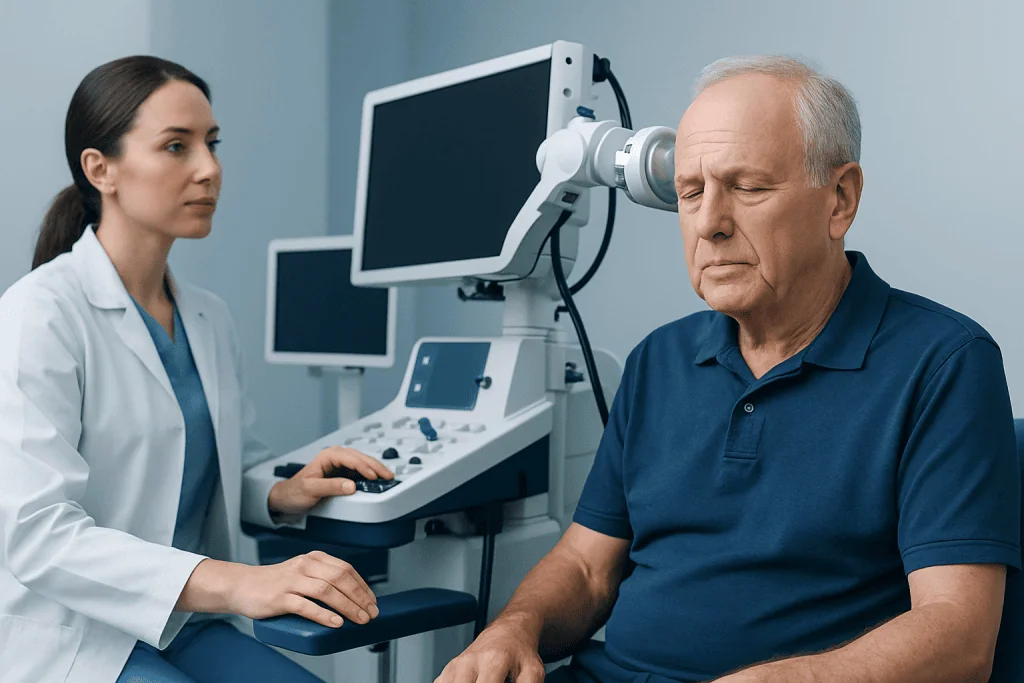
The main symptom is a rhythmic shaking that usually appears with action or posture. A person may notice that handwriting becomes shaky or smaller, liquids spill more easily, or fine tasks such as buttoning a shirt, applying makeup, shaving, or using a phone become more difficult. Tremor may affect both sides of the body, but one side is often more noticeable.
Essential tremor can fluctuate. It may be more obvious when a person is tired, anxious, physically active, hungry, or after caffeine. Some people notice temporary improvement after a small amount of alcohol, but alcohol is not recommended as a treatment because of health risks and the potential for dependence.
Common features include:
- Shaking of the hands during writing, eating, or holding objects
- A yes-yes or no-no head tremor in some people
- Shaky or quivering voice when speaking
- Worsening tremor during stress or public situations
- Improvement at rest, especially when the hands are fully relaxed
Symptoms vary widely from person to person. The goal of evaluation is not only to name the condition, but also to understand how much it affects the individual’s daily life and what type of support is most appropriate.
Causes and Risk Factors

The exact cause of essential tremor is not fully understood. Research suggests that it involves abnormal communication within movement-control networks of the brain, including circuits linked to the cerebellum and thalamus. These regions help coordinate smooth, accurate movement, so small changes in their signaling can lead to rhythmic shaking during action.
Family history is common. When essential tremor runs in families, it may be described as familial tremor, and several family members may notice similar symptoms at different ages. However, not everyone with essential tremor has affected relatives, and not everyone with a family history will develop symptoms.
Essential tremor can begin at almost any age, including young adulthood, but it is more frequently recognized in middle-aged and older adults. Tremor may gradually progress over time, though the pace is often slow. Risk factors that can make tremor more noticeable include sleep deprivation, stress, stimulants, some medications, thyroid overactivity, and certain metabolic or neurological conditions that need to be distinguished from essential tremor.
Diagnosis: What the Neurologist Looks For
Diagnosis is based mainly on a careful medical history and neurological examination. The doctor asks when the tremor started, which body parts are involved, what triggers or improves it, whether there is a family history, and how it affects daily activities. The examination usually includes observing the hands at rest, with arms outstretched, and during tasks such as writing, drawing a spiral, pouring water, or touching a target.
There is no single blood test that proves essential tremor. Instead, the neurologist looks for a pattern that fits essential tremor and checks for signs that suggest another condition. These may include rest tremor, slowness, stiffness, balance problems, weakness, numbness, medication-related tremor, thyroid disease, or other movement disorders.
Tests are chosen according to the person’s history and examination. Blood tests may be used to check thyroid function, liver or kidney function, vitamin levels, or medication effects when relevant. Brain imaging, such as MRI, is not needed for every person but may be recommended if the tremor is unusual, one-sided in a concerning way, rapidly progressive, associated with other neurological signs, or being evaluated before a procedure such as deep brain stimulation.
Medication Options
Treatment is individualized. If tremor is mild and does not interfere with daily life, reassurance, monitoring, and practical adjustments may be enough. When symptoms affect function or quality of life, medication may help reduce tremor amplitude, even if it does not remove tremor completely.
Two commonly used first-line medicines are propranolol and primidone. Propranolol is a beta blocker that may be helpful for hand tremor, especially when tremor worsens with physical symptoms of anxiety. It may not be suitable for some people with asthma, certain heart rhythm problems, low blood pressure, or other conditions. Primidone is an anti-seizure medicine that can reduce tremor in some patients, but it is usually started carefully because side effects such as sleepiness, dizziness, or nausea can occur, especially early in treatment.
Other medicines may be considered when first-line options are not suitable or not effective enough. These can include topiramate, gabapentin, or selected anti-anxiety medicines in specific situations. Botulinum toxin injections may help certain head, voice, or hand tremors, although hand injections require careful technique because weakness can occur. Medication choices should always take into account age, other medical conditions, pregnancy plans, occupation, driving, and possible interactions with current medicines.
When Deep Brain Stimulation Is Considered
Deep brain stimulation, often called DBS, is a surgical treatment considered for people with essential tremor that remains significantly disabling despite appropriate medication trials. It is not usually the first treatment. It may be discussed when tremor interferes with essential daily activities such as eating, drinking, writing, personal care, work tasks, or independence, and when the person is medically suitable for surgery.
In DBS for essential tremor, a neurosurgeon places thin electrodes in a movement-related brain target, commonly the ventral intermediate nucleus of the thalamus. The electrodes are connected to a small implanted pulse generator, similar in concept to a pacemaker, usually placed under the skin of the chest. The device sends controlled electrical pulses that help regulate abnormal tremor signaling. Settings can be adjusted after surgery to improve benefit and reduce side effects.
Evaluation before DBS is thorough. It usually includes confirmation of the diagnosis by a movement disorder neurologist, review of previous medication trials, brain imaging, assessment of general health, and discussion of goals and expectations. Potential benefits include meaningful tremor reduction, but DBS does not cure the underlying condition and requires follow-up programming and device management. Possible risks, such as infection, bleeding, speech or balance changes, mood or cognitive effects, and hardware issues, are reviewed carefully so the patient can make an informed decision.
Other procedure-based options, such as focused ultrasound thalamotomy or radiofrequency thalamotomy, may be discussed in selected cases. The best option depends on tremor pattern, whether one or both sides are affected, medical history, local expertise, and patient preference.
Prevention, Self-Care, and Daily Living
There is no proven way to prevent essential tremor from developing, but many people can reduce its impact with practical strategies. Keeping regular sleep, eating on time, staying hydrated, and managing stress may help because fatigue, hunger, and tension can amplify tremor. Reducing or avoiding caffeine and other stimulants may also be useful for some people.
Adaptive tools can make daily tasks easier and less tiring. Weighted utensils, cups with lids, two-handled mugs, electric toothbrushes, button hooks, voice-to-text software, and pens with larger grips may improve independence. Occupational therapy can help identify personalized techniques for writing, dressing, cooking, and workplace tasks.
Emotional well-being also matters. Tremor can make people feel self-conscious, especially in social or professional settings. Education, supportive conversations with family or colleagues, and, when needed, counseling can reduce the stress-tremor cycle. Exercise is generally encouraged for overall health, balance, mood, and confidence, although specific activities should be chosen according to safety and comfort.
When to See a Doctor
A person should seek medical evaluation if tremor is new, worsening, affecting daily activities, or associated with other symptoms such as weakness, numbness, slowness, stiffness, balance difficulty, speech changes, confusion, or weight loss. A doctor should also review tremor that begins after starting a new medication or supplement, or tremor that is accompanied by symptoms of thyroid overactivity such as palpitations, heat intolerance, or unexplained weight change.
People already diagnosed with essential tremor should return for follow-up if medication is not helping enough, side effects occur, or symptoms begin to limit independence. Treatment plans often need adjustment over time, and a movement disorder specialist can help review medication options, rehabilitation strategies, and whether advanced therapies such as DBS are appropriate.
For international patients seeking evaluation, Acibadem International provides access to multidisciplinary specialists and JCI-accredited hospitals that diagnose and treat movement disorders, including essential tremor. As with any neurological condition, the most suitable care plan should be based on a complete in-person assessment and shared decision-making with qualified clinicians.
Frequently asked questions
Is essential tremor the same as Parkinson disease?
No. Essential tremor usually occurs during action, such as writing or holding a cup, while Parkinson tremor often appears at rest. Parkinson disease also commonly includes slowness, stiffness, and walking changes, which are not typical core features of essential tremor.
Can essential tremor go away on its own?
Essential tremor is usually a long-term condition, and it often does not disappear completely. However, symptoms can fluctuate and may remain mild for many years. Treatment and self-care can often reduce its impact on daily life.
What is the best medication for essential tremor?
There is no single best medicine for everyone. Propranolol and primidone are commonly used first-line options, but the right choice depends on the person’s symptoms, age, medical history, other medicines, and side effect risks. A neurologist can help select and adjust treatment safely.
When is DBS recommended for essential tremor?
DBS may be considered when tremor remains disabling despite appropriate medication trials and affects important daily activities. Candidates need a detailed evaluation to confirm the diagnosis, assess medical suitability, and discuss realistic goals. DBS can reduce tremor, but it requires surgery and ongoing follow-up.
Does stress cause essential tremor?
Stress does not usually cause essential tremor by itself, but it can make tremor more noticeable. Anxiety, fatigue, caffeine, and lack of sleep can also amplify symptoms. Stress management may help reduce day-to-day tremor severity.
Are there non-drug ways to manage essential tremor?
Yes. Practical tools such as weighted utensils, larger pen grips, covered cups, and voice-to-text technology can help with daily tasks. Sleep regularity, limiting caffeine, occupational therapy, and relaxation strategies may also be useful.
References
- International Parkinson and Movement Disorder Society
- American Academy of Neurology
- National Institute of Neurological Disorders and Stroke
- Mayo Clinic
- Cleveland Clinic
This article is for general information only and is not a substitute for professional medical advice. Please consult a qualified doctor about your individual situation.
Tremor in Turkey — costs, top hospitals & a free quote
JCI-accredited · board-certified surgeons · reply within 24h
Add us as a Preferred Source to see more of our trusted health content across Google Search, AI Overviews and Discover.

More from the Health Library



Related Specialists

Gülşah Kalaycı
Physical Medicine & Rehabilitation
Prof. Dr. Yurtkuran Sadıkoğlu
Interventional Radiology
Prof. Dr. Eyüp Murat Ökten
Cardiovascular Surgery
Assoc. Prof. Dr. Seçkin Satılmış
Cardiology