Eye Patch for Amblyopia Treatment: How It Works, Results and What to Expect
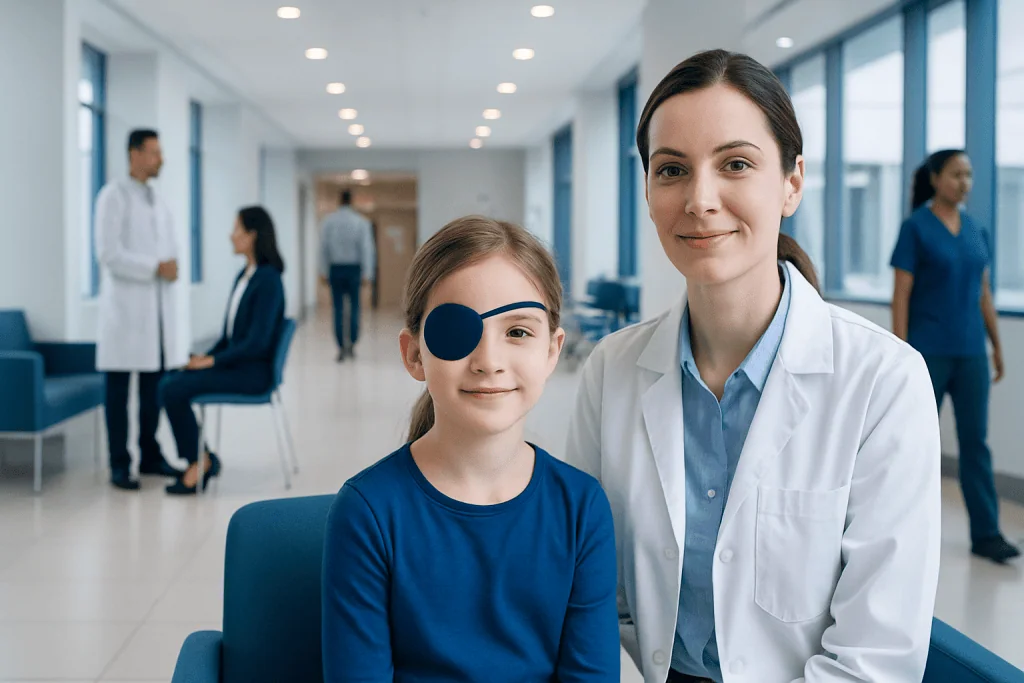
Patching treats amblyopia by training the brain to rely more on the weaker eye. Glasses are commonly needed before or alongside patching therapy.
Key Takeaways
- Patching treats amblyopia by training the brain to rely more on the weaker eye.
- Glasses are commonly needed before or alongside patching therapy.
- The number of patching hours and total treatment time depend on age, severity, vision response and the cause of amblyopia.
- Improvement may begin within weeks, but treatment often continues for months and requires regular reviews.
- Patching should be supervised because excessive or unmonitored patching can reduce vision in the stronger eye.
- Early assessment is important, although older children and some adults may still benefit from individualized care.
An eye patch for amblyopia treatment works by temporarily covering the stronger-seeing eye, encouraging the brain to use and develop vision in the weaker eye. It is most effective when prescribed and monitored by an eye specialist, often together with correctly fitted glasses and treatment of any underlying vision problem.
Overview: How an Eye Patch Treats Amblyopia
An eye patch for amblyopia treatment is a non-surgical therapy used to improve vision in an eye that has not developed normal visual function. Amblyopia, often called “lazy eye,” occurs when the brain favors one eye and gradually pays less attention to input from the other. The eye itself may look normal, but the brain does not learn to use its image clearly.
The patch is placed over the stronger-seeing eye for a specialist-prescribed amount of time. This makes the weaker eye do more of the visual work and can help strengthen the connection between that eye and the brain. Patching is usually one part of a wider treatment plan, rather than a stand-alone solution for every child.
Before patching begins, an ophthalmologist or pediatric eye specialist checks whether the child needs glasses and whether there is an underlying issue such as a difference in prescription between the eyes, an eye turn, or a blockage of vision such as cataract. Correcting these problems is essential because the weaker eye needs a clear image to develop properly.
Who May Be a Candidate for Patching Therapy?

Patching is most often recommended for children with amblyopia. It may be used when one eye has a significantly stronger glasses prescription than the other, when an eye turn affects visual development, or after treatment of a condition that prevented clear vision from reaching one eye. The decision is based on a complete eye examination rather than on the appearance of the eyes alone.
Children frequently receive glasses first. In some cases, wearing the correct glasses consistently improves vision enough that less patching is needed. If the difference in vision remains, patching or penalization with prescribed eye drops may be considered. A clinician will select the approach according to the child’s age, visual acuity, cause of amblyopia and ability to follow treatment.
Amblyopia is generally easier to treat during early childhood, when the visual system is still developing. However, it should not be assumed that treatment is futile in an older child or teenager. An eye specialist can assess whether treatment could still offer benefit and set realistic expectations for the individual.
Step by Step: What Happens During Eye Patching?
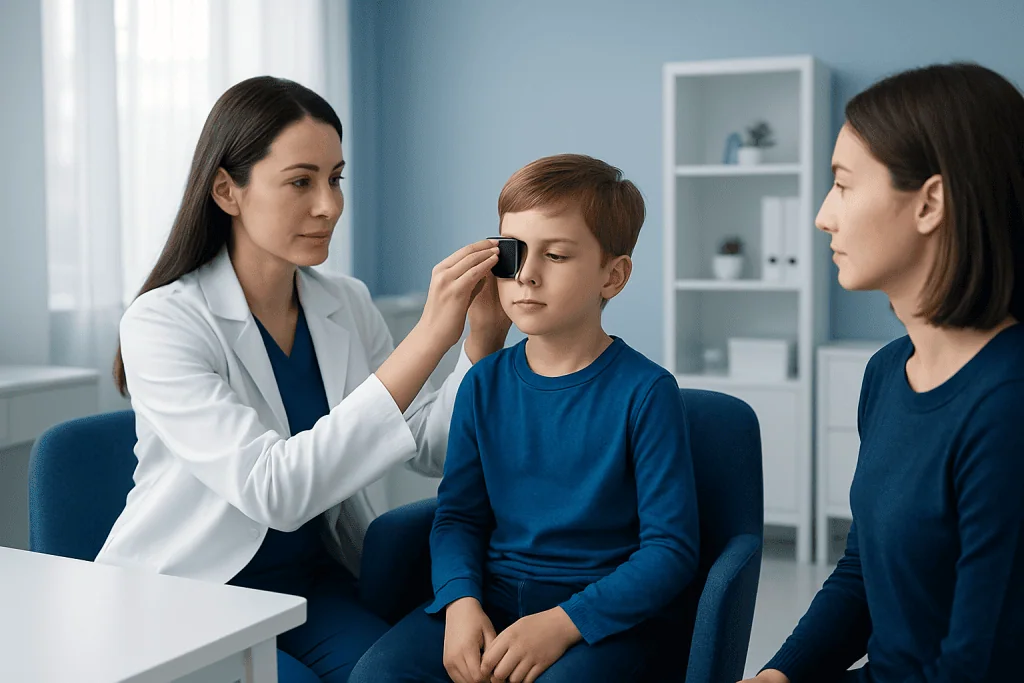
After measuring vision in each eye and identifying the cause of amblyopia, the eye specialist prescribes a patching plan. The plan states which eye to cover, how many hours per day to patch, when to wear the patch, and when to return for review. Parents and caregivers should follow this schedule closely and avoid changing the duration without clinical advice.
Most patches are adhesive, single-use patches placed directly on clean, dry skin around the stronger eye. This prevents the child from looking around the patch. In selected situations, a fabric occluder fitted over glasses may be used, but it must block vision completely. The child can usually take part in normal daily activities while patching, including schoolwork, reading, drawing and supervised play.
Activities that require careful use of the weaker eye, such as coloring, puzzles, reading or age-appropriate close work, may be encouraged during patching. The clinician may advise extra care with activities in which reduced depth perception could create a safety concern. Regular appointments are important to check vision in both eyes and adjust the plan as needed.
- Use only the eye and patching schedule prescribed by the specialist.
- Apply the patch securely so the stronger eye cannot see around it.
- Keep a simple daily record of patching time if requested.
- Bring the patching record and glasses to follow-up appointments.
How Long Does It Take to Correct a Lazy Eye With an Eye Patch?
There is no single timeline for correcting amblyopia with an eye patch. Some children show meaningful improvement over several weeks, while many need treatment for months. The overall duration depends on the child’s age, the degree of vision reduction, the cause of amblyopia, whether glasses are worn consistently, and how reliably the patching plan is followed.
Vision is usually reassessed at regular intervals, often every few weeks to a few months depending on the treatment plan. Once vision improves, the specialist may reduce patching gradually rather than stop it abruptly. This can help lower the chance that amblyopia will return, particularly in younger children.
The goal is not simply to use a patch for a set number of days. The goal is to achieve the best possible vision in the weaker eye while keeping vision healthy in the stronger eye. Because progress varies, the treating clinician is the best person to estimate the likely duration after follow-up measurements.
How Long Does It Take to See Results From Eye Patches?
Some improvement can be detected within a few weeks of consistent patching, especially when the child is also wearing an appropriate glasses prescription. However, changes may be gradual and are not always noticeable at home. Formal vision testing at follow-up visits gives the most reliable indication of whether the weaker eye is responding.
Improvement may slow as the difference between the eyes becomes smaller. This does not necessarily mean treatment has failed; the clinician may change the daily patching duration, review the glasses prescription, check for an eye alignment issue, or consider another treatment such as prescribed atropine penalization.
Consistency matters more than trying to speed up treatment by adding extra hours. Patching longer than prescribed does not guarantee faster improvement and may carry risks for the stronger eye. Families should contact the eye care team if the child cannot tolerate the patch, develops persistent skin irritation, or seems to have new difficulty seeing.
How Many Hours of Patching for Amblyopia?
The required number of hours varies. For some children with mild or moderate amblyopia, a specialist may recommend a shorter daily period, while more severe cases may require longer patching. The schedule should always be individualized and changed only after the child’s vision has been rechecked.
Many treatment plans begin with a manageable number of hours that fits into the child’s routine. Patching may take place after school, during reading or play, or at another consistent time. A routine can make treatment easier for children and caregivers and may improve adherence.
It is important not to compare one child’s schedule with another’s. The appropriate daily duration depends on clinical findings, not on a universal rule. The specialist will also monitor the stronger eye because extended occlusion can, rarely, cause its vision to decrease if not properly supervised.
Can You Fix Amblyopia With Just Patching?
Patching can be highly effective, but amblyopia cannot always be addressed with patching alone. The weaker eye must receive a clear image. If the child has uncorrected short-sightedness, long-sightedness or astigmatism, glasses are usually needed. If an eye turn, cataract, drooping eyelid or another condition affects vision, that condition may require separate treatment.
In some children, consistent glasses wear alone improves vision substantially. Others need patching after glasses, while some may use atropine drops in the stronger eye as an alternative or addition. Treatment is tailored to the source of the amblyopia and the child’s response over time.
When amblyopia is associated with misalignment of the eyes, treatment may also involve management of the underlying amblyopia and its causes and, in selected cases, eye muscle surgery. Surgery can improve alignment but does not replace visual therapy when amblyopia is present. An ophthalmologist can explain which combination of treatments is appropriate.
Benefits, Possible Challenges and When to Seek Medical Care
The main benefit of patching is the opportunity to improve visual development in the weaker eye and reduce the long-term impact of unequal vision. It is non-invasive and can be integrated into everyday life. The most common challenges are resistance to wearing the patch, temporary frustration from relying on the weaker eye, and mild redness or irritation of the skin around the eye.
Parents should seek prompt advice from the eye care team if the child reports a sudden change in vision, persistent pain, marked redness, discharge, a rash that does not settle, or difficulty seeing with the stronger eye after the patch is removed. They should also arrange review if patching is consistently difficult, because the care plan may be adjusted safely.
Regular specialist monitoring is a key part of safe treatment. Acibadem International’s multidisciplinary specialists and JCI-accredited hospitals assess and treat eye conditions for international patients, coordinating ophthalmology care when needed. Families should continue scheduled reviews even when vision appears to be improving, since treatment may need adjustment and amblyopia can recur.
Frequently asked questions
Does an eye patch cure amblyopia?
An eye patch can improve vision in the weaker eye by encouraging the brain to use it more. Whether amblyopia fully resolves depends on factors such as its cause, severity, age at treatment and adherence to glasses and patching. Ongoing review is needed to measure response and detect recurrence.
Should a child wear glasses under an amblyopia patch?
If glasses have been prescribed, the child will usually continue wearing them during treatment. The patch covers the stronger eye, while the glasses help ensure the weaker eye receives the clearest possible image. The eye specialist will explain the correct way to combine glasses and patching.
Can patching make the stronger eye weaker?
If a patch is used for longer than prescribed or without follow-up, it can occasionally reduce vision in the stronger eye. This is why patching schedules are individualized and vision is checked regularly in both eyes. Parents should not increase patching time without specialist advice.
What if my child refuses to wear the eye patch?
Resistance is common, particularly early in treatment, because the child must rely on the weaker eye. A consistent routine, positive encouragement and child-friendly patch designs may help. If patching remains difficult, the eye specialist can discuss practical strategies or alternative treatments when appropriate.
Can adults use an eye patch for amblyopia?
Amblyopia treatment is usually most effective in childhood because visual development is more adaptable then. Some older children, teenagers and adults may still have treatment options, but the expected benefit is more variable. An ophthalmologist can assess individual circumstances and advise whether treatment is worthwhile.
Is amblyopia the same as an eye turn?
No. Amblyopia is reduced vision caused by the brain favoring one eye, while an eye turn is called strabismus. Strabismus can cause amblyopia, but amblyopia can also result from unequal refractive error or a condition blocking vision. A child may have one condition, both conditions, or neither.
References
- American Academy of Ophthalmology
- American Association for Pediatric Ophthalmology and Strabismus
- National Eye Institute
- NHS
- Mayo Clinic
This article is for general information only and is not a substitute for professional medical advice. Please consult a qualified doctor about your individual situation.
Explore treatments in Turkey — costs, top hospitals & a free quote
JCI-accredited · board-certified surgeons · reply within 24h
Add us as a Preferred Source to see more of our trusted health content across Google Search, AI Overviews and Discover.

Ophthalmology
Comprehensive eye care from laser vision correction to retina, cornea and cataract surgery.
75 specialists in this unitMore from the Health Library



Related Specialists

Dt. Tubahan Kaya
Oral & Dental Health
Prof. Dr. Fatih Dikici
Orthopedic Surgery & Traumatology
Prof. Dr. Ayşe Sağduyu Kocaman
Neurology
Dr. Berrin Arslan
Pediatrics