Eye Test Chart — Explained by Medical Evidence, Not Myths

An eye test chart mainly measures visual acuity, not overall eye health. The most common chart is the Snellen chart, but other charts may be used for children or people who cannot read letters.
Key Takeaways
- An eye test chart mainly measures visual acuity, not overall eye health.
- The most common chart is the Snellen chart, but other charts may be used for children or people who cannot read letters.
- A chart result can suggest nearsightedness, farsightedness, astigmatism, or the need for a fuller eye examination.
- Lighting, testing distance, glasses use, and eye conditions can affect results.
- Sudden vision changes, eye pain, flashes, or a dark curtain over vision need prompt medical attention.
An eye test chart is a standard tool used to measure visual acuity, or how clearly a person can see letters or symbols at a specific distance. It is useful for screening vision, but it does not diagnose every eye condition and should be interpreted as part of a complete eye assessment.
What an eye test chart actually tells a person
An eye test chart is a visual acuity tool used to check how clearly a person sees at a measured distance. In everyday terms, it helps answer a simple question: can the eyes distinguish detail well enough to read lines of letters, numbers, or symbols of different sizes? This is why the chart is common in clinics, schools, occupational screening, and routine eye exams.
However, an eye test chart does not provide a complete picture of eye health. A person may read the chart well and still have another eye problem, such as glaucoma, early cataract, retinal disease, or reduced side vision. For that reason, chart testing is best understood as one part of a broader assessment rather than a stand-alone diagnosis.
Medical evidence supports visual acuity testing as a standard, reliable screening method when it is performed under consistent conditions. It is especially useful for monitoring whether vision has changed over time and for helping guide decisions about glasses, contact lenses, or further evaluation by an eye specialist.
How the chart works and why there are different types
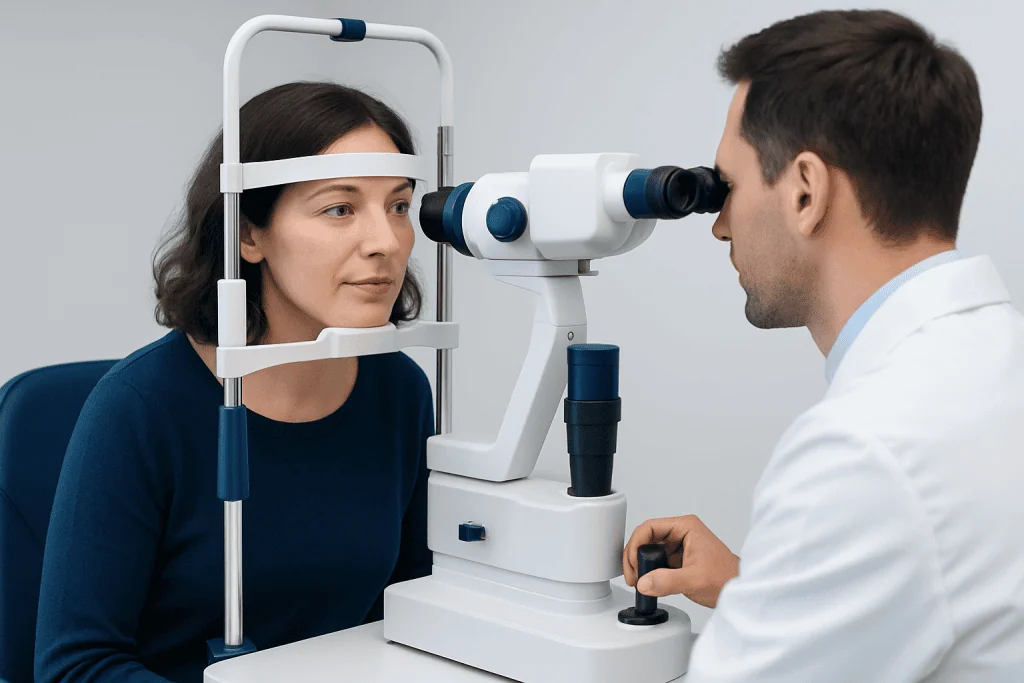
The best-known eye test chart is the Snellen chart, which uses rows of letters that become progressively smaller. A person stands or sits at a fixed distance and reads the smallest line they can see clearly, usually with each eye tested separately and then together. The result is recorded as a visual acuity fraction such as 20/20 or 20/40.
A 20/20 result means that at 20 feet, the person can see what a person with standard vision would be expected to see at that distance. A 20/40 result means the person must be 20 feet away to see what someone with standard vision could read from 40 feet away. Lower clarity does not always mean serious disease, but it may suggest refractive error or another issue that needs closer review.
Different charts exist because not everyone can read standard letters comfortably or accurately. Common examples include:
-
Snellen chart: standard chart with block letters for literate adults and older children.
-
Tumbling E chart: uses the letter E in different directions for people who cannot read letters.
-
Lea symbols or picture charts: often used for young children.
-
Near vision charts: used to assess reading vision at close range.
Modern clinics may also use digital charts, but the principle remains the same: a standardized way to measure visual detail at a known distance under controlled lighting.
What the results can and cannot mean
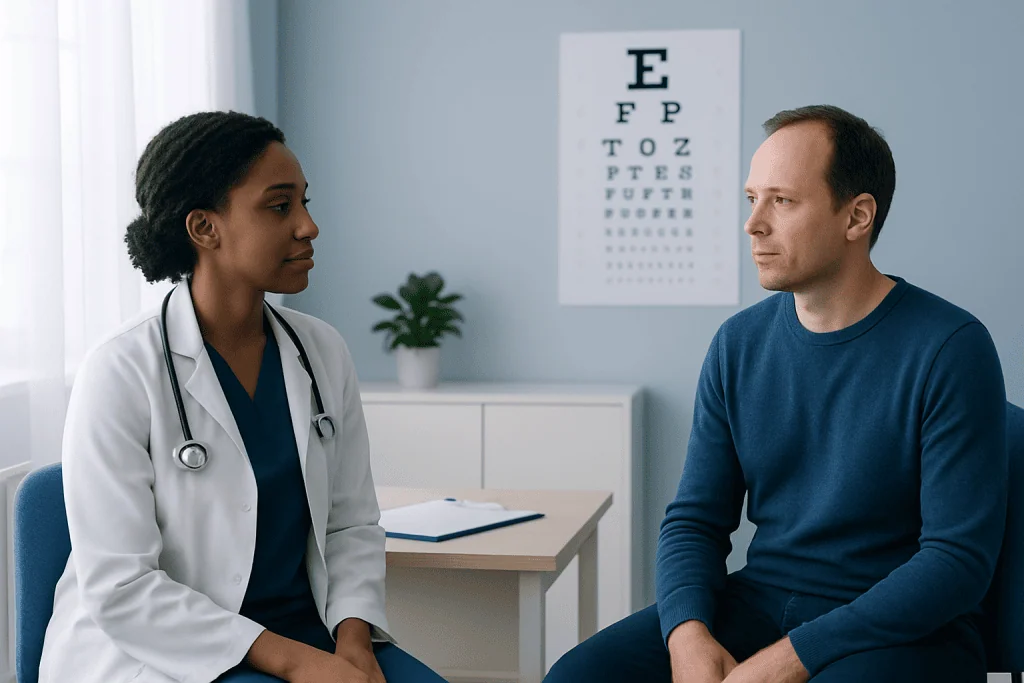
Eye test chart results can suggest that vision is normal, mildly reduced, or significantly impaired. They are especially helpful for identifying refractive errors such as myopia, hyperopia, presbyopia, and astigmatism. If vision improves with a pinhole device or updated lenses, the cause is often related to focusing rather than disease.
Even so, chart results should not be overinterpreted. Poor performance can be influenced by dry eyes, fatigue, poor lighting, eye misalignment, incorrect testing distance, unclean glasses, language or literacy barriers, and reduced concentration. A single result is most meaningful when interpreted alongside symptoms and the person’s eye history.
Importantly, some sight-threatening conditions may not reduce central visual acuity in the early stages. A person with good chart vision can still have problems with peripheral vision, color perception, contrast sensitivity, or the retina and optic nerve. Conditions such as glaucoma or retinal disorders may require additional tests beyond the chart.
If reduced acuity persists, an eye professional may recommend a full refraction, slit-lamp examination, pressure measurement, retinal assessment, or imaging. In specialist settings, further evaluation may include a comprehensive eye examination to determine the exact cause of the change in vision.
Common reasons a person may not read the chart clearly
The most common reason for blurred chart vision is refractive error. This means the eye does not focus light precisely on the retina. Nearsightedness usually affects distance vision, farsightedness can make near tasks difficult and sometimes distance as well, and astigmatism can cause blur or distortion at different ranges.
Age-related changes are another frequent cause. Presbyopia, which typically develops in midlife, affects the ability to focus on near objects. Cataracts can gradually reduce sharpness, contrast, and night vision. Dry eye disease may also cause fluctuating blur, especially during reading or screen use.
Other possible causes include amblyopia, corneal disease, retinal conditions, optic nerve disorders, and complications related to diabetes or high blood pressure. Some people notice new difficulty with an eye test chart after an injury, infection, migraine, or medication change. In children, trouble with chart reading may first appear as squinting, sitting close to screens, or school-related visual complaints.
Because the causes range from simple and correctable to more complex, persistent changes should not be self-diagnosed from chart performance alone. A proper assessment can clarify whether the issue is routine, such as needing updated lenses, or whether it requires further medical attention.
How vision is assessed beyond the chart
When an eye test chart suggests reduced acuity or symptoms point to a broader issue, clinicians usually expand the evaluation. Refraction checks whether lenses improve vision. Slit-lamp examination looks at the front of the eye, including the cornea, lens, and tear film. Pressure measurement helps screen for conditions that can affect the optic nerve.
The retina and optic nerve are also important parts of a complete eye exam. These structures may be examined after pupil dilation, especially when the cause of vision loss is not obvious. In some cases, optical coherence tomography, visual field testing, or retinal imaging may be recommended to identify damage that a chart alone cannot show.
For people with symptoms such as floaters, flashes, blind spots, or distorted central vision, the doctor may investigate retinal causes, including retinal detachment, which needs urgent assessment. If cloudy vision is related to lens changes, treatment discussions may eventually include cataract surgery when appropriate.
Children, older adults, and people with chronic illnesses may need tailored testing. A child’s assessment may focus on eye alignment and visual development, while an older adult may need evaluation for cataract, glaucoma, or macular problems. The goal is to understand vision in context, not just to assign a number from the chart.
What happens if the chart shows a problem
If the chart suggests reduced visual acuity, the next steps depend on the cause. Many people simply need updated glasses or contact lenses. Others may benefit from treatment for dry eyes, removal of a foreign body, management of eye inflammation, or follow-up for an age-related change in the lens or retina.
When a medical condition is found, treatment is directed at that condition rather than the chart score itself. Examples include monitoring and treatment for glaucoma, medication for certain inflammatory conditions, or specialist care for retinal disease. If the main issue is how the eye focuses light, laser eye surgery may be discussed for selected adults after a proper eligibility assessment.
Some situations require urgent care, especially if vision worsens suddenly. Immediate evaluation is important when reduced chart vision comes with eye pain, trauma, double vision, a sudden shower of floaters, flashes of light, or part of the visual field becoming dark. These symptoms can indicate a problem that should not wait for a routine appointment.
Near the end of the care pathway, patient education also matters. Understanding what the chart result means, how to use prescribed lenses, and when to return for repeat testing can help preserve vision and improve daily function.
Self-care, prevention, and using charts wisely at home
Home eye charts can be useful for general monitoring, but they should be used carefully. The testing distance, lighting, and printed size must be correct, and results should not replace a professional exam. Home checks are most helpful when a person is comparing their own vision over time using the same method each time.
Simple eye care habits can support visual comfort and help reduce avoidable strain. These include wearing the correct prescription, taking breaks during prolonged screen use, managing dry eye symptoms if advised by a doctor, protecting the eyes from injury, and attending routine eye examinations based on age and risk factors.
People with diabetes, high blood pressure, a family history of serious eye disease, or previous eye surgery should be especially consistent with follow-up. Good control of chronic conditions can help reduce eye complications over time. Children should also have vision checked at recommended ages because some visual problems are easier to treat when found early.
A person should not rely on internet myths such as “reading the chart online proves the eyes are healthy” or “blurry chart lines always mean glasses are needed.” The chart is a practical tool, but the safest interpretation comes from a qualified eye professional who can examine the whole eye and the person’s symptoms together.
When to seek medical care
A routine appointment is appropriate if chart reading has gradually become harder, if glasses no longer seem effective, or if reading and screen tasks cause persistent eye strain or headaches. Children who squint, cover one eye, move unusually close to books or screens, or struggle at school may also need an eye assessment.
Prompt medical care is recommended if vision changes suddenly or if blur affects only one eye without an obvious explanation. Other warning signs include eye pain, redness with reduced vision, new double vision, flashes of light, many new floaters, loss of side vision, or a shadow or curtain across sight.
People with recent eye injury, chemical exposure, or severe infection symptoms should seek urgent evaluation rather than waiting for chart re-testing. If specialist care is needed, Acibadem International’s multidisciplinary specialists and JCI-accredited hospitals diagnose and treat eye conditions for international patients.
Frequently asked questions
What is an eye test chart used for?
An eye test chart is used to measure visual acuity, which means how clearly a person can see details at a set distance. It is commonly used in routine eye exams and vision screening, but it does not check every aspect of eye health.
Does a 20/20 result mean the eyes are completely healthy?
No. A 20/20 result means central distance vision is normal under the test conditions, but it does not rule out every eye condition. Some diseases can affect the retina, optic nerve, pressure inside the eye, or side vision before chart results change.
Can someone fail an eye test chart and still not need glasses?
Yes, sometimes. Dry eyes, fatigue, poor lighting, illness, or a temporary problem can reduce performance on the chart. That is why a clinician may repeat testing or do additional exams before deciding whether glasses are needed.
Are online eye test charts accurate?
Online charts can give a rough idea of whether vision may have changed, but they are not a substitute for a professional eye exam. Screen size, viewing distance, lighting, and printer settings can make home results less reliable.
How often should a person have vision checked?
The answer depends on age, symptoms, and medical history. Children, older adults, people who wear glasses or contact lenses, and those with diabetes or family history of eye disease may need more regular eye exams.
When is blurred vision an emergency?
Blurred vision needs urgent assessment if it starts suddenly or comes with pain, flashes, many new floaters, a dark curtain over vision, double vision, or injury. These symptoms can signal a serious eye or neurological problem that should be evaluated quickly.
This article is for general information only and is not a substitute for professional medical advice. Please consult a qualified doctor about your individual situation.
Explore treatments in Turkey — costs, top hospitals & a free quote
JCI-accredited · board-certified surgeons · reply within 24h
Add us as a Preferred Source to see more of our trusted health content across Google Search, AI Overviews and Discover.

More from the Health Library
HIV Tongue: A Complete Medical Overview

Blue Light Glasses: What Patients Need to Know

Indoor Rowing Machine: What Patients Need to Know
Mango Glycemic Index — Explained by Medical Evidence, Not Myths

How many steps are in a mile? The Numbers, Explained by Clinicians