Eyelash Mites — Explained by Medical Evidence, Not Myths

Eyelash mites are common and usually harmless, but overgrowth can contribute to eyelid inflammation called Demodex blepharitis. Symptoms may include itching, burning, crusting at the lash line, a gritty feeling, and recurrent styes or irritation.
Key Takeaways
- Eyelash mites are common and usually harmless, but overgrowth can contribute to eyelid inflammation called Demodex blepharitis.
- Symptoms may include itching, burning, crusting at the lash line, a gritty feeling, and recurrent styes or irritation.
- Diagnosis is usually based on an eye examination, symptoms, and signs such as debris around the eyelashes.
- Treatment focuses on eyelid hygiene and, when needed, doctor-guided therapies to reduce mites and inflammation.
- Persistent redness, pain, vision changes, or repeated eyelid problems should be assessed by an eye specialist.
Eyelash mites are microscopic mites that often live harmlessly in hair follicles and oil glands, including around the eyelashes. Problems usually happen when they become too numerous, leading to eyelid irritation, crusting, itching, and inflammation that can be diagnosed and treated with evidence-based care.
Overview: what eyelash mites really are
Eyelash mites are tiny organisms, usually from the Demodex family, that live in or near hair follicles and oil glands. They are extremely common in adults and are not automatically a sign of poor hygiene. In many people, they cause no symptoms at all.
The issue begins when the number of mites increases or when the eyelids become more sensitive to their presence. This can trigger inflammation along the eyelid margins, often called Demodex blepharitis. In practical terms, this may feel like itchy, irritated, crusty eyelids or a persistent gritty sensation in the eyes.
Medical evidence does not support many popular myths about eyelash mites. They are not unusual, they cannot usually be seen with the naked eye, and their presence alone does not mean someone has a serious infection. What matters most is whether they are linked to symptoms, eye surface irritation, or repeated eyelid problems.
Eyelash mites may overlap with other eye and skin conditions, including dry eye and blepharitis. For this reason, evaluation focuses on the whole eyelid and ocular surface rather than the mites alone.
Symptoms and signs that may suggest eyelash mites
When eyelash mites become problematic, symptoms often develop gradually rather than suddenly. People may notice itching around the eyelids, especially in the morning, along with burning, stinging, or a feeling that something is in the eye. The eyes may also water more than usual or feel dry at the same time.
A key clinical clue is debris or cuff-like scales at the base of the eyelashes. These sleeves of material around the lashes can suggest Demodex involvement, although they are not the only cause of eyelid crusting. Eyelids may look red or mildly swollen, and the lash line can feel tender.
Some people also experience recurrent styes, irritation that keeps returning despite basic cleansing, or loss and misdirection of eyelashes. In others, the main problem is worsening dry-eye symptoms because inflammation affects the tear film and the eyelid oil glands.
- Itchy eyelids
- Burning or stinging eyes
- Crusting at the lash line
- Gritty or foreign-body sensation
- Red eyelid margins
- Recurrent styes or chalazia
- Intermittent blurred vision from an unstable tear film
Why eyelash mites become a problem
Eyelash mites do not usually cause trouble simply because they exist. Instead, symptoms tend to appear when the mite population increases, the skin barrier is disrupted, or there is a stronger inflammatory response. Age is one factor, as Demodex colonization becomes more common over time.
Other contributors may include rosacea, chronic blepharitis, oily skin, changes in the eyelid oil glands, or a history of recurrent eye irritation. In some cases, a weakened immune system can make Demodex-related problems more likely, although many healthy people also develop symptoms.
Poor eyelid hygiene is sometimes discussed, but it is only one part of the picture. Over-cleaning or using harsh products near the eyes can also worsen irritation. The goal is not aggressive scrubbing, but gentle and consistent care of the eyelid margins.
Because symptoms overlap with dry eye, allergy, and other eyelid conditions, it is important not to self-diagnose based on internet myths alone. Related concerns such as dry eye or underlying skin inflammation may need attention at the same time.
How doctors diagnose eyelash mites
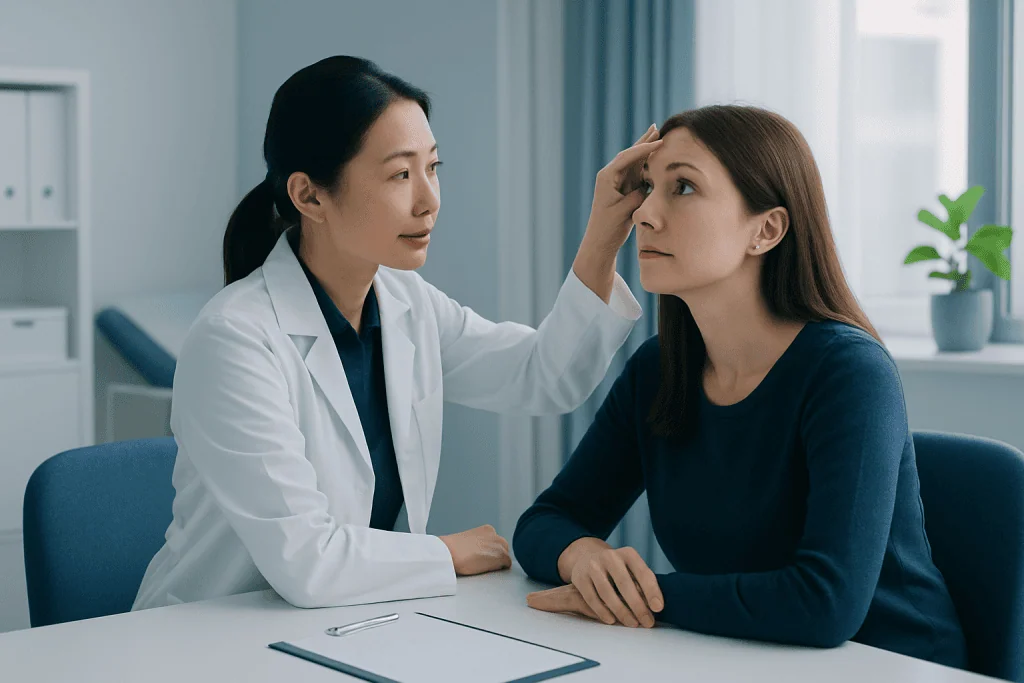
Diagnosis starts with a medical history and a careful eye examination. An ophthalmologist or other qualified eye specialist asks about itching, crusting, morning discomfort, recurrent styes, contact lens use, skin conditions, and previous treatments. The pattern and duration of symptoms help guide the evaluation.
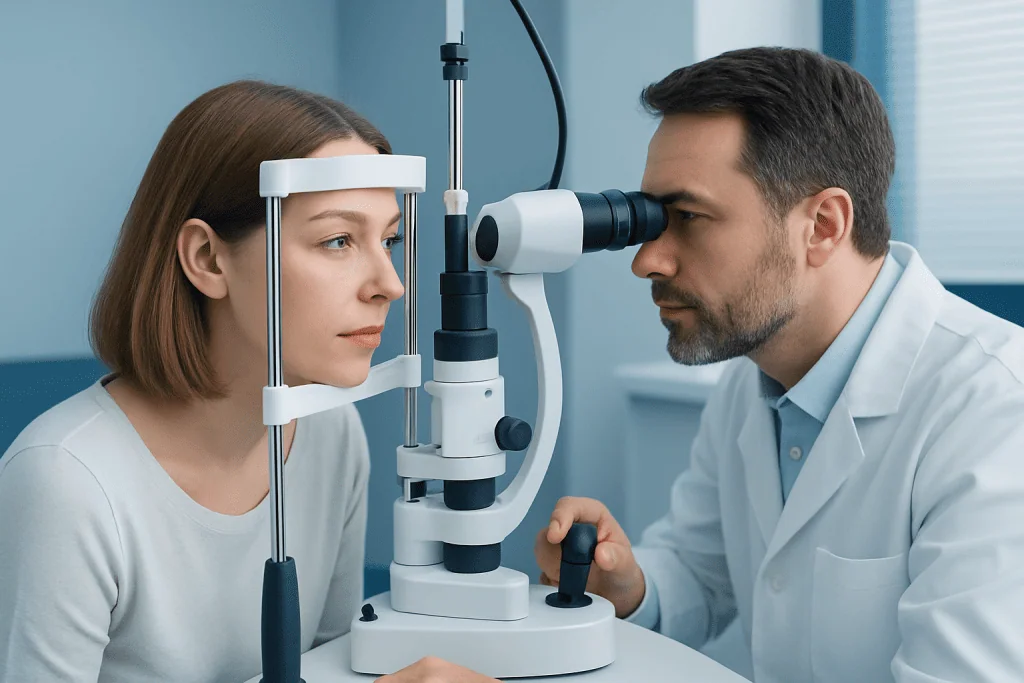
During the examination, the eyelid margins and lashes are viewed under magnification, often with a slit-lamp microscope. The clinician looks for cylindrical dandruff-like debris at the lash base, signs of inflammation, tear-film instability, blocked oil glands, and any corneal or conjunctival irritation.
In some cases, a few eyelashes may be examined more closely to confirm the presence of Demodex mites. However, visible mites are not always required for diagnosis if the symptoms and eyelid findings are typical. The broader aim is to identify whether mites are likely contributing to blepharitis and to rule out other causes.
If the symptoms are persistent or complex, the doctor may also assess meibomian gland dysfunction, allergy, rosacea-related eye disease, or infection. Comprehensive evaluation can be arranged through an eye examination when symptoms do not improve or keep returning.
Treatment options supported by medical practice
Treatment depends on how severe the symptoms are and whether other eyelid or ocular surface disorders are present. The foundation of care is improving eyelid hygiene in a way that reduces debris, supports the oil glands, and calms inflammation. This often includes warm compresses and doctor-recommended lid cleansing methods.
When Demodex overgrowth is strongly suspected, an eye specialist may recommend targeted products intended for the eyelid margin. These can include cleansers or treatments chosen specifically for Demodex-associated blepharitis. Because the skin around the eyes is delicate, self-treating with strong oils, antiseptics, or homemade remedies is not advisable.
If there is significant inflammation, dryness, or associated meibomian gland dysfunction, treatment may also address the tear film and ocular surface. Depending on the person, this may include lubricating drops, in-office eyelid care, or therapy for coexisting conditions. Patients with more persistent disease may benefit from review in an ophthalmology setting.
When recurring eyelid bumps, gland blockage, or related eyelid issues are present, the treatment plan may need to go beyond mite reduction alone. The most effective approach is usually individualized rather than one-size-fits-all.
Self-care, hygiene, and what not to believe
Evidence-based self-care is simple and gentle. Washing the face regularly, removing eye makeup carefully, replacing old eye cosmetics, and keeping the eyelids clean can help reduce irritation. Warm compresses may soften oils and debris at the lid margins, especially when used consistently.
It is also sensible to avoid sharing towels, pillowcases, eye makeup, or cosmetic brushes. Contact lens users should follow lens hygiene carefully and should not wear lenses if the eyes are acutely irritated unless a clinician advises otherwise. If a product seems to trigger burning or redness, it is best to stop using it and discuss alternatives with a doctor.
Common myths can be misleading. Eyelash mites are not a sign that someone is unclean, and they do not always need treatment. There is also no reliable evidence that harsh scrubbing, undiluted essential oils, or social-media home remedies are safe for the eyes; these can injure the eyelid skin or ocular surface.
For people with repeated eyelid inflammation, specialist care may include assessment for related eye surface disorders and guidance on structured dry eye treatment if tear-film problems are contributing to symptoms.
When to seek medical care
Medical advice is appropriate if eyelid itching, crusting, or redness lasts more than a short time, keeps returning, or does not improve with basic gentle hygiene. Professional assessment is especially helpful if there are recurrent styes, lash loss, significant dryness, or symptoms affecting comfort during reading, screen use, or contact lens wear.
Prompt evaluation is important if symptoms are more severe. Eye pain, sensitivity to light, noticeable swelling, discharge, worsening redness, or changes in vision should not be ignored, because these signs can point to problems beyond simple eyelid irritation.
Children, older adults, and people with skin conditions such as rosacea may need tailored advice. A clinician can distinguish between eyelash mites, allergy, infection, and other causes of eyelid inflammation, then recommend the safest treatment plan.
Near the end of the care pathway, patients who need specialist assessment may be seen by multidisciplinary eye teams; Acibadem International’s JCI-accredited hospitals provide diagnosis and treatment for international patients with eyelid and ocular surface conditions.
Frequently asked questions
Are eyelash mites normal?
Yes. Eyelash mites are very common and often live on the skin without causing any symptoms. They become a concern mainly when they are linked to eyelid inflammation, irritation, or recurring eye problems.
Can a person see eyelash mites with the naked eye?
Usually not. Eyelash mites are microscopic and are typically identified during an eye examination with magnification. People are more likely to notice symptoms such as itching or crusting than the mites themselves.
Do eyelash mites mean someone has poor hygiene?
No. Their presence is common and does not by itself indicate poor hygiene. While gentle eyelid care can help control symptoms, many factors besides hygiene can contribute to mite overgrowth and eyelid irritation.
What is the difference between eyelash mites and blepharitis?
Eyelash mites are organisms that may live around the lashes, while blepharitis is inflammation of the eyelid margins. Demodex mites can contribute to one type of blepharitis, but blepharitis can also happen for other reasons such as gland dysfunction, skin conditions, or bacteria.
Can eyelash mites cause blurry vision?
They do not usually damage vision directly, but they can contribute to tear-film instability and surface irritation. This may cause intermittent blurred vision that improves with blinking. Persistent or worsening vision changes should be assessed by a doctor.
Are home remedies safe for treating eyelash mites?
Not always. The skin and surface of the eye are sensitive, and some popular home remedies may cause irritation or injury. It is safer to use treatments or cleansers recommended by a qualified eye specialist.
This article is for general information only and is not a substitute for professional medical advice. Please consult a qualified doctor about your individual situation.
Hair transplant in Turkey — costs, graft counts & a free assessment
JCI-accredited · board-certified surgeons · reply within 24h
Add us as a Preferred Source to see more of our trusted health content across Google Search, AI Overviews and Discover.

More from the Health Library

Steel Cut Oats Versus Rolled: A Complete Medical Overview

Twenty Week Scan: A Complete Medical Overview

Statin Drugs: A Complete Medical Overview

Alert and Oriented X4: What Patients Need to Know

Swelling Inside Earlobe — Explained by Medical Evidence, Not Myths