Fitness Hip — Explained by Medical Evidence, Not Myths

Fitness hip is a general term for exercise-related hip pain, not a single disease. Common causes include muscle strain, tendinopathy, bursitis, hip impingement, and labral injury.
Key Takeaways
- Fitness hip is a general term for exercise-related hip pain, not a single disease.
- Common causes include muscle strain, tendinopathy, bursitis, hip impingement, and labral injury.
- The pattern of pain, movement limits, and training history help guide diagnosis.
- Early treatment often includes activity modification, physical therapy, and gradual return to exercise.
- Persistent pain, limping, catching, or pain at rest should be assessed by a doctor.
Fitness hip is not a formal medical diagnosis. It usually refers to hip pain, pinching, stiffness, or reduced performance related to exercise, often caused by overuse, muscle imbalance, tendon irritation, or structural problems such as impingement.
What fitness hip means
Fitness hip usually means hip discomfort that develops during or after exercise. It is a broad, non-medical phrase rather than a precise diagnosis. In practice, it may describe pain in the front of the hip or groin, the outer side of the hip, the buttock area, or a combination of these, especially during running, squats, lunges, cycling, dancing, or gym training.
Medical evidence shows that exercise-related hip pain has many possible causes. Some are relatively simple, such as muscle strain or tendon overload. Others involve the joint itself, including cartilage or labral injury, reduced hip stability, or bone shape differences that can lead to impingement. Because the hip transfers force between the trunk and the legs, problems in the lower back, pelvis, knees, or feet can also contribute.
A helpful way to think about fitness hip is as a symptom pattern, not a label. The goal is to identify where the pain comes from, what movements provoke it, and whether there are training or biomechanical factors that can be corrected. This approach is often more useful than relying on myths such as “tight hips” being the only explanation.
Common symptoms and how they feel
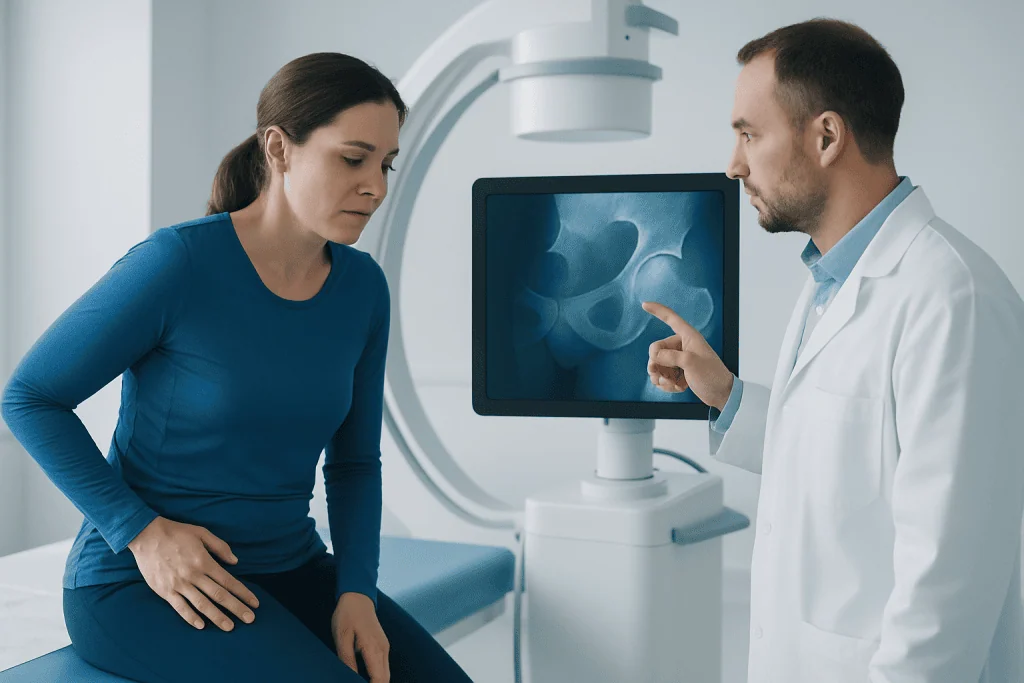
The symptoms of fitness hip vary depending on the tissues involved. Front-of-hip or groin pain may suggest joint irritation, hip flexor strain, or impingement. Outer hip pain is often linked to the tendons of the gluteal muscles or the bursa near the greater trochanter. Deep buttock pain may come from the muscles around the pelvis, the lower back, or structures at the back of the hip.
People often describe a pinching feeling with deep flexion, such as during squats, high steps, or sitting low in a chair. Others notice stiffness when starting activity, aching after exercise, or pain the next day rather than during the workout. Clicking, catching, or a feeling that the joint is not moving smoothly can occur with labral or joint-related problems, although these sensations are not always a sign of serious damage.
Symptoms that deserve more attention include limping, night pain, visible swelling, sudden loss of strength, inability to bear weight, fever, or pain after a fall. These features make a simple training overload less likely and may point to a fracture, infection, inflammatory condition, or another problem that needs timely assessment.
Why fitness hip happens: causes and risk factors
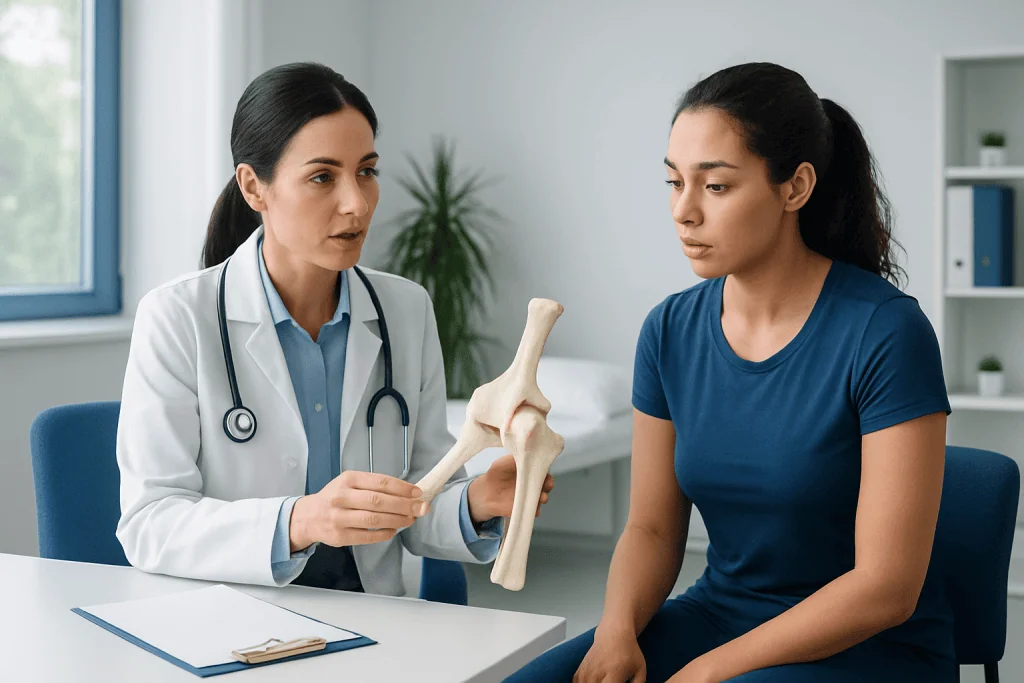
One common cause is training overload. This can happen when exercise volume, intensity, speed work, resistance, or range of motion increases faster than the tissues can adapt. Repeated hip flexion under load, frequent hill running, deep squatting, explosive twisting, and insufficient recovery can all irritate muscles, tendons, and the joint lining.
Another major group of causes involves movement mechanics and anatomy. Weakness or poor timing in the gluteal muscles may increase stress on the front or side of the hip. Reduced hip mobility, core control problems, or altered pelvic position can also change how force is distributed. In some people, the shape of the femoral head or the rim of the socket can contribute to hip impingement, especially during repeated deep bending or pivoting.
Soft-tissue conditions are also frequent. These include hip flexor strain, adductor strain, gluteal tendinopathy, and greater trochanteric pain syndrome. Bursitis may coexist with tendon irritation. In active adults, cartilage and labral problems can be another source of groin pain, particularly if there is locking, catching, or pain with rotation. Some cases overlap with a hip labral tear or with early wear-related change in the joint.
Risk factors include sudden changes in exercise routine, poor technique, previous injury, inadequate sleep or recovery, low muscle strength, and training through pain. Age can matter too: younger athletes may be more prone to structural impingement patterns, while middle-aged adults may develop tendon or degenerative joint problems more often. However, there is no single “fitness body type” that predicts hip pain with certainty.
How doctors diagnose fitness-related hip pain
Diagnosis begins with a careful history. A doctor will ask where the pain is felt, when it started, which activities trigger it, whether there was an injury, and what training changes happened before symptoms began. The pattern over time is important: pain that appears only during deep flexion is different from pain that persists at rest or wakes a person at night.
The physical examination usually includes assessment of walking, standing posture, range of motion, strength, and movement control. Specific tests may reproduce pain during flexion, internal rotation, resisted lifting of the leg, or side-lying hip strength testing. The lower back, pelvis, and knee may also be examined, because pain can travel and more than one region may be involved.
Imaging is not always needed at the start. X-rays can show bone shape, arthritis, or fracture signs. Ultrasound can help evaluate some tendon problems. MRI is often used if labral injury, stress injury, persistent pain, or unexplained symptoms are suspected. In selected cases, doctors may recommend MRI scanning to look closely at the joint and surrounding soft tissues.
The main reason for medical evaluation is not simply to assign a label. It is to rule out urgent causes, identify the pain source accurately, and guide treatment so that activity can resume as safely as possible. That matters because treatment differs greatly between, for example, a gluteal tendon problem and structural impingement.
Treatment options based on the cause
Most cases of fitness hip improve with conservative treatment. This usually starts with reducing or modifying the movements that trigger pain rather than stopping all activity. A temporary change in depth, speed, mileage, resistance, or training frequency can help irritated tissues calm down. Relative rest is often more useful than complete immobilization.
Targeted rehabilitation is a central part of care. Physical therapy may focus on hip strength, trunk control, flexibility where appropriate, movement retraining, and gradual return to loading. For example, outer hip tendon pain often responds to gluteal strengthening and avoiding positions that compress the tendons. Front-of-hip pain may improve with changes in squat depth, cadence, or pelvic control, along with progressive strengthening.
Medication may sometimes be used for short-term symptom relief, depending on the person’s medical history and a doctor’s advice. Ice or heat may also help some people. If the pain source is clearer and symptoms persist, additional treatments can be considered, such as image-guided injections in selected cases. People with structural joint symptoms may need assessment by an orthopedic specialist, especially if there is significant catching, locking, or loss of function.
When non-surgical treatment does not bring adequate improvement, treatment depends on the diagnosis. Some patients with persistent impingement or labral pathology may be evaluated for hip arthroscopy. If advanced joint damage is present, doctors may discuss broader orthopedic care options. The choice is individualized and based on symptoms, imaging findings, physical examination, and goals for activity.
Self-care, training changes, and prevention
Preventing fitness hip is less about a single stretch and more about balanced training. Gradual progression is one of the most evidence-based strategies. Increases in volume, intensity, load, or complexity should be introduced step by step, especially after time away from exercise. Recovery, sleep, and variation in training matter because tissues adapt between sessions, not only during them.
Warm-up routines can support performance and movement quality, but they do not guarantee injury prevention on their own. It is often more helpful to prepare the hip for the specific activity ahead, such as light mobility work, controlled squats, glute activation, or lower-load practice sets. Technique also matters. Repeatedly training into painful end ranges, especially deep hip flexion with internal rotation, can aggravate symptoms in some people.
People with recurrent symptoms may benefit from reviewing footwear, running mechanics, bike fit, lifting form, and exercise selection. Cross-training can maintain fitness while reducing stress on irritated tissues. It is also wise to avoid self-diagnosing every hip pain episode as “tightness.” In many cases, the problem is related to load, strength, tendon capacity, or joint mechanics rather than a lack of stretching alone.
- Build training gradually after breaks or injury.
- Do not push through sharp or worsening hip pain.
- Strengthen gluteal, trunk, and leg muscles consistently.
- Use pain as feedback to adjust exercise depth, load, or frequency.
- Seek professional guidance if symptoms keep returning.
When to seek medical care
Medical care is recommended if hip pain lasts more than a few weeks, keeps returning, limits normal walking, or prevents participation in usual exercise despite rest and simple self-care. Assessment is also sensible when pain is focused in the groin, because joint-related causes are more common there and may be harder to distinguish without an examination.
Urgent care is more appropriate after a fall or sudden injury if there is severe pain, inability to bear weight, marked swelling, deformity, fever, or pain that is constant and not linked to movement. Athletes and active adults with catching, locking, or a clear loss of motion should also be evaluated, especially if symptoms are affecting work, sport, or sleep.
Accurate diagnosis can shorten recovery time and reduce unnecessary rest. In appropriate cases, multidisciplinary teams may combine imaging, rehabilitation, sports medicine, and orthopedic assessment. Acibadem International’s multidisciplinary specialists in JCI-accredited hospitals diagnose and treat hip conditions for international patients, including evaluation through orthopedic rehabilitation when recovery and return to activity need structured support.
Frequently asked questions
Is fitness hip a real medical diagnosis?
No. Fitness hip is an informal term people use for hip pain or dysfunction related to exercise. The actual medical cause may be a muscle strain, tendinopathy, bursitis, impingement, labral injury, arthritis, or pain referred from another area.
Can exercise cause hip impingement?
Exercise does not usually create the bone shape associated with hip impingement, but certain movements can bring symptoms to light. Deep flexion, twisting, and repeated high-load training may irritate the joint if impingement is already present.
Should a person stop working out completely if they have fitness hip?
Not always. Many people improve with activity modification rather than complete rest. The safer approach is to reduce or change painful movements and continue tolerated exercise under professional guidance when possible.
What is the difference between outer hip pain and groin pain?
Outer hip pain often points to gluteal tendon problems or irritation around the bursa. Groin pain more often suggests a problem inside the hip joint or in the hip flexors or adductors, although an examination is needed to be more certain.
Do all cases of clicking or catching in the hip mean a labral tear?
No. Clicking can happen from tendons moving over bony structures and may be harmless in some people. However, painful catching, locking, or repeated joint symptoms should be assessed because labral or cartilage problems are possible.
When is imaging needed for fitness hip?
Imaging is usually considered when pain persists, symptoms are severe, the diagnosis is unclear, or there are warning signs such as inability to bear weight or pain at rest. X-rays and MRI are common tools, but the choice depends on the suspected cause.
This article is for general information only and is not a substitute for professional medical advice. Please consult a qualified doctor about your individual situation.
Joint and spine care in Turkey — expert assessment & treatment
JCI-accredited · board-certified surgeons · reply within 24h
Add us as a Preferred Source to see more of our trusted health content across Google Search, AI Overviews and Discover.

More from the Health Library

Cracked Femur: A Complete Medical Overview

Athlete’s Foot — Explained by Medical Evidence, Not Myths

Broken Ribs Remedy: A Complete Medical Overview

Troponin — Explained by Medical Evidence, Not Myths

Orthopnea — Explained by Medical Evidence, Not Myths

Low Fat Dairy for Gout: A Complete Medical Overview
Orthopedic Surgery & Traumatology Specialists at Acibadem

Prof. Dr. Aziz Kaya Alturfan
Orthopedic Surgery & Traumatology
Dr. Baran Şen
Orthopedic Surgery & Traumatology
Prof. Dr. Barış Kocaoğlu
Orthopedic Surgery & Traumatology
Dr. Bengü Kasım
Physical Medicine & Rehabilitation