Freckles: An Evidence-Based Guide for Patients

Freckles are usually harmless pigment spots linked to sun exposure and inherited skin traits. They are most common in people with lighter skin, light hair, or a family history of freckles.
Key Takeaways
- Freckles are usually harmless pigment spots linked to sun exposure and inherited skin traits.
- They are most common in people with lighter skin, light hair, or a family history of freckles.
- Freckles can darken with sunlight and fade when sun exposure is reduced.
- Freckles are different from moles and from suspicious skin lesions that may need medical review.
- Sun protection helps prevent new freckles and reduces darkening of existing ones.
- Any spot that changes, bleeds, itches persistently, or looks different from others should be examined.
Freckles are small, flat brown or tan spots that usually develop on sun-exposed skin and are most often harmless. They reflect a combination of genetics and ultraviolet exposure, but any spot that changes in size, shape, or color should be assessed by a doctor.
Overview: what freckles are and why they appear
Freckles are small, flat spots on the skin that are usually tan, light brown, or medium brown. They commonly appear on areas that get more sun, such as the face, nose, shoulders, arms, and upper chest. In most people, freckles are harmless and do not signal disease.
They form when skin cells called melanocytes produce more melanin, the pigment that gives skin its color. Unlike raised lesions, freckles are flat and usually have a fairly even color. They often become more noticeable after time in the sun and may lighten during months with less ultraviolet exposure.
Freckles are especially common in people with fair skin, red or blond hair, and a tendency to sunburn. Genetics play an important role, which is why freckles often run in families. Even so, anyone can develop freckle-like pigment spots depending on their skin type and sun exposure history.
How freckles differ from other dark spots
Not every small brown spot is a freckle. Freckles are one type of pigmentation change, but they can resemble other marks such as sun spots, moles, or post-inflammatory hyperpigmentation left behind after acne or irritation. Understanding the difference helps people know when a spot is likely harmless and when it may need a closer look.
Classic freckles, also called ephelides, tend to appear in childhood or early life, darken with sun exposure, and fade somewhat in winter or with careful sun protection. Another common type of sun-related spot is a solar lentigo, sometimes called a sun spot or age spot. Lentigines usually develop later in life, may be larger and more sharply defined, and often do not fade much when sun exposure decreases.
Moles are different because they are usually collections of pigment-producing cells and may be flat or raised. Most moles are harmless, but some can change over time. A doctor may also assess unusual spots to rule out skin cancer or other pigment disorders if the appearance is not typical for freckles.
- Freckles: small, flat, often fade and darken with seasons.
- Sun spots/lentigines: often persistent, related to long-term sun exposure.
- Moles: may be flat or raised, usually stable but should be monitored for change.
- Post-inflammatory dark marks: follow skin irritation, eczema, or acne.
Causes and risk factors

The main triggers for freckles are ultraviolet light and inherited skin sensitivity. Sunlight stimulates melanin production as the skin tries to protect itself. In people who are genetically prone to freckling, this process creates small clusters of extra pigment rather than an even tan.
Risk is higher in people with lighter skin tones, light-colored eyes, red or blond hair, and a family history of freckles. Children may develop freckles early, especially if they spend a lot of time outdoors without consistent sun protection. Freckles are not contagious, and they are not caused by poor hygiene.
Artificial ultraviolet exposure can also contribute. Tanning beds expose skin to UV radiation and may increase pigmentation changes while also increasing the risk of premature skin aging and skin cancer. Hormonal changes can influence some pigment conditions, but classic freckles are most strongly tied to genetics and sun exposure rather than hormones alone.
Some people notice more spots after repeated sunburns. This does not mean freckles themselves are dangerous, but it does indicate that the skin has had UV exposure. Over time, cumulative UV damage raises the importance of regular skin awareness and prevention.
Symptoms and what is typical for freckles
Freckles are usually easy to recognize. They are flat, painless, and small, often only a few millimeters across. Their color may range from tan to brown, and they usually appear in clusters rather than as a single isolated lesion. The surrounding skin looks normal.
They do not usually itch, bleed, crust, or become raised. Freckles are most noticeable on sun-exposed sites and may become darker after holidays, outdoor sports, or summer months. In winter, or with regular sunscreen use, they may become lighter.
Typical freckles tend to be fairly uniform within each spot. Still, the overall pattern can vary from person to person. If a spot seems new, noticeably darker than the others, irregular, or behaves differently from ordinary freckles, it should not simply be assumed to be harmless.
People who are unsure whether a mark is a freckle may benefit from a skin examination. A dermatologist can distinguish common freckles from lentigines, moles, inflammatory marks, and less common pigmented lesions.
How doctors evaluate freckles
Most freckles do not require testing. In many cases, a clinician can identify them through a simple visual skin examination and a discussion of when they appeared, whether they change with sun exposure, and whether there is a personal or family history of skin problems.
If a spot looks atypical, a doctor may examine it more closely with a dermatoscope, a handheld device that magnifies skin structures. This can help differentiate harmless pigmented spots from lesions that need monitoring or removal. Clinical judgment is especially important when a lesion is asymmetric, has uneven borders, multiple colors, or recent change.
Sometimes photographs are used to document spots over time, particularly in people with many pigmented lesions. If there is concern that a mark may not be a freckle, the doctor may recommend further assessment. In selected cases, diagnostic evaluation can include dermatology care or a skin biopsy to confirm the diagnosis.
The aim of evaluation is not to medicalize every freckle, but to identify the small number of lesions that do not fit the usual harmless pattern. Prompt review supports early diagnosis if another condition is present.
Treatment options and cosmetic considerations
Because freckles are usually harmless, treatment is not medically necessary in most cases. Many people choose not to treat them at all. For those who prefer to reduce their appearance, the first step is usually daily sun protection, which helps prevent darkening and can allow some freckles to fade over time.
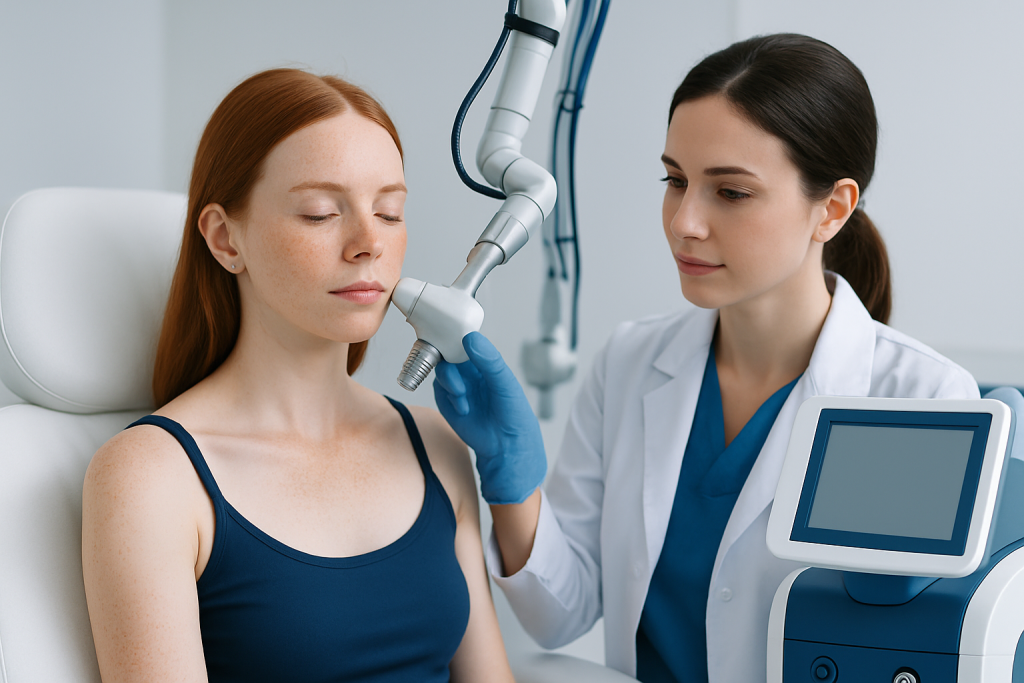
Cosmetic options may include topical prescription creams, chemical peels, laser treatments, or intense pulsed light, depending on skin type and the nature of the pigmentation. These treatments should be guided by a qualified skin specialist because not every dark spot is a freckle, and some procedures can irritate the skin or cause uneven pigmentation if used inappropriately.
People sometimes seek advice when freckles coexist with other skin concerns such as uneven texture, sun damage, or suspicious lesions. In those settings, expert evaluation is more important than self-treatment with over-the-counter products. If there is any uncertainty, a clinician may first rule out melanoma or other important causes of pigmentation change before discussing cosmetic treatment.
Near the end of the care pathway, some patients may explore specialist assessment through multidisciplinary skin services. Acibadem International’s specialists at JCI-accredited hospitals diagnose and treat skin conditions for international patients, including evaluation of pigmented lesions and selected cosmetic options when appropriate.
Prevention and everyday self-care
The best way to reduce new freckles and keep existing ones from becoming darker is consistent sun protection. This does not mean avoiding daylight completely, but it does mean protecting the skin from excessive ultraviolet exposure. Prevention is also valuable because it lowers long-term sun damage, not just freckling.
Helpful habits include using a broad-spectrum sunscreen, reapplying it as directed, wearing a hat and protective clothing, and seeking shade during periods of intense midday sun. Sunglasses can help protect the delicate skin around the eyes. Tanning beds are best avoided because they expose the skin to concentrated UV radiation.
Daily skin awareness is also useful. People can take note of their normal pattern of freckles and other spots so that new or changing lesions are easier to recognize. Good lighting or occasional photographs may help. Those with very sun-sensitive skin may also benefit from discussing personalized prevention plans in a dermatology consultation.
- Use broad-spectrum sunscreen on exposed skin every day.
- Wear hats, sleeves, and sunglasses outdoors.
- Limit intentional tanning and avoid tanning beds.
- Check the skin regularly for new or changing spots.
When to seek medical care
Freckles themselves are usually not a reason for urgent medical attention, but any pigmented spot should be checked if it looks different from the others or begins to change. A practical guide is the ABCDE pattern: asymmetry, irregular border, uneven color, increasing diameter, or evolution over time. A lesion that suddenly appears very dark, becomes raised, or develops symptoms deserves professional review.
Medical advice is also important if a spot bleeds, crusts, does not heal, or causes persistent itching or tenderness. People with a personal or family history of skin cancer, many moles, severe sunburn history, or a weakened immune system may need a lower threshold for assessment.
Primary care doctors and dermatologists can evaluate whether a mark is a simple freckle, a sun-related spot, or something that needs further testing. If there is concern for a suspicious lesion, further review may involve skin cancer treatment planning after diagnosis. Early assessment is reassuring in many cases and supports timely care when needed.
Frequently asked questions
Are freckles harmful?
Freckles are usually harmless. They are a common pattern of increased pigment in sun-exposed skin, especially in people who are genetically prone to them. The main concern is not the freckles themselves, but making sure a changing spot is not being mistaken for a freckle.
Can freckles turn into skin cancer?
Freckles themselves do not usually turn into skin cancer. However, some concerning skin lesions can resemble freckles or appear among them. That is why any spot that changes in color, shape, size, or behavior should be assessed by a doctor.
Why do freckles get darker in summer?
Freckles often darken in summer because ultraviolet light stimulates melanin production. In people who freckle easily, that pigment gathers in small visible spots. With less sun exposure, freckles may fade somewhat over time.
Can freckles be removed?
Yes, some freckles can be lightened for cosmetic reasons, but treatment is usually optional because they are harmless. Options may include topical therapies or dermatologist-guided procedures such as lasers or peels. A specialist should confirm that the spots are true freckles before cosmetic treatment is considered.
What is the difference between freckles and moles?
Freckles are flat pigment spots that often become darker with sun exposure and may fade when sunlight is reduced. Moles are different skin growths made up of pigment-producing cells and can be flat or raised. Most moles are benign, but they are monitored more closely for change.
Can people with darker skin get freckles?
Yes, people with darker skin can develop freckles, although they are more commonly noticed in people with lighter complexions. The appearance may differ depending on natural skin tone and the amount of sun exposure. Any new or unusual pigmented spot should still be evaluated in context.
References
- American Academy of Dermatology
- National Cancer Institute
- National Health Service
- Mayo Clinic
- World Health Organization
This article is for general information only and is not a substitute for professional medical advice. Please consult a qualified doctor about your individual situation.
Joint and spine care in Turkey — expert assessment & treatment
JCI-accredited · board-certified surgeons · reply within 24h
Add us as a Preferred Source to see more of our trusted health content across Google Search, AI Overviews and Discover.