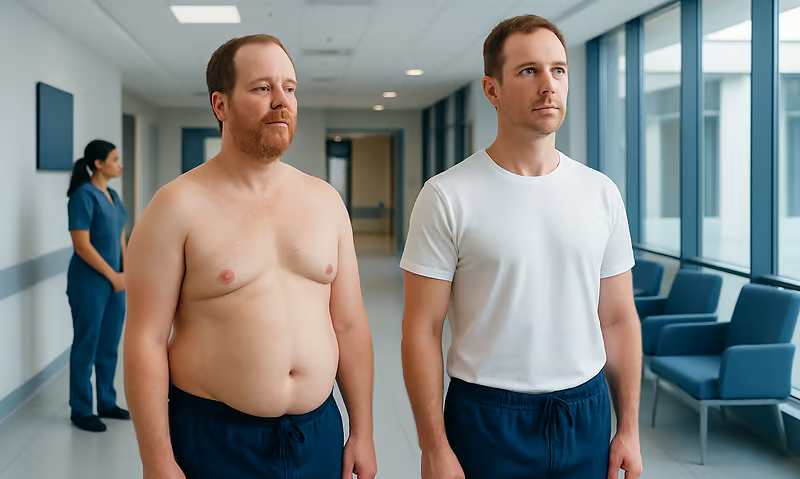
Frontal Bossing: An Evidence-Based Guide for Patients

Frontal bossing describes a forehead that appears more prominent than usual. It can occur as a normal family trait or alongside an underlying medical condition.
Key Takeaways
- Frontal bossing describes a forehead that appears more prominent than usual.
- It can occur as a normal family trait or alongside an underlying medical condition.
- Evaluation focuses on the person’s overall growth, development, symptoms, and medical history.
- Treatment depends on the cause and may involve monitoring, medical care, or specialist referral.
- Prompt medical review is important if frontal bossing appears with developmental delay, unusual growth, or other concerning symptoms.
Frontal bossing is an unusually prominent forehead caused by changes in the frontal bone. It is not a disease itself, but it can be a normal inherited feature or a clue to an underlying genetic, hormonal, or developmental condition that should be assessed by a doctor.
Overview: what frontal bossing means
Frontal bossing means the forehead appears more prominent, broad, or protruding than expected. It refers to the shape of the frontal bone at the front of the skull rather than to a disease on its own. In some people, this appearance is simply a normal inherited facial feature. In others, it may reflect an underlying condition that affected bone growth, hormones, or development.
Because head and face shapes vary naturally, frontal bossing is best understood in context. Doctors consider a person’s age, family features, growth pattern, and any other physical or developmental findings. A prominent forehead seen in isolation is approached differently from frontal bossing that appears together with delayed milestones, abnormal growth, or other body changes.
This distinction matters for patients and families. The goal is not only to describe the appearance, but also to identify whether there is a medical explanation that needs follow-up. Care is often led by pediatricians, genetic specialists, endocrinologists, neurologists, or craniofacial teams depending on the suspected cause.
How frontal bossing may look and what symptoms can occur
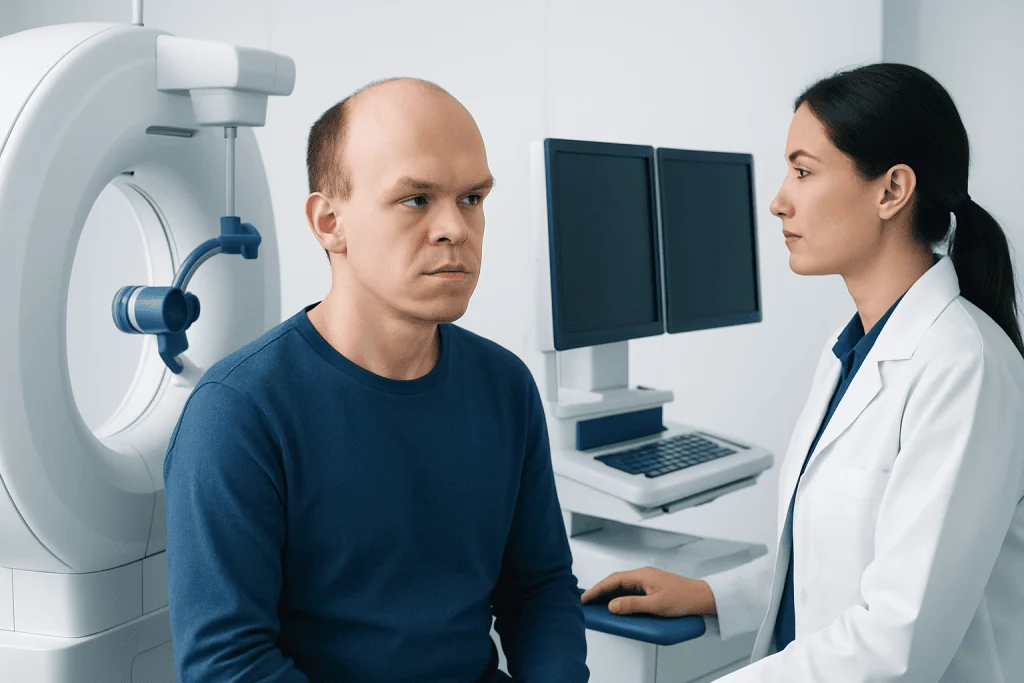
The main feature is a forehead that looks unusually prominent when viewed from the front or side. Some people also have a larger head size, a more pronounced brow ridge, or facial features that seem out of proportion with the rest of the face. Frontal bossing itself does not usually cause pain.
Whether symptoms are present depends on the underlying cause. If frontal bossing is part of a broader condition, a person may also have growth differences, developmental delay, changes in hands or feet, dental or jaw concerns, vision problems, or other skeletal findings. In babies and children, parents may notice a change in head shape over time or that the child looks different from siblings.
Features that doctors may ask about include:
- Rapid or unusual growth patterns
- Developmental delays or learning difficulties
- Headaches, vision changes, or vomiting
- Bone or joint problems
- Puberty changes or hormonal symptoms
- A family history of similar facial features or genetic conditions
Not every person with frontal bossing has additional symptoms. However, associated features help guide the medical evaluation and determine whether further testing is needed.
Causes and risk factors

Frontal bossing can result from several different processes. In some families, it is simply part of normal facial variation. In other cases, it occurs because a genetic syndrome, endocrine disorder, blood disorder, or developmental condition changes the way the skull bones grow.
Potential causes may include inherited skeletal or genetic syndromes, certain metabolic conditions, and hormone-related disorders such as excess growth hormone. Frontal bossing may also be seen in some children with conditions that affect red blood cell production and bone marrow expansion. In babies, doctors may also consider skull-shape disorders such as craniosynostosis when the head shape seems abnormal or changes early in life.
Risk factors depend on the specific cause. They can include a family history of a genetic condition, known hormonal disease, or a previously diagnosed blood or metabolic disorder. In many cases, frontal bossing is first recognized during infancy or childhood because this is when growth patterns are easiest to observe.
Because the causes vary widely, it is not possible to tell the reason for frontal bossing based on appearance alone. A careful medical history and examination are essential before making assumptions or considering treatment.
How doctors diagnose the cause
Diagnosis starts with a physical examination and a detailed history. The doctor asks when the prominent forehead was first noticed, whether it has changed over time, and whether there are other symptoms involving growth, development, hormones, or bones. Family history can be especially useful because some facial traits and genetic conditions run in families.
The examination may include head circumference and body measurements, assessment of facial features, a neurologic exam, and a review of developmental milestones in children. If frontal bossing appears to be isolated and the child is otherwise developing normally, monitoring may be all that is needed. If other findings are present, additional tests may be recommended.
Possible investigations can include blood tests, hormonal evaluation, genetic testing, and imaging studies. Depending on the situation, doctors may use MRI scanning or CT scanning to assess the skull, brain, or surrounding structures, especially if there are concerns about head shape, intracranial pressure, or associated abnormalities. A referral to a genetics team or craniofacial specialist may help clarify complex cases.
The purpose of diagnosis is not just to label the forehead shape. It is to understand whether the appearance is a normal variation or part of a condition that may benefit from treatment, surveillance, or supportive care.
Treatment options and ongoing care
There is no single treatment for frontal bossing because treatment depends entirely on the cause. If it is a normal inherited feature without any health impact, no medical treatment may be necessary. In these situations, reassurance and routine follow-up may be enough.
When an underlying condition is found, treatment focuses on that diagnosis. This may involve hormonal treatment plans, management of a blood or metabolic disorder, developmental support, or specialist care for a genetic syndrome. If the forehead prominence is related to a skull development problem such as a skull suture condition, care may involve a craniofacial or neurosurgical team and, in selected cases, neurosurgical treatment.
Some people also seek advice about appearance, especially if the feature causes emotional distress or affects self-confidence. In such cases, doctors first confirm that any underlying medical issue has been properly evaluated. Discussions about cosmetic or reconstructive options should be individualized, realistic, and guided by appropriate specialists.
For international patients who need coordinated assessment, Acibadem International’s multidisciplinary specialists and JCI-accredited hospitals evaluate skull shape and related conditions using a team-based approach.
Prevention and self-care
Frontal bossing itself usually cannot be prevented, especially when it is related to inherited traits or genetic conditions. However, early medical attention can help identify treatable causes and reduce complications linked to some underlying disorders. Regular well-child visits are important because doctors monitor growth, development, and head shape over time.
For people with a diagnosed condition, self-care means following the treatment plan and attending recommended follow-up appointments. Parents may be asked to track developmental milestones, growth changes, or new symptoms. Keeping records of family medical history can also be helpful if genetic evaluation is advised.
Emotional support matters too. Visible physical differences can affect confidence, particularly in school-age children and teenagers. Calm, factual explanations and support from healthcare professionals, counselors, or patient groups can help families manage uncertainty and social concerns.
When to seek medical care
A doctor should assess frontal bossing if it is newly noticed, becomes more obvious over time, or appears together with other symptoms. In children, medical review is especially important if there are delays in rolling, sitting, walking, speech, or learning, or if growth seems unusually fast or slow.
Prompt care is also important if frontal bossing occurs with headaches, repeated vomiting, vision changes, seizures, breathing concerns, or a rapidly enlarging head. These symptoms do not always mean a serious problem, but they warrant timely evaluation. If a baby’s head shape seems unusual from early infancy, a pediatrician should examine the child and decide whether specialist referral is needed.
Adults who develop new forehead prominence, changes in facial appearance, enlargement of hands or feet, or hormonal symptoms should also arrange a medical assessment. Sudden or progressive changes deserve attention because they may point to an underlying endocrine or bone-related disorder.
Frequently asked questions
Is frontal bossing a disease?
No. Frontal bossing is a physical finding that describes a prominent forehead. It may be a normal inherited feature or a sign of an underlying condition, so the meaning depends on the person’s overall health and examination.
Can frontal bossing be normal?
Yes, in some people it can be a normal family trait with no medical significance. Doctors usually look for other symptoms, growth changes, or developmental concerns before deciding whether further testing is needed.
What causes frontal bossing in a child?
Possible causes include normal inherited facial structure, genetic syndromes, endocrine disorders, metabolic conditions, blood disorders, or problems with skull development. A pediatric assessment helps determine whether the child needs monitoring, tests, or referral to specialists.
How is frontal bossing diagnosed?
Doctors diagnose frontal bossing through a physical examination and medical history, including family history and developmental review. If needed, they may recommend blood tests, genetic testing, or imaging to look for an underlying cause.
Can frontal bossing be treated?
Treatment is directed at the underlying cause rather than at the forehead shape alone. Some people need no treatment, while others may need endocrine care, genetic evaluation, or specialist management for skull or bone conditions.
When should parents worry about a prominent forehead?
Parents should seek medical advice if a child has a prominent forehead along with delayed development, unusual head growth, headaches, vomiting, seizures, or vision changes. It is also sensible to ask a pediatrician about any head-shape difference that seems to become more noticeable over time.
References
- National Institutes of Health
- MedlinePlus
- American Academy of Pediatrics
- National Organization for Rare Disorders
- Merck Manual Consumer Version
This article is for general information only and is not a substitute for professional medical advice. Please consult a qualified doctor about your individual situation.
Explore treatments in Turkey — costs, top hospitals & a free quote
JCI-accredited · board-certified surgeons · reply within 24h
Add us as a Preferred Source to see more of our trusted health content across Google Search, AI Overviews and Discover.