Gallbladder Cancer Surgery: Procedure, Recovery and Results
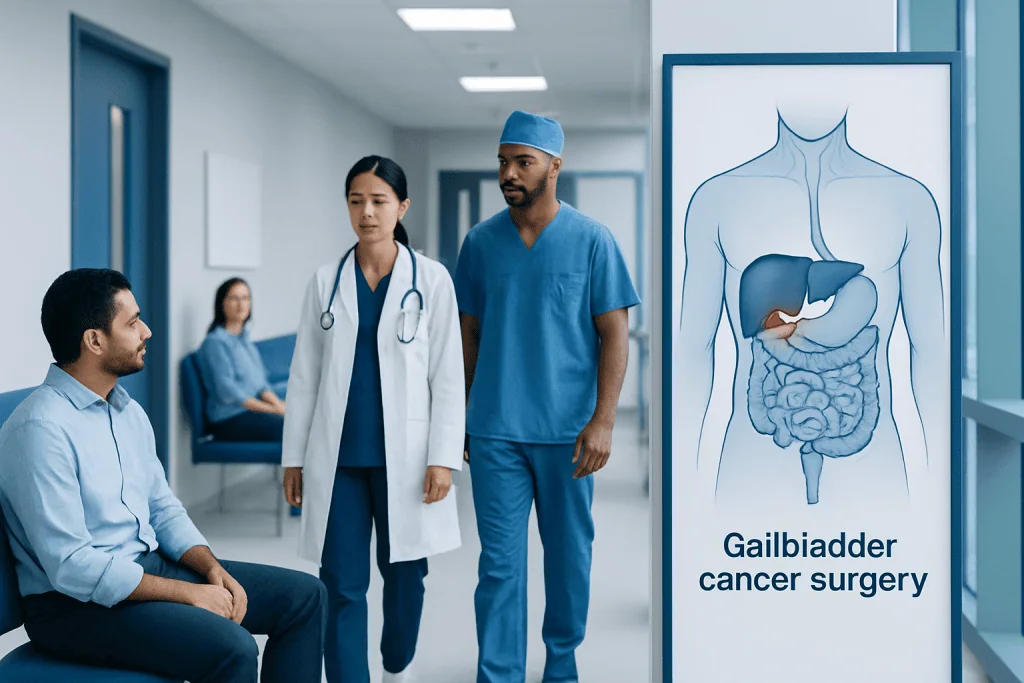
The surgical plan depends mainly on cancer stage, location, imaging findings, and overall health. Early gallbladder cancers may be treated with gallbladder removal alone, while more advanced localized tumors often require extended surgery.
Key Takeaways
- The surgical plan depends mainly on cancer stage, location, imaging findings, and overall health.
- Early gallbladder cancers may be treated with gallbladder removal alone, while more advanced localized tumors often require extended surgery.
- Recovery varies with the extent of surgery; most people need temporary limits on lifting, driving, and strenuous activity.
- Surgery has important potential benefits but also risks, including bleeding, infection, bile leakage, and blood clots.
- Follow-up after surgery may include pathology review, imaging, blood tests, and discussion of additional treatment such as chemotherapy.
Gallbladder cancer surgery is the main treatment with curative intent when the tumor is localized and can be completely removed. The operation may range from gallbladder removal alone to a more extensive resection involving nearby liver tissue, lymph nodes, and occasionally other organs.
Overview: What Is Gallbladder Cancer Surgery?
Gallbladder cancer surgery is an operation to remove cancer from the gallbladder, a small organ beneath the liver that stores bile. It is usually considered when imaging and clinical assessment suggest the cancer can be removed completely and a person is well enough for surgery. The goal is to remove the tumor with a margin of healthy tissue where appropriate while avoiding unnecessary removal of nearby organs.
The gallbladder cancer removal procedure is tailored to the stage of disease. For a very early cancer found unexpectedly after a routine gallbladder operation, removing the gallbladder may already be sufficient. For cancers that have grown into deeper gallbladder layers but have not spread far away, surgeons may recommend a more extensive gallbladder cancer resection that includes a small portion of the liver next to the gallbladder and regional lymph nodes.
Care is best planned by a multidisciplinary team that may include hepatobiliary surgeons, medical oncologists, radiologists, pathologists, gastroenterologists, anesthesiologists, and specialist nurses. This team reviews scan results and pathology findings to determine whether surgery, drug treatment, or a combination of approaches is most appropriate.
How Candidacy and Surgical Planning Are Determined
Not every person with gallbladder cancer benefits from an operation. A surgical team considers whether all visible cancer can likely be removed, whether cancer has spread to distant organs, the involvement of major blood vessels or bile ducts, and the person’s liver function, nutrition, heart and lung health, and daily functional ability.
Assessment commonly includes contrast-enhanced CT or MRI scans of the abdomen and chest. Blood tests evaluate liver function, blood counts, kidney function, and clotting. In selected situations, doctors may use laparoscopy, a minimally invasive examination of the abdomen, before committing to a larger operation. This can identify small deposits of cancer that were not visible on scans.
Some people are diagnosed only after a gallbladder removed for presumed gallstones is examined under a microscope. If pathology shows cancer beyond an early stage, further surgery may be advised to remove adjacent liver tissue and lymph nodes. The pathology report, including tumor depth and margin status, is central to this decision.
- Early, localized disease may be suitable for surgery with curative intent.
- Locally advanced disease may require chemotherapy before or after surgery in selected cases.
- Widely metastatic disease is usually treated with systemic therapy and symptom-focused care rather than major resection.
How the Gallbladder Cancer Removal Surgery Is Performed
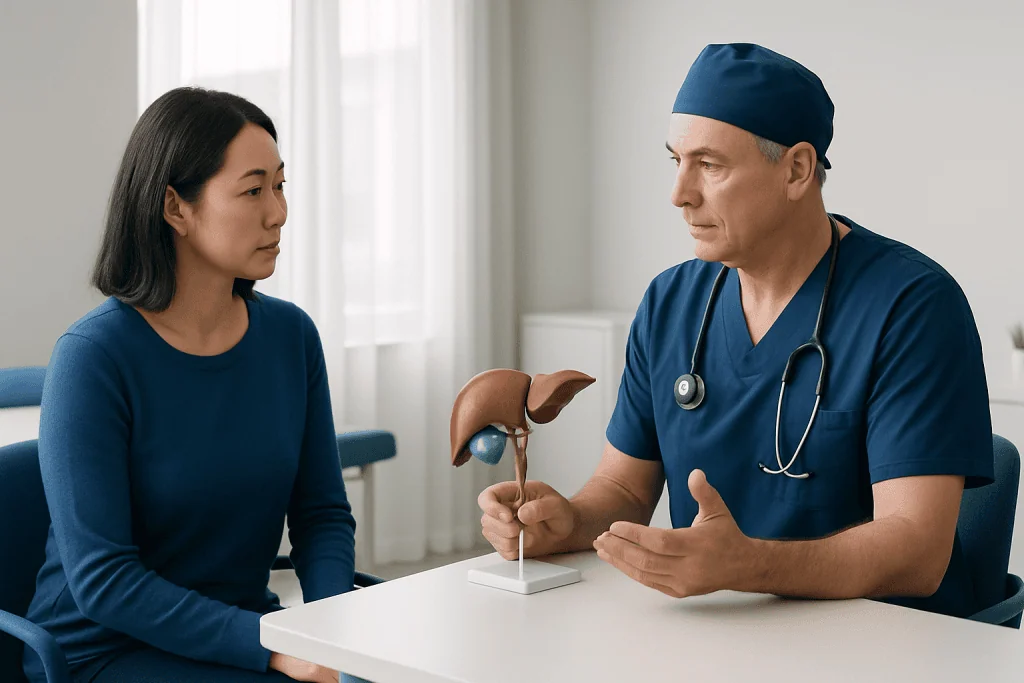
The exact approach depends on the tumor’s stage and location. A simple cholecystectomy removes the gallbladder. It may be performed laparoscopically through small incisions or through an open incision, although an open approach may be preferred when cancer is known or suspected because it can allow a more thorough cancer operation.
An extended cholecystectomy is a common gallbladder cancer removal surgery for tumors that have invaded beyond the innermost gallbladder wall. During this operation, the surgeon removes the gallbladder, a wedge or segments of liver tissue immediately beside it, and lymph nodes in the area of the liver hilum. If the cancer involves the bile duct, surgeons may need to remove part of it and reconstruct bile flow by connecting the remaining bile ducts to the small intestine.
After general anesthesia is given, the surgical team makes the planned incision, carefully inspects the abdomen, and confirms that resection remains appropriate. The gallbladder and planned surrounding tissues are removed, blood vessels and bile ducts are securely managed, and the specimen is sent to pathology. A drain may be placed temporarily in some cases. The procedure duration varies considerably according to the extent of surgery and whether reconstruction is needed.
For people seeking coordinated specialist evaluation, gallbladder cancer treatment may involve surgical planning alongside oncology, imaging, and supportive care services. At Acibadem International, multidisciplinary specialists at JCI-accredited hospitals diagnose and treat gallbladder cancer for international patients.
Benefits, Risks and Possible Additional Treatment
When gallbladder cancer is localized and completely removable, surgery offers the main opportunity for long-term disease control and, in some cases, cure. Removing regional lymph nodes also helps establish the true stage, which informs prognosis and decisions about treatment after surgery. However, the benefit depends on factors such as tumor stage, tumor biology, lymph node involvement, surgical margins, and a person’s overall condition.
All major abdominal operations carry risks. These include bleeding, wound infection, pneumonia, blood clots, reactions to anesthesia, and injury to nearby structures. More specific risks of gallbladder cancer resection include bile leakage, collections of bile or fluid, liver dysfunction, narrowing of a bile duct reconstruction, and delayed bowel function. The surgical team discusses individual risks before consent and monitors closely for complications after the operation.
The final pathology report usually becomes available after surgery and confirms how deeply the tumor grew, whether lymph nodes contain cancer, and whether margins are clear. Depending on these findings, an oncologist may discuss adjuvant chemotherapy, meaning treatment given after surgery to lower the risk of recurrence. Some people instead need treatment for unresectable or recurrent cancer, which may include systemic therapy, radiation in selected circumstances, and symptom-directed procedures.
Recovery Timeline and Gallbladder Surgery Recovery Restrictions
Recovery after gallbladder cancer surgery depends greatly on whether the operation was a simple cholecystectomy or an extended liver and lymph node resection. After a smaller procedure, some people return home within a day or two. Following a major open operation, hospital recovery is commonly longer and includes pain management, early assisted walking, breathing exercises, gradual return to eating, and monitoring of liver and bile drainage.
In the first few weeks at home, fatigue, reduced appetite, abdominal discomfort, and changes in bowel habits can occur. Patients are usually encouraged to take short walks and increase activity gradually, while avoiding strenuous exercise and heavy lifting until their surgeon confirms healing is adequate. Gallbladder surgery recovery restrictions vary, but driving should wait until the person is no longer taking sedating pain medicine and can comfortably perform an emergency stop.
Eating smaller, balanced meals and limiting foods that clearly worsen nausea, bloating, or diarrhea may help during early recovery. Adequate fluids, protein, and calories support wound healing. A care team should be contacted promptly for fever, worsening abdominal pain, persistent vomiting, yellowing of the skin or eyes, increasing wound redness or drainage, shortness of breath, or leg swelling.
Follow-up visits review healing and pathology, then establish a surveillance plan. This may include clinical visits, blood tests, and periodic imaging. Emotional recovery matters as well; patients and families may benefit from oncology nursing support, counseling, rehabilitation, or a cancer support group.
How Long Does It Take for Gallbladder Cancer to Spread?
There is no fixed timeline for gallbladder cancer to spread. Growth and spread depend on the individual tumor’s biology, its location, how deeply it has invaded the gallbladder wall, and whether it has access to lymphatic channels, blood vessels, the liver, or nearby bile ducts. Some cancers remain localized for a time, while others are aggressive and can spread before symptoms are recognized.
Gallbladder cancer can extend directly into the adjacent liver and can spread through lymph nodes or to distant organs such as the liver, peritoneum, or lungs. Because early symptoms may be absent or nonspecific, some cases are found at a later stage. This uncertainty is why timely assessment of persistent symptoms and careful review of suspicious imaging findings are important.
Scans can show the current extent of disease but cannot reliably predict exactly how quickly a particular cancer will progress. Doctors use stage, pathology, imaging, and overall health to recommend the most appropriate timing and sequence of treatment.
What Is the Life Expectancy for Stage 1 Gallbladder Cancer With Treatment?
Stage 1 gallbladder cancer is generally the most favorable stage because the tumor is confined to the gallbladder wall and has not spread to lymph nodes or distant organs. With complete surgical removal, many people can achieve long-term survival, and some are cured. However, life expectancy cannot be accurately predicted for one individual from stage alone.
Outlook is influenced by the precise depth of invasion, tumor type and grade, whether the cancer was fully removed with clear margins, the quality of staging, and general health. A cancer confined to the innermost lining may need no treatment beyond gallbladder removal, while a deeper stage 1 tumor may require a discussion about additional resection to ensure adequate treatment.
Published survival figures are population estimates collected across different healthcare systems and treatment periods, so they should not be treated as a personal forecast. A surgeon and oncologist can explain what the operative and pathology findings mean for an individual’s outlook and follow-up needs.
Is Stage 3 Gallbladder Cancer Curable? Are There Success Stories in Stage 4?
Stage 3 gallbladder cancer has spread more extensively into nearby tissues, lymph nodes, or structures, but it has not necessarily spread to distant organs. In carefully selected cases where a surgeon can remove all visible cancer, treatment may still be given with curative intent. However, stage 3 disease has a higher risk of recurrence than earlier-stage disease, and treatment often combines surgery with systemic therapy when appropriate.
Stage 4 gallbladder cancer generally means the disease has spread to distant sites or involves structures in a way that prevents complete surgical removal. It is usually not considered curable with currently available standard treatments. Nevertheless, there are people who live longer than expected or have meaningful responses to chemotherapy, immunotherapy when suitable, clinical trials, and supportive care; these are sometimes described as success stories, but outcomes vary widely and should not create unrealistic expectations.
For stage 3 or stage 4 disease, individual decisions should be reviewed by an experienced multidisciplinary cancer team. Treatment aims may include controlling cancer growth, relieving symptoms, preserving nutrition and strength, and supporting quality of life. Palliative care can be introduced alongside active cancer treatment and focuses on comfort, symptom relief, and practical support.
When to Seek Medical Care
A person should arrange medical assessment for persistent upper-right abdominal pain, unexplained weight loss, loss of appetite, ongoing nausea, new fatigue, or a noticeable abdominal lump. These symptoms have many possible causes and do not necessarily indicate cancer, but they should be evaluated when persistent or worsening.
Urgent medical care is needed for jaundice, dark urine, pale stools, fever with abdominal pain, severe or worsening abdominal pain, confusion, or inability to keep fluids down. These symptoms can indicate blockage or infection in the biliary system and require prompt assessment.
Anyone who has had gallbladder cancer surgery should follow the postoperative instructions provided by their surgical team and attend scheduled visits. New symptoms between appointments should be discussed with the treating team rather than waiting for the next routine review.
Frequently asked questions
Can gallbladder cancer be removed with keyhole surgery?
Keyhole, or laparoscopic, surgery may be used to remove the gallbladder in selected situations, particularly when cancer is not known beforehand or disease is very early. When gallbladder cancer is known or suspected, an open operation is often considered because it may better support complete removal of nearby liver tissue and lymph nodes when needed. The safest approach depends on the tumor and the surgeon’s assessment.
What happens if gallbladder cancer is found after gallbladder removal?
A pathologist examines the removed gallbladder and determines the depth of cancer invasion, margins, and other features. Very early cancer may have been fully treated by the initial operation. If the tumor has grown more deeply, doctors may recommend further imaging and, in some cases, additional surgery to remove nearby liver tissue and lymph nodes.
How painful is recovery from gallbladder cancer surgery?
Pain is expected after abdominal surgery, but it is managed with a personalized plan that may include several types of pain relief. Discomfort generally improves over days to weeks, although fatigue can last longer after an extended resection. Pain that is increasing rather than improving should be reported to the surgical team.
Can a person live normally without a gallbladder?
Yes. The liver continues to produce bile after the gallbladder is removed, and bile flows directly into the intestine. Some people notice temporary diarrhea, bloating, or difficulty with very fatty meals, especially early after surgery, but many return to their usual diet over time.
Will chemotherapy always be needed after gallbladder cancer surgery?
No. The recommendation depends on the stage, lymph node findings, surgical margins, and overall health. For higher-risk resected disease, an oncologist may recommend chemotherapy after surgery to reduce the chance of recurrence. Decisions should be individualized after final pathology is available.
How often is follow-up needed after gallbladder cancer surgery?
Follow-up schedules vary according to stage, treatment received, and local clinical guidance. Visits commonly include a review of symptoms, examination, blood tests, and imaging at planned intervals. The treating oncology team provides a schedule tailored to the individual situation.
References
- National Cancer Institute
- American Cancer Society
- European Society for Medical Oncology
- National Comprehensive Cancer Network
- World Health Organization
This article is for general information only and is not a substitute for professional medical advice. Please consult a qualified doctor about your individual situation.
Bladder Cancer in Turkey — costs, top hospitals & a free quote
JCI-accredited · board-certified surgeons · reply within 24h
Add us as a Preferred Source to see more of our trusted health content across Google Search, AI Overviews and Discover.

Medical Oncology Department
Medical treatment of cancer with chemotherapy, immunotherapy and targeted therapies under a multidisciplinary tumor board.
60 specialists in this unit