

Gamma Knife Recovery: What Happens After Radiosurgery?

Gamma Knife radiosurgery is a non-invasive treatment, so recovery is usually faster than with traditional surgery. Many patients go home the same day and resume light daily activities within 24 to 48 hours.
Key Takeaways
- Gamma Knife radiosurgery is a non-invasive treatment, so recovery is usually faster than with traditional surgery.
- Many patients go home the same day and resume light daily activities within 24 to 48 hours.
- Mild headache, fatigue, scalp tenderness, or temporary swelling-related symptoms can occur after treatment.
- Benefits are not always immediate; the treated area often changes gradually over weeks or months.
- Follow-up appointments and MRI scans are essential to check how the treatment is working.
- Patients should contact a doctor promptly if they develop severe headache, worsening weakness, confusion, or seizures.
Gamma Knife recovery is often shorter and easier than recovery after open brain surgery because no incision is made. Most people return home the same day, but follow-up imaging and symptom monitoring remain an important part of care.
Overview: What Gamma Knife Recovery Is Like
Gamma Knife radiosurgery is a highly precise form of radiation treatment used mainly for conditions in the brain and nearby structures. Despite the name, it is not a knife and does not involve a surgical incision. Recovery is therefore different from recovery after open neurosurgery. Many patients are able to go home the same day, and physical healing is usually relatively quick.
Even so, recovery does not end when the treatment session is over. Gamma Knife works by delivering focused radiation to a specific target, such as a tumor, vascular malformation, or nerve-related condition. The effects of that radiation develop gradually. This means a person may feel physically well soon after treatment, while the medical response inside the brain continues over time.
For that reason, recovery has two parts: short-term recovery from the procedure day itself, and longer-term follow-up to monitor results. The care team usually explains what symptoms are expected, when regular activities can resume, and when to return for imaging and review.
What Happens on the Day of Treatment and Right After
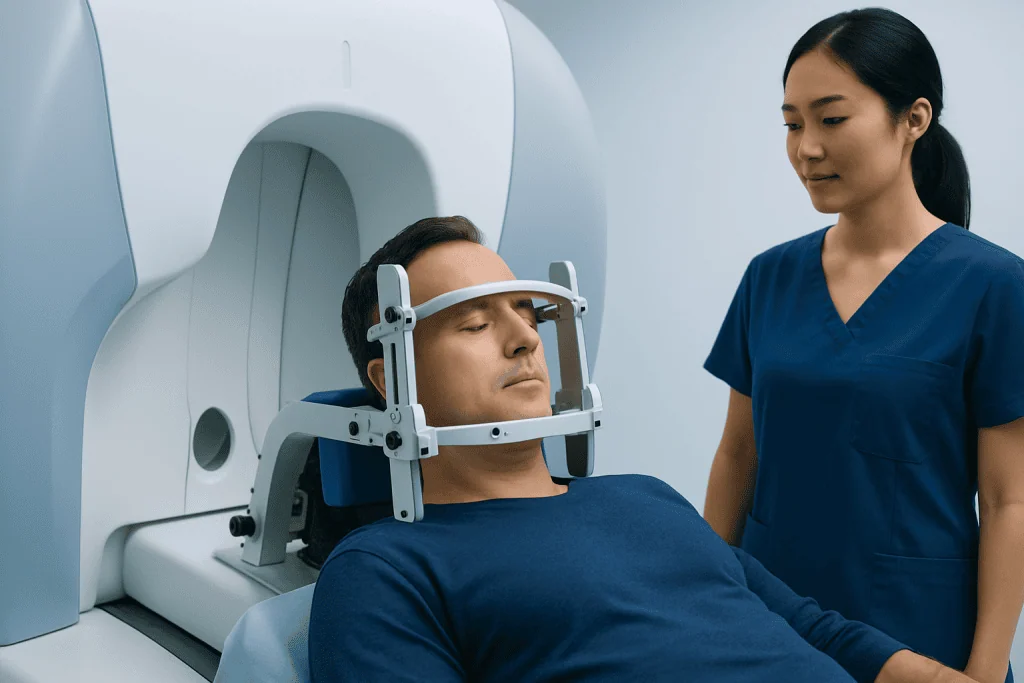
Gamma Knife treatment is typically done as an outpatient procedure. Depending on the treatment plan, the patient may have a head frame placed or may use a fitted mask to keep the head still. Imaging such as MRI, CT, or angiography is used to map the treatment area precisely. Once planning is complete, the person lies on the treatment table while the machine delivers radiation to the target.
After treatment, the care team monitors the patient for a period of time before discharge. Some people feel ready to leave within a few hours. If a frame was used, there may be mild soreness, pressure, or tenderness at the pin sites. If sedation was given, temporary drowsiness can occur, and someone else may need to drive the patient home.
Most people do not need a hospital stay unless there are other medical concerns or the underlying brain condition requires closer observation. Before discharge, patients are usually given instructions about rest, medicines such as steroids or pain relief if needed, how to care for frame pin sites, and when to call for medical advice.
Common Symptoms During Gamma Knife Recovery

Early recovery symptoms are often mild and temporary. A person may feel tired for the rest of the day or for a day or two afterward. Mild headache, nausea, scalp tenderness, or a small amount of swelling around frame pin sites can also happen. These symptoms usually improve with rest and supportive care.
Some people notice no immediate symptoms at all. Others may experience effects related not to the procedure itself, but to swelling in or around the treated area. When this happens, symptoms depend on which part of the brain was treated. For example, there may be temporary dizziness, numbness, facial discomfort, balance changes, or weakness. Doctors sometimes prescribe corticosteroids to reduce swelling when needed.
Delayed effects are also possible. Radiation-related swelling can appear weeks to months later, which is why follow-up matters even after an easy first few days. The care team will explain which symptoms are expected for the condition being treated, whether that is a brain tumor, trigeminal neuralgia, or an arteriovenous malformation. In some cases, Gamma Knife may be part of broader neurosurgical care or linked with ongoing radiation oncology treatment.
- Fatigue
- Mild headache
- Nausea
- Scalp tenderness or pin-site discomfort
- Temporary swelling-related neurologic symptoms
- Rarely, seizure or significant worsening of symptoms
How Long Recovery Takes
For most patients, the short-term recovery period is brief. Light daily activities can often be resumed within one to two days, as long as the care team agrees. Some patients return to work quickly, especially if their job is not physically demanding. Others may need more time depending on fatigue, the condition treated, or any medicines used after the procedure.
The longer-term timeline is different because Gamma Knife results are not usually immediate. A benign or malignant brain lesion may shrink slowly over months. In conditions such as trigeminal neuralgia, pain relief may begin within weeks but can take longer. For vascular conditions such as arteriovenous malformations, the treated vessels may close off gradually over a period of months to years.
This delayed treatment response is normal and does not mean the procedure failed. Follow-up MRI or other imaging helps show whether the target is shrinking, becoming inactive, or otherwise responding as expected. Recovery time therefore includes both the return to normal routine and the ongoing monitoring of treatment effect.
Follow-Up Care, Imaging, and Warning Signs
Follow-up is a key part of Gamma Knife recovery. The first review may take place within days or weeks, depending on the condition and symptoms. Imaging, often with MRI, is scheduled later to assess the treated area. The exact timing varies, but repeated scans are common because the effects of radiosurgery are gradual.
Patients should take all prescribed medicines exactly as directed and attend every follow-up visit, even if they feel well. Steroids may be tapered over time if they were used. Anti-seizure medicine may also be continued in selected patients, depending on the reason for treatment and prior history.
It is important to seek medical advice promptly if new or worsening symptoms appear. These can include severe headache, repeated vomiting, increasing drowsiness, confusion, seizure, worsening weakness, speech difficulty, vision changes, or significant trouble with balance. Such symptoms do not always mean a serious complication, but they need urgent assessment.
Self-Care After Gamma Knife Radiosurgery
Most recovery advice focuses on rest, hydration, and returning gradually to routine activities. Patients are often encouraged to take it easy for the remainder of the treatment day. Gentle movement is usually fine once they feel steady. If sedation was used, driving, alcohol, and important decisions should be avoided until the effects fully wear off and the medical team says it is safe.
If a head frame was used, pin sites should be kept clean and observed for signs of irritation. A doctor should be informed if there is increasing redness, drainage, or persistent pain. Showering instructions may vary, so it is best to follow the center’s specific guidance.
Self-care may include:
- Resting on the day of treatment
- Drinking fluids and eating light meals if nausea is mild
- Using prescribed or approved pain relief for headache or pin-site discomfort
- Taking steroids or other medicines exactly as instructed
- Returning gradually to work, exercise, and driving only when medically appropriate
- Keeping a record of any new neurologic symptoms to discuss at follow-up
Patients who are being treated for broader conditions such as brain tumors may also have care from multiple specialists, including neurologists, neurosurgeons, radiation oncologists, and rehabilitation teams.
Possible Risks and When Recovery Needs Extra Attention
Gamma Knife is designed to minimize radiation exposure to healthy tissue, but no procedure is entirely free of risk. Potential side effects depend on the target’s size and location, the radiation dose, and the person’s overall health. One of the more important delayed issues is swelling around the treated area, which can temporarily worsen neurologic symptoms.
Less commonly, there may be radiation-related changes in nearby tissue, ongoing headaches, persistent neurologic deficits, or seizures. The risk pattern differs depending on what is being treated. For example, a person treated for acoustic neuroma, brain metastases, or vascular lesions may have different expectations and follow-up needs. Sometimes doctors recommend additional treatment, such as medicines, repeat radiosurgery, or another procedure, if the response is incomplete.
Specialist review is especially important if symptoms are not improving as expected or if new symptoms begin months after treatment. In selected cases, patients may need further evaluation with advanced imaging or support from services such as brain and nerve surgery. Acibadem International’s multidisciplinary specialists and JCI-accredited hospitals diagnose and treat patients needing Gamma Knife radiosurgery and follow-up care, including international patients.
Frequently asked questions
How long does it take to recover from Gamma Knife radiosurgery?
Physical recovery from the procedure itself is often short, and many people resume light activities within a day or two. However, the treatment effect inside the brain can take weeks or months to develop, so follow-up continues well beyond the first few days.
Is Gamma Knife recovery easier than recovery after open brain surgery?
For many patients, yes. Because Gamma Knife does not require an incision, general recovery is often faster and less physically demanding than open surgery. Still, the underlying brain condition and possible delayed swelling can affect the overall recovery experience.
What side effects are common after Gamma Knife treatment?
Common short-term effects include fatigue, mild headache, nausea, and scalp tenderness if a head frame was used. Some people may also develop temporary symptoms related to swelling in the treated area, depending on the location in the brain.
Can symptoms get worse before they get better?
Sometimes they can, especially if temporary swelling occurs after treatment. This does not always mean the treatment is failing, but any worsening neurologic symptom should be discussed with a doctor promptly so it can be assessed.
When can a person drive or return to work after Gamma Knife?
This depends on the person's symptoms, whether sedation was used, and the condition being treated. Some people return to desk-based work quickly, while others need more time. Driving should only resume when the care team says it is safe.
Why are follow-up MRI scans needed after Gamma Knife?
Gamma Knife works gradually, so scans are needed to show how the treated area is responding over time. Imaging helps doctors check for shrinkage, control of the target, or treatment-related changes such as swelling.
References
- World Health Organization
- National Cancer Institute
- American Association of Neurological Surgeons
- Radiological Society of North America
- National Institute of Neurological Disorders and Stroke
This article is for general information only and is not a substitute for professional medical advice. Please consult a qualified doctor about your individual situation.
Gamma Knife in Turkey — costs, top hospitals & a free quote
JCI-accredited · board-certified surgeons · reply within 24h
Add us as a Preferred Source to see more of our trusted health content across Google Search, AI Overviews and Discover.

Neurology
Diagnosis and treatment of disorders of the brain, spinal cord, nerves and muscles.
51 specialists in this unitMore from the Health Library



Related Specialists

Dr. Ayla Sifoğlu
Neurology
Prof. Dr. Ender Semiz
Cardiology
Dr. Muhammed Taha Taş
Emergency Service
Dt. Asli Şener Bozkir
Oral & Dental Health