Genital Psoriasis — Explained by Medical Evidence, Not Myths

Genital psoriasis is a form of psoriasis affecting sensitive skin in and around the genital area. It is not contagious and is not a sexually transmitted infection.
Key Takeaways
- Genital psoriasis is a form of psoriasis affecting sensitive skin in and around the genital area.
- It is not contagious and is not a sexually transmitted infection.
- Symptoms may look smoother and less scaly than psoriasis on elbows, knees, or scalp because the area is moist and subject to friction.
- Diagnosis usually relies on a skin examination and a careful review of symptoms and triggers.
- Treatment often includes gentle skin care, trigger avoidance, and carefully selected topical medicines for sensitive skin.
- Persistent rash, pain, cracking, or uncertainty about the diagnosis should be assessed by a doctor.
Genital psoriasis is psoriasis that affects the skin of the vulva, penis, scrotum, groin folds, buttock crease, or nearby areas. It is not a sexually transmitted infection, and with the right diagnosis and gentle treatment plan, symptoms such as redness, soreness, and itching can often be controlled.
Overview: what genital psoriasis is and what it is not
Genital psoriasis is a chronic inflammatory skin condition that affects the genital region, including the vulva, penis, scrotum, pubic area, groin folds, inner thighs, buttock crease, and skin around the anus. It happens when the immune system drives skin cells to turn over too quickly, leading to inflamed patches. In this delicate area, psoriasis often appears bright red or darker than surrounding skin, shiny, tender, and less scaly than it does elsewhere on the body.
A common source of anxiety is whether it is infectious. Genital psoriasis is not a sexually transmitted infection, and it cannot be passed to a partner through sexual contact. It is also not caused by poor hygiene. Because the genital area is warm, moist, and exposed to friction, symptoms may feel more uncomfortable there even when the visible rash seems limited.
This type of psoriasis may occur on its own, but many people also have psoriasis on other parts of the body, such as the scalp, elbows, knees, or nails. In some cases it overlaps with plaque psoriasis or appears as part of inverse psoriasis, which tends to affect skin folds. Recognizing these patterns helps guide treatment and avoid unnecessary worry.
How genital psoriasis can feel and look
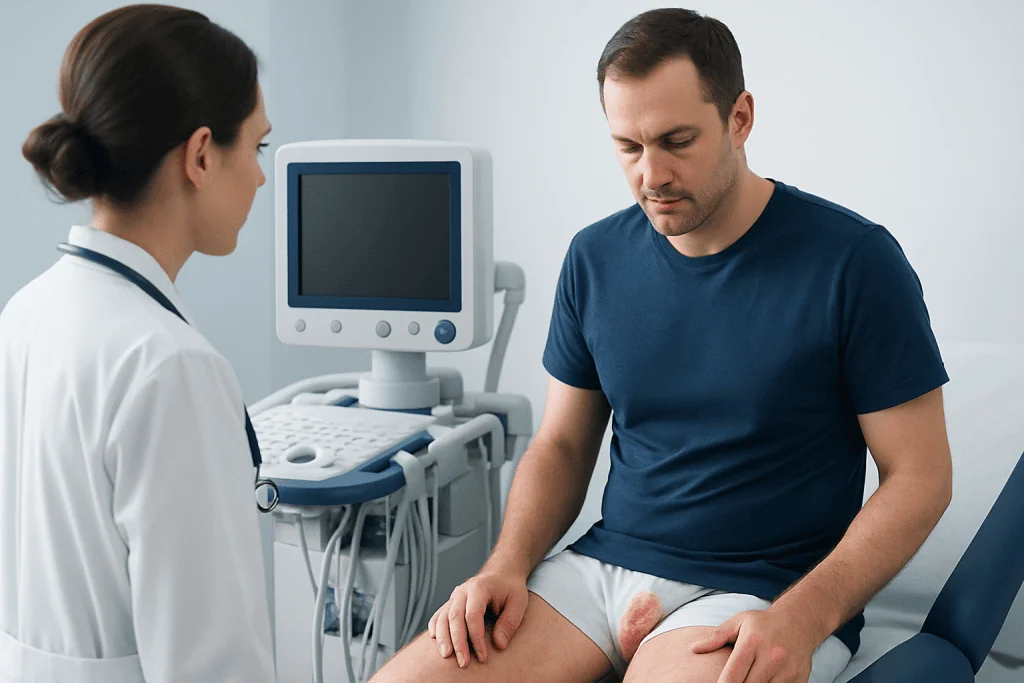
Symptoms vary from person to person, but the most common complaints are itching, burning, soreness, irritation, and sensitivity during walking, exercise, or sexual activity. The skin may look red, pink, violet, brown, or darker than surrounding skin depending on a person’s skin tone. Some patches are smooth and glossy rather than thick and flaky.
Because friction and moisture soften the outer skin layer, heavy scale may be absent. Instead, the area may develop fine surface peeling, cracks, or painful fissures. If the skin becomes very irritated, it can sting when urine, sweat, soap, or tight clothing comes into contact with it.
Common sites include:
- Skin folds of the groin
- The vulva, usually on outer areas rather than internal vaginal tissue
- The penis, especially the glans or shaft
- The scrotum
- The crease between the buttocks and the skin around the anus
Symptoms may come and go over time. Many people notice flares linked to stress, illness, chafing, sweating, or the use of irritating products. Since genital psoriasis can affect comfort, body image, and intimacy, its impact may be significant even when the involved area is small.
Why it happens and what can trigger flare-ups

Psoriasis is an immune-mediated condition with a strong genetic component. A person may be more likely to develop it if close family members have psoriasis or related inflammatory conditions. The exact cause is complex, but it involves the immune system sending signals that speed up skin cell growth and create persistent inflammation.
In the genital region, symptoms are often intensified by local triggers. Friction from skin rubbing together, tight clothing, prolonged sitting, exercise, and sexual activity can worsen inflammation. Sweat, heat, and moisture may also increase discomfort. Harsh soaps, fragranced wipes, deodorants, antiseptics, and some lubricants can irritate already sensitive skin.
Other factors that may contribute to flares include emotional stress, smoking, excess alcohol use, infections, and some medications in susceptible people. Obesity can increase friction in skin folds and make inverse-type psoriasis more troublesome. Not everyone has the same triggers, so it is often helpful to notice patterns over time and discuss them with a clinician.
Importantly, genital psoriasis can resemble other skin disorders. Conditions such as fungal infections, contact dermatitis, lichen sclerosus, eczema, or sexually transmitted infections may produce similar symptoms. That is why diagnosis should rely on medical assessment rather than self-treatment alone.
How doctors diagnose genital psoriasis
Diagnosis usually begins with a detailed medical history and a close skin examination. A doctor will ask where the rash is located, how long it has been present, whether it itches or burns, and whether there is psoriasis elsewhere on the body or a family history of the condition. They may also ask about soaps, detergents, shaving, sexual health history, and recent use of creams or medications.
In many cases, an experienced dermatologist can identify genital psoriasis based on appearance and distribution. The doctor may examine the scalp, nails, elbows, knees, and other skin folds for clues that support the diagnosis. If the rash is not typical, tests may be used to rule out infection or other inflammatory skin diseases.
Possible diagnostic steps include:
- Skin examination under good lighting
- Review of personal and family history of psoriasis
- Swabs or scrapings if yeast or fungal infection is suspected
- Patch testing if allergic contact dermatitis is possible
- Occasionally a small skin biopsy when the diagnosis remains uncertain
Because the genital area is sensitive and many conditions overlap, trying multiple over-the-counter creams without guidance can sometimes blur the picture or worsen irritation. A clear diagnosis helps treatment stay both effective and safe.
Treatment options for sensitive skin
Treatment for genital psoriasis is usually individualized because the skin in this area is thin and easily irritated. The main goals are to reduce inflammation, calm itching or soreness, help the skin heal, and prevent repeated flares. Topical treatments are often the first choice, but the exact plan depends on symptom severity, the extent of psoriasis elsewhere on the body, and how often symptoms return.
Doctors may prescribe low-potency topical corticosteroids for short periods, especially during flares. These medicines can be very helpful when used carefully, but because the genital area absorbs medication more readily, they should be used exactly as directed. In some patients, non-steroid anti-inflammatory creams such as calcineurin inhibitors may be considered to reduce long-term steroid exposure. If psoriasis is more widespread or difficult to control, dermatologists may discuss psoriasis treatment options that address the condition more broadly.
Supportive care also matters. Bland emollients can reduce dryness and friction, while avoiding fragranced cleansers and harsh scrubbing can protect the skin barrier. If itching is intense, treating any contributing infection or contact allergy is important before assuming psoriasis alone is responsible. When diagnosis is uncertain or symptoms are persistent, specialist dermatology care can help refine the treatment plan.
For people whose psoriasis affects several body areas or significantly disrupts quality of life, systemic therapy may sometimes be appropriate under specialist supervision. Treatment should always balance symptom control with the extra sensitivity of genital skin. Self-medicating with strong steroid creams or antifungal products for prolonged periods is not recommended unless advised by a doctor.
Self-care, intimacy, and everyday prevention
Daily habits can make a meaningful difference. Gentle skin care is especially important: washing with lukewarm water, using mild fragrance-free cleansers only when needed, and patting rather than rubbing the skin dry can reduce irritation. Applying a simple moisturizer or barrier product recommended by a clinician may help protect the skin from friction.
Loose, breathable underwear and clothing can reduce heat and chafing. After exercise, changing out of damp clothes promptly may help. People who notice irritation from menstrual products, lubricants, condoms, wipes, or shaving products should discuss alternatives with a healthcare professional. If weight contributes to rubbing in skin folds, gradual, sustainable lifestyle measures may also improve comfort over time.
Sexual activity can sometimes trigger burning or tenderness during a flare, but genital psoriasis itself is not contagious. Open communication with a partner may reduce anxiety and misunderstanding. During active irritation, some people benefit from pausing sexual activity or using gentler products until the skin settles. When symptoms affect confidence or relationships, support from a clinician can be just as important as medication.
Stress management, smoking cessation, moderation in alcohol use, and attention to general skin health may also reduce flare frequency in some individuals. If a person has broader skin symptoms, assessment for dermatology and venereology services may be useful, especially when psoriasis needs to be distinguished from infections or other genital skin conditions.
When to seek medical care
Medical assessment is a good idea whenever a new genital rash appears and the cause is unclear. Because genital psoriasis can resemble infections, eczema, or allergic reactions, self-diagnosis is not always reliable. A doctor can confirm what is happening and recommend safe treatment for this sensitive area.
A person should seek care sooner if symptoms are painful, spreading, bleeding, cracking, disturbing sleep, or interfering with urination, walking, exercise, or intimacy. Care is also important if there is discharge, fever, open sores, or concern about a sexually transmitted infection, since these features may point to another condition that needs prompt attention.
Anyone with known psoriasis should also speak with a clinician if genital symptoms are new, frequent, or not improving with the prescribed plan. Near the end of the care pathway, some patients may benefit from evaluation in a center where skin, urology, gynecology, and other specialists work together. Acibadem International’s multidisciplinary specialists and JCI-accredited hospitals diagnose and treat psoriasis and related skin conditions for international patients.
Frequently asked questions
Is genital psoriasis a sexually transmitted infection?
No. Genital psoriasis is an inflammatory skin condition, not a sexually transmitted infection. It is not contagious and cannot be passed to a partner through sexual contact.
What does genital psoriasis look like?
It often appears as smooth, red or discolored, shiny patches in the groin, vulva, penis, scrotum, or buttock crease. Unlike psoriasis on the elbows or scalp, it may have little visible scaling because the area is moist and subject to friction.
Can genital psoriasis be mistaken for a yeast infection or eczema?
Yes. Symptoms can overlap with yeast infection, fungal rash, eczema, contact dermatitis, and some other genital skin conditions. That is why a medical examination is important when the diagnosis is uncertain or symptoms keep returning.
How is genital psoriasis treated safely?
Treatment often includes gentle skin care, trigger avoidance, and prescription creams chosen for sensitive skin. Doctors may use low-strength topical steroids for short periods or non-steroid anti-inflammatory treatments, depending on the person's symptoms and medical history.
Can sex make genital psoriasis worse?
It can during a flare, mainly because friction may increase irritation, burning, or soreness. The condition itself is not contagious, but some people find it more comfortable to wait until symptoms settle or to discuss gentler products and approaches with their clinician.
Will genital psoriasis go away permanently?
Psoriasis is usually a long-term condition with periods of improvement and flare-ups. Many people achieve good symptom control with the right treatment plan, skin care routine, and attention to triggers.
References
- American Academy of Dermatology
- National Psoriasis Foundation
- NHS
- Mayo Clinic
- British Association of Dermatologists
This article is for general information only and is not a substitute for professional medical advice. Please consult a qualified doctor about your individual situation.
Explore treatments in Turkey — costs, top hospitals & a free quote
JCI-accredited · board-certified surgeons · reply within 24h
Add us as a Preferred Source to see more of our trusted health content across Google Search, AI Overviews and Discover.

More from the Health Library

COVID Vaccine 2025: An Evidence-Based Guide for Patients

Nutrient Nutrients: A Complete Medical Overview

Glute Bridge: An Evidence-Based Guide for Patients

Google Breathing Exercise: What Patients Need to Know

Bentonite Clay: A Complete Medical Overview