Glaucoma and LASIK Eye Surgery: Procedure, Recovery and Results

LASIK reshapes the cornea to reduce dependence on glasses or contact lenses; it does not lower eye pressure or cure glaucoma. People with stable, well-monitored glaucoma may sometimes be candidates for LASIK, while uncontrolled or advanced glaucoma usually requires caution or avoidance.
Key Takeaways
- LASIK reshapes the cornea to reduce dependence on glasses or contact lenses; it does not lower eye pressure or cure glaucoma.
- People with stable, well-monitored glaucoma may sometimes be candidates for LASIK, while uncontrolled or advanced glaucoma usually requires caution or avoidance.
- Glaucoma laser procedures and LASIK are different treatments with different goals, techniques and recovery expectations.
- Corneal changes after LASIK can make standard eye-pressure readings appear lower, so ongoing glaucoma monitoring needs specialist interpretation.
- Most people need transport home after glaucoma laser treatment and should avoid driving until vision is clear and a clinician says it is safe.
Glaucoma and LASIK eye surgery may be considered together in carefully selected people, but LASIK does not treat glaucoma and can affect how eye pressure is measured afterwards. A glaucoma specialist and refractive surgeon should assess optic nerve health, eye pressure control, corneal thickness and long-term monitoring needs before recommending either procedure.
Overview: glaucoma and LASIK eye surgery
Glaucoma and LASIK eye surgery can coexist, but the decision needs individual assessment. LASIK is a refractive procedure that changes the shape of the cornea to improve focusing and reduce reliance on glasses or contact lenses. It does not treat glaucoma, protect the optic nerve or replace pressure-lowering drops, laser treatment or surgery.
Glaucoma is a group of conditions in which damage to the optic nerve can lead to permanent vision loss. Elevated intraocular pressure is an important risk factor, although glaucoma can also occur when measured pressure is in the usual range. Because LASIK changes corneal thickness and shape, it can influence routine pressure measurements and make long-term glaucoma follow-up more complex.
A person with glaucoma should have a coordinated review by an ophthalmologist experienced in glaucoma and a refractive surgeon before considering LASIK. The review should establish whether the disease is stable, whether the optic nerve is vulnerable, and whether another vision-correction option may be safer or more suitable.
How LASIK and glaucoma laser procedures work
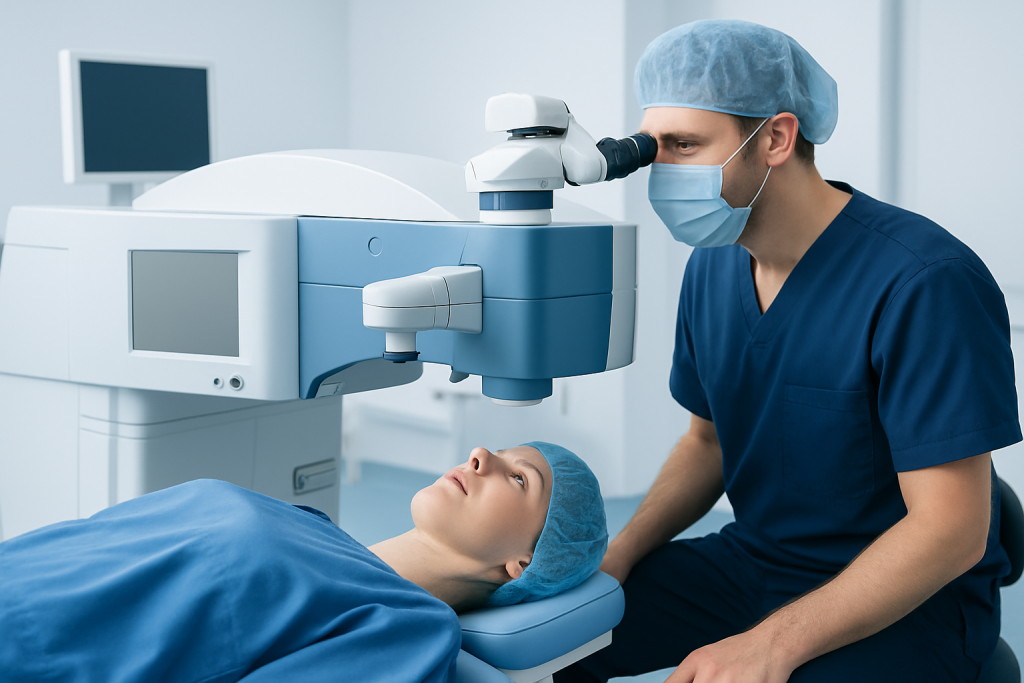
LASIK uses a laser to reshape the cornea, the clear front window of the eye. The surgeon creates a thin corneal flap, applies an excimer laser to reshape underlying tissue, and returns the flap to its position. By changing the way light focuses on the retina, LASIK can correct short-sightedness, long-sightedness or astigmatism within an appropriate treatment range.
Laser treatment for glaucoma has a very different purpose. In open-angle glaucoma, selective laser trabeculoplasty may improve drainage of fluid from the eye to help lower pressure. In narrow-angle glaucoma, laser peripheral iridotomy creates a small opening in the iris to reduce the risk of angle closure. These treatments aim to protect the optic nerve by managing eye pressure; they do not correct a glasses prescription.
For people needing pressure control, an ophthalmologist may discuss glaucoma treatment options such as drops, laser procedures or surgery according to glaucoma type, eye pressure, optic nerve findings and visual-field results. The best order of treatment is individual: glaucoma must be appropriately controlled and monitored before elective refractive surgery is considered.
Candidacy: can people with glaucoma have LASIK?
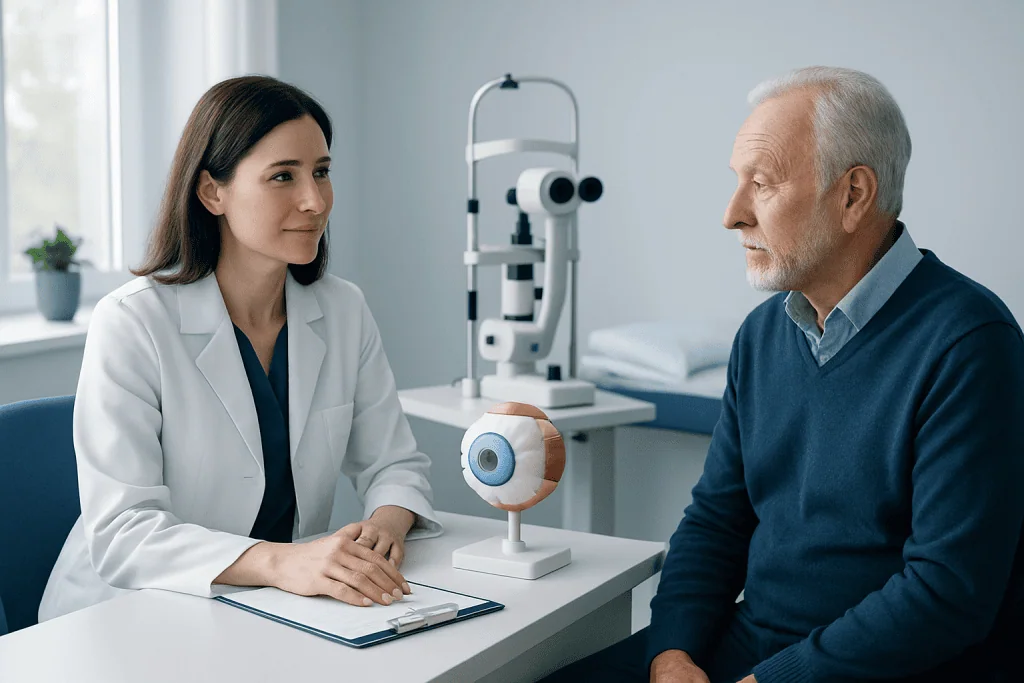
Some people with glaucoma can be considered for LASIK, particularly when their condition is mild, stable and well controlled over time. However, suitability is not determined by pressure alone. The ophthalmology team considers optic nerve appearance, visual-field testing, corneal thickness and shape, glaucoma type, current medicines, previous procedures and the likelihood of reliable follow-up.
LASIK may be unsuitable or postponed when glaucoma is uncontrolled, progressing, advanced, or associated with substantial optic nerve damage. It may also be less appropriate in people with certain corneal disorders, severe dry eye, unstable glasses prescriptions, pregnancy or breastfeeding, or other eye conditions that affect healing or visual outcomes.
A key issue is future monitoring. After LASIK, standard applanation tonometry may underestimate true eye pressure because the cornea is thinner and biomechanically altered. Clinicians can account for this by using pre-operative records, corneal measurements, optic nerve imaging, visual fields and alternative pressure-assessment approaches. Regular follow-up remains essential even if vision is excellent after LASIK.
- Bring prior glaucoma test results and a complete medicine list to the consultation.
- Do not stop glaucoma drops unless the prescribing ophthalmologist specifically advises it.
- Ask how eye pressure will be measured and compared with baseline values after refractive surgery.
What happens during the procedures
Before LASIK, the eye team carries out detailed testing, including refraction, corneal mapping, corneal thickness measurement, pupil assessment and an eye-health examination. For a person with glaucoma, this assessment also includes pressure history, optic nerve examination, imaging and visual-field information. Contact lenses may need to be stopped for a specified period before testing because they can temporarily affect corneal shape.
On the day of LASIK, numbing eye drops are used. The patient is awake, and the active laser treatment generally takes only a short time per eye. A device helps keep the eyelids open, and the patient is asked to look at a fixation light. Vision may be blurred immediately afterwards, and temporary burning, watering, light sensitivity or a gritty feeling can occur as the eye begins to heal.
Glaucoma laser treatment is usually performed in an outpatient setting with numbing drops. The ophthalmologist places a special lens on the eye and directs laser energy to the drainage angle or iris, depending on the procedure. Eye pressure may be checked shortly after treatment because a temporary rise can occasionally occur. The team will provide individual instructions about drops, activity and the next review.
Recovery, results and practical questions
After LASIK, many people notice clearer vision within one or two days, although vision can fluctuate during early healing. Mild discomfort, dry eye, glare, halos or light sensitivity are common at first and usually improve. Follow-up visits allow the surgeon to check corneal healing, vision and any signs of inflammation or infection. In people with glaucoma, these visits complement rather than replace regular glaucoma monitoring.
How long is recovery after glaucoma laser surgery? Recovery after laser peripheral iridotomy or selective laser trabeculoplasty is often quick. Many people resume light activities the next day, although temporary blurred vision, redness, light sensitivity or mild discomfort can last for hours to a few days. Pressure-lowering effects, particularly after trabeculoplasty, may develop gradually over several weeks, and continued drops may still be needed.
How many days should I rest after LASIK eye surgery? Most people rest on the day of LASIK and take at least the following day away from work or demanding visual tasks. The exact timing depends on healing, work requirements and the surgeon’s advice. It is usually sensible to avoid rubbing the eyes, swimming, hot tubs, dusty environments and contact sports for the period recommended by the surgical team.
Can I drive home after laser surgery for glaucoma? It is best to arrange for someone else to take the patient home. Vision can be temporarily blurred from the laser procedure, eye drops or glare, and some patients receive medicines that can affect alertness. Driving should only resume when vision is clear, the patient feels comfortable and the ophthalmologist’s instructions allow it.
Benefits, risks and follow-up needs
The potential benefit of LASIK is reduced dependence on glasses or contact lenses. For a suitable candidate, it may improve uncorrected distance vision and daily convenience. For glaucoma laser treatment, the potential benefit is lower eye pressure or reduced risk from a narrow drainage angle, helping to preserve remaining vision when used as part of a long-term care plan.
Neither procedure guarantees that glasses, medication or further eye treatment will never be needed. LASIK can be associated with dry eye, visual disturbances in low light, undercorrection, overcorrection, infection, inflammation and uncommon flap-related complications. Glaucoma laser procedures can cause short-term inflammation, temporary pressure elevation, blurred vision or an insufficient pressure response; their effect may lessen over time.
How serious is laser surgery for glaucoma? Glaucoma laser treatment is generally an established outpatient procedure and is often less invasive than incisional glaucoma surgery. Even so, it is a medical procedure performed near structures essential for sight, so careful assessment and follow-up are important. Its seriousness depends on the type and stage of glaucoma, the laser used, the person’s eye health and how the eye responds to treatment.
Ongoing glaucoma surveillance is vital after LASIK. Changes in corneal measurements can complicate interpretation of pressure readings, while glaucoma progression may occur without noticeable symptoms. Regular optic nerve examinations, visual-field tests and imaging help the clinician make decisions using more than a single pressure measurement.
When to seek medical care
Anyone with diagnosed glaucoma who is considering LASIK should arrange a specialist consultation before booking elective surgery. Prompt review is also important for people with a family history of glaucoma, previous high eye-pressure readings, substantial short-sightedness, steroid use, eye injury or a history of angle closure. These factors do not automatically rule out LASIK, but they require careful evaluation.
After either LASIK or glaucoma laser treatment, urgent ophthalmic advice is needed for worsening pain, marked redness, a sudden decrease in vision, persistent nausea or vomiting, increasing light sensitivity, flashes, a curtain-like shadow, or discharge from the eye. These symptoms do not always indicate a serious complication, but they should be assessed promptly rather than monitored at home.
For international patients, Acibadem International’s multidisciplinary ophthalmology specialists at JCI-accredited hospitals can assess glaucoma status and refractive-surgery suitability, then plan appropriate follow-up. A specialist can also explain whether a non-LASIK approach to vision correction may better support long-term eye health.
Frequently asked questions
Does LASIK make glaucoma worse?
LASIK does not usually cause glaucoma, but it may complicate eye-pressure measurement and requires careful consideration in people who already have glaucoma. The suction phase during LASIK can temporarily raise eye pressure, so optic nerve health and glaucoma stability are important when assessing suitability. A glaucoma specialist should be involved in the decision.
Can LASIK lower eye pressure?
LASIK is not a treatment for high eye pressure or glaucoma. Some routine pressure readings may appear lower after LASIK because the cornea has been reshaped, not because glaucoma has improved. Glaucoma management should continue according to the ophthalmologist's plan.
Should glaucoma be treated before LASIK?
Glaucoma should be assessed and appropriately controlled before elective LASIK is considered. Some people may need drops, laser treatment or surgery first, while others may be advised not to have LASIK because of disease severity or monitoring concerns. The sequence of care is individual.
How soon can vision improve after glaucoma laser treatment?
Vision may be mildly blurred for several hours after glaucoma laser treatment, often because of eye drops, temporary inflammation or light sensitivity. The pressure-lowering effect can take days to weeks, depending on the type of laser procedure. The ophthalmologist will schedule follow-up pressure checks.
Can glaucoma laser surgery replace eye drops?
For some people, laser treatment can reduce the number of drops needed or delay the need for drops. Others still need the same medicines, additional treatment or later surgery to reach a safe pressure target. Response varies by glaucoma type and individual eye characteristics.
Can I have cataract surgery instead of LASIK if I have glaucoma?
Cataract surgery may be relevant if a cataract is affecting vision and can sometimes help lower pressure in certain forms of glaucoma, especially narrow-angle disease. It is not automatically a substitute for LASIK, as the goals and suitability differ. An ophthalmologist can discuss the option based on lens clarity, glaucoma type and visual needs.
References
- American Academy of Ophthalmology
- National Eye Institute
- Glaucoma Research Foundation
- European Glaucoma Society
This article is for general information only and is not a substitute for professional medical advice. Please consult a qualified doctor about your individual situation.
Eye Surgery in Turkey — costs, top hospitals & a free quote
JCI-accredited · board-certified surgeons · reply within 24h
Add us as a Preferred Source to see more of our trusted health content across Google Search, AI Overviews and Discover.

Ophthalmology
Comprehensive eye care from laser vision correction to retina, cornea and cataract surgery.
75 specialists in this unitMore from the Health Library



Related Specialists

Dr. Nesrin Karakaya
Anesthesiology
Assoc. Prof. Dr. Emrullah Hayta
Physical Medicine & Rehabilitation
Çiğdem Ünver
Physical Medicine & Rehabilitation
Dr. Hüseyin Hüsni Gönençer
Anesthesiology