Heart Attack Warning Signs and Emergency Treatment
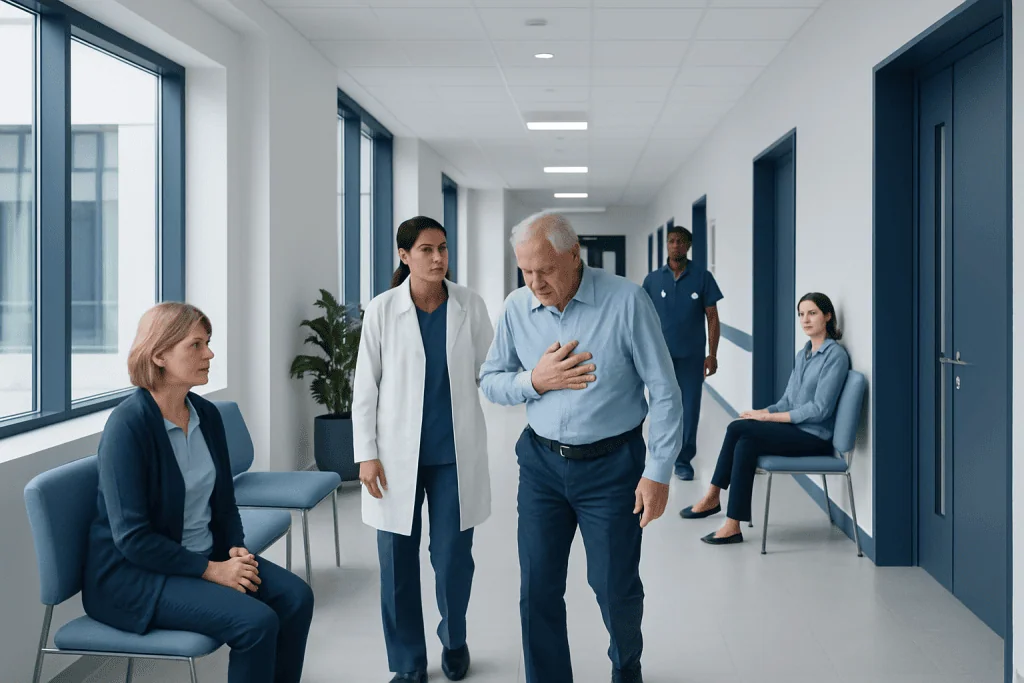
Chest pressure, pain, heaviness, or tightness that lasts more than a few minutes can be a warning sign of a heart attack. Symptoms may also include shortness of breath, sweating, nausea, dizziness, fatigue, or pain spreading to the arm, jaw, neck, back, or upper abdomen.
Key Takeaways
- Chest pressure, pain, heaviness, or tightness that lasts more than a few minutes can be a warning sign of a heart attack.
- Symptoms may also include shortness of breath, sweating, nausea, dizziness, fatigue, or pain spreading to the arm, jaw, neck, back, or upper abdomen.
- Emergency help should be called immediately; a person with possible heart attack symptoms should not drive themselves to the hospital.
- Doctors diagnose heart attacks using an ECG, blood tests such as troponin, imaging, and sometimes coronary angiography.
- Emergency treatment may include medicines, oxygen if needed, and procedures such as angioplasty and stenting to restore blood flow.
- Long-term prevention focuses on controlling blood pressure, cholesterol, diabetes, smoking, weight, physical activity, and prescribed heart medicines.
A heart attack is a medical emergency that happens when blood flow to part of the heart muscle is severely reduced or blocked. Recognizing warning signs early and calling emergency services immediately can protect the heart and improve recovery.
Overview
A heart attack, also called a myocardial infarction, occurs when blood flow through one of the coronary arteries is blocked or critically reduced. These arteries supply oxygen-rich blood to the heart muscle. When the heart muscle does not receive enough oxygen, its cells can become injured. Fast medical care aims to restore blood flow as quickly as possible and reduce the amount of heart muscle affected.
The most common cause is a blood clot that forms on top of a cholesterol-rich plaque inside a coronary artery. This process is part of coronary artery disease, which can develop silently over many years. A heart attack can happen suddenly, but many people have warning symptoms in the hours, days, or even weeks beforehand.
Heart attack symptoms are not always dramatic. Some people have severe chest pain, while others feel pressure, indigestion-like discomfort, breathlessness, unusual fatigue, or nausea. Because symptoms can vary, it is safer to treat possible heart attack warning signs as an emergency rather than waiting to see if they pass.
Heart Attack Warning Signs and Symptoms
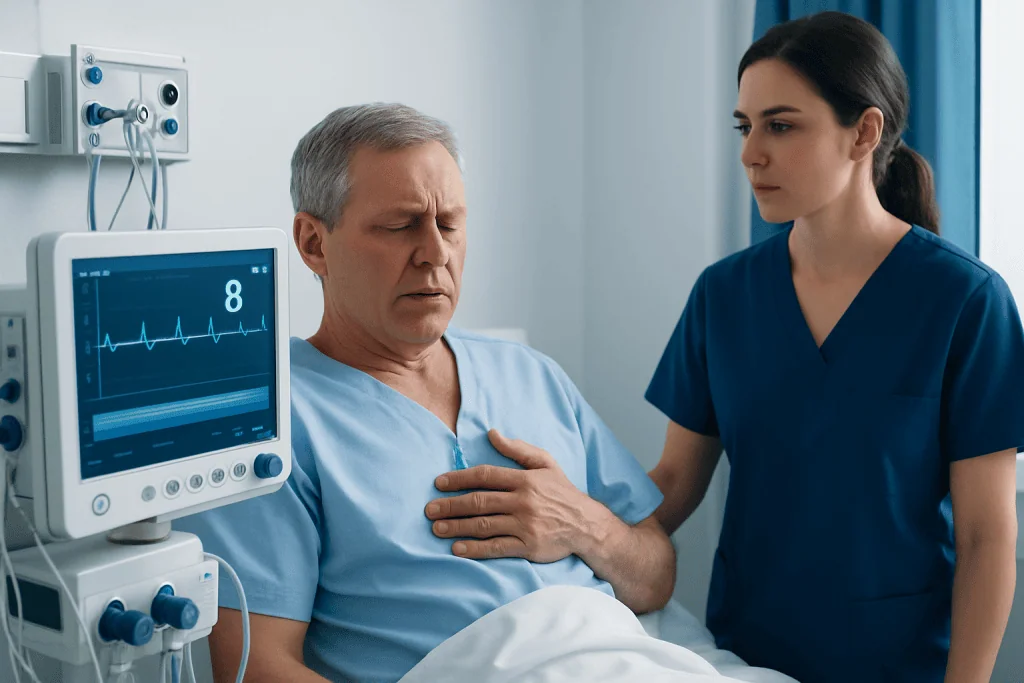
The classic warning sign is discomfort in the center or left side of the chest. It may feel like pressure, squeezing, fullness, burning, heaviness, or pain. The discomfort may last more than a few minutes, go away, and then return. It may begin during activity or at rest, and it may not improve with changing position.
Heart attack symptoms can spread beyond the chest. Pain or discomfort may travel to one or both arms, the shoulders, neck, jaw, back, or upper abdomen. Some people describe the feeling as indigestion, heartburn, or a tight band across the chest. Shortness of breath may occur with or without chest discomfort.
Other warning signs can include cold sweat, nausea, vomiting, lightheadedness, fainting, sudden weakness, anxiety, or a sense that something is seriously wrong. Older adults, women, and people with diabetes may be more likely to have less typical symptoms, such as unexplained fatigue, breathlessness, upper abdominal discomfort, or dizziness rather than obvious chest pain.
Any new, severe, unexplained, or persistent chest discomfort should be taken seriously. A heart attack cannot be diagnosed at home based on symptoms alone, and similar symptoms may also occur with other serious conditions. Prompt emergency evaluation is the safest approach.
What to Do in a Heart Attack Emergency
If a heart attack is suspected, emergency medical services should be called immediately. The person should stop activity, sit or lie down, and try to remain as calm and still as possible while help is on the way. They should not drive themselves to the hospital, because symptoms can worsen suddenly and treatment can begin in the ambulance.
Emergency dispatchers may provide instructions by phone. In some cases, they may advise taking aspirin if the person is not allergic and has no known reason to avoid it, such as active bleeding or certain medical advice from a doctor. This should be done only as directed by emergency services or a qualified healthcare professional. If the person has prescribed nitroglycerin for chest pain, they should use it only according to their doctor’s instructions.
While waiting for help, it can be useful to gather information for the medical team: the time symptoms started, current medicines, allergies, known heart conditions, and any recent medical events. If the person becomes unresponsive and is not breathing normally, emergency dispatchers may guide bystanders through cardiopulmonary resuscitation, or CPR. If an automated external defibrillator is available, it should be used according to its voice prompts.
Causes and Risk Factors
Most heart attacks occur because of coronary artery disease. Over time, fatty deposits called plaques can build up inside the arteries. If a plaque tears or ruptures, the body may form a clot at that site. The clot can block blood flow to the heart muscle, causing a heart attack.
Less commonly, a heart attack may occur due to a sudden spasm of a coronary artery, a tear in the artery wall, severe imbalance between the heart’s oxygen demand and supply, or other medical conditions that affect blood clotting or blood flow. These causes are less common but still require urgent medical evaluation and treatment.
Risk factors that increase the chance of a heart attack include high blood pressure, high LDL cholesterol, smoking, diabetes, chronic kidney disease, obesity, physical inactivity, unhealthy diet, and a family history of early heart disease. Age is also a factor, although heart attacks can occur in younger adults, especially when several risk factors are present.
Stress, poor sleep, excessive alcohol use, and stimulant drug use can also place extra strain on the cardiovascular system. Some risk factors, such as age and family history, cannot be changed. However, many important risks can be reduced through medical care, lifestyle changes, and appropriate prescribed treatment.
Diagnosis in the Emergency Department
When a person arrives with possible heart attack symptoms, the medical team acts quickly. The first tests usually include an electrocardiogram, or ECG, which records the electrical activity of the heart. Certain ECG changes can show that a coronary artery may be blocked and that urgent treatment is needed.
Blood tests are also important. Doctors commonly measure troponin, a protein released into the blood when heart muscle is injured. Troponin levels may be repeated over several hours because early results can sometimes be normal soon after symptoms begin. Other tests may check kidney function, blood count, electrolytes, blood sugar, and clotting status.
Depending on the situation, doctors may use chest X-ray, echocardiography, CT imaging, or coronary angiography. Coronary angiography involves injecting contrast dye into the heart arteries to show narrowed or blocked areas. This test can help guide treatment such as angioplasty and stent placement.
Diagnosis is based on the overall picture: symptoms, ECG findings, blood tests, imaging, medical history, and physical examination. Because heart attacks can present in different ways, clinicians may monitor a patient closely even when the first tests are not definitive.
Emergency Treatment Options
The main goal of emergency treatment is to restore blood flow to the heart muscle and prevent complications. Treatment depends on the type of heart attack, the time since symptoms began, the patient’s condition, and the hospital’s available resources. Care may begin in the ambulance and continue in the emergency department, cardiac catheterization laboratory, or coronary care unit.
Medicines may include antiplatelet drugs to reduce clotting, anticoagulants, medicines to relieve chest discomfort, drugs to control blood pressure and heart rhythm, and cholesterol-lowering therapy. Oxygen may be given if oxygen levels are low or if the patient has breathing difficulty. The exact medicines are chosen by the medical team based on the person’s risks and test results.
For many patients with a blocked coronary artery, a procedure called percutaneous coronary intervention may be recommended. This is often known as angioplasty and stenting. A cardiologist guides a thin tube through a blood vessel to the heart, opens the blocked artery with a small balloon, and often places a stent to help keep the artery open.
In some cases, clot-dissolving medicines may be used when angioplasty is not immediately available and the type of heart attack is suitable for this treatment. Some patients may need coronary artery bypass graft surgery, especially if there are multiple severe blockages or complex artery disease. After emergency treatment, rehabilitation and long-term prevention become central parts of recovery.
Recovery, Prevention, and When to See a Doctor
Recovery after a heart attack is different for each person. Many patients are prescribed medicines to reduce the risk of another heart attack, protect heart function, control blood pressure, lower cholesterol, and prevent clots. It is important to take medicines exactly as prescribed and to discuss side effects or concerns with the treating doctor before stopping any medication.
Cardiac rehabilitation is often recommended after a heart attack. This supervised program may include safe exercise training, education about heart health, nutrition guidance, stress management, and support for returning to daily activities. It helps patients rebuild confidence while reducing future cardiovascular risk.
Prevention focuses on the habits and medical conditions that affect the arteries. Helpful steps include stopping smoking, keeping blood pressure and diabetes controlled, following a heart-healthy eating pattern, staying physically active as advised by a doctor, maintaining a healthy weight, limiting alcohol, and attending follow-up appointments. Family members may also benefit from learning CPR and recognizing emergency warning signs.
Emergency services should be called for chest pressure, chest pain, unexplained shortness of breath, fainting, sudden sweating with discomfort, or pain spreading to the arm, jaw, neck, back, or upper abdomen. People with risk factors should not delay care if symptoms feel unusual or concerning. Acibadem International’s multidisciplinary specialists and JCI-accredited hospitals diagnose and treat heart attack and coronary artery disease for international patients, with care planned according to each patient’s medical needs.
Frequently asked questions
What does a heart attack feel like?
A heart attack often feels like pressure, squeezing, heaviness, burning, or pain in the chest. The discomfort may spread to the arm, jaw, neck, back, shoulder, or upper abdomen. Some people mainly experience shortness of breath, sweating, nausea, dizziness, or unusual fatigue.
Can a heart attack happen without chest pain?
Yes. Some heart attacks cause mild or no chest pain, especially in older adults, women, and people with diabetes. Symptoms may include breathlessness, weakness, indigestion-like discomfort, nausea, sweating, or sudden fatigue. Any unexplained symptoms that feel serious or persistent should be assessed urgently.
Should someone with possible heart attack symptoms drive to the hospital?
No. A person with possible heart attack symptoms should call emergency medical services and wait for trained responders. Symptoms can worsen suddenly, and paramedics can begin assessment and treatment during transport. Driving also places the person and others at risk.
Is aspirin always safe during a suspected heart attack?
Aspirin may help in some heart attack emergencies, but it is not safe for everyone. People with aspirin allergy, active bleeding, certain bleeding disorders, or specific medical instructions may need to avoid it. It is best to follow the advice of emergency dispatchers or a qualified healthcare professional.
How do doctors confirm a heart attack?
Doctors use an ECG, blood tests such as troponin, physical examination, medical history, and sometimes imaging or coronary angiography. Troponin may need to be repeated because it can rise over time. The diagnosis is made by combining symptoms with test results and clinical judgment.
What is the difference between heartburn and a heart attack?
Heartburn usually causes a burning feeling related to meals or lying down, but heart attack discomfort can also feel like indigestion or burning. Because symptoms can overlap, it is not always possible to tell the difference without medical tests. New, severe, persistent, or unexplained chest or upper abdominal discomfort should be treated as an emergency.
Can another heart attack be prevented after the first one?
The risk can often be reduced with the right combination of medicines, cardiac rehabilitation, follow-up care, and lifestyle changes. Controlling blood pressure, cholesterol, diabetes, smoking, weight, diet, and physical activity is important. Patients should work closely with their cardiology team and follow their individualized treatment plan.
This article is for general information only and is not a substitute for professional medical advice. Please consult a qualified doctor about your individual situation.
Heart care in Turkey — expert evaluation and treatment
JCI-accredited · board-certified surgeons · reply within 24h
Add us as a Preferred Source to see more of our trusted health content across Google Search, AI Overviews and Discover.
Check your numbers in seconds
BMI, calories, due date, blood pressure and 30+ more clinical calculators — free, instant, doctor-reviewed ranges.

Cardiology Department
Diagnosis and treatment of heart and vascular conditions, from prevention to advanced interventional procedures.
93 specialists in this unitRelated Treatments
Related Conditions
More from the Health Library

Low Ejection Fraction and Heart Bypass Surgery: Benefits, Risks, and Planning

Blood Transfusion During CABG: When It Is Needed and How Safety Is Managed

Silent Ischemia: When Coronary Artery Disease Has Few Symptoms

COPD and Heart Bypass Surgery: Breathing Risks and Recovery Planning

Hyperlipidemia: When High Cholesterol Needs Specialist Cardiology Care