Heel Bursitis: Symptoms, Causes, and Treatment Options

Heel bursitis affects a fluid-filled bursa that helps reduce friction around the heel. Pain is often felt at the back of the heel or under it, especially with walking, running, or certain shoes.
Key Takeaways
- Heel bursitis affects a fluid-filled bursa that helps reduce friction around the heel.
- Pain is often felt at the back of the heel or under it, especially with walking, running, or certain shoes.
- Common triggers include overuse, poor footwear, pressure, foot shape issues, and nearby tendon irritation.
- Most people improve with rest, activity changes, supportive shoes, ice, and medical guidance when needed.
- Persistent heel pain should be assessed to rule out other causes such as Achilles tendon problems or plantar fasciitis.
Heel bursitis is inflammation of a small cushioning sac near the heel bone. It commonly causes pain, swelling, and tenderness around the back or bottom of the heel, and treatment usually focuses on reducing irritation, easing inflammation, and addressing the cause.
Overview of heel bursitis
Heel bursitis is a condition in which a bursa near the heel becomes irritated and inflamed. A bursa is a small fluid-filled sac that acts as a cushion between bones, tendons, and soft tissues. Around the heel, these bursae help reduce friction as the foot moves during standing, walking, and exercise.
The condition may affect the back of the heel, where the Achilles tendon meets the heel bone, or the underside of the heel. When inflamed, the bursa can become painful and swollen, making everyday activities uncomfortable. Many people notice symptoms gradually after increased activity, a change in footwear, or repeated pressure on the area.
Heel bursitis is treatable, and in many cases symptoms improve with conservative care. Early attention can help reduce irritation before pain becomes more persistent. Because heel pain can also be caused by problems such as Achilles tendonitis or plantar fasciitis, a medical assessment may be helpful when symptoms do not settle.
How heel bursitis feels and where symptoms appear
The main symptom of heel bursitis is pain around the heel. This pain may be located at the back of the heel, just above where the heel meets the shoe, or under the heel depending on which bursa is affected. Some people describe soreness at the start of activity that worsens with prolonged walking, running, climbing stairs, or standing for long periods.
Swelling and tenderness are also common. The area may feel warm, look slightly puffy, or become sensitive to touch. When the bursa at the back of the heel is involved, shoes with a rigid heel counter can rub against the inflamed tissue and make symptoms more noticeable.
Other features can include stiffness after rest, discomfort when rising onto the toes, and pain when the ankle is flexed. Symptoms may affect one or both heels. If the pain becomes severe, causes limping, or limits daily activity, it is sensible to seek professional evaluation.
- Pain at the back or bottom of the heel
- Swelling or a localized tender spot
- Discomfort with tight or stiff-backed shoes
- Worsening pain with activity or repeated pressure
- Stiffness after rest or in the morning
Why heel bursitis develops

Heel bursitis usually develops because of repeated friction, direct pressure, or overload in the tissues around the heel. Activities that involve a lot of running, jumping, fast walking, or uphill movement can increase stress on the area. A sudden increase in training intensity or duration is another common factor.
Footwear plays an important role. Shoes that fit poorly, rub at the back of the heel, or provide limited cushioning may irritate the bursa over time. High heels, stiff dress shoes, and certain athletic shoes can contribute in some people, especially if they are worn for long periods.
Structural and mechanical factors may also raise the risk. Tight calf muscles, altered walking mechanics, prominent heel bone contours, and conditions affecting the Achilles tendon can all increase pressure around the heel. In some cases, inflammatory conditions such as rheumatoid arthritis or crystal-related arthritis can be associated with bursitis, so doctors may ask about broader joint symptoms as part of the evaluation.
Conditions that can resemble heel bursitis
Heel pain has several possible causes, and symptoms can overlap. Pain at the back of the heel may come from bursitis, Achilles tendon irritation, a bony prominence near the tendon insertion, or a combination of these issues. Pain under the heel may suggest bursitis, but plantar fascia irritation or nerve-related causes can also be considered.
Doctors often distinguish heel bursitis by looking at the exact location of tenderness, what movements trigger symptoms, and whether there is visible swelling. For example, pain that is sharply worse when a shoe rubs the back of the heel may point toward bursitis near the Achilles tendon. Tenderness more under the heel may suggest a different bursa or another cause entirely.
This distinction matters because treatment is guided by the underlying problem. In some cases, imaging may be used if symptoms are persistent or if the diagnosis is not clear. Care from an orthopedic or foot specialist can help identify whether bursitis is the main issue or whether there is nearby tendon or bone involvement.
How heel bursitis is diagnosed
Diagnosis usually begins with a medical history and physical examination. A doctor will ask when the pain started, whether there was a change in activity or footwear, and what makes symptoms better or worse. During the examination, they may press on the heel, assess swelling, check ankle movement, and observe walking pattern.
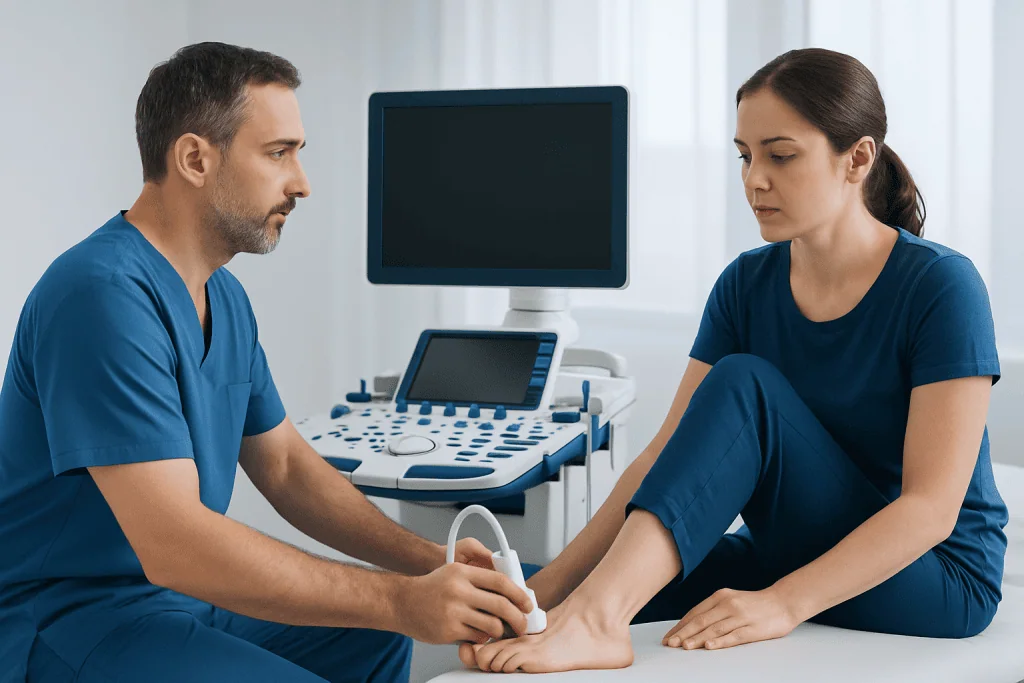
Imaging is not always necessary, but it can be helpful in selected cases. Ultrasound may show inflammation around the bursa and can help evaluate nearby soft tissues. X-rays do not show the bursa itself well, but they may reveal heel bone shape, calcification, or other structural features that contribute to symptoms. In more complex cases, MRI may be considered to assess surrounding tendons and soft tissue structures.
If there are signs of infection, inflammatory disease, or another medical condition, additional tests may be needed. These decisions depend on the person’s symptoms, general health, and examination findings. The goal is to confirm the cause of heel pain and build a treatment plan that reduces stress on the affected area.
Treatment options for heel bursitis
Most cases of heel bursitis improve with conservative treatment. Resting from aggravating activity, especially high-impact exercise, allows the irritated bursa to settle. Ice, temporary activity modification, and supportive footwear may reduce pain and swelling. Soft-backed shoes, heel lifts, padding, or cushioned insoles can reduce friction and pressure around the heel.
A doctor may recommend pain-relieving or anti-inflammatory medication when appropriate, depending on the person’s medical history. Stretching of the calf muscles and a guided rehabilitation program may also help if tightness or poor mechanics are contributing factors. In some cases, people benefit from physical therapy and rehabilitation to improve flexibility, strength, and walking or running mechanics.
If symptoms continue despite self-care, further treatment may be considered. This may include custom orthotics, more structured rehabilitation, or assessment by an orthopedic specialist. When there is significant associated tendon or structural irritation, evaluation in orthopedics and traumatology can help guide next steps. Surgery is uncommon and is generally reserved for persistent cases with an identifiable structural cause that has not responded to non-surgical treatment.
Prevention and self-care strategies
Preventing heel bursitis often centers on lowering repetitive stress at the heel. Gradually increasing exercise intensity gives the tissues time to adapt. Warm-up routines, calf stretching, and strengthening exercises for the lower leg can help support healthier movement patterns and reduce strain.
Footwear is one of the most practical places to start. Shoes should fit well, provide cushioning, and avoid rubbing the back of the heel. Replacing worn-out sports shoes and using inserts when recommended can make walking and exercise more comfortable. For people with recurrent symptoms, a foot assessment may identify pressure points or gait factors that need attention.
Weight management, avoiding prolonged pressure on the heel, and changing activities during flare-ups may also help. Some people do better with lower-impact exercise such as cycling or swimming while symptoms settle. If heel pain keeps returning, a clinician can look for underlying issues such as tendon tightness, arthritis, or biomechanical problems that may need longer-term management.
When to seek medical care
Medical care is recommended if heel pain lasts more than a few days despite rest, or if it repeatedly comes back. A doctor should also assess marked swelling, difficulty walking, pain that disrupts sleep, or symptoms that interfere with work, exercise, or daily routines. Prompt review is especially important when there is redness, fever, or sudden severe pain, as these can suggest infection or another urgent problem.
People with diabetes, inflammatory arthritis, nerve problems, or circulation issues should not ignore persistent heel symptoms. These conditions can affect healing and may increase the risk of complications from even seemingly minor foot problems. Professional advice can help prevent a prolonged cycle of pain and altered walking mechanics.
For international patients who need coordinated evaluation, Acibadem International’s multidisciplinary specialists and JCI-accredited hospitals diagnose and treat heel conditions with individualized care plans. Depending on the findings, assessment may include rheumatology input when inflammatory joint disease is suspected, alongside orthopedic and rehabilitation support.
Frequently asked questions
What is heel bursitis?
Heel bursitis is inflammation of a small fluid-filled sac near the heel bone. This sac normally reduces friction between bones, tendons, and soft tissues, but when irritated it can cause pain, swelling, and tenderness.
How is heel bursitis different from plantar fasciitis?
Heel bursitis involves an inflamed bursa, while plantar fasciitis affects the thick band of tissue along the bottom of the foot. The location of pain may overlap, but plantar fasciitis often causes pain under the heel that is especially noticeable with the first steps in the morning.
Can shoes cause heel bursitis?
Yes, poorly fitting or stiff-backed shoes can irritate the tissues around the heel and contribute to bursitis. Footwear that rubs repeatedly or provides little cushioning can make symptoms worse, especially during long periods of walking or standing.
Does heel bursitis go away on its own?
Mild cases may improve with rest, reduced pressure, and changes in footwear or activity. However, symptoms can persist or return if the underlying cause is not addressed, so medical advice may be useful when pain lasts or keeps recurring.
Is exercise safe with heel bursitis?
High-impact exercise may worsen symptoms during a flare-up. Many people can continue with lower-impact activities, such as cycling or swimming, while they recover, but it is best to follow guidance from a qualified clinician or physical therapist.
When should someone see a doctor for heel bursitis?
A doctor should evaluate heel pain that is severe, persistent, recurrent, or associated with swelling, redness, fever, or difficulty walking. Medical review is also important for people with diabetes, inflammatory arthritis, or other conditions that affect foot health.
References
- American Academy of Orthopaedic Surgeons
- National Institute of Arthritis and Musculoskeletal and Skin Diseases
- American Orthopaedic Foot & Ankle Society
- Mayo Clinic
- NHS
This article is for general information only and is not a substitute for professional medical advice. Please consult a qualified doctor about your individual situation.
Bursitis in Turkey — costs, top hospitals & a free quote
JCI-accredited · board-certified surgeons · reply within 24h
Add us as a Preferred Source to see more of our trusted health content across Google Search, AI Overviews and Discover.

Orthopedics & Spine
Care for bones, joints and the musculoskeletal system, including joint replacement, sports injuries and trauma.
125 specialists in this unitMore from the Health Library



Related Specialists

Prof. Dr. Cem Aygün
Gastroenterology
Prof. Dr. Meral Bayramoğlu
Physical Medicine & Rehabilitation
Dr. Yasin Yener
Anesthesiology
Assoc. Prof. Dr. Mustafa Zungur
Cardiology