Hive vs Eczema: Key Differences and How Doctors Tell Them Apart

Hives are raised, itchy welts that typically fade within 24 hours in one location, although new welts may appear elsewhere. Eczema causes longer-lasting dry, rough, scaly, cracked, or thickened areas of skin, often with recurring itch.
Key Takeaways
- Hives are raised, itchy welts that typically fade within 24 hours in one location, although new welts may appear elsewhere.
- Eczema causes longer-lasting dry, rough, scaly, cracked, or thickened areas of skin, often with recurring itch.
- A clinician usually distinguishes hive vs eczema by examining the rash, asking how long individual spots last, and reviewing possible triggers.
- Antihistamines are commonly used for hives, while regular moisturizing and anti-inflammatory skin treatments are central to eczema care.
- Swelling of the lips, tongue, or throat, breathing difficulty, faintness, or widespread symptoms with hives need urgent medical assessment.
Hive vs eczema can be confusing because both may cause red, itchy skin. The key difference is timing and texture: hives are usually raised welts that come and go quickly, whereas eczema causes dry, irritated patches that tend to persist or recur in the same areas.
Hive vs Eczema: Side-by-Side Comparison
Although both conditions can make the skin itchy and red, hives and eczema have different patterns. Hives, also called urticaria, are temporary swellings in the skin. Eczema, often referring to atopic dermatitis, is a long-term inflammatory skin condition that weakens the skin barrier and can flare repeatedly.
The duration of an individual mark is one of the most useful clues. A hive usually disappears or changes shape within minutes to 24 hours, without leaving scale or a lasting mark. Eczema patches usually remain in the same location for days, weeks, or longer unless the flare settles with skin care and appropriate treatment.
| Feature | Hives (urticaria) | Eczema (atopic dermatitis) |
|---|---|---|
| Appearance | Raised, smooth welts; often pale in the center with surrounding redness | Dry, rough, scaly, cracked, or weeping inflamed patches |
| How long one spot lasts | Usually less than 24 hours | Often days to weeks or longer in the same area |
| Pattern | May move around the body or change shape | Often recurs in typical body sites |
| Skin after the rash fades | Usually returns to normal | May remain dry, discolored, or thickened from repeated scratching |
| Common sensation | Itch, stinging, or burning | Intense itch; skin may feel dry, sore, or tender |
| Common management | Trigger review and non-sedating antihistamines when advised | Moisturizers, trigger avoidance, and anti-inflammatory topical treatment when advised |
It is possible for a person to have both conditions. For example, someone with eczema may develop hives after a viral illness, a medication reaction, physical trigger, or exposure to an allergen. A new or uncertain rash is best assessed in context rather than diagnosed from appearance alone.
What Hives Look and Feel Like
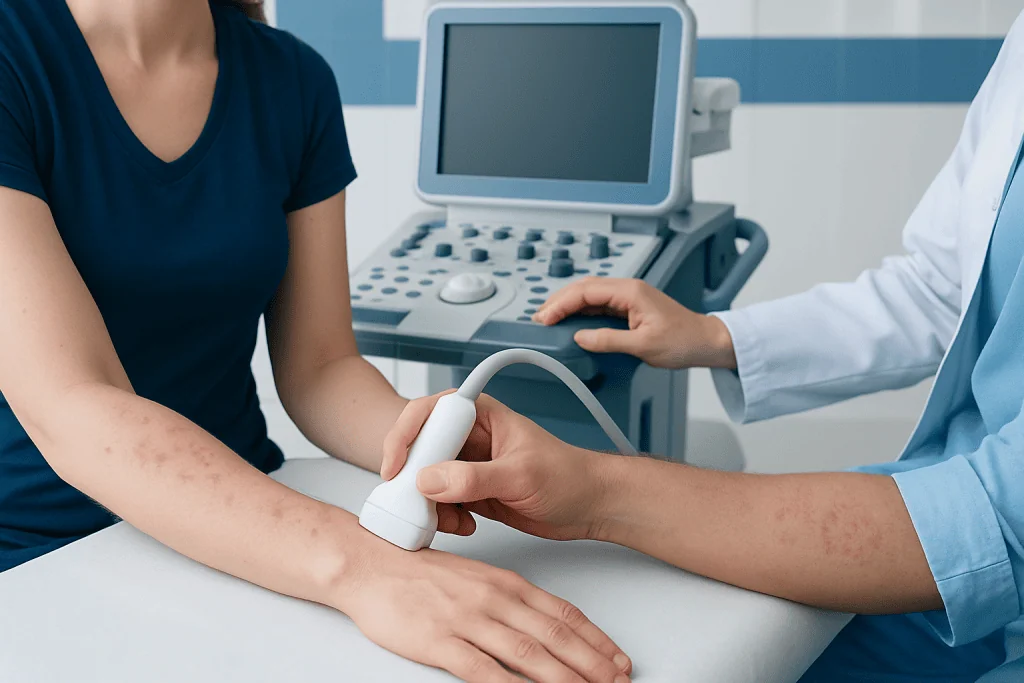
Hives are swollen areas in the upper layers of the skin. They may be small and round, large and irregular, or merge into broader plaques. On lighter skin tones they often look pink, red, or pale with a red border. On darker skin tones, the color change may be subtler, while the raised texture, warmth, and itch may be more noticeable.
A defining feature is that individual welts are fleeting. One area may flatten within an hour or several hours while new welts emerge on the trunk, arms, legs, face, or elsewhere. Hives can be intensely itchy, but they generally do not cause scaling, persistent cracking, or thickened skin.
Some people also develop deeper swelling called angioedema, commonly around the eyelids, lips, hands, feet, or genitals. This can occur with hives or on its own. Angioedema affecting the mouth or throat requires urgent evaluation because it can interfere with breathing.
Acute hives last less than six weeks and are often associated with an infection, medication, food exposure, insect sting, or a physical stimulus. Chronic spontaneous urticaria means hives recur most days of the week for more than six weeks; in many cases, no single external cause is identified.
What Eczema Looks and Feels Like

Eczema is an inflammatory condition in which the skin barrier does not hold moisture effectively and reacts more easily to irritants and allergens. During a flare, the skin may become dry, red or darker than the surrounding area, rough, scaly, swollen, or cracked. Some acute flares can develop tiny fluid-filled bumps or ooze and crust after scratching.
Itch is a central feature of eczema and may be especially troublesome at night. Repeated scratching can cause the skin to become thickened, leathery, or darker or lighter than usual. These color changes can persist after inflammation improves, particularly in deeper skin tones, but they are not necessarily signs of active infection.
The location varies with age and individual pattern. Eczema often affects the hands, face, eyelids, neck, elbow creases, knee creases, ankles, and feet. Infants may have eczema on the cheeks and outer surfaces of the limbs. Contact dermatitis, a form of eczema triggered by a substance touching the skin, may be limited to the exposure area.
Because eczema can resemble several skin conditions, a clinician may consider alternatives such as fungal infection, psoriasis, scabies, or contact allergy. More detailed information about symptoms and care is available in the eczema health guide.
How a Clinician Tells Them Apart
Doctors and dermatologists usually diagnose hives or eczema from a careful history and skin examination. They may ask the patient to describe the first appearance of the rash, whether each individual spot stays in the same place, how long it lasts, and whether photographs were taken during a flare. Clear photographs can be especially helpful when hives have faded before an appointment.
For suspected hives, the clinician will ask about recent illnesses, new medicines or supplements, foods, insect stings, exercise, heat, cold, pressure on the skin, alcohol, and stress. However, a temporal association does not always prove a trigger. Broad allergy testing is not routinely useful for every case of hives, particularly when there is no consistent history suggesting a specific allergen.
For suspected eczema, clinicians examine the skin’s dryness, scale, scratch marks, distribution, and signs of secondary infection. They may ask about personal or family history of eczema, asthma, hay fever, sensitive skin, occupational exposures, fragrances, cleaning products, metals, cosmetics, or gloves. Patch testing may be considered when allergic contact dermatitis is suspected.
Tests are sometimes needed when the pattern is atypical. Welts that remain fixed for more than 24 hours, are painful rather than itchy, bruise, or leave marks may require further assessment. A skin biopsy, blood tests, or referral to an allergy or dermatology specialist may be appropriate depending on the findings.
Causes, Triggers, and Risk Factors
Hives result from the release of histamine and other inflammatory substances by immune cells in the skin. Common triggers include viral infections, certain medicines, foods, insect stings, heat, cold, sunlight, pressure, exercise, and emotional stress. In children, viral infections are a frequent cause of acute hives. In many people with chronic hives, an identifiable allergy is not found.
Eczema develops through a combination of inherited tendency, immune activity, skin-barrier changes, and environmental exposures. It is more common in people with a personal or family history of atopic conditions such as asthma and allergic rhinitis. Dry weather, heat and sweating, harsh soaps, fragrances, wool, detergents, stress, and skin infections can all aggravate a flare.
Food allergy can coexist with eczema, especially in some children with moderate to severe disease, but food is not the cause of every eczema flare. Removing multiple foods without medical guidance can lead to unnecessary dietary restriction and nutritional problems. Testing and elimination diets should be guided by a clinician when there is a convincing history of immediate reactions after a particular food.
A simple symptom diary may help identify patterns. It can record the date, timing, appearance, duration, activities, new products, medicines, meals, illness symptoms, and treatments used. The goal is to identify repeatable associations, not to assume that every flare has a single cause.
What to Do for Hives and What to Do for Eczema
For mild hives without breathing symptoms or severe swelling, cool compresses, loose clothing, and avoiding known triggers may reduce discomfort. A clinician or pharmacist can advise whether a non-sedating antihistamine is suitable. People should not stop a prescribed medicine on their own unless they have been instructed to do so, but should seek prompt medical advice if hives start after a new medication.
Hives that continue beyond six weeks, recur frequently, disrupt sleep, or do not respond to initial measures deserve medical review. Treatment may be adjusted according to the frequency and severity of symptoms. If a specific trigger such as cold, pressure, or exercise appears relevant, a clinician can advise on safer ways to manage exposure.
For eczema, consistent skin-barrier care is the foundation. Applying a fragrance-free emollient regularly, especially after bathing, helps retain moisture. Short lukewarm showers or baths, gentle fragrance-free cleansers, soft breathable clothing, and keeping nails short may reduce irritation and damage from scratching.
Active eczema flares may need a clinician-prescribed topical anti-inflammatory treatment. The choice depends on the person’s age, body area, severity, and medical history, particularly for sensitive areas such as the face or eyelids. Persistent, widespread, or difficult-to-control eczema may benefit from specialist treatment planning, including dermatology evaluation and treatment.
When to Seek Medical Care
Emergency medical care is needed for hives or swelling accompanied by trouble breathing, wheezing, throat tightness, difficulty swallowing, voice changes, severe dizziness, fainting, or swelling of the tongue or throat. These may be signs of a serious allergic reaction. Emergency services should be contacted immediately rather than waiting to see if symptoms improve.
Prompt medical assessment is also appropriate when a rash is associated with fever, significant pain, blistering, skin peeling, purple spots that do not fade when pressed, or signs of infection such as increasing warmth, tenderness, pus, or rapidly spreading redness. These features are not typical of uncomplicated hives or mild eczema and need evaluation.
A non-urgent appointment is recommended if hives last longer than six weeks, individual welts remain in one place beyond 24 hours, eczema is affecting sleep or daily activities, or over-the-counter skin care has not helped. Infants and young children with extensive, oozing, or recurrent rashes should be assessed by a qualified clinician.
Acibadem International’s multidisciplinary specialists and JCI-accredited hospitals assess skin conditions, including recurrent hives and eczema, for international patients. An in-person clinician can confirm the diagnosis and create a care plan based on the rash pattern, possible triggers, and the person’s overall health.
Frequently asked questions
Can eczema turn into hives?
Eczema does not turn into hives, because they are different skin conditions. However, a person with eczema can develop hives at the same time or at a different time. New raised welts that move or fade within a day are more suggestive of hives than an eczema flare.
How can someone tell whether a rash is hives or eczema at home?
The most useful home observation is how long each individual spot remains in the same place. Hives are usually smooth and raised, then fade within 24 hours, while eczema tends to stay put and becomes dry, scaly, rough, or cracked. Photographs taken over several hours can help a clinician assess the pattern.
Are hives always caused by an allergy?
No. Hives may be associated with an allergy, but they can also follow infections, physical triggers such as heat or pressure, medicines, or occur without an identifiable trigger. Chronic hives are often not caused by a specific food or environmental allergy. A clinician can determine whether allergy evaluation is appropriate from the history.
Can antihistamines help eczema itch?
Antihistamines may help some people sleep if itch is keeping them awake, but they do not treat the skin-barrier inflammation that drives eczema. Regular moisturizing and prescribed anti-inflammatory treatment, when needed, are more central to eczema management. A doctor or pharmacist can advise on safe options for the individual.
What does it mean if a hive leaves a bruise?
Typical hives fade without bruising or a lasting skin change. A rash that remains fixed for more than 24 hours, is painful, or leaves bruise-like marks should be assessed by a doctor. This pattern may indicate a condition other than ordinary urticaria.
Should foods be avoided during an eczema flare?
Routine elimination of foods is not recommended unless there is a clear, repeatable history of symptoms after a particular food or a clinician has advised it. Unnecessary dietary restriction can be harmful, especially for children. Medical assessment can help decide whether allergy testing or supervised dietary changes are needed.
This article is for general information only and is not a substitute for professional medical advice. Please consult a qualified doctor about your individual situation.
Eczema in Turkey — costs, top hospitals & a free quote
JCI-accredited · board-certified surgeons · reply within 24h
Add us as a Preferred Source to see more of our trusted health content across Google Search, AI Overviews and Discover.

More from the Health Library

Does Green Tea Make You Poo? Causes, Explanations, and Next Steps

Teething Rash: Common Causes, Related Conditions, and When to See a Doctor

Mental Fatigue: Possible Causes and When to Seek Care

Is the Heart a Muscle? A Doctor-Reviewed Answer

How to Be Induced? Causes, Explanations, and Next Steps