

How Dental Implants Work: Step-by-Step Treatment Guide

Dental implants replace a tooth root with a small post placed in the jawbone. Treatment usually happens in stages, including planning, placement, healing, and fitting the final crown.
Key Takeaways
- Dental implants replace a tooth root with a small post placed in the jawbone.
- Treatment usually happens in stages, including planning, placement, healing, and fitting the final crown.
- Good oral health, healthy gums, and adequate jawbone support are important for implant success.
- Healing takes time because the implant needs to bond with the bone before the final tooth is attached.
- Careful oral hygiene and regular dental visits help implants last longer.
Dental implants are a long-term way to replace missing teeth by anchoring an artificial tooth to the jawbone. This step-by-step guide explains how dental implants work, who may benefit, what treatment involves, and what to expect during recovery.
Overview: What Dental Implants Are and How They Work
Dental implants are artificial tooth roots used to replace missing teeth. In most cases, the implant itself is a small titanium post placed into the jawbone. Over time, the bone heals around the implant in a process called osseointegration, creating a secure foundation for a replacement tooth.
A complete implant restoration usually has three parts: the implant post, an abutment that connects the post to the visible tooth, and the final crown or bridge. Once healed, the new tooth is designed to look natural and help restore chewing, speech, and smile appearance. Many people explore dental implants when they want a fixed alternative to removable dentures or a way to replace a single missing tooth without altering neighboring teeth.
Dental implants can be used for one missing tooth, several missing teeth, or to support a full arch of replacement teeth in selected cases. The exact treatment plan depends on the number of teeth missing, the condition of the gums, the amount of available bone, and the person’s overall health.
Who May Benefit from Dental Implants
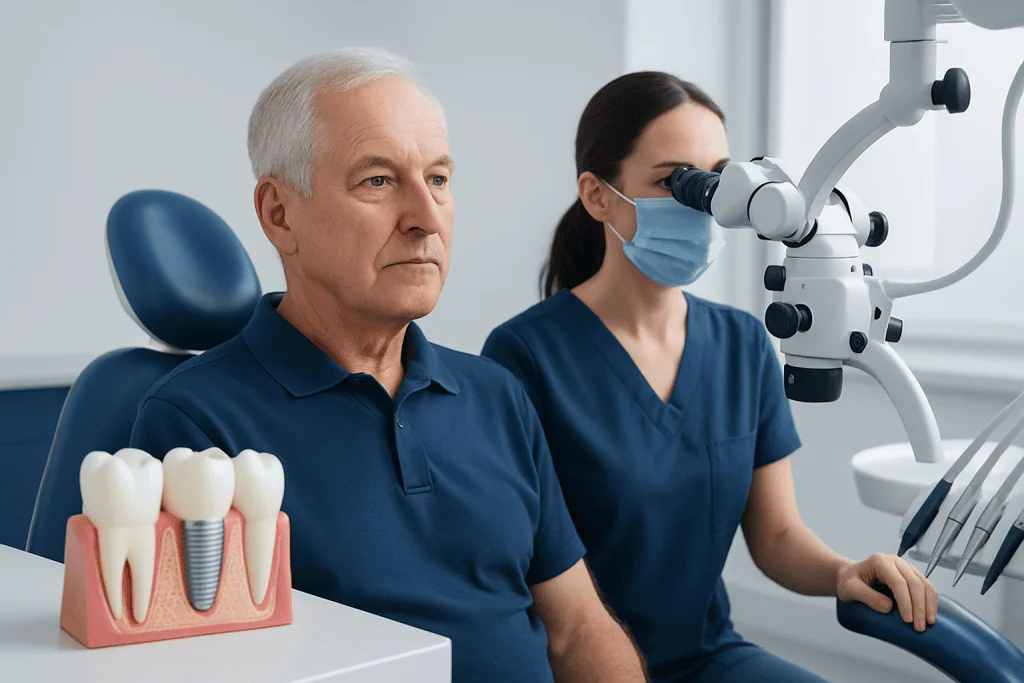
Dental implants may be a suitable option for adults who have lost one or more teeth and want a stable, longer-term replacement. People often choose implants to improve comfort while eating, prevent nearby teeth from shifting, and support a more natural bite. They can also help maintain the shape of the jawbone after tooth loss, since missing roots no longer stimulate the bone in the usual way.
A dentist evaluates several factors before recommending implants. Healthy gums are especially important, as untreated gum disease can affect healing and long-term support. Bone quality and quantity also matter, because the implant needs enough jawbone for stable placement. If bone loss has occurred, additional procedures may sometimes be discussed before or during treatment.
Not everyone is an immediate candidate, but many people can still be considered after dental or medical issues are addressed. A full assessment through general dentistry care may identify cavities, gum problems, bite issues, or habits such as teeth grinding that should be managed first.
Step-by-Step Dental Implant Treatment
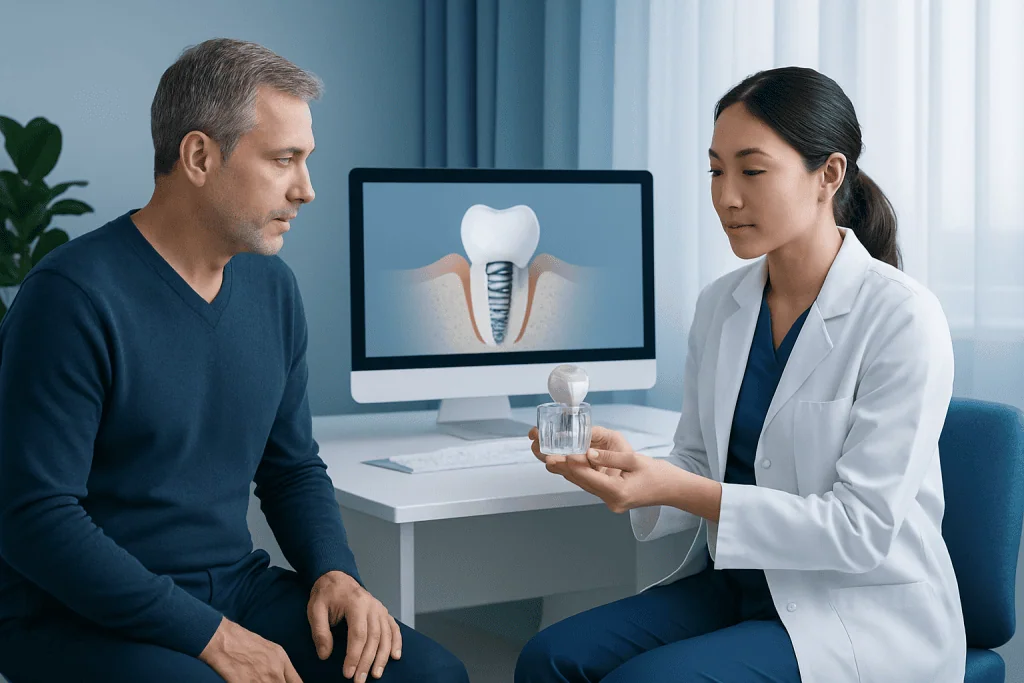
The first step is a detailed consultation and treatment plan. The dentist reviews medical history, oral health, gum condition, and jawbone structure. Dental X-rays and often 3D imaging are used to determine implant position and avoid important structures such as nerves and sinus spaces. Modern planning tools, including digital dentistry techniques, can improve precision and help patients better understand the process.
The next step is implant placement. Under local anesthesia, and sometimes with additional sedation when appropriate, the dentist or oral surgeon places the implant into the jawbone. Some patients have a tooth removed at the same visit if needed, while others require a separate healing phase first. A temporary tooth or healing cap may be placed depending on the case.
After placement, the bone needs time to fuse with the implant. This healing period commonly takes several weeks to months, depending on the individual and the implant location. During this time, the dentist monitors healing and may advise a softer diet for a period. Once the implant is stable, an abutment is attached and impressions or digital scans are taken for the final crown.
The final step is fitting the custom-made replacement tooth. The crown is designed to match the surrounding teeth in shape, color, and bite. In some cases, a bridge or denture is connected instead of a single crown. If needed, the visible restoration may be combined with custom dental crowns or related prosthetic work to achieve a balanced result.
Preparation Before the Procedure
Preparing for implant treatment helps support smoother healing and better results. Before the procedure, the dental team may recommend treating gum inflammation, filling cavities, adjusting the bite, or improving daily oral hygiene. If a person smokes, they may be encouraged to stop or reduce smoking, since tobacco can interfere with healing and increase the risk of implant complications.
Some patients need additional procedures before receiving implants. These may include tooth extraction, bone grafting, sinus lift procedures in the upper jaw, or management of gum recession. These steps are not needed for everyone, but they can create a healthier and more stable foundation when bone or soft tissue support is limited.
During planning, the dentist also discusses medications, medical conditions, and expectations. Conditions such as uncontrolled diabetes, active oral infection, or heavy teeth grinding may require extra attention. For example, untreated bruxism can place excessive force on restorations, so it may need to be managed alongside implant care.
Recovery, Healing, and Aftercare
Some discomfort, swelling, mild bleeding, or bruising can happen after implant surgery, especially in the first few days. These effects are usually temporary and often improve with rest, prescribed or recommended pain relief, and careful following of aftercare instructions. Many people can return to routine daily activities relatively soon, although recovery varies from person to person.
Good aftercare is essential while the implant site heals. Patients are commonly advised to keep the area clean, avoid disturbing the surgical site, and choose softer foods for a time. The dentist may recommend avoiding very hot foods, vigorous rinsing at first, smoking, or heavy physical exertion in the immediate recovery period.
Long-term implant care is similar to caring for natural teeth. Brushing twice daily, cleaning between teeth, and attending regular professional checkups are important. Ongoing dental hygiene support helps reduce plaque buildup and protect the surrounding gum and bone. Even though implants cannot decay like natural teeth, the tissues around them can still become inflamed if oral care is neglected.
Benefits, Risks, and Possible Complications
Dental implants offer several benefits. They can feel more secure than removable dentures, help maintain chewing efficiency, and support a natural-looking smile. Because implants are anchored in the jawbone, they may also help reduce bone shrinkage after tooth loss. For single-tooth replacement, they often avoid the need to trim neighboring teeth, unlike some traditional bridge treatments.
Like any medical or dental procedure, implants also involve risks and limitations. Not all implants heal successfully, and occasionally an implant may not bond properly with the bone. Infection, delayed healing, nerve irritation, sinus issues in upper jaw cases, or loosening of a component are possible complications, although careful planning helps reduce these risks.
Long-term success depends on several factors, including oral hygiene, gum health, bite balance, smoking status, and follow-up care. People with existing periodontal problems may need evaluation for conditions such as gum recession or other gum concerns before implant treatment proceeds. A dentist can explain the expected benefits and the possible downsides in the context of the individual patient’s health.
When to See a Dentist and What to Ask
A person should see a dentist if they have a missing tooth, a loose denture, difficulty chewing, shifting teeth, or concerns about smile appearance after tooth loss. Early evaluation can be helpful because jawbone changes begin after a tooth is lost, and timely planning may widen the available treatment options.
It is also important to seek dental advice if there are signs of gum disease, pain, swelling, or a broken tooth that may need extraction and replacement planning. During the consultation, patients may wish to ask how many stages will be needed, how long healing may take, whether bone grafting is likely, and what type of final restoration is recommended.
For international patients seeking evaluation and treatment, Acibadem International’s multidisciplinary specialists in JCI-accredited hospitals diagnose and treat dental conditions including implant needs. A clear treatment plan, realistic expectations, and regular follow-up are the best foundation for a safe and satisfactory implant journey.
Frequently asked questions
How long does the dental implant process take?
The full dental implant process usually takes several weeks to several months. This is because the implant needs time to heal and bond with the jawbone before the final crown is attached. The exact timeline depends on healing, bone quality, and whether extra procedures such as grafting are needed.
Is getting a dental implant painful?
The procedure is usually done with local anesthesia, so the area is numbed during implant placement. Some soreness, swelling, or mild discomfort afterward is common, but this often improves within a few days. The dental team provides instructions to help keep recovery as comfortable as possible.
Who is not a good candidate for dental implants?
Some people may need treatment before implants are placed, especially if they have active gum disease, uncontrolled medical conditions, poor oral hygiene, or significant bone loss. Heavy smoking and untreated teeth grinding can also affect outcomes. A dentist can assess whether these issues can be addressed to make treatment safer and more predictable.
How long do dental implants last?
Dental implants can last many years and may remain in place long term when they are well cared for. Their longevity depends on oral hygiene, regular dental visits, gum health, and avoiding harmful habits. The crown attached to the implant may need maintenance or replacement earlier than the implant itself in some cases.
Are dental implants better than bridges or dentures?
Dental implants, bridges, and dentures each have advantages, and the best choice depends on the person’s needs. Implants are fixed in the jawbone and can feel more like natural teeth, while bridges or dentures may be more suitable in other situations. A dentist will compare options based on bone support, oral health, cost, and treatment goals.
Can a dental implant fail?
Yes, an implant can fail, although careful planning and good aftercare reduce the risk. Failure may happen if the implant does not integrate with the bone, if infection develops, or if too much force is placed on the area. Early review is important if there is persistent pain, unusual mobility, or swelling.
References
- American Dental Association
- National Institute of Dental and Craniofacial Research
- Mayo Clinic
- National Health Service
- European Federation of Periodontology
This article is for general information only and is not a substitute for professional medical advice. Please consult a qualified doctor about your individual situation.
Dental Implants in Turkey — costs, top hospitals & a free quote
JCI-accredited · board-certified surgeons · reply within 24h
Add us as a Preferred Source to see more of our trusted health content across Google Search, AI Overviews and Discover.

Dental & Oral Health
Full-scope dental care from implants and aesthetics to oral and maxillofacial surgery.
158 specialists in this unitRelated Treatments
More from the Health Library



Related Specialists

Assoc. Prof. Dr. Ferit Bayram
Oral & Dental Health
Assoc. Prof. Dr. Yeliz Çavuşoğlu Yüce
Oral & Dental Health
Assoc. Prof. Dr. Mutlu Keskin
Oral & Dental Health
Prof. Dr. Ülkü Noyan
Oral & Dental Health