

How Neurotology Diagnoses Inner Ear and Balance Disorders

Neurotology evaluates problems involving hearing, balance, the inner ear, and related cranial nerves. Diagnosis usually starts with a detailed symptom history and a focused ear and neurological examination.
Key Takeaways
- Neurotology evaluates problems involving hearing, balance, the inner ear, and related cranial nerves.
- Diagnosis usually starts with a detailed symptom history and a focused ear and neurological examination.
- Common tests include hearing tests, balance assessments, and imaging when needed.
- Symptoms such as vertigo, tinnitus, hearing loss, or unsteadiness can have several possible causes that require tailored evaluation.
- Early medical assessment is especially important for sudden hearing loss, severe vertigo, new neurological symptoms, or ongoing imbalance.
Neurotology is a subspecialty focused on disorders of the inner ear, hearing, balance, and related nerve pathways. It helps identify the cause of symptoms such as vertigo, dizziness, tinnitus, imbalance, and sudden hearing changes through careful clinical assessment and targeted testing.
Overview: What Neurotology Does
Neurotology is a highly specialized area of medicine that focuses on the inner ear, balance system, hearing pathways, and the nerves that connect the ear to the brain. It is often considered a bridge between ear, nose, and throat medicine and neurology. The inner ear does more than support hearing; it also plays a central role in balance, spatial orientation, and eye movement control.
People are often referred for neurotology assessment when they have symptoms such as spinning sensations, unsteadiness, ringing in the ears, fullness in one ear, fluctuating hearing, or sudden hearing changes. These symptoms may come from conditions affecting the inner ear itself, the vestibular nerve, or the way the brain processes balance signals.
Because dizziness and balance problems can have many causes, neurotology diagnosis is designed to be systematic. The goal is not only to confirm that a problem exists, but also to determine where it is coming from and whether it is related to the ear, the nerves, or another part of the nervous system. This step is important because treatment depends on the underlying cause rather than the symptom alone.
Symptoms That May Need a Neurotology Evaluation
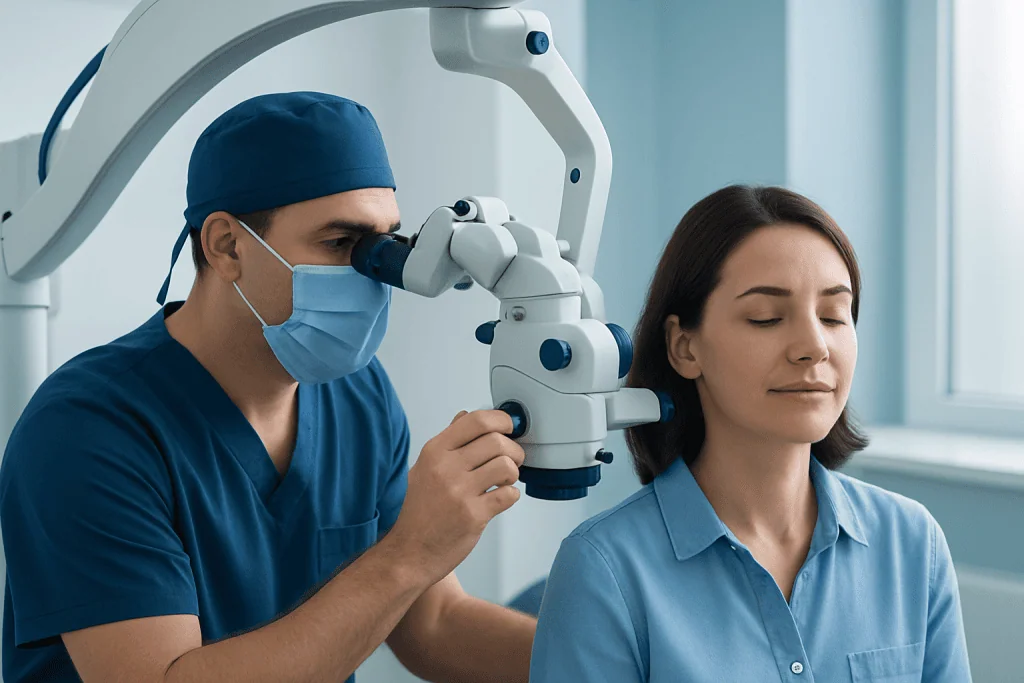
Many people use the word “dizziness” to describe different feelings, so neurotologists pay close attention to how symptoms are experienced. Some patients describe true vertigo, a false sense that they or the room are spinning. Others report lightheadedness, floating, rocking, unsteadiness when walking, or difficulty focusing vision during movement. These details can offer important clues about whether the inner ear is involved.
Symptoms that may lead to referral include hearing loss in one or both ears, tinnitus, ear pressure, repeated ear infections, sound sensitivity, balance problems, nausea associated with movement, and falls. Some conditions also cause symptoms to come and go in episodes, while others produce a more constant sense of imbalance.
Doctors also consider the timing and triggers of symptoms. For example, brief dizziness when turning over in bed may suggest vertigo related to a positional disorder, while attacks that last longer and occur with ear fullness or hearing fluctuation may point toward a different inner ear condition. If symptoms occur with facial weakness, double vision, severe headache, numbness, or trouble speaking, urgent evaluation is needed because the cause may not be limited to the ear.
How the Diagnostic Process Begins

The first and often most valuable step in neurotology is a detailed medical history. The doctor asks when symptoms started, how long they last, whether they are constant or episodic, and what makes them better or worse. Hearing changes, recent infections, head injury, migraine history, noise exposure, past ear surgery, medication use, and family history may all be relevant.
A focused physical examination follows. This usually includes inspection of the ear, evaluation of eye movements, tests of balance and walking, and a neurological assessment. The doctor may look for involuntary eye movements called nystagmus, which can help identify whether dizziness is coming from the inner ear or another part of the nervous system. Bedside positional maneuvers may also be used if symptoms suggest a positional form of vertigo.
Neurotology diagnosis often relies on putting together multiple findings rather than any single test result. A person can have similar symptoms from different conditions, and some disorders affect both hearing and balance while others affect only one system. This is why a structured assessment is important before deciding on treatment.
Tests Used to Diagnose Inner Ear and Balance Disorders
Hearing tests are a core part of evaluation. Audiometry checks how well a person hears different tones and speech, helping the doctor determine whether hearing loss is present and whether it suggests a problem in the outer, middle, or inner ear. Additional hearing-related tests may assess how the eardrum moves, how sound travels through the middle ear, and how the auditory nerve is functioning.
Balance testing may be recommended when symptoms are persistent, unclear, or recurrent. These tests can evaluate how the inner ear balance organs respond to movement and how the eyes react to balance signals. Depending on the situation, a doctor may request videonystagmography, caloric testing, video head impulse testing, vestibular evoked myogenic potentials, or computerized posturography. Not every patient needs all of these tests; the choice depends on the symptom pattern and suspected diagnosis.
Imaging studies such as MRI or CT scans are used when structural causes need to be ruled out or when symptoms suggest involvement beyond the inner ear. Blood tests are less commonly the main diagnostic tool, but they may help in selected cases, such as suspected infection, autoimmune disease, metabolic causes, or medication-related effects. Some patients may also need a combined assessment with neurology evaluation if symptoms overlap with migraine, neuropathy, or central nervous system conditions.
- Common diagnostic tools include hearing tests, bedside balance examination, and vestibular testing.
- Imaging is usually reserved for specific concerns such as asymmetrical hearing loss, persistent unexplained symptoms, or suspected nerve-related causes.
- Testing is individualized to avoid unnecessary procedures and to focus on the most likely cause.
Conditions Neurotology Commonly Diagnoses
Neurotologists assess a wide range of disorders that affect hearing and balance. These include benign paroxysmal positional vertigo, vestibular neuritis, labyrinthitis, Ménière disease, vestibular migraine, superior semicircular canal dehiscence, acoustic neuroma, sudden sensorineural hearing loss, chronic imbalance after inner ear injury, and tinnitus-related conditions. Some symptoms may also be linked with tinnitus or broader hearing loss patterns that need careful evaluation.
Several of these conditions can feel similar at first. For example, both vestibular neuritis and vestibular migraine may cause severe dizziness, but they are managed differently. Ménière disease may include episodes of vertigo with hearing fluctuation and ear fullness, while positional vertigo is often brief and triggered by changes in head position. The role of neurotology is to distinguish among these possibilities as accurately as possible.
Some conditions are temporary and improve with targeted treatment or rehabilitation. Others may be chronic but manageable with a long-term plan. Understanding the exact diagnosis helps set realistic expectations and supports safer decisions about medicines, maneuvers, therapy, hearing support, or surgery when necessary.
What Happens After the Diagnosis
Treatment depends on the cause found during neurotology assessment. For some positional vertigo disorders, a canalith repositioning maneuver may relieve symptoms quickly. In other cases, treatment may include medication, dietary advice, migraine management, infection treatment, hearing support, tinnitus counseling, or a program of vestibular rehabilitation. Rehabilitation can help the brain adapt when the balance system has been disrupted.
When hearing loss is significant, additional support such as cochlear implant assessment or other hearing interventions may be discussed if appropriate. A smaller number of patients may need surgery, especially if there is a structural problem, a tumor affecting the hearing nerve, chronic ear disease, or a condition that has not improved with conservative care. In selected situations, management may also involve ear surgery within a broader ENT plan.
Follow-up is often part of care, especially if symptoms change over time or if hearing and balance need to be monitored. Near the end of the care pathway, some patients choose centers where ENT, audiology, neurology, radiology, and rehabilitation work together. Acibadem International’s multidisciplinary specialists and JCI-accredited hospitals evaluate and treat inner ear and balance disorders for international patients when this level of coordinated care is needed.
Self-care, Safety, and When to Seek Medical Attention
While diagnosis should come from a qualified doctor, a few self-care steps can help patients stay safer and better prepared for evaluation. It may help to keep a symptom diary noting when dizziness happens, how long it lasts, whether there is hearing change, and what triggers it. Avoiding sudden movements, staying hydrated, and reducing fall risks at home can also be useful while waiting for assessment.
People with recurrent balance symptoms should use extra caution when driving, climbing, swimming alone, or working at heights until the cause is understood. If hearing seems muffled or one-sided, it is helpful to arrange hearing evaluation promptly rather than waiting for symptoms to pass. Early care can be especially important when the problem starts suddenly.
Medical attention should be sought urgently for sudden hearing loss, severe continuous vertigo, fainting, chest pain, head injury, new weakness, numbness, trouble speaking, double vision, severe headache, or difficulty walking. These symptoms may signal a condition that needs emergency assessment. Even when symptoms are not urgent, repeated dizziness, ongoing tinnitus, or unexplained imbalance deserve professional evaluation because effective treatment often begins with an accurate diagnosis.
Frequently asked questions
What is the difference between neurotology and general ENT care?
General ENT care covers a wide range of ear, nose, and throat conditions. Neurotology is more specialized and focuses on hearing, balance, the inner ear, and related nerve pathways. It is often helpful when symptoms such as vertigo, tinnitus, or complex hearing loss need deeper assessment.
Does every person with dizziness need balance testing?
No. Many cases can be strongly suspected from the history and physical examination alone. Balance tests are usually chosen when symptoms are persistent, recurrent, unclear, or when the doctor needs more detailed information to confirm the diagnosis.
Can inner ear disorders cause both hearing loss and vertigo?
Yes. Some inner ear conditions affect both the hearing and balance parts of the ear, so a person may notice spinning, unsteadiness, ear fullness, tinnitus, or hearing fluctuation together. This symptom combination is one reason a full neurotology evaluation can be useful.
Is MRI always needed in neurotology diagnosis?
Not always. MRI is usually reserved for situations where symptoms suggest a structural problem, nerve-related disorder, asymmetrical hearing loss, or another cause outside the inner ear. Many patients are diagnosed without imaging based on examination and targeted hearing or vestibular tests.
What should someone do before a neurotology appointment?
It can help to write down symptoms, their timing, possible triggers, and any hearing changes. Bringing a list of medicines, past test results, and relevant medical history can also make the visit more efficient. If possible, noting whether dizziness feels like spinning, lightheadedness, or imbalance is especially useful.
Are inner ear and balance disorders treatable?
Many are treatable, and some improve very well once the cause is identified. Treatment may involve positional maneuvers, medicines, rehabilitation, hearing support, or surgery in selected cases. The best approach depends on the specific diagnosis rather than the symptom alone.
This article is for general information only and is not a substitute for professional medical advice. Please consult a qualified doctor about your individual situation.
Neurotology in Turkey — costs, top hospitals & a free quote
JCI-accredited · board-certified surgeons · reply within 24h
Add us as a Preferred Source to see more of our trusted health content across Google Search, AI Overviews and Discover.

Otorhinolaryngology (ENT)
Care for ear, nose, throat and head-and-neck conditions, including hearing and balance disorders.
126 specialists in this unitMore from the Health Library

Neuro-Otology Evaluation: What to Expect at Your First Visit

Otology Meaning: What Otology Covers in Ear Disease and Hearing Care

Vestibular Schwannoma: Hearing Loss, Balance Symptoms, and Neurotology Evaluation

Neuro-Otology Tests for Dizziness: What VNG, vHIT, and Balance Exams Show

Otologic Symptoms That Should Not Be Ignored: Ear Fullness, Hearing Changes, and Imbalance

Ménière-Like Symptoms Without Hearing Loss: Could It Be Vestibular Migraine?
Otorhinolaryngology Specialists at Acibadem

Prof. Dr. Alp Demireller
Otorhinolaryngology
Asst. Prof. Dr. Alper Özdilek
Otorhinolaryngology
Asst. Prof. Dr. Altuğ Özagar
Otorhinolaryngology
Assoc. Prof. Dr. Aras Şenvar
Otorhinolaryngology