How to Choose a Dental Office for Implants, Crowns, or Emergency Care

The best dental office is not defined by price alone; experience, planning, safety, and aftercare also matter. Implants and crowns should begin with a careful examination, imaging when needed, and a clear treatment plan.
Key Takeaways
- The best dental office is not defined by price alone; experience, planning, safety, and aftercare also matter.
- Implants and crowns should begin with a careful examination, imaging when needed, and a clear treatment plan.
- Emergency dental care is most effective when a clinic can assess pain, infection, trauma, and timing promptly.
- Patients should ask about the dentist’s training, sterilization standards, materials used, and expected recovery.
- Clear communication, written costs, and realistic expectations are signs of a trustworthy practice.
Choosing the right dental office can make treatment safer, more comfortable, and more predictable. For implants, crowns, or urgent dental problems, it helps to look at the team’s qualifications, technology, infection control, communication, and follow-up care.
Overview: What to Look for in a Dental Office
When a person is choosing a dental office for implants, crowns, or emergency care, the decision should go beyond convenience alone. Dental treatment affects comfort, function, appearance, and long-term oral health. A well-chosen clinic can help reduce avoidable complications and support a smoother treatment experience.
A good dental office usually combines professional qualifications, careful diagnosis, modern equipment when appropriate, strong hygiene practices, and good communication. It should also explain options clearly, including the benefits, possible limitations, treatment steps, expected healing time, and follow-up needs. Patients often feel more confident when they understand not only what will be done, but also why it is being recommended.
Different dental needs call for different strengths. A patient seeking dental implants may need advanced planning and restorative expertise, while someone with a broken tooth may need a same-day crown assessment or urgent repair. For trauma, swelling, severe pain, or bleeding, access to prompt emergency dental care is especially important.
Why Needs Differ for Implants, Crowns, and Emergencies
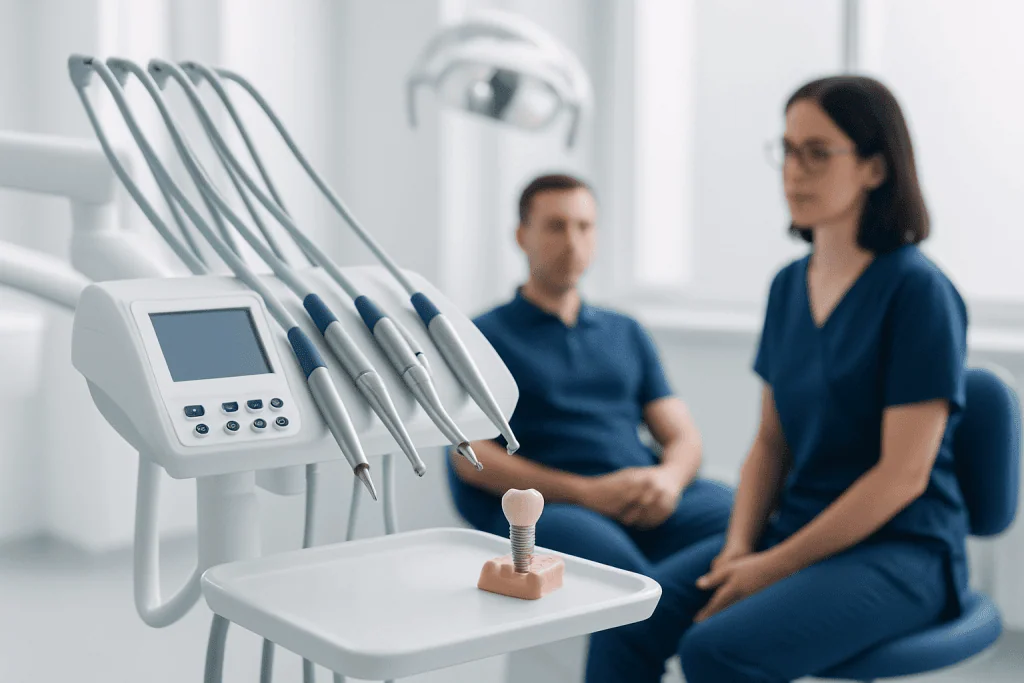
Implants, crowns, and emergencies are all common dental concerns, but they are not identical. Dental implants replace missing teeth by anchoring an artificial tooth root in the jawbone. Because implants involve bone, gum health, bite balance, and healing, they require detailed assessment and precise execution. Some patients may also need additional procedures, such as bone grafting, before implant placement is possible.
Dental crowns are different. A crown is a custom-made cap that covers and protects a damaged, weakened, or heavily restored tooth. The right dental office should be able to determine whether a crown is the best option or whether a filling, root canal treatment, extraction, or bridge would be more suitable. This is one reason a broad foundation in general dentistry remains valuable even in more advanced care.
Emergency dental care focuses on urgency and timing. Not every dental problem is life-threatening, but some need rapid attention to control pain, limit infection, stop bleeding, or save a tooth after injury. A reliable office should be able to recognize what needs immediate treatment, what can safely wait, and when hospital-based care is necessary.
Qualifications, Experience, and Team-Based Care

One of the most helpful questions a patient can ask is who will actually provide the treatment. Dentists may have different training backgrounds and levels of experience in implant placement, restorative dentistry, oral surgery, cosmetic work, and emergency management. For implants and complex crowns, experience with planning, bite alignment, gum health, and long-term maintenance matters.
Patients can reasonably ask how the office evaluates complex cases, whether difficult cases are managed in-house or referred, and whether a multidisciplinary team is involved when needed. For example, a person with advanced gum disease, bone loss, or a fractured tooth near the gumline may benefit from coordinated care among restorative dentists, oral surgeons, periodontists, or endodontists. This team approach can improve both function and durability.
It is also worth asking about continuing education and familiarity with current techniques. A qualified office should be comfortable discussing why a certain material, design, or procedure is recommended. Good practices welcome informed questions and provide balanced answers instead of making treatment sound effortless or guaranteed.
- Ask who will perform each step of treatment.
- Ask whether the dentist routinely treats cases like yours.
- Ask how the office handles complications or unexpected findings.
- Ask whether specialists are available if needed.
Diagnosis, Technology, and Treatment Planning
Careful diagnosis is one of the clearest signs of a high-quality dental office. Before recommending implants or crowns, the dentist should review symptoms, oral hygiene, gum condition, bite, medical history, and the condition of nearby teeth. Imaging may include standard dental X-rays, and for some implant cases, three-dimensional scans may be useful to assess bone volume and anatomical structures more precisely.
Technology can support better planning, but it should not replace clinical judgment. Digital scanning, computer-guided planning, and digital dentistry tools may improve comfort, precision, and communication. However, the best office uses technology thoughtfully, explains its purpose, and relates it to the patient’s actual needs rather than presenting every tool as essential.
A clear treatment plan should describe the sequence of care, estimated time frame, temporary restorations if needed, healing periods, and possible alternatives. For instance, a patient missing multiple teeth may need to understand the differences between single implants, bridges, or full-arch solutions. Good planning also includes a discussion of risks such as infection, implant failure, crown loosening, discomfort, or the need for additional treatment if underlying disease is discovered.
Safety, Hygiene, Materials, and Comfort
Infection control is a basic expectation in any dental office. Patients should feel comfortable asking about sterilization practices, disposable items, protective barriers, and how instruments are cleaned and stored. A professional environment is usually clean, organized, and transparent about safety protocols. This is especially relevant for implant surgery and emergency procedures involving bleeding or open tissues.
Material quality also matters. For crowns, patients may want to know what type of material is being used, such as ceramic, porcelain-based, metal-based, or zirconia, and why it fits the location and bite forces involved. For implants, patients can ask about the implant system, restoration components, and whether the office uses established materials with a strong clinical track record.
Comfort is another important part of care. Some people feel anxious about dental treatment, while others worry about pain control or recovery. A supportive office should explain available numbing methods, sedation options where appropriate, expected sensations after treatment, and practical aftercare. When patients know what to expect, treatment often feels more manageable.
Communication, Costs, and Follow-Up Care
Clear communication is often what separates a reassuring dental experience from a confusing one. A trustworthy office explains the diagnosis in understandable terms, answers questions patiently, and gives realistic expectations. It should not pressure a patient into treatment on the spot unless the situation is truly urgent. Instead, it should help the patient understand benefits, limitations, alternatives, and likely maintenance needs.
Written cost information is also important. Dental care can involve several stages, especially for implants, crowns after root canal treatment, or emergency care that later turns into more definitive treatment. Patients should ask whether the quoted cost includes imaging, temporary restorations, laboratory work, follow-up visits, and possible additional steps if healing is delayed or the treatment plan changes.
Follow-up care deserves special attention. Implants need monitoring, crowns may need bite adjustments, and emergency treatment may only be the first stage of care. A reliable office explains how patients can reach the team after a procedure, what warning signs to watch for, and when review appointments are needed. Near the end of the treatment journey, some international patients may also seek coordinated support from experienced centers; Acibadem International’s multidisciplinary specialists and JCI-accredited hospitals diagnose and treat dental conditions for patients traveling from abroad.
Questions to Ask Before Choosing a Dental Office
Many patients find it helpful to prepare a short list of questions before booking treatment. The answers can reveal whether the office takes a careful, patient-centered approach. Asking questions is not a sign of mistrust; it is a practical way to make an informed decision.
Useful questions may include:
- What is causing the problem, and what are the treatment options?
- Why do you recommend an implant, crown, or another procedure?
- What imaging or tests are needed before treatment?
- Who will perform the procedure, and what is their experience?
- What are the possible risks, limitations, and alternatives?
- How long will treatment and recovery take?
- What aftercare, maintenance, or future replacements might be needed?
- How are emergencies handled outside normal office hours?
If answers are rushed, vague, or overly promotional, a second opinion may be helpful. By contrast, a strong dental office usually gives balanced explanations and encourages patients to take time to decide when the situation allows.
When to Seek Urgent Dental Attention
Some dental problems should not wait for a routine appointment. Urgent evaluation is often appropriate for severe tooth pain, facial swelling, fever with dental symptoms, uncontrolled bleeding, trauma to the mouth, a knocked-out tooth, or a broken tooth causing significant pain. In these situations, timely care may help reduce infection risk, improve comfort, or increase the chance of saving a tooth.
Patients should also seek prompt dental advice if a crown falls off, an implant area becomes increasingly painful or swollen, or there is pus, a bad taste, or sudden difficulty biting. After dental trauma, keeping any broken tooth pieces or a knocked-out tooth and contacting a dental office immediately can be helpful. If there is trouble breathing, difficulty swallowing, major facial swelling, or heavy bleeding, emergency medical services or hospital care may be needed.
Even when the problem seems small, persistent symptoms deserve attention. Ongoing sensitivity, repeated crown looseness, gum bleeding, or difficulty chewing may point to underlying issues that are easier to treat early. Choosing a dental office with both restorative and urgent-care capability can make these situations easier to manage.
Frequently asked questions
How can a patient tell if a dental office is suitable for implants?
A suitable office should perform a full examination, review gum and bone health, and explain whether imaging is needed before treatment. Patients can also ask who places the implants, how complex cases are handled, and what follow-up care is included.
Is the cheapest dental office always the best choice?
Not necessarily. Lower prices may be appropriate in some settings, but cost alone does not show the quality of diagnosis, materials, sterilization, planning, or aftercare. It is usually wiser to compare value, transparency, and experience rather than price only.
What should a person expect before getting a dental crown?
The dentist should examine the tooth, look for decay or cracks, assess the bite, and decide whether the tooth also needs other treatment, such as root canal therapy. The office should explain the crown material, how long the process may take, and how the final fit will be checked.
When is dental pain considered an emergency?
Dental pain is more urgent when it is severe, associated with swelling, fever, trauma, pus, or trouble eating or sleeping. Sudden worsening pain after an injury or signs of spreading infection should be assessed promptly by a dental professional.
Why is follow-up care important after implants or crowns?
Follow-up visits help the dentist check healing, bite alignment, gum response, and the fit of the final restoration. Early review can detect problems such as inflammation, looseness, or pressure points before they become more serious.
Should a patient get a second opinion for major dental work?
A second opinion can be useful for expensive, complex, or irreversible treatment, especially when multiple options are available. It may help the patient better understand the diagnosis, compare recommendations, and feel more confident in the final decision.
References
- American Dental Association
- National Institute of Dental and Craniofacial Research
- Mayo Clinic
- National Health Service
- World Health Organization
This article is for general information only and is not a substitute for professional medical advice. Please consult a qualified doctor about your individual situation.
Explore treatments in Turkey — costs, top hospitals & a free quote
JCI-accredited · board-certified surgeons · reply within 24h
Add us as a Preferred Source to see more of our trusted health content across Google Search, AI Overviews and Discover.

Dental & Oral Health
Full-scope dental care from implants and aesthetics to oral and maxillofacial surgery.
151 specialists in this unitRelated Treatments
More from the Health Library



Related Specialists

Assoc. Prof. Dr. Ferit Bayram
Oral & Dental Health
Assoc. Prof. Dr. Yeliz Çavuşoğlu Yüce
Oral & Dental Health
Assoc. Prof. Dr. Mutlu Keskin
Oral & Dental Health
Prof. Dr. Ülkü Noyan
Oral & Dental Health