How to Choose a Neurointerventional Radiologist or Hospital

A strong choice depends on both the doctor’s expertise and the hospital’s neurovascular infrastructure. Team-based care is important because many conditions need coordination between neurology, neurosurgery, and intensive care specialists.
Key Takeaways
- A strong choice depends on both the doctor’s expertise and the hospital’s neurovascular infrastructure.
- Team-based care is important because many conditions need coordination between neurology, neurosurgery, and intensive care specialists.
- Advanced imaging, 24/7 emergency support, and intensive care access can affect safety and outcomes.
- Patients should ask clear questions about experience, treatment options, risks, recovery, and follow-up.
- Second opinions can be helpful, especially for complex aneurysms, AVMs, or stroke-related procedures.
Choosing a neurointerventional radiologist or hospital involves more than finding a well-known name. Patients and families can make a more confident decision by looking at specialist experience, hospital systems, imaging capabilities, emergency readiness, and follow-up care.
Overview: What a Neurointerventional Radiologist Does
A neurointerventional radiologist is a doctor who uses advanced imaging and minimally invasive techniques to diagnose and treat conditions affecting the blood vessels of the brain, head, neck, and spine. These specialists treat problems such as brain aneurysms, arteriovenous malformations, carotid artery narrowing, certain strokes, and other neurovascular disorders. Instead of open surgery, many procedures are performed by guiding tiny catheters through blood vessels to the treatment area.
Because these conditions can be complex and sometimes urgent, choosing the right specialist and hospital matters. A patient is not only choosing a doctor for a single procedure, but also a care team, imaging center, intensive care support system, and recovery pathway. This broader view can help families make a more informed decision.
Some patients need care for emergencies such as acute ischemic stroke, while others are being evaluated for a planned procedure after an aneurysm or vascular malformation is found on imaging. In either setting, the ideal center combines technical skill with clear communication, careful decision-making, and strong follow-up care.
Which Conditions and Procedures to Ask About
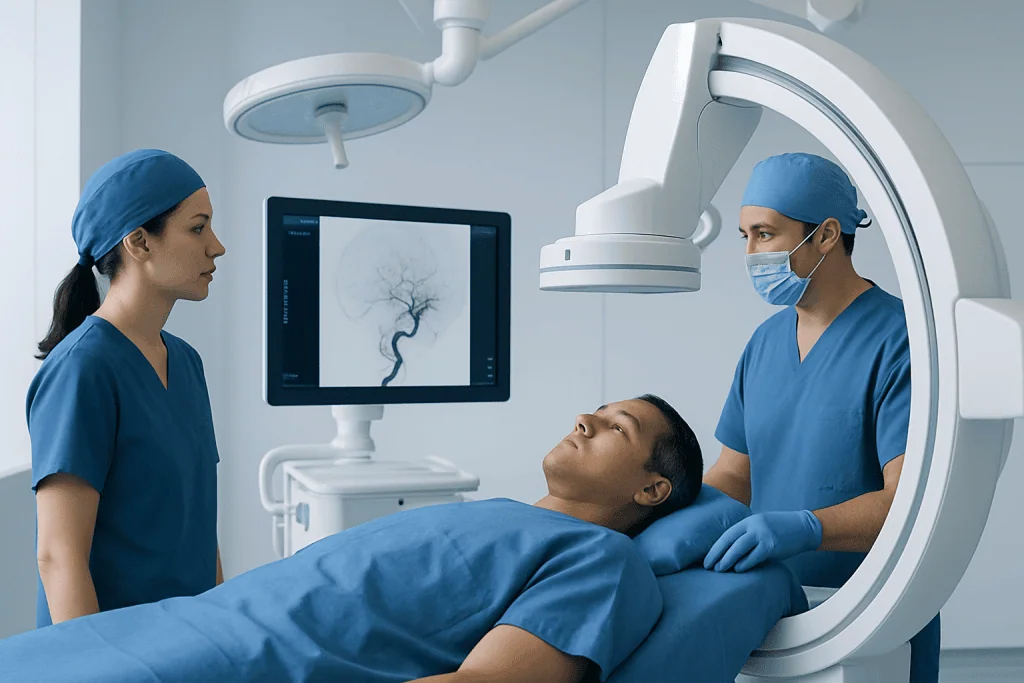
Neurointerventional radiologists commonly evaluate and treat a range of neurovascular conditions. These may include brain aneurysms, carotid or intracranial artery narrowing, dural arteriovenous fistulas, spinal vascular malformations, and stroke caused by a blocked blood vessel. Some also help manage bleeding in the brain or skull base vascular problems in close partnership with neurosurgeons and neurologists.
Common procedures may include cerebral angiography, endovascular coiling, flow diversion, embolization, carotid artery stenting, and catheter-based clot removal. If a patient is being treated for a stroke, it may be helpful to ask whether the hospital offers mechanical thrombectomy around the clock. For aneurysm care, patients may hear about endovascular aneurysm treatment or other catheter-based options depending on the aneurysm’s size and location.
Not every hospital offers the same level of neurointerventional care. Some centers focus mainly on diagnostics, while others provide comprehensive treatment for both routine and highly complex neurovascular disease. Asking whether the center regularly treats the specific condition in question can be more useful than asking only whether it offers a certain procedure.
How to Evaluate the Specialist’s Expertise

Training and experience are central when choosing a neurointerventional radiologist. Patients may wish to ask about the doctor’s background in radiology, neuroradiology, neurology, or neurosurgery, followed by dedicated fellowship training in endovascular or neurointerventional procedures. The exact training pathway can vary by country, but specialized post-residency training in this field is an important sign of focused expertise.
Experience should be considered in relation to the patient’s own condition. A doctor who treats a broad range of neurovascular disorders may still have a special focus, such as aneurysms, stroke intervention, or spinal vascular lesions. It is reasonable to ask how often the doctor performs the recommended procedure and whether they routinely treat similar cases.
Communication style also matters. A strong specialist should explain why a procedure is recommended, what alternatives exist, what the main risks are, and what recovery may involve. Patients often feel more comfortable when the doctor is willing to discuss both the benefits and the limitations of treatment in clear, understandable language.
A second opinion can be valuable, especially when treatment is elective or technically complex. This is often helpful for difficult aneurysms, vascular malformations, or situations where more than one treatment path may be appropriate, including endovascular therapy, open surgery, or careful monitoring.
Why the Hospital or Center Is Just as Important
Even an excellent specialist works best within a well-prepared hospital system. Neurointerventional procedures depend on high-quality angiography suites, rapid access to MRI and CT imaging, anesthesia services, stroke pathways, intensive care, and specialized nursing support. These resources can influence safety before, during, and after treatment.
Team-based care is especially important in interventional neuroradiology. The best centers usually involve specialists from neurology, neurosurgery, vascular surgery, critical care, rehabilitation, and radiology. For example, a patient with stroke may need emergency imaging, catheter-based treatment, close monitoring in a neuro-intensive care unit, and early rehabilitation planning. A patient with a vascular malformation may need a combined evaluation from both endovascular and surgical teams.
Patients can ask whether the hospital has 24/7 emergency coverage for stroke and neurovascular complications, whether it offers dedicated neuro-intensive care, and whether it can manage complications if they occur. Access to neurosurgery is particularly important if an emergency surgical procedure becomes necessary after a vascular event or intervention.
Hospital quality standards also deserve attention. Accreditation, infection prevention protocols, radiation safety practices, and clear patient pathways all reflect how organized and reliable a center is. Near the end of the care journey, coordinated discharge planning and easy access to follow-up can be just as important as the procedure itself.
Questions Patients and Families Can Ask
Bringing a list of questions to the consultation can help patients compare hospitals and specialists more confidently. It can also make a stressful conversation easier to follow. In many cases, a family member or trusted companion can help take notes and remember key points.
Helpful questions may include:
- What is the exact diagnosis, and how certain is it?
- Why is this procedure recommended, and what are the alternatives?
- How urgent is treatment?
- How often do you perform this procedure for this condition?
- What are the main risks and possible complications?
- Will neurology, neurosurgery, or intensive care specialists also be involved?
- What type of anesthesia or sedation is used?
- How long is the hospital stay, and what does recovery usually involve?
- What follow-up imaging or clinic visits will be needed?
For planned procedures, it may also help to ask how cases are reviewed. Some hospitals discuss complex patients in multidisciplinary meetings where several specialists weigh the safest and most effective approach. This process can improve decision-making, especially for conditions with more than one treatment option.
If a patient is traveling for care, practical questions are equally important. These may include how quickly records can be reviewed, whether remote consultations are available, how follow-up is coordinated after returning home, and whether translation services are offered when needed.
Signs of a Comprehensive Neurovascular Center
Patients often benefit from choosing a center that can provide full-spectrum neurovascular care rather than only isolated procedures. A comprehensive center is more likely to offer emergency stroke treatment, elective aneurysm and AVM care, advanced imaging, intensive care, and rehabilitation in one system. This can reduce delays and improve coordination.
For example, a hospital that routinely manages stroke should have rapid triage processes, immediate brain imaging, and access to catheter-based intervention if appropriate. In many hospitals, this includes organized pathways for stroke treatment from arrival through recovery. A center that treats aneurysms and complex vascular lesions should also be able to provide surgical backup and post-procedure monitoring.
Other signs of a strong center include experienced nursing teams, a dedicated neuro-intensive care unit, and clear policies for complication management. Patients may also ask whether the center follows standardized protocols for imaging review, antiplatelet management when needed, and discharge planning. These details may sound technical, but they often reflect how consistently the hospital delivers care.
For international patients, logistical support can also matter. Assistance with records review, travel planning, interpreter services, and continuity of care after discharge can make treatment safer and less stressful. Where appropriate, Acibadem International’s multidisciplinary specialists and JCI-accredited hospitals diagnose and treat neurovascular conditions for international patients.
Balancing Convenience, Cost, and Clinical Quality
Practical considerations are real, but they should be weighed alongside medical quality. Distance from home, insurance coverage, travel demands, and waiting times can all affect decision-making. For routine consultations, convenience may play a larger role. For rare, high-risk, or technically demanding conditions, specialist expertise and hospital capability often deserve greater priority.
Patients should be cautious about choosing a center based only on marketing language or the promise of the newest device. New technology can be valuable, but it is most useful in experienced hands and within a hospital that has strong protocols. A balanced decision usually considers the doctor’s experience, the center’s emergency readiness, and the clarity of the treatment plan.
It may help to gather the patient’s imaging, reports, medication list, and prior medical history before seeking opinions. Organized records can speed review and make it easier for specialists to explain whether treatment is necessary now, can safely wait, or may not be needed at all. This is especially useful when comparing recommendations from different centers.
When to Seek Urgent Evaluation or a Second Opinion
Some symptoms require urgent medical evaluation rather than routine research into hospitals. Sudden weakness, difficulty speaking, facial drooping, severe sudden headache, loss of vision, seizures, confusion, or sudden problems with balance can be signs of a neurological emergency. In these situations, emergency services should be contacted immediately, because rapid treatment may protect brain function.
For non-emergency situations, a second opinion is often worthwhile when the diagnosis is uncertain, more than one treatment option exists, or the proposed procedure is complex. This can help patients understand whether observation, medication, surgery, or endovascular treatment is the best fit. A thoughtful second opinion should clarify choices rather than create unnecessary fear.
Patients should also return to their doctor promptly if symptoms change while waiting for evaluation. New neurological symptoms, worsening headaches, or recovery concerns after a procedure should not be ignored. The right hospital and specialist will not only perform the intervention, but also provide a clear plan for what to do before treatment, after discharge, and if new symptoms appear.
Frequently asked questions
What is the difference between a neurointerventional radiologist and a neurosurgeon?
A neurointerventional radiologist treats many brain and spinal blood vessel problems from inside the blood vessels using catheters and imaging guidance. A neurosurgeon performs operations on the brain, spine, and related structures. In many cases, both specialists work together to decide which treatment is safest and most effective.
Is a larger hospital always the better choice?
Not always, but hospitals with comprehensive neurovascular services may be better prepared for complex cases and emergencies. What matters most is whether the hospital regularly treats the patient’s specific condition and has the right specialists, imaging, intensive care, and follow-up support.
Should a patient get a second opinion before a neurointerventional procedure?
A second opinion can be very helpful, especially for planned procedures such as aneurysm treatment or vascular malformation care. It can confirm the diagnosis, explain alternatives, and help the patient feel more confident about timing and treatment choices.
What questions should patients ask during the first consultation?
Patients can ask about the diagnosis, urgency, treatment options, risks, recovery time, and follow-up imaging. It is also reasonable to ask how often the specialist performs the recommended procedure and which other doctors or teams will be involved in care.
Why does 24/7 stroke capability matter?
Stroke treatment is often time-sensitive, and some patients may need urgent catheter-based procedures to restore blood flow. A hospital with round-the-clock stroke services can usually assess and treat eligible patients more quickly, which may improve the chance of recovery.
Can patients travel to another city or country for neurointerventional care?
Yes, especially for specialized or elective treatment, but planning is important. Patients should ask how records will be reviewed, how follow-up will work after returning home, and what support is available for travel, interpretation, and communication with local doctors.
This article is for general information only and is not a substitute for professional medical advice. Please consult a qualified doctor about your individual situation.
Explore treatments in Turkey — costs, top hospitals & a free quote
JCI-accredited · board-certified surgeons · reply within 24h
Add us as a Preferred Source to see more of our trusted health content across Google Search, AI Overviews and Discover.

Neurosurgery
Surgical treatment of the brain, spine and nervous system, including minimally invasive and functional procedures.
70 specialists in this unitMore from the Health Library

CSF Leak From the Nose: When Clear Nasal Drainage Needs Urgent Care
Cerebral Angiography for Stroke and Aneurysm Care: What Patients Should Expect

Cerebral Aneurysm Symptoms: When a Sudden Headache Needs Emergency Imaging

Neurointerventional Radiology: Conditions It Treats and When It Is Used

Interventional Neurology vs Neurointerventional Radiology: What Is the Difference?