

How to Wake Up Taste Buds after Radiation: How It Works, Results and What to Expect

Radiation to the head and neck can alter taste directly and indirectly through dry mouth, mouth soreness, infections, and changes in smell. There is no instant way to restore taste buds, but supportive care can make eating easier while recovery occurs.
Key Takeaways
- Radiation to the head and neck can alter taste directly and indirectly through dry mouth, mouth soreness, infections, and changes in smell.
- There is no instant way to restore taste buds, but supportive care can make eating easier while recovery occurs.
- Taste often begins to improve weeks to months after treatment, while some people need a year or longer for the fullest recovery.
- A dentist, radiation oncologist, dietitian, speech-language pathologist, or ENT specialist may help address specific barriers to eating.
- New severe pain, inability to drink, fever, bleeding, or rapid weight loss needs prompt medical assessment.
Taste changes after radiation usually improve gradually as the mouth and taste pathways recover, although the timeline differs from person to person. Gentle oral care, dry-mouth treatment, adequate nutrition, and regular follow-up can support comfort and help food become more enjoyable again.
How to Wake Up Taste Buds After Radiation: The Main Approach
For people wondering how to wake up taste buds after radiation, the most helpful approach is usually not a single procedure or remedy. Taste commonly returns as radiation-related inflammation settles and the tissues of the mouth recover. During this period, protecting the mouth, treating dry mouth and soreness, maintaining nutrition, and repeatedly trying tolerated flavors can help a person eat more comfortably.
Radiation therapy, particularly for cancers of the head and neck, may affect the taste buds, salivary glands, oral lining, nerves, and sense of smell. Food may seem bland, bitter, metallic, overly salty, or unpleasantly sweet. These changes are real treatment effects and are not a sign that a person is doing anything wrong.
Recovery is variable. Some people notice early improvement in the weeks after treatment ends, whereas others improve more gradually over several months. The oncology team can assess whether taste changes are primarily related to radiation or whether dry mouth, oral thrush, dental problems, medications, reflux, or nutritional deficiencies are contributing.
How Radiation Changes Taste and Eating
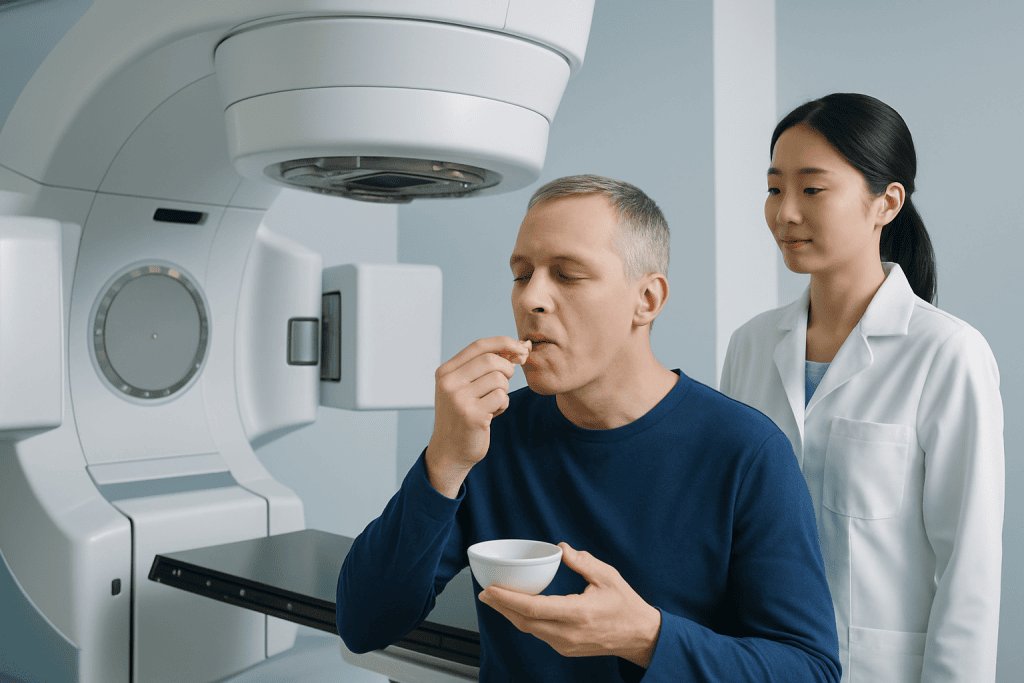
Taste is created through teamwork between taste receptors on the tongue and mouth, saliva, smell, touch, temperature, and the brain. Radiation can temporarily damage fast-renewing taste receptor cells and inflame the mouth lining. If salivary glands are in the treatment field, reduced saliva can further limit how flavor molecules reach taste receptors.
Reduced saliva may also make food difficult to chew or swallow and may change the way food feels in the mouth. Mouth sores, thick saliva, dental sensitivity, or infection can make strongly flavored foods uncomfortable. Changes in smell, which may occur during cancer treatment, can further reduce flavor perception.
Modern radiation planning aims to protect healthy tissue whenever clinically appropriate, but the extent of taste change depends on the treatment area, total radiation exposure, other treatments such as chemotherapy, and a person’s baseline oral health. Similar supportive principles can be useful for people recovering from head and neck cancer.
How to Stimulate Taste Buds After Radiation?

There is no proven method that can immediately switch taste buds back on after radiation. However, gentle, repeated exposure to foods that are safe and tolerable may help a person identify flavors that are beginning to return. Small meals are often easier than large meals, especially when fatigue, nausea, dry mouth, or appetite changes are present.
Cool or room-temperature foods may be more comfortable than hot foods when the mouth is sore. Some people prefer soft, moist foods such as soups, yogurt, oatmeal, eggs, stews, or foods served with sauces and gravies. If food tastes metallic, using plastic utensils and choosing nonmetallic cookware may help. If food tastes bland, aromatic herbs, mild spices, lemon or vinegar may add interest, but acidic foods should be avoided if they sting or if mouth sores are present.
Daily oral care can reduce irritation and support comfort. This generally includes a soft toothbrush, regular dental advice, alcohol-free mouth rinses, and rinsing with a mild salt-and-baking-soda solution if the care team recommends it. Tobacco and alcohol can irritate healing tissues and should be avoided. Before taking zinc, supplements, or commercial taste-restoration products, a person should ask their oncology clinician, because benefits are uncertain and some products may not be suitable during recovery.
- Keep a short food diary to identify foods, temperatures, and textures that work best.
- Prioritize protein and calories even if preferred foods change temporarily.
- Sip fluids regularly and use moist foods to make swallowing easier.
- Ask for a referral to an oncology dietitian when intake or weight is falling.
Candidacy and Step-by-Step Supportive Care
Supportive care is appropriate for most people with taste changes during or after radiation, but it should be individualized. A clinician may first review the radiation field, timing of symptoms, medicines, oral hygiene, swallowing symptoms, weight trend, and hydration. A mouth examination can identify sores, infection, dental concerns, or signs of significant dry mouth.
The next step is to manage treatable causes. This may include medication for pain or nausea, treatment for oral thrush when present, saliva substitutes or saliva-stimulating medicines for selected people, and dental care. Patients with swallowing difficulty may benefit from assessment by a speech-language pathologist, while an oncology dietitian can create a realistic food and supplement plan.
A typical care pathway involves regular review rather than an invasive taste-bud procedure: report symptoms, examine the mouth, address dryness or infection, adapt diet and oral care, then reassess recovery over time. For individuals with radiation-related mouth and swallowing effects, the cancer team may coordinate radiotherapy follow-up and supportive care with dental, nutrition, ENT, and rehabilitation services.
How Long Does It Take for Taste Buds to Heal After Radiation?
Taste changes may start during radiation treatment and often become more noticeable toward the end of treatment or shortly afterward. For many people, taste begins to improve within several weeks to a few months after radiation ends. Recovery may continue for six months to a year or longer, particularly when the salivary glands received radiation or treatment was extensive.
The pace and degree of recovery cannot be predicted precisely. Some people regain most of their usual taste, while others continue to notice reduced taste, dry mouth, or sensitivity to certain flavors. Persistent symptoms do not mean there is no help available; they are a reason to review possible contributing factors and improve symptom management.
Regular follow-up is important because nutrition, hydration, dental health, swallowing, and quality of life are closely connected. If taste changes are not improving, the clinician may look for oral infection, medication effects, reflux, sinus disease, or other conditions that may be adding to the problem.
What Helps Taste Buds Come Back? Benefits, Limits and Recovery Timeline
The potential benefits of a structured recovery plan are better mouth comfort, improved fluid and food intake, weight maintenance, and gradual return of enjoyable eating. Managing dry mouth is especially important because saliva supports taste, chewing, swallowing, and tooth protection. Depending on the individual, useful measures may include frequent water sips, sugar-free gum or lozenges if safe, humidified air at night, saliva substitutes, and prescribed saliva-stimulating treatment.
Nutrition support is not only about flavor. When taste is limited, protein-rich foods, high-calorie additions, oral nutrition drinks, and texture adjustments can help meet nutritional needs. If swallowing is painful or difficult, people should not force dry or hard foods. A swallowing assessment can identify safer strategies and reduce the risk of food or drink going into the airway.
Possible challenges during recovery include persistent dry mouth, tooth decay, mouth infection, burning sensations, poor appetite, weight loss, and emotional distress around eating. Prompt attention to these problems can reduce their impact. Acibadem International’s multidisciplinary specialists and JCI-accredited hospitals can support international patients with coordinated oncology, ENT, dental, nutrition, and rehabilitation care when needed.
What Are the Hardest Days After Radiation Treatment?
For many people receiving head and neck radiation, the most difficult period is the final part of treatment and the first one to two weeks after treatment ends. Radiation effects can continue to build briefly after the last session, so mouth soreness, thick saliva, fatigue, swallowing discomfort, and taste loss may peak before they improve.
This phase can be physically and emotionally demanding, but it is temporary for many patients. The care team may arrange frequent symptom checks, hydration support, pain management, nutrition review, and mouth care guidance. Keeping the team informed early can prevent a manageable symptom from becoming a barrier to eating or drinking.
Recovery is usually gradual rather than sudden. Small improvements, such as tolerating a new texture, noticing an aroma, or finding one food that tastes acceptable, can be meaningful milestones. It is reasonable to continue adapting meals while allowing the body time to heal.
When to Seek Medical Care
A person should contact their oncology team promptly if they cannot drink enough fluids, have very little urine, feel faint, develop fever, have worsening mouth pain, or cannot take prescribed medicines because of swallowing problems. Rapid weight loss, vomiting, bleeding from the mouth, new neck swelling, or shortness of breath also need urgent clinical advice.
Persistent white patches, worsening burning, severe dry mouth, tooth pain, or a new mouth sore that does not heal should be assessed. These symptoms may have causes that can be treated, such as infection or dental disease. Routine dental follow-up is especially important after radiation involving the mouth or jaw.
People should also speak with a clinician if taste loss is affecting mood, social eating, or daily life. Supportive treatment can include nutrition counseling, symptom management, dental care, and rehabilitation. The goal is not to rush recovery, but to make recovery safer, more comfortable, and better supported.
Frequently asked questions
Can taste buds grow back after radiation?
Taste receptor cells can regenerate, so many people experience gradual improvement after radiation ends. Recovery can be slowed by dry mouth, mouth inflammation, infection, or changes in smell. Some people have longer-lasting changes, especially after radiation to areas containing major salivary glands.
How can someone make food taste better after radiation?
Trying different temperatures, textures, seasonings, and moist foods can help identify what is most tolerable. Cool foods, sauces, herbs, and small frequent meals are useful for some people, while acidic or spicy foods may irritate a sore mouth. An oncology dietitian can tailor ideas to nutritional needs and swallowing ability.
Does dry mouth affect taste after radiation?
Yes. Saliva helps dissolve food molecules and carry them to taste receptors, so reduced saliva can make food seem bland or different. Treating dry mouth can improve comfort, chewing, swallowing, and sometimes flavor perception.
Should a person take zinc to restore taste after radiation?
Zinc is not appropriate for everyone, and evidence for restoring radiation-related taste changes is limited. Supplements may interact with treatment plans or be unsuitable in certain medical situations. A person should ask their oncology clinician before starting zinc or any supplement.
When should taste changes after radiation be checked?
Taste changes should be discussed at routine oncology follow-up, especially if they reduce food or fluid intake. Earlier assessment is important for severe mouth pain, signs of infection, dehydration, swallowing problems, or unintentional weight loss. Clinicians can look for treatable causes in addition to radiation effects.
Will taste return completely after radiation therapy?
Many people recover part or most of their taste, but complete recovery is not guaranteed. The outcome depends on the radiation area, treatment intensity, salivary gland effects, other therapies, and individual healing. Ongoing symptom care can still improve eating and quality of life even when taste recovery is incomplete.
References
- National Cancer Institute
- American Cancer Society
- American Society of Clinical Oncology
- National Institute of Dental and Craniofacial Research
- Multinational Association of Supportive Care in Cancer
This article is for general information only and is not a substitute for professional medical advice. Please consult a qualified doctor about your individual situation.
Explore treatments in Turkey — costs, top hospitals & a free quote
JCI-accredited · board-certified surgeons · reply within 24h
Add us as a Preferred Source to see more of our trusted health content across Google Search, AI Overviews and Discover.

More from the Health Library



Related Specialists

Dr. Ertan Sağol
Orthopedic Surgery & Traumatology
Dr. Faısla Rabea
Emergency Service
Prof. Dr. Faik Acar Koç
Perinatology & High Risk Pregnancies
Prof. Dr. Yurtkuran Sadıkoğlu
Radiology