Huntington’s Chorea vs Other Movement Disorders: How Doctors Tell the Difference

Huntington’s chorea causes involuntary, dance-like movements but also affects thinking, mood, and daily function. Many other conditions can cause chorea or similar abnormal movements, including medication side effects, Parkinsonian disorders, dystonia, tremor, and Wilson disease.
Key Takeaways
- Huntington’s chorea causes involuntary, dance-like movements but also affects thinking, mood, and daily function.
- Many other conditions can cause chorea or similar abnormal movements, including medication side effects, Parkinsonian disorders, dystonia, tremor, and Wilson disease.
- A careful family history and neurological examination often provide important clues.
- Genetic testing is the main way to confirm Huntington’s disease when it is suspected.
- Diagnosis is usually made by a neurologist, often with support from genetics, psychiatry, and rehabilitation specialists.
Huntington’s chorea can resemble several other movement disorders, especially in the early stages. Doctors tell the difference by combining a detailed history, neurological examination, brain imaging when needed, and genetic testing for Huntington’s disease.
Overview: Why Huntington’s Chorea Can Be Confused With Other Disorders
Huntington’s chorea refers to the involuntary, irregular, flowing movements that are commonly seen in Huntington’s disease. These movements may look restless, fidgety, or dance-like. However, doctors do not rely on movement alone to make the diagnosis. Huntington’s disease is a neurodegenerative condition that can affect movement, thinking, behavior, and emotional health over time.
Several other neurological and medical conditions can cause abnormal movements that resemble chorea. Some people may actually have tremor, dystonia, tics, myoclonus, medication-related movements, or changes related to another brain disorder. Because treatment, follow-up, and family counseling differ from one condition to another, it is important to identify the exact cause.
Doctors usually distinguish Huntington’s disease from other movement disorders by looking at the whole clinical picture. This includes the person’s age at symptom onset, family history, progression of symptoms, cognitive or psychiatric changes, examination findings, and test results. In many cases, Huntington’s disease can be confirmed through genetic testing after appropriate counseling.
Symptoms Doctors Look For in Huntington’s Disease
In Huntington’s disease, movement symptoms are only one part of the picture. Chorea often begins subtly. A person may seem unusually fidgety, clumsy, or unsteady. Small involuntary movements may affect the face, fingers, shoulders, or trunk. As the condition progresses, balance, coordination, speech, and swallowing may also be affected.
Doctors also ask about non-movement symptoms because these can strongly support the diagnosis. Some people develop changes in concentration, planning, judgment, or memory. Others notice depression, irritability, anxiety, apathy, or impulsive behavior. These features may appear before obvious chorea or alongside it.
Common features that raise suspicion for Huntington’s disease include:
- Gradually progressive involuntary movements
- Problems with balance or coordination
- Changes in mood, behavior, or personality
- Decline in thinking skills or daily functioning
- A family history of similar symptoms, dementia, or unexplained psychiatric illness
Not every person has the same pattern. In younger people, for example, stiffness, slowness, and behavioral or learning difficulties may be more noticeable than classic chorea. This is one reason specialist assessment is important.
Other Movement Disorders That Can Look Similar

Many conditions can mimic Huntington’s chorea. Some cause true chorea, while others create movements that may appear similar to a patient or family member. Doctors carefully study the quality of the movement, whether it is rhythmic or irregular, whether it can be briefly suppressed, and whether it is linked to posture, stress, medications, or specific tasks.
For example, tremor usually produces rhythmic shaking, which differs from the irregular, unpredictable movements of chorea. Dystonia causes sustained or twisting postures rather than flowing movements. Tics are often preceded by an urge and may be briefly suppressed. Myoclonus causes quick, shock-like jerks. Parkinsonian disorders more often cause slowness, stiffness, and resting tremor than chorea.
Doctors also consider conditions that cause secondary chorea. These may include medication side effects, stroke, autoimmune disorders, thyroid disease, Wilson disease, metabolic disturbances, pregnancy-related chorea, and other neurodegenerative illnesses. Depending on the person’s symptoms, they may also compare Huntington’s disease with Parkinson’s disease or with broader groups of movement disorders.
A key part of diagnosis is deciding whether the abnormal movement is degenerative, temporary, medication-related, inherited, or caused by another treatable medical problem. This step helps doctors avoid missing conditions that may improve with targeted treatment.
Causes and Risk Factors That Help Differentiate the Diagnosis
Huntington’s disease is caused by a change in the HTT gene and is usually inherited in an autosomal dominant pattern. This means a parent with the altered gene can pass it on to a child. Because of this, family history is often an important clue. If several relatives across generations had involuntary movements, early cognitive decline, or psychiatric changes, doctors become more suspicious of Huntington’s disease.
Even so, family history is not always straightforward. Some people do not know their biological relatives well, and previous generations may have been misdiagnosed. In a smaller number of cases, symptoms can appear without a clearly recognized family history. For this reason, doctors do not exclude Huntington’s disease simply because the history is unclear.
Risk factors that may point away from Huntington’s disease include recent exposure to medications known to trigger abnormal movements, sudden onset after a stroke, signs of liver disease or copper metabolism problems, or symptoms suggesting autoimmune or endocrine illness. A younger age of onset with liver or psychiatric symptoms may prompt testing for Wilson disease. Sudden or one-sided movements may suggest a vascular cause rather than a genetic neurodegenerative disease.
Doctors also ask about alcohol and substance use, head injury, infections, and other neurological symptoms. These details can guide the next steps in evaluation and help identify reversible causes of chorea-like symptoms.
How Doctors Diagnose Huntington’s Chorea
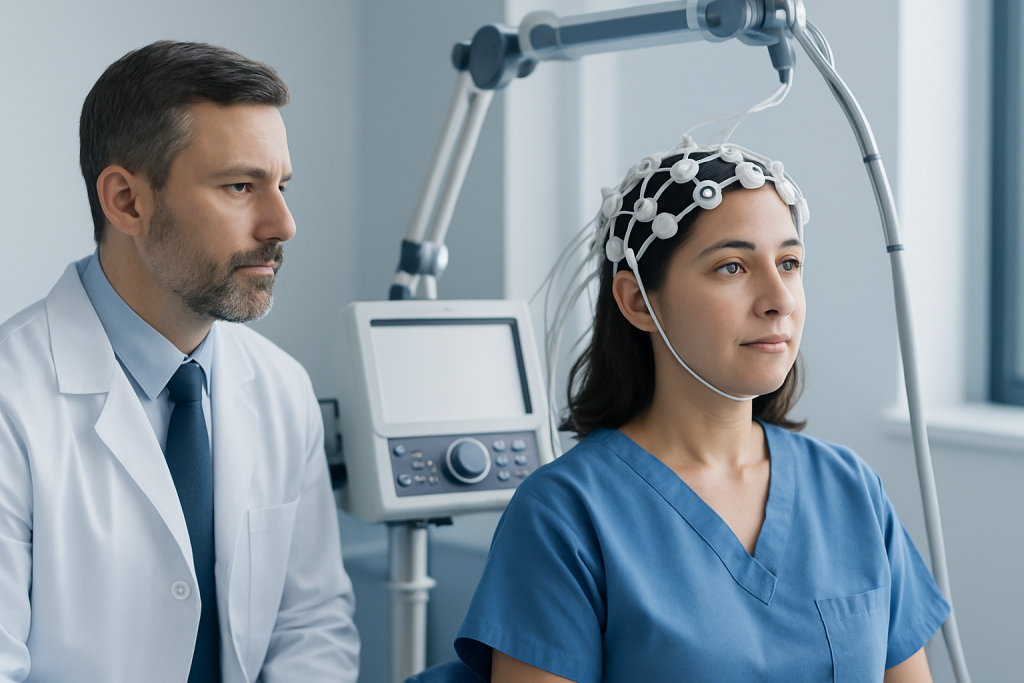
Diagnosis usually starts with a detailed conversation and neurological examination. The doctor observes the movement pattern, gait, speech, eye movements, coordination, muscle tone, reflexes, and balance. Cognitive screening and questions about mood or behavior are also important because Huntington’s disease commonly affects more than motor control.
If Huntington’s disease is suspected, genetic testing is the most specific way to confirm it. Before testing, patients are usually offered genetic counseling to discuss what the result may mean medically, emotionally, and for family members. A positive test in the right clinical setting can confirm the diagnosis, while a negative result may lead doctors to investigate other causes.
Additional tests may be used to support diagnosis or rule out alternatives. These can include blood tests for thyroid disease, metabolic problems, autoimmune causes, or Wilson disease. Brain MRI or CT scans may help exclude stroke, structural abnormalities, or other neurological conditions. In some cases, neurological rehabilitation assessment helps document functional difficulties and plan supportive care.
The diagnostic process may involve several specialists, including a neurologist, psychiatrist, genetic counselor, neuroradiologist, and rehabilitation team. When symptoms are complex or overlap with other disorders, multidisciplinary evaluation can be especially helpful.
Treatment Options After the Diagnosis Is Clear
There is no cure that stops or reverses Huntington’s disease, but treatment can help manage symptoms and support quality of life. Once doctors are confident about the diagnosis, care is tailored to the person’s movement symptoms, mood, thinking, nutrition, speech, and safety needs. This is one reason an accurate diagnosis matters so much.
Chorea may be treated with medications when movements interfere with walking, eating, sleep, or daily activities. Mood symptoms such as depression, anxiety, irritability, or obsessive behaviors may also respond to medication and psychological support. Speech and swallowing assessments can identify strategies to reduce aspiration risk and improve communication.
Supportive therapies are often central to care. Physical therapy may help mobility and balance, occupational therapy can assist with daily tasks and home safety, and speech therapy may address communication and swallowing issues. In selected situations, doctors may recommend physical therapy and rehabilitation as part of an ongoing plan.
When the diagnosis turns out to be a different movement disorder, treatment changes accordingly. For instance, medication adjustment may help drug-induced chorea, while other conditions may require metabolic treatment, stroke care, or disease-specific neurological management. In experienced centers, including Acibadem International, multidisciplinary specialists in JCI-accredited hospitals diagnose and treat Huntington’s disease and related movement disorders for international patients.
Prevention, Self-care, and Family Considerations
Huntington’s disease itself cannot currently be prevented if a person has inherited the gene change. However, early recognition can help people access symptom management, rehabilitation, emotional support, and planning for the future. Good nutrition, regular activity within a person’s ability, sleep support, and fall prevention can all play a useful role in everyday care.
Families often need support as well. Because Huntington’s disease is inherited, diagnosis may raise questions for children, siblings, and other relatives. Genetic counseling can help families understand inheritance patterns, the role of predictive testing for adults at risk, and the emotional implications of testing. Decisions about testing are personal and should be made with qualified guidance.
Self-care strategies may include keeping regular medical follow-up, reviewing medications carefully, addressing depression or anxiety early, and making the home safer if balance becomes a problem. Caregivers may also benefit from education about communication changes, swallowing safety, and behavior symptoms.
For people whose diagnosis is uncertain or evolving, follow-up matters. Some movement disorders become clearer over time, and repeat examinations can help doctors refine the diagnosis and update treatment plans.
When to See a Doctor
A person should seek medical advice if they develop new involuntary movements, unexplained clumsiness, balance problems, changes in speech, or noticeable shifts in mood, behavior, or thinking. These symptoms do not always mean Huntington’s disease, but they deserve professional evaluation, especially if they are gradually worsening.
Prompt assessment is particularly important when symptoms begin suddenly, affect only one side of the body, or are accompanied by weakness, severe confusion, or other acute neurological symptoms. These features may suggest a different urgent condition, such as stroke or medication toxicity, rather than Huntington’s disease.
People with a family history of Huntington’s disease should not assume that any movement symptom is caused by the condition. A neurologist can help distinguish inherited disease from more common and sometimes treatable causes. If needed, the doctor may arrange genetic testing and counseling in an appropriate setting.
Early evaluation can bring clarity, guide treatment, and connect patients and families with practical support. Even when no cure is available, a clear diagnosis often helps people make informed decisions and improve day-to-day care.
Frequently asked questions
What is the difference between Huntington’s chorea and Huntington’s disease?
Huntington’s disease is the overall inherited neurological condition. Huntington’s chorea refers specifically to the involuntary, irregular movements that often occur as part of the disease. A person can have Huntington’s disease with movement, cognitive, and psychiatric symptoms together.
Can someone have chorea without having Huntington’s disease?
Yes. Chorea can happen for many reasons, including medication side effects, autoimmune conditions, thyroid disorders, stroke, Wilson disease, and other neurological illnesses. That is why doctors usually do not diagnose Huntington’s disease based on movements alone.
How do doctors confirm Huntington’s disease?
Doctors confirm suspected Huntington’s disease with genetic testing, usually after a neurological assessment and counseling. The test looks for a specific change in the HTT gene. Other tests may also be used to rule out different causes of abnormal movements.
Is family history always present in Huntington’s disease?
Family history is common, but it is not always clearly known. Some families may have had relatives who were never formally diagnosed, or a person may not know their biological family history. Because of this, doctors still consider Huntington’s disease even when the family background is uncertain.
What doctor should evaluate possible Huntington’s chorea?
A neurologist, especially one with experience in movement disorders, is usually the best starting point. Depending on symptoms, the person may also see a psychiatrist, genetic counselor, speech therapist, or rehabilitation specialist. Multidisciplinary care is often helpful.
Can Huntington’s disease be mistaken for Parkinson’s disease?
Sometimes, especially early on or in less typical cases. Parkinson’s disease more often causes slowness, stiffness, and resting tremor, while Huntington’s disease commonly causes irregular chorea along with changes in thinking or behavior. A specialist exam helps distinguish the two.
References
- National Institute of Neurological Disorders and Stroke
- National Institute on Aging
- NHS
- MedlinePlus
- GeneReviews
This article is for general information only and is not a substitute for professional medical advice. Please consult a qualified doctor about your individual situation.
Movement Disorders in Turkey — costs, top hospitals & a free quote
JCI-accredited · board-certified surgeons · reply within 24h
Add us as a Preferred Source to see more of our trusted health content across Google Search, AI Overviews and Discover.