Iliac Crest: What Patients Need to Know

The iliac crest is the top rim of the pelvic bone and serves as an important attachment point for muscles and ligaments. Pain around the iliac crest may be caused by muscle strain, overuse, trauma, inflammation, or problems in the lower back or sacroiliac joint.
Key Takeaways
- The iliac crest is the top rim of the pelvic bone and serves as an important attachment point for muscles and ligaments.
- Pain around the iliac crest may be caused by muscle strain, overuse, trauma, inflammation, or problems in the lower back or sacroiliac joint.
- Diagnosis often depends on a physical exam and, when needed, imaging such as X-rays or MRI.
- Most cases improve with rest, activity changes, physical therapy, and treatment of the underlying cause.
- Medical care is important if pain is severe, persistent, follows an injury, or occurs with numbness, weakness, fever, or trouble walking.
The iliac crest is the curved upper edge of the pelvis, commonly felt as the top of the hip bone. It plays an important role in movement, posture, and muscle attachment, and discomfort in this area can come from the bone itself or from nearby muscles, joints, nerves, or the lower back.
Overview: what the iliac crest is and why it matters
The iliac crest is the curved, upper border of the ilium, which is the largest part of the pelvic bone. Many people know it simply as the top of the hip bone that can often be felt through the skin on either side of the body. Although it is a small anatomical term, it refers to an area that plays a major role in supporting posture, helping movement, and anchoring several important muscles.
The iliac crest helps connect the trunk to the lower body. Muscles of the abdomen, back, and hips attach in this region, which is why discomfort here may be felt during walking, bending, twisting, exercise, or even prolonged sitting. The area also lies close to the lower spine and sacroiliac joints, so pain that seems to come from the iliac crest may sometimes actually begin in nearby structures.
For patients, understanding the iliac crest is useful because pain in this area is common and has many possible explanations. Some causes are simple, such as muscle strain after activity. Others may need medical assessment, especially if symptoms are persistent, severe, or associated with weakness, numbness, fever, or trauma.
Anatomy and function of the iliac crest
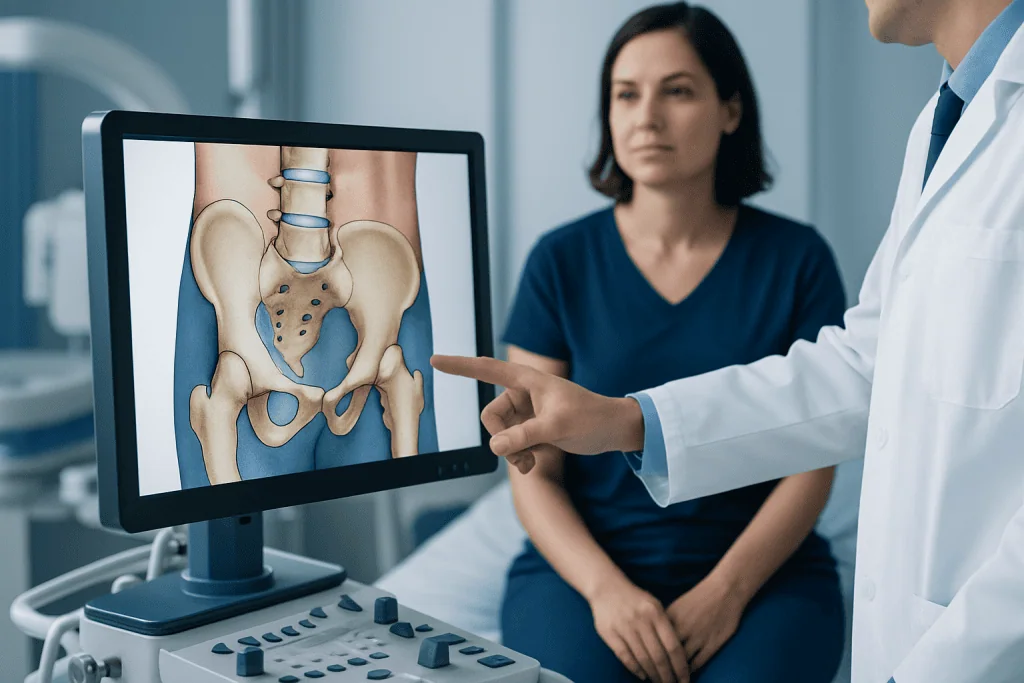
The pelvis is a ring-shaped structure made of several bones that support the spine and transfer body weight to the legs. The iliac crest forms the prominent upper rim of the pelvis. It runs from the front of the hip toward the back and can usually be felt on both sides.
This bony ridge serves as an attachment site for several muscles and connective tissues. These include parts of the abdominal wall, the back muscles, and hip-related muscles that help stabilize the trunk and pelvis. Because so many structures connect here, the iliac crest is involved in actions such as standing upright, rotating the trunk, lifting the leg, and maintaining balance during movement.
The area is also clinically important because doctors use it as a physical landmark during examination and some medical procedures. In certain situations, bone from the iliac crest may be used for grafting, since it provides accessible, healthy bone tissue. Even without surgery, however, the iliac crest is best understood as a key meeting point between the spine, pelvis, and hip muscles.
Symptoms linked to the iliac crest area

Symptoms can vary depending on the underlying cause. Some people notice a localized ache or tenderness directly over the top of the hip bone. Others feel a sharper pain during exercise, twisting, coughing, or standing from a seated position. The discomfort may affect one side or both sides.
Pain around the iliac crest sometimes spreads to nearby areas. It may radiate into the lower back, buttock, groin, or outer thigh. In some cases, the problem is not the bone itself but nearby muscles, tendons, or joints. This can make the symptoms feel broader than one small point.
Common symptoms include:
- Tenderness when pressing on the top of the hip
- Pain during walking, running, climbing stairs, or bending
- Stiffness in the hip, pelvis, or lower back
- Muscle tightness or spasms
- Swelling or bruising after an injury
- Numbness, tingling, or weakness if nearby nerves are affected
When symptoms are ongoing, a broader musculoskeletal evaluation may be needed because pain in this area can overlap with conditions affecting the lower back, sacroiliac joint, or hip.
Common causes and risk factors
One of the most common causes of iliac crest pain is muscle strain or overuse. Sudden increases in physical activity, sports that involve twisting, repetitive bending, or poor lifting technique can all irritate the muscles and tendons attached to the pelvic rim. Runners, dancers, and people who perform repeated trunk movements may be more likely to develop this type of pain.
Direct trauma is another possible cause. A fall, collision, or blow to the side of the body can bruise the iliac crest or, less commonly, lead to a fracture. In adolescents and young athletes, forceful muscle contraction may occasionally pull on a growth plate or tendon attachment, causing a traction injury. Adults may also develop inflammation around the area after repeated physical stress.
Sometimes the pain comes from nearby structures rather than the iliac crest itself. Lower back disorders, sacroiliac joint dysfunction, and some hip problems can cause referred pain along the pelvic rim. A doctor may also consider scoliosis or spinal irritation if there is an altered posture pattern, as well as lumbar disc problems when pain travels with numbness or tingling.
Risk factors include poor core strength, muscle imbalance, prolonged sitting, previous injury, high-impact sports, osteoporosis, and inflammatory conditions. In older adults, bone weakness may increase the chance of fracture after a fall. Less common causes include infection, bone lesions, or systemic inflammatory disease, which is why persistent or unexplained pain deserves medical attention.
How doctors diagnose iliac crest pain
Diagnosis starts with a careful medical history. A doctor will usually ask when the pain began, whether there was a specific injury, what movements make it worse, and whether symptoms spread to the back, groin, or leg. Questions about sports, work activities, recent falls, and general health can provide important clues.
A physical examination often focuses on tenderness over the iliac crest, range of motion of the hip and lower back, muscle strength, gait, and any signs of nerve irritation. Because pain in this region can be referred from nearby structures, the exam may include the sacroiliac joints, lumbar spine, and abdominal wall as well.
Imaging is not always needed for mild, short-lived symptoms, but it may be recommended if pain is severe, follows trauma, lasts beyond a reasonable recovery period, or is associated with red-flag symptoms. Depending on the situation, doctors may use X-ray imaging to check for fracture or bone changes, or MRI to look at soft tissues, bone marrow, nerves, and nearby joints.
In selected cases, blood tests or other evaluations may be used if infection, inflammatory disease, or another systemic condition is suspected. The goal is not only to identify the painful structure but also to understand why it has become irritated.
Treatment options and recovery
Treatment depends on the cause. For many patients, iliac crest pain improves with conservative care. This often includes short-term rest from aggravating activity, ice or heat as advised by a clinician, and gradual return to movement. Doctors may suggest pain-relieving medicines or anti-inflammatory treatment when appropriate, based on the patient’s medical history.
Physical therapy is often one of the most helpful approaches, especially when pain is related to muscle strain, posture, overuse, or mechanical imbalance. Therapy may focus on stretching tight muscles, strengthening the core and hip stabilizers, and improving movement patterns. For pain linked to the lower back or nerve irritation, a broader physical therapy and rehabilitation plan may help restore function safely.
If imaging shows a fracture, treatment depends on its type and severity. Some injuries heal with protection, rest, and monitored rehabilitation, while more complex trauma may need orthopedic care. If the source of pain is in the spine, sacroiliac joint, or hip, treatment is aimed at that underlying issue rather than the iliac crest alone. In certain cases, doctors may recommend specialist evaluation by orthopedics and traumatology teams.
Recovery time varies widely. A mild overuse strain may improve over days to weeks, while injuries involving bone, nerves, or long-standing biomechanical problems can take longer. Ongoing symptoms should not be ignored, especially if they interfere with sleep, walking, exercise, or daily activities.
Prevention and self-care
Prevention usually centers on reducing strain across the pelvis, hips, and lower back. Warm-up before exercise, gradual training progression, and attention to technique can lower the risk of overuse injuries. Core strength and hip stability are particularly important because they help control pelvic movement and reduce excess stress on the iliac crest region.
People who sit for long periods may benefit from regular movement breaks, posture changes, and ergonomic support. Athletes and active adults should avoid sudden increases in training volume or intensity. Wearing appropriate footwear and training on suitable surfaces may also help reduce repetitive impact through the pelvis and spine.
At home, self-care for mild symptoms may include temporary activity modification, gentle stretching, and avoiding movements that sharply worsen pain. However, self-treatment should not replace medical advice if symptoms persist, become more frequent, or are accompanied by swelling, fever, weakness, or neurological symptoms.
Near the end of care planning, some patients choose evaluation at specialist centers. Acibadem International’s multidisciplinary teams in JCI-accredited hospitals diagnose and treat musculoskeletal, spine, and hip-related causes of iliac crest pain for international patients.
When to seek medical care
Medical assessment is important when iliac crest pain is severe, follows a fall or direct injury, or does not improve with rest and simple self-care. A doctor should also evaluate pain that keeps returning or limits walking, standing, exercise, work, or sleep.
Prompt care is especially important if pain occurs with any warning signs. These may suggest a fracture, nerve involvement, infection, or another condition that needs timely treatment.
- Sudden severe pain after trauma
- Visible swelling, bruising, or deformity
- Fever or unexplained illness
- Numbness, tingling, or leg weakness
- Difficulty walking or bearing weight
- Pain that spreads down the leg or is linked to back pain
- Persistent pain without a clear cause
Early evaluation can help clarify whether the source is a simple soft-tissue injury or a more complex problem involving the spine, hip, or pelvis. When in doubt, consulting a qualified doctor is the safest next step.
Frequently asked questions
What is the iliac crest?
The iliac crest is the curved top border of the pelvic bone, often felt as the upper edge of the hip. It helps support the body and serves as an attachment point for muscles of the abdomen, back, and hips.
Why does the iliac crest hurt?
Pain in the iliac crest area may come from muscle strain, overuse, bruising, inflammation, or injury to nearby joints and nerves. Sometimes the pain is referred from the lower back, sacroiliac joint, or hip rather than from the bone itself.
Can iliac crest pain be related to the lower back?
Yes. The iliac crest sits close to the lower spine and sacroiliac joints, so back-related problems can sometimes be felt in this area. If pain radiates, causes numbness, or comes with weakness, a doctor may look for spinal or nerve-related causes.
How is iliac crest pain diagnosed?
Doctors usually begin with a medical history and physical examination to identify tenderness, movement limits, and possible referred pain. If needed, imaging such as X-rays or MRI may be used to check for fractures, soft-tissue injuries, or nearby spine and joint problems.
What helps iliac crest pain go away?
Many cases improve with rest, activity modification, and treatment directed at the underlying cause. Physical therapy is often helpful, especially when posture, muscle imbalance, or overuse is contributing to symptoms.
When should someone worry about iliac crest pain?
Pain should be assessed promptly if it is severe, follows trauma, or comes with fever, swelling, numbness, weakness, or difficulty walking. Persistent or unexplained pain also deserves medical evaluation, even if it seems mild at first.
This article is for general information only and is not a substitute for professional medical advice. Please consult a qualified doctor about your individual situation.
Joint and spine care in Turkey — expert assessment & treatment
JCI-accredited · board-certified surgeons · reply within 24h
Add us as a Preferred Source to see more of our trusted health content across Google Search, AI Overviews and Discover.

More from the Health Library

Blue hands: A Complete Medical Guide for Patients

Cortisone Flare: What Patients Need to Know

Baby Walker: What Patients Need to Know

What’s a Cysts: An Evidence-Based Guide for Patients

Overflow Incontinence: An Evidence-Based Guide for Patients