

Interventional Neuroradiologist vs Neurosurgeon: Who Treats Brain Blood Vessel Disorders?

Interventional neuroradiologists treat many brain and spinal blood vessel disorders from inside the blood vessels using catheters and imaging guidance. Neurosurgeons treat conditions with open or minimally invasive brain and spine surgery, especially when direct access to the problem is needed.
Key Takeaways
- Interventional neuroradiologists treat many brain and spinal blood vessel disorders from inside the blood vessels using catheters and imaging guidance.
- Neurosurgeons treat conditions with open or minimally invasive brain and spine surgery, especially when direct access to the problem is needed.
- Many neurovascular conditions, including aneurysms and arteriovenous malformations, are best managed by a multidisciplinary team.
- The right specialist depends on the exact disorder, its location, the urgency, and the patient’s overall health.
- Early evaluation at a center with both endovascular and surgical expertise can widen treatment options.
An interventional neuroradiologist and a neurosurgeon may both treat brain blood vessel disorders, but they use different techniques and often work as a team. Understanding each specialist’s role can help patients and families feel more confident when discussing diagnosis and treatment options.
Overview: How These Specialists Differ
When comparing an interventional neuroradiologist vs neurosurgeon, it helps to know that both are doctors who care for disorders of the brain, spine, and nervous system, but they are trained to treat them in different ways. An interventional neuroradiologist is a physician who uses advanced imaging and tiny catheters placed through blood vessels to diagnose and treat neurovascular conditions from inside the body, usually through a small puncture in the wrist or groin.
A neurosurgeon is a surgeon trained to operate on the brain, spine, and nervous system. Neurosurgeons can perform open surgery, microsurgery, and some minimally invasive procedures. In brain blood vessel disorders, they may clip an aneurysm, remove an arteriovenous malformation, relieve pressure from bleeding, or carry out related operations when direct surgical treatment is the safest or most effective option.
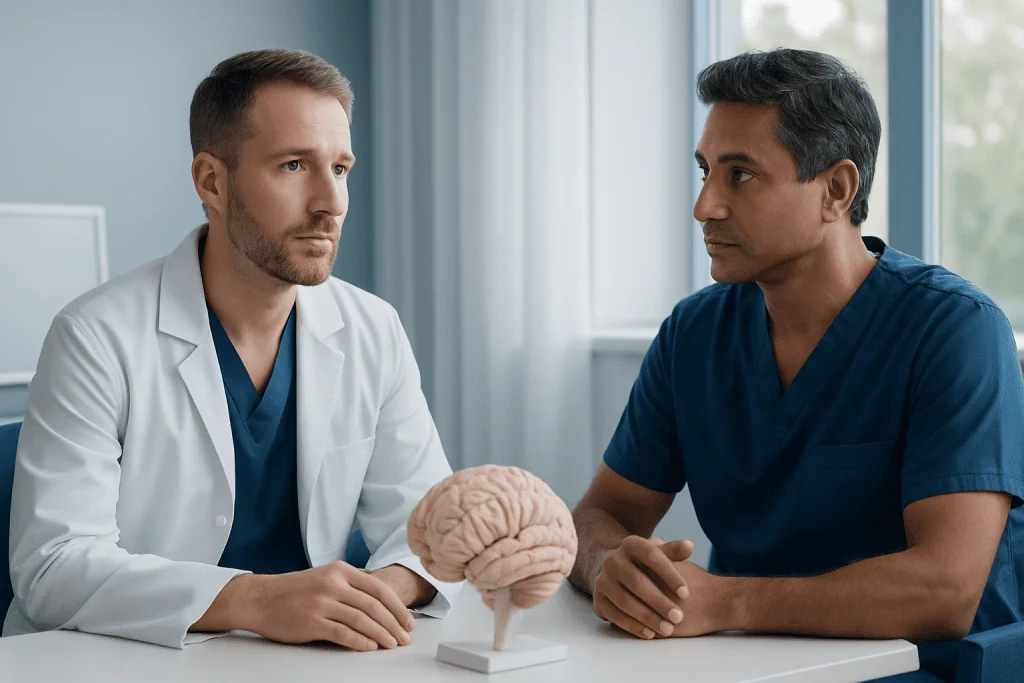
These two specialists are not competitors. In many cases, they work closely together to plan the best treatment. One patient may be treated entirely by an interventional neuroradiologist, another may need a neurosurgeon, and a third may benefit from both specialists at different stages of care.
Which Brain Blood Vessel Disorders Do They Treat?
Brain blood vessel disorders are often called neurovascular conditions. They include bulging, narrowed, blocked, tangled, or leaking blood vessels in the brain or spinal cord. Some are found after symptoms such as sudden headache, weakness, vision changes, or stroke. Others are discovered incidentally during imaging done for another reason.
Common conditions treated by one or both specialists include brain aneurysms, arteriovenous malformations, dural arteriovenous fistulas, carotid or intracranial artery narrowing, acute ischemic stroke caused by a clot, and bleeding in or around the brain. In selected cases, they may also treat vascular tumors or abnormalities affecting the head, neck, or spine.
The choice of specialist depends on the disorder itself. For example, some aneurysms are well suited to endovascular treatment from inside the artery, while others may be better treated with surgery. Some vascular malformations require embolization first and surgery later. This is why treatment planning often involves discussion between interventional neuroradiology, neurosurgery, neurology, and stroke specialists.
- Brain aneurysm
- Arteriovenous malformation (AVM)
- Dural arteriovenous fistula (dAVF)
- Carotid or intracranial artery stenosis
- Acute ischemic stroke due to large vessel blockage
- Brain hemorrhage related to vascular disease
What an Interventional Neuroradiologist Does
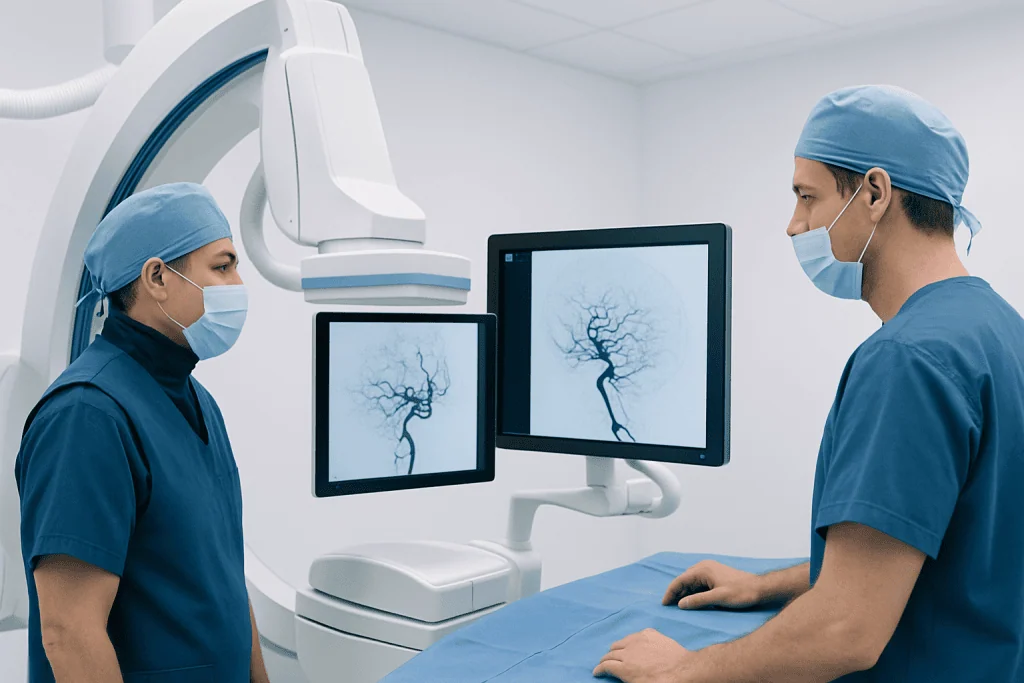
An interventional neuroradiologist specializes in image-guided procedures performed through blood vessels. Using real-time X-ray imaging and contrast dye, the doctor guides very thin tubes called catheters to the abnormal vessel. This allows treatment without opening the skull in many cases.
Procedures may include coiling or flow diversion for aneurysms, embolization of AVMs or fistulas, and clot removal in acute stroke. The goal is to repair, block, reopen, or stabilize blood vessels while minimizing injury to surrounding brain tissue. Many patients appreciate that these techniques often involve smaller incisions, shorter hospital stays, and faster recovery than open surgery, although this depends on the condition and the procedure performed.
Interventional neuroradiologists also play a major role in diagnosis. Angiography can map blood vessels in great detail and may be the best test for treatment planning. In urgent situations such as stroke, they may perform mechanical thrombectomy to remove a clot and restore blood flow. For aneurysms or malformations, they may offer endovascular embolization as a main treatment or as part of a combined care plan.
What a Neurosurgeon Does
A neurosurgeon treats disorders of the nervous system using surgical techniques. For brain blood vessel problems, this can include opening the skull to directly reach the abnormal vessel, remove a malformation, repair bleeding, or reduce dangerous pressure on the brain. Neurosurgery remains essential in many neurovascular emergencies and complex cases.
For example, a neurosurgeon may place a clip across the neck of an aneurysm, remove an AVM after embolization, or perform surgery after a hemorrhage to evacuate blood or relieve swelling. Surgical treatment can offer durable results, especially when anatomy is not suitable for endovascular therapy or when direct access gives better control of the problem.
Many neurosurgeons also help manage recovery after a bleed or stroke, monitor the brain in intensive care, and guide longer-term decisions. In some centers, vascular neurosurgeons work side by side with interventional neuroradiologists to compare options such as aneurysm treatment by coiling or clipping, depending on what best fits the patient’s anatomy and risks.
How Doctors Decide Who Should Treat the Condition
The best treatment plan depends on more than the diagnosis alone. Doctors look at the size and shape of the blood vessel problem, whether it has bled, where it is located, how urgently it needs treatment, and whether nearby brain tissue is at risk. The patient’s age, overall health, medicines, and personal preferences also matter.
For example, in an acute stroke caused by a large blocked artery, an interventional neuroradiologist may be the key specialist because fast endovascular clot removal can be lifesaving and brain-saving. In contrast, a patient with a large hemorrhage causing severe pressure may need immediate neurosurgical care. In some aneurysms, either endovascular treatment or surgery may be reasonable, and the team will explain the pros and cons of each.
Multidisciplinary review is especially valuable for complex conditions such as arteriovenous malformation (AVM). One person may need staged embolization followed by surgery or radiosurgery, while another may be monitored instead of treated right away. The aim is always to choose the safest strategy with the best chance of protecting brain function.
Diagnosis, Evaluation, and Treatment Planning
Evaluation usually begins with a medical history, neurological examination, and brain imaging. Depending on the situation, tests may include CT, MRI, CT angiography, MR angiography, or catheter angiography. These studies help show whether there is bleeding, a blockage, an aneurysm, or an abnormal connection between vessels.
Catheter angiography is often considered the most detailed way to study blood vessels in the brain and spine. It can reveal anatomy that may not be fully seen on other scans and helps doctors decide whether endovascular therapy, surgery, or another approach is best. The care team also checks blood pressure, heart health, kidney function, and medications such as blood thinners before treatment.
Patients and families should feel comfortable asking who will lead care, what alternatives exist, and whether treatment is urgent or can be planned. In experienced centers, treatment planning is often discussed in a dedicated neurovascular conference. Acibadem International’s multidisciplinary specialists in JCI-accredited hospitals diagnose and treat these conditions for international patients, with coordinated input from neuroradiology, neurosurgery, and neurology teams.
Recovery, Follow-Up, and Self-Care
Recovery depends on the condition and the type of treatment used. After endovascular treatment, patients may recover more quickly, but they still need monitoring for bleeding, vessel spasm, clotting, or recurrence. After neurosurgery, hospital stays may be longer and rehabilitation may be needed, especially if there has been a stroke or hemorrhage.
Follow-up imaging is an important part of care. A treated aneurysm may need later scans to confirm it remains sealed, and an AVM may require repeat imaging to check whether any abnormal vessels remain. The medical team will explain the schedule for clinic visits, medicines, activity limits, and warning signs to watch for.
Self-care focuses on protecting brain and blood vessel health. This includes taking medicines exactly as prescribed, controlling blood pressure, not smoking, managing cholesterol and diabetes, staying physically active when medically cleared, and keeping all follow-up appointments. People who have had stroke symptoms or a brain hemorrhage may also benefit from rehabilitation and emotional support during recovery.
When to Seek Medical Help
Some brain blood vessel disorders are emergencies. Sudden weakness or numbness on one side, trouble speaking, facial drooping, loss of vision, confusion, severe dizziness, or a sudden loss of balance can be signs of stroke and need urgent medical attention. A sudden, extremely severe headache, especially with vomiting, fainting, neck stiffness, or seizure, may suggest bleeding in or around the brain.
Even when symptoms are mild or temporary, prompt evaluation matters. A brief episode of weakness, speech difficulty, or vision loss can be a warning sign of a serious vascular problem. New persistent headaches, pulsating noise in the ear, unexplained neurological symptoms, or an incidentally found aneurysm should also be discussed with a qualified doctor.
Patients do not need to decide on their own whether an interventional neuroradiologist or neurosurgeon is the right first step. The safest approach is to seek care at a hospital with neurovascular expertise, where the appropriate specialist can be involved quickly and treatment options can be reviewed together.
Frequently asked questions
Is an interventional neuroradiologist the same as a neurosurgeon?
No. An interventional neuroradiologist treats many conditions from inside the blood vessels using catheters and imaging, while a neurosurgeon treats disorders with surgical techniques, including open brain surgery when needed. Both may care for the same condition, but they usually do so in different ways.
Who treats a brain aneurysm?
A brain aneurysm may be treated by an interventional neuroradiologist, a neurosurgeon, or both as part of a team. Some aneurysms are best treated with endovascular techniques such as coiling or flow diversion, while others are better managed with surgical clipping. The best option depends on the aneurysm’s size, shape, location, and whether it has ruptured.
Who performs emergency clot removal in stroke?
Emergency clot removal, also called thrombectomy, is commonly performed by an interventional neuroradiologist or another specially trained neurointerventional physician. This procedure is used for selected strokes caused by blockage of a large brain artery. Quick treatment is important because restoring blood flow can help protect brain tissue.
Do patients always need surgery for brain blood vessel disorders?
No. Many conditions can be treated with minimally invasive endovascular procedures, and some may only need monitoring. Others do require surgery, especially when there is bleeding, pressure on the brain, or anatomy that is not suitable for catheter-based treatment. A specialist team can explain whether observation, endovascular care, surgery, or a combination is most appropriate.
What questions should patients ask at the first consultation?
Useful questions include what the diagnosis means, whether the condition is urgent, what treatment choices are available, and what the benefits and risks of each option may be. Patients may also ask who will perform the procedure, how long recovery usually takes, and what follow-up imaging is needed. Bringing a family member or written questions can help.
Can both specialists be involved in the same treatment plan?
Yes. Many complex neurovascular conditions are managed jointly. For example, an interventional neuroradiologist may reduce blood flow to an AVM before a neurosurgeon removes it, or both specialists may review an aneurysm together to decide whether endovascular or surgical treatment is safer.
References
- World Health Organization
- American Stroke Association
- National Institute of Neurological Disorders and Stroke
- Society of NeuroInterventional Surgery
- American Association of Neurological Surgeons
This article is for general information only and is not a substitute for professional medical advice. Please consult a qualified doctor about your individual situation.
Joint and spine care in Turkey — expert assessment & treatment
JCI-accredited · board-certified surgeons · reply within 24h
Add us as a Preferred Source to see more of our trusted health content across Google Search, AI Overviews and Discover.

Neurosurgery
Surgical treatment of the brain, spine and nervous system, including minimally invasive and functional procedures.
72 specialists in this unitMore from the Health Library



Related Specialists

Dr. Suna Ertok
Nuclear Medicine
Assoc. Prof. Dr. Seden Erten Çelik
Cardiology
Prof. Dr. Uğur Özbek
Medical Genetics
Prof. Dr. Bora Peynircioğlu
Interventional Radiology