Iron in Spinach: An Evidence-Based Guide for Patients

Spinach contains non-heme iron, which is less easily absorbed than heme iron from meat, poultry, and fish. Compounds in spinach, including oxalates, can reduce how much of its iron the body absorbs.
Key Takeaways
- Spinach contains non-heme iron, which is less easily absorbed than heme iron from meat, poultry, and fish.
- Compounds in spinach, including oxalates, can reduce how much of its iron the body absorbs.
- Eating spinach with vitamin C-rich foods may improve iron absorption.
- Spinach alone is usually not enough to treat significant iron deficiency or iron deficiency anemia.
- Patients with fatigue, pallor, shortness of breath, or known low iron should seek medical advice for testing and tailored care.
Iron in spinach is real, but the body absorbs it less efficiently than iron from animal foods. For many patients, spinach can be part of a healthy iron-supporting diet, especially when paired with vitamin C-rich foods and an overall balanced eating plan.
Overview: Is Iron in Spinach Helpful?
Iron in spinach can help support daily iron intake, but it is not one of the most efficiently absorbed sources of iron. Spinach contains non-heme iron, the form found in plant foods, and the body generally absorbs this less readily than the heme iron found in meat, poultry, and fish.
This does not mean spinach is unhealthy or unimportant. Spinach is a nutrient-dense vegetable that provides vitamins, minerals, and fiber, and it can play a useful role in an eating pattern designed to support healthy iron levels. However, patients with low iron should know that the amount absorbed from spinach may be limited by naturally occurring compounds in the plant.
For this reason, it is more accurate to think of spinach as one helpful part of a broader iron-conscious diet rather than a stand-alone solution. People who have symptoms of low iron, have been told they are anemic, or belong to a higher-risk group often need a fuller nutrition plan and, in some cases, medical treatment.
How the Body Uses Iron
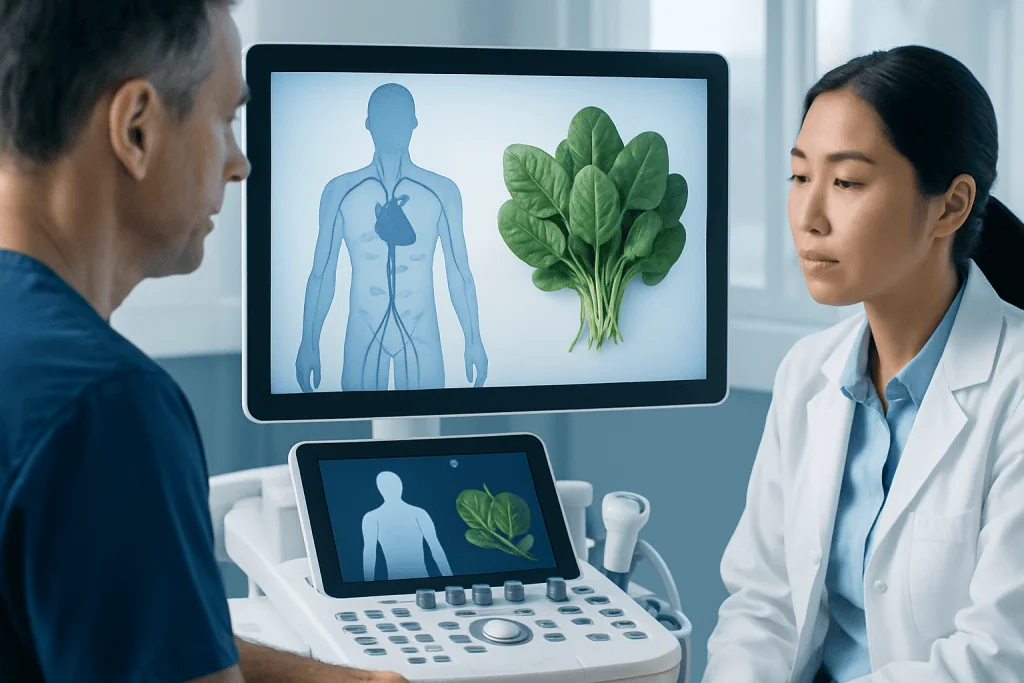
Iron is an essential mineral that helps the body make hemoglobin, the protein in red blood cells that carries oxygen. It also supports energy production, immune function, and normal growth and development. When iron intake or absorption is too low, the body may gradually use up its stored iron and eventually develop iron deficiency.
There are two main dietary forms of iron. Heme iron comes from animal foods and is usually absorbed more efficiently. Non-heme iron comes from plant foods, fortified foods, and some supplements. Spinach belongs to this second group.
Absorption of non-heme iron depends on what else is eaten at the same time. Some foods and nutrients improve absorption, while others reduce it. This is why the overall meal pattern matters as much as the iron content listed for a single food.
- Heme iron: found in red meat, poultry, and fish
- Non-heme iron: found in spinach, beans, lentils, tofu, nuts, seeds, and fortified grains
- Iron stores: the body also keeps reserve iron, mainly as ferritin
Why Spinach Iron Is Harder to Absorb

Spinach is often discussed as an iron-rich vegetable, and it does contain iron. The key issue is bioavailability, which means how much of that iron the body can actually absorb and use. In spinach, iron is present in a plant-based form and is affected by compounds called oxalates, which can bind minerals and reduce absorption.
This means that even though spinach contributes iron on paper, the body may only take in a portion of it. The same person may absorb much more iron from a meal that includes lean meat or seafood than from spinach alone. Other compounds in the diet, such as phytates in some grains and legumes, and polyphenols in tea or coffee, can also reduce non-heme iron absorption.
Cooking spinach can change its volume and texture, making it easier to eat larger amounts, but it does not completely remove the factors that limit iron absorption. Patients do not need to avoid spinach; instead, it helps to understand its strengths and limitations. Spinach remains a nutritious food, just not the most reliable way to correct clinically important iron deficiency by itself.
How to Improve Iron Absorption From Spinach
One of the most practical ways to improve absorption of iron in spinach is to pair it with vitamin C-rich foods. Vitamin C can help convert non-heme iron into a form that is easier for the body to absorb. This is especially useful for people who follow vegetarian or mostly plant-based diets.
Examples of helpful pairings include spinach with citrus fruit, strawberries, kiwi, tomatoes, bell peppers, or broccoli. A spinach salad with lemon juice, or cooked spinach served with tomatoes and peppers, may support better iron uptake than spinach eaten on its own.
It may also help to avoid drinking tea or coffee with iron-focused meals, since these beverages can reduce absorption. Calcium-rich foods and supplements can sometimes interfere as well when taken at the same time. A clinician or dietitian may suggest timing meals and supplements differently if a patient is trying to improve iron status.
- Helpful pairings: spinach with lemon, orange, tomato, bell pepper, or berries
- Less helpful at the same meal: tea, coffee, and sometimes calcium supplements
- Best approach: focus on the whole meal, not spinach alone
Who May Need More Than Dietary Spinach
Some people can maintain healthy iron levels with a balanced diet that includes spinach and other iron-containing foods. Others may need closer attention because their iron needs are higher, their blood loss is greater, or their absorption is reduced. This includes many menstruating women, pregnant people, growing children, adolescents, endurance athletes, frequent blood donors, and people with restrictive diets.
Iron deficiency can also be related to digestive or absorption problems, chronic disease, or blood loss from the gastrointestinal tract. In these situations, simply eating more spinach may not address the underlying cause. Patients with ongoing symptoms or repeatedly low iron test results should be assessed by a qualified doctor.
When iron deficiency progresses, it may lead to iron deficiency anemia. Evaluation often includes a medical history, blood tests such as hemoglobin and ferritin, and a review of diet, menstrual history, medications, and possible digestive symptoms. If there are concerns about malabsorption or bleeding, further investigations may be needed, sometimes including gastroscopy or colonoscopy when clinically appropriate.
Practical Food Choices for Supporting Iron Levels
For patients who want to support healthy iron levels through food, spinach is best used alongside a variety of other iron sources. Plant-based choices include lentils, beans, chickpeas, tofu, pumpkin seeds, quinoa, and iron-fortified cereals. For people who eat animal products, lean red meat, poultry, seafood, and eggs may also contribute useful amounts of iron.
A practical strategy is to build meals around more than one iron-containing ingredient and add a source of vitamin C. For example, a meal could include spinach, lentils, and tomatoes, or fortified cereal with berries. This approach often works better than focusing on a single “superfood.”
If blood tests confirm iron deficiency, doctors may recommend iron supplements in addition to dietary changes. Supplements should be used under medical guidance, as the best formulation, timing, and duration vary from person to person. Some patients also need treatment for the cause of low iron rather than the low iron alone.
In complex cases, especially when nutrition, bleeding, or absorption issues overlap, multidisciplinary evaluation can be helpful. Acibadem International’s specialists in JCI-accredited hospitals diagnose and treat international patients with conditions related to anemia, nutrition, and digestive health, including care pathways connected to hematology services when needed.
When to Seek Medical Care
Patients should seek medical advice if they have symptoms that may suggest low iron or anemia. These can include unusual tiredness, weakness, pale skin, shortness of breath with routine activity, dizziness, headaches, reduced exercise tolerance, or heart palpitations. Symptoms are not specific, so testing is important before assuming spinach or any other food is the answer.
Medical care is also important if there is heavy menstrual bleeding, black or bloody stools, unexplained weight loss, ongoing abdominal pain, difficulty swallowing, or a family history of gastrointestinal disease. In adults, especially older adults and men, unexplained iron deficiency often needs a medical evaluation to look for a cause.
Prompt assessment matters for children, pregnant patients, and anyone with chronic illness. A doctor can decide whether testing, supplementation, dietary counseling, or further investigation is appropriate. Self-treating long-term fatigue with diet alone may delay diagnosis of an underlying problem.
Frequently asked questions
Does spinach have a lot of iron?
Spinach does contain iron, but the body does not absorb it as efficiently as iron from animal foods. It can still contribute to iron intake as part of a balanced diet.
Why is iron in spinach less absorbable?
The iron in spinach is non-heme iron, which is naturally less easily absorbed than heme iron. Spinach also contains oxalates, which can bind to minerals and reduce how much iron the body takes in.
Can spinach cure iron deficiency anemia?
Spinach alone is usually not enough to correct significant iron deficiency anemia. Patients with confirmed anemia often need medical evaluation, and some require iron supplements or treatment of an underlying cause.
What foods help the body absorb iron from spinach?
Vitamin C-rich foods can improve absorption of non-heme iron. Good examples include citrus fruits, tomatoes, bell peppers, strawberries, kiwi, and broccoli.
Should tea or coffee be avoided with spinach meals?
Tea and coffee can reduce absorption of non-heme iron when taken with meals. If someone is trying to improve iron status, it may help to drink them between meals instead.
Who is more likely to have low iron?
People at higher risk include menstruating women, pregnant people, children, teenagers, people with restrictive diets, endurance athletes, and frequent blood donors. People with digestive disorders or internal bleeding may also be at risk.
References
- World Health Organization
- National Institutes of Health Office of Dietary Supplements
- Centers for Disease Control and Prevention
- Academy of Nutrition and Dietetics
- National Heart, Lung, and Blood Institute
This article is for general information only and is not a substitute for professional medical advice. Please consult a qualified doctor about your individual situation.
Explore treatments in Turkey — costs, top hospitals & a free quote
JCI-accredited · board-certified surgeons · reply within 24h
Add us as a Preferred Source to see more of our trusted health content across Google Search, AI Overviews and Discover.

More from the Health Library



Related Specialists

Prof. Dr. Müfit Kalelioğlu
Neurosurgery
Esra Er
Physical Medicine & Rehabilitation
Dr. Abdullah Yener İnce
Orthopedic Surgery & Traumatology
Assoc. Prof. Dr. Ferda Çağavi
Neurosurgery