Keloid Ear: What Patients Need to Know

A keloid ear is a benign scar overgrowth that extends beyond the original wound. Ear piercing is one of the most common triggers, especially on the earlobe and cartilage.
Key Takeaways
- A keloid ear is a benign scar overgrowth that extends beyond the original wound.
- Ear piercing is one of the most common triggers, especially on the earlobe and cartilage.
- Keloids differ from normal scars because they may keep growing and can recur after treatment.
- Treatment may include steroid injections, pressure therapy, freezing, laser treatment, or surgery combined with follow-up care.
- Anyone with a fast-growing, painful, or repeatedly infected ear scar should be assessed by a doctor.
Keloid ear is a raised, firm scar that grows beyond the original skin injury, most often after ear piercing, surgery, acne, burns, or other trauma. While it is not cancerous, it can continue to enlarge, cause discomfort, and return after treatment, so early medical assessment is often helpful.
What is a keloid ear?
A keloid ear is an overgrowth of scar tissue that forms on or around the ear after the skin has been injured. It often appears after ear piercing, but it may also develop after surgery, acne, burns, cuts, or other irritation. Unlike a typical scar, a keloid grows beyond the original wound edges and may continue enlarging over time.
Keloids are benign, which means they are not cancer. Even so, they can be bothersome because they may look noticeable, feel firm or itchy, and sometimes become tender. On the ear, they are especially common on the earlobe, though they can also affect the upper ear cartilage.
Patients often want to know whether a keloid ear will go away on its own. In most cases, it does not shrink completely without treatment. Some remain stable, while others slowly become larger, which is why evaluation by a qualified doctor can help guide the best next steps.
How a keloid ear looks and feels
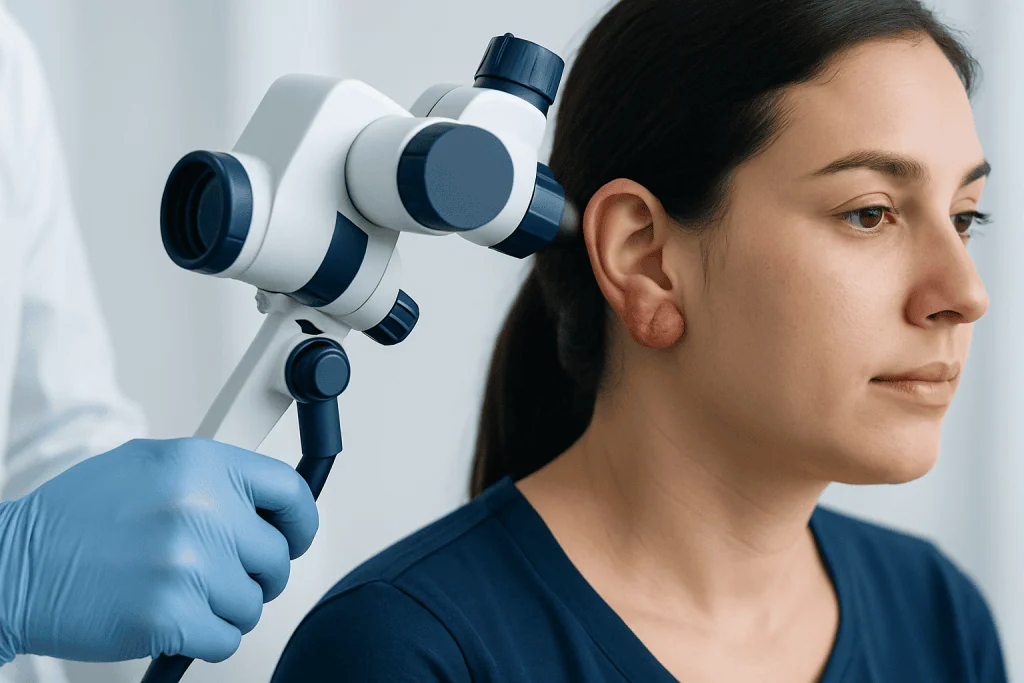
A keloid on the ear usually appears as a smooth, raised bump or nodule. It may be pink, red, brown, or darker than the surrounding skin, depending on skin tone and how long it has been present. Some keloids are small and rounded, while others become larger, irregular, or bulb-like.
The texture is often firm or rubbery. Some people have no symptoms apart from the visible change, but others notice itching, tenderness, pressure, or mild pain, especially when lying on that side or wearing headphones, earrings, or masks with ear loops.
A keloid ear can sometimes be mistaken for other conditions. These include hypertrophic scars, epidermoid cysts, inflamed piercing bumps, and less commonly skin tumors. Distinguishing among these conditions matters because treatment approaches differ, and a doctor may compare the scar pattern, timing, and growth behavior before making a plan.
- Common locations: earlobe, helix, and cartilage near a piercing site
- Common symptoms: visible lump, firmness, itching, sensitivity, cosmetic concern
- Less common issues: recurrent irritation, bleeding after friction, localized infection around jewelry
Why keloid ear develops
Keloids form when the skin’s healing response becomes overactive. After an injury, the body produces collagen to repair tissue. In a keloid, this repair process continues longer than needed, leading to excess scar tissue that extends beyond the original injury site.
Ear piercing is one of the most frequent causes of keloid ear, particularly if there is repeated irritation from jewelry, infection, or trauma during healing. Cartilage piercings may be more problematic than soft earlobe piercings because they heal more slowly and may be more vulnerable to inflammation.
Not everyone who gets a piercing develops a keloid, which suggests an inherited tendency in some people. Risk appears to be higher in those with a personal or family history of keloids and in people who have developed thick scars elsewhere, such as on the chest, shoulders, or jawline. Age may also play a role, as keloids are often seen in younger individuals during the years when piercings are common.
Although keloid ear is a skin condition, it may overlap with broader scar-related concerns discussed in keloid care. Understanding that the issue is a scar overgrowth rather than an infection or cancer can help patients approach treatment more confidently.
How doctors diagnose a keloid ear
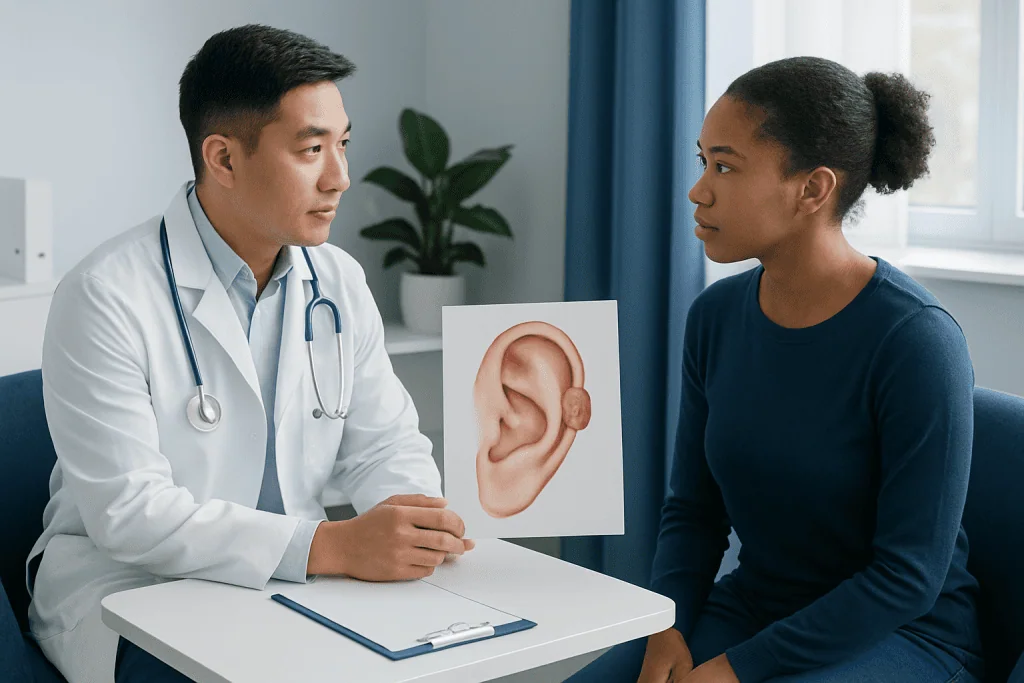
Diagnosis is usually based on a medical history and physical examination. A doctor will ask when the lesion first appeared, whether there was a piercing or injury, how quickly it grew, and whether there are symptoms such as itching, pain, discharge, or repeated inflammation.
During the examination, the clinician looks at the size, shape, color, consistency, and relationship to the original wound. A keloid usually extends beyond the initial injury, while a hypertrophic scar tends to stay within the wound borders. This distinction can influence treatment choices and expectations for recurrence.
Further testing is not always needed. However, if the lesion looks unusual, is rapidly changing, bleeds easily, or does not fit the typical pattern of a scar, a doctor may recommend biopsy or removal for laboratory review. Imaging is rarely required for a straightforward earlobe keloid but may occasionally be considered for complex or recurrent lesions involving deeper tissue.
Treatment options for keloid ear
Treatment depends on the size, location, symptoms, and whether the keloid has been treated before. Many patients do best with combination therapy rather than a single method, because keloids have a known tendency to recur. The goals are to flatten the scar, reduce symptoms, improve appearance, and lower the chance of regrowth.
Common non-surgical options include corticosteroid injections to soften and flatten the scar, silicone or pressure earrings after appropriate evaluation, cryotherapy to freeze scar tissue, and selected laser treatments to improve texture or color. In some cases, doctors may discuss additional therapies such as injections with other medications, depending on the scar pattern and response.
Surgery may be considered when the keloid is large, uncomfortable, or cosmetically distressing. However, surgery alone has a higher recurrence risk, so it is commonly paired with follow-up measures such as steroid injections, pressure therapy, or other scar-control strategies. For selected patients, an individualized procedural plan may include plastic and reconstructive surgery or, when appropriate, dermatology care for combined medical and procedural management.
Because ear scars are visible and recurrence is possible, patients benefit from realistic expectations. Improvement is common, but treatment may require several visits over time. In international care settings, multidisciplinary teams at Acibadem International’s JCI-accredited hospitals evaluate and treat keloid ear for patients who need coordinated specialist care.
Prevention and self-care after piercing or treatment
Prevention begins with awareness of risk. Someone who has had a keloid before, or has a strong family history of keloids, may want to avoid elective ear piercing or discuss the risk with a doctor first. If piercing is chosen, careful aftercare and minimizing trauma are important.
Keeping the area clean, avoiding unnecessary touching, and following the piercer’s and doctor’s aftercare instructions can help reduce irritation during healing. It is also sensible to avoid heavy earrings or jewelry that pulls on a new piercing. Any sign of infection, persistent swelling, or delayed healing should be checked early because ongoing inflammation may worsen scar formation.
After treatment, patients should attend follow-up visits as advised. Doctors may recommend pressure earrings, silicone-based scar care, or repeated injections to lower recurrence risk. Self-treatment, such as cutting, squeezing, or applying harsh products to the lesion, should be avoided because additional injury can make the keloid worse.
- Consider avoiding piercing if there is a past history of keloids
- Choose professional piercing with sterile technique
- Reduce friction and trauma during healing
- Seek prompt care for infection or a fast-growing bump
- Follow long-term scar-prevention instructions after treatment
When to seek medical care
Medical review is appropriate if a bump appears after an ear piercing or injury and continues to enlarge beyond the original wound. Early care can be helpful, especially if the lesion is itchy, painful, repeatedly irritated, or causing concern about appearance. Prompt assessment may also prevent delays if the lesion is not a keloid but another condition.
Urgent evaluation is sensible if there is marked redness, warmth, pus, fever, sudden bleeding, or severe pain, as these features may suggest infection or another problem that needs treatment. A doctor should also assess any lesion that changes quickly, becomes ulcerated, or returns after previous removal.
Patients with recurring or complex cases may benefit from specialists experienced in scar disorders and procedural care. Depending on the scar type and treatment plan, referral may involve ear, nose, and throat care or specialists in skin lesion assessment and treatment when the diagnosis is uncertain.
Frequently asked questions
Is a keloid ear dangerous?
A keloid ear is usually not dangerous and is not a cancer. It is a benign overgrowth of scar tissue, but it can become uncomfortable, noticeable, or difficult to manage if it keeps growing. A doctor can confirm the diagnosis and discuss treatment options.
Can a keloid ear go away without treatment?
In many cases, a keloid ear does not disappear on its own. Some may stay the same size for a long time, while others gradually enlarge. If it is growing or bothersome, medical evaluation is a good idea.
What is the difference between a keloid and a piercing bump?
A piercing bump can be caused by irritation, inflammation, infection, or a hypertrophic scar. A keloid usually grows beyond the borders of the original piercing wound and may continue enlarging over time. Because they can look similar at first, professional assessment is often helpful.
Does removing a keloid ear cure it permanently?
Not always. Keloids can come back after removal, especially if surgery is used alone. This is why doctors often combine procedures with follow-up treatments such as steroid injections, pressure therapy, or other scar-control methods.
Who is more likely to get a keloid ear?
Risk may be higher in people with a personal or family history of keloids and in those who have developed thick scars elsewhere on the body. Ear piercing, especially if healing is complicated by irritation or infection, is a common trigger. A doctor can help assess risk before elective piercing.
Should someone with a past keloid avoid ear piercing?
Many doctors advise caution because a previous keloid suggests a tendency to form more. Avoiding elective piercing may reduce the chance of another keloid. If piercing is still being considered, discussing the risk with a qualified doctor first is sensible.
References
- American Academy of Dermatology
- National Health Service
- MedlinePlus
- Mayo Clinic
- British Association of Dermatologists
This article is for general information only and is not a substitute for professional medical advice. Please consult a qualified doctor about your individual situation.
Explore treatments in Turkey — costs, top hospitals & a free quote
JCI-accredited · board-certified surgeons · reply within 24h
Add us as a Preferred Source to see more of our trusted health content across Google Search, AI Overviews and Discover.