Knee for Knee — Explained by Medical Evidence, Not Myths

Knee for knee is a non-medical phrase, so the meaning depends on the symptoms and context. Common causes of knee problems include overuse, ligament or meniscus injury, arthritis, and alignment issues.
Key Takeaways
- Knee for knee is a non-medical phrase, so the meaning depends on the symptoms and context.
- Common causes of knee problems include overuse, ligament or meniscus injury, arthritis, and alignment issues.
- Diagnosis usually combines a physical examination with imaging such as X-ray or MRI when needed.
- Treatment ranges from rest, exercise, and medication to injections or surgery for more severe damage.
- Persistent swelling, locking, instability, or inability to bear weight should be assessed by a doctor.
“Knee for knee” is not a formal medical diagnosis. People often use it when comparing one knee to the other, describing knee-to-knee contact or alignment, or searching for the reason behind knee pain, swelling, stiffness, or instability.
What “knee for knee” usually means
“Knee for knee” is not a standard medical term, but it is commonly used in everyday language when someone wants to understand a knee problem by comparing one knee with the other. It may also refer to knees touching or changing position because of alignment differences, or to symptoms such as pain, swelling, stiffness, or a feeling that one knee is not working like the other.
From a medical point of view, the important step is not the phrase itself but the exact problem behind it. A painful knee after a twist, a swollen knee after activity, a knee that clicks, or a knee that slowly becomes stiff with age can all have different causes. The knee is a complex joint made up of bone, cartilage, ligaments, tendons, and menisci, so symptoms can come from several structures.
Because the same words can describe many different situations, a careful history and examination are important. Understanding when the symptoms started, whether there was an injury, which movements make things worse, and whether the knee feels unstable helps guide the next steps.
How the knee works and why problems happen
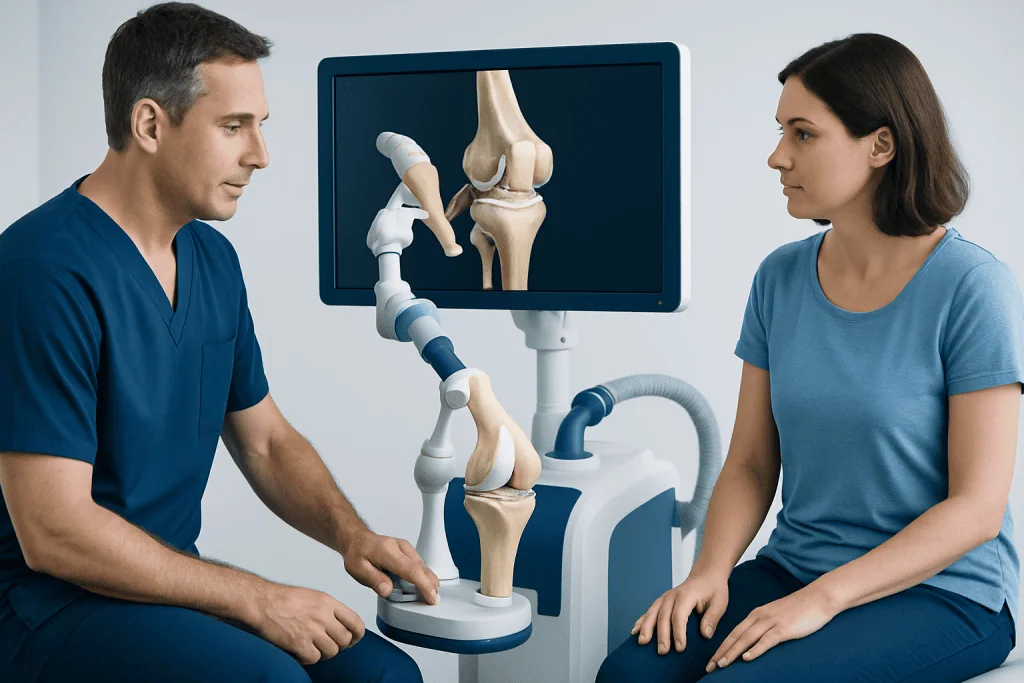
The knee connects the thigh bone, shin bone, and kneecap. It allows bending, straightening, and small rotational movements that are needed for walking, climbing stairs, sitting, and sports. The smooth cartilage lining reduces friction, while the menisci act as shock absorbers. Ligaments help keep the joint stable, and muscles around the thigh and hip help control movement.
Knee symptoms happen when one or more of these parts become irritated, injured, inflamed, or worn down. Sudden twisting can damage a meniscus or ligament. Repeated loading from running, kneeling, jumping, or climbing may irritate tendons or the kneecap joint. Over time, cartilage can thin and lead to knee osteoarthritis, which often causes stiffness and pain during daily activities.
Alignment also matters. If the kneecap does not track smoothly, or if the leg position changes the way body weight passes through the joint, some areas may carry more pressure than others. This can contribute to discomfort, grinding sensations, or gradual wear. In children and adolescents, growth-related conditions or changes in leg alignment may also affect the knee.
Common symptoms linked to knee concerns
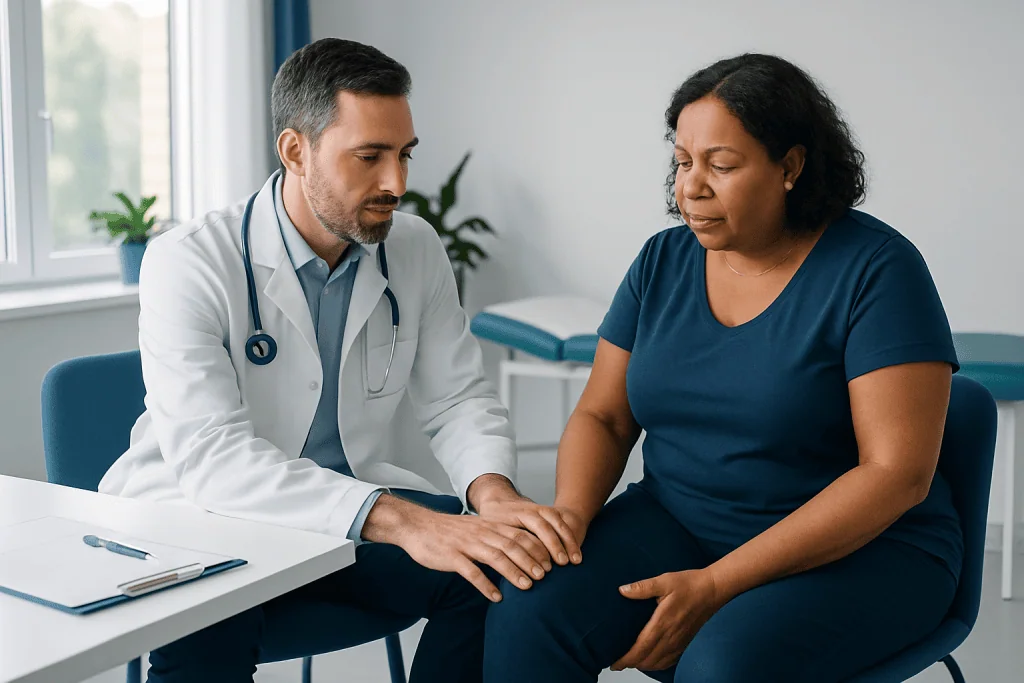
People searching for “knee for knee” are often trying to make sense of symptoms. Pain is the most common complaint, but its pattern matters. Pain in the front of the knee may be linked to the kneecap joint or tendon irritation. Pain on the inner or outer side may suggest a meniscus problem, ligament strain, or wear in a specific part of the joint. Pain at the back of the knee can come from tendons, joint swelling, or a fluid-filled cyst.
Other symptoms can be just as important as pain. Swelling may happen quickly after an injury or build up gradually with inflammation or arthritis. Stiffness is often more noticeable in the morning or after sitting for long periods. Clicking can be harmless, but locking, catching, or a knee that suddenly gives way deserves closer assessment.
Doctors also ask about function. Trouble walking, going up or down stairs, standing from a chair, kneeling, or returning to sport can help identify the source of the problem. Symptoms in both knees may point more toward overuse, arthritis, or alignment issues, while symptoms in one knee after trauma make a structural injury more likely.
- Pain with walking, stairs, or bending
- Swelling or a feeling of tightness
- Stiffness after rest
- Clicking, catching, or locking
- Instability or the knee giving way
- Reduced range of motion
Causes and risk factors supported by medical evidence
Several well-recognized conditions can sit behind the phrase “knee for knee.” Acute injuries include ligament sprains, such as an anterior cruciate ligament injury, meniscus tears, and direct impact injuries. These are more likely after twisting, pivoting, falls, or sports. A person may notice a pop, immediate swelling, or difficulty continuing activity.
Chronic or gradually developing problems are also common. These include kneecap pain, tendon irritation, bursitis, and osteoarthritis. Arthritis is especially likely when pain develops slowly, stiffness increases over time, and the knee feels less flexible or more painful after activity. Excess body weight, previous injuries, muscle weakness, and physically demanding work can all increase stress on the joint.
Age, activity level, body mechanics, and medical history all affect risk. Athletes may be more prone to overuse injuries or ligament damage. Older adults are more likely to develop degenerative changes. People with inflammatory joint disease, prior surgery, or abnormal leg alignment may also have a higher chance of ongoing knee symptoms.
Not all causes are inside the knee itself. Pain can sometimes be referred from the hip or lower back, especially if the examination is otherwise normal. This is one reason a whole-limb assessment is often useful rather than focusing only on one painful spot.
How knee problems are diagnosed
Diagnosis starts with a detailed discussion of symptoms. A doctor will usually ask when the problem began, whether there was an injury, where the pain is located, and what movements make it worse or better. They may also ask about swelling, locking, fever, other joint pain, and previous knee problems. This history often narrows the list of likely causes before any test is done.
The physical examination checks range of motion, swelling, tenderness, alignment, muscle strength, and joint stability. Specific maneuvers can help identify meniscus or ligament injury. Comparing one knee with the other is often part of the examination, which may be one reason people use the phrase “knee for knee” when describing their concern.
Imaging is chosen based on the clinical picture. X-rays are useful for fractures, alignment, and signs of arthritis. MRI can show soft tissues such as ligaments, cartilage, and menisci more clearly. Ultrasound may help with fluid collections or tendon problems. If an infection or inflammatory condition is suspected, blood tests or analysis of joint fluid may also be needed.
When symptoms suggest significant joint damage, an orthopedic specialist may recommend further evaluation for procedures such as knee replacement or robotic knee replacement if arthritis is advanced and non-surgical treatment is no longer enough.
Treatment options: from self-care to surgery
Treatment depends on the diagnosis, symptom severity, age, activity goals, and the effect on daily life. Many knee problems improve with conservative care. This may include short-term activity modification, ice, simple pain relief recommended by a doctor, supportive bracing in selected cases, and physiotherapy to improve strength, flexibility, and joint control. Exercises for the quadriceps, hips, and core are often central because better muscle support can reduce joint stress.
For inflammatory flare-ups or arthritis, weight management, low-impact activity, and supervised rehabilitation can be helpful. Some patients may benefit from injections, depending on the cause of symptoms and clinical judgment. If a torn meniscus, major ligament injury, or loose fragment is causing locking or recurrent instability, minimally invasive evaluation and treatment such as knee arthroscopy may be considered.
Surgery is usually reserved for cases where symptoms are severe, the joint is structurally damaged, or non-surgical treatment has not provided enough relief. In advanced arthritis, surgeons may discuss partial or total joint replacement. The aim is usually to reduce pain, improve function, and support a safer return to everyday activities.
Treatment plans are most effective when they are individualized. Someone with a sports injury needs a different approach from someone with age-related wear or an inflammatory condition. A multidisciplinary evaluation can help balance symptom relief, joint protection, and long-term mobility.
Prevention, daily habits, and self-care
Although not every knee problem can be prevented, many can be reduced by protecting the joint during daily life and exercise. Regular strengthening of the thigh, hip, and core muscles helps support alignment and control. Gradual training progress, proper footwear, and good movement technique can lower stress on the knee during walking, running, or sports.
Weight management can make a meaningful difference because the knee carries body weight with every step. Choosing low-impact activities such as swimming, cycling, or walking on even ground may help people stay active while reducing excessive joint loading. Warming up before exercise and allowing enough recovery after activity are also useful habits.
For mild flare-ups, temporary rest from aggravating movements, ice, and gentle range-of-motion exercises may ease symptoms. However, prolonged complete rest is usually not ideal, because muscles can weaken and stiffness can increase. If symptoms keep returning, a professional assessment can help identify whether technique, footwear, alignment, or an underlying condition is contributing.
Near the end of the care pathway, some people may seek specialist assessment abroad. Acibadem International’s multidisciplinary specialists in JCI-accredited hospitals diagnose and treat knee conditions for international patients, including arthritis and sports-related injuries, when a tailored evaluation is needed.
When to seek medical care
Medical review is important if knee pain is severe, starts after a significant injury, or makes it difficult to bear weight. Prompt assessment is also advisable if the knee locks, repeatedly gives way, becomes noticeably deformed, or swells quickly. These features may suggest a structural injury that needs targeted treatment.
A person should also seek care if the knee is red, very warm, or associated with fever, because infection or inflammatory disease needs urgent evaluation. Ongoing symptoms that last more than a few weeks, interfere with work or sleep, or continue despite rest and basic self-care should not be ignored.
For gradual, persistent stiffness or activity-related pain, early assessment may help slow progression and improve function. This is especially true if there is concern about arthritis, previous injury, or recurring instability. A qualified clinician can confirm whether the issue is likely to improve with rehabilitation or whether imaging and specialist referral are needed.
Frequently asked questions
Is “knee for knee” a medical diagnosis?
No. It is not a formal medical diagnosis or a specific disease name. People usually use the phrase to compare one knee with the other, describe alignment, or ask about symptoms such as pain, swelling, or stiffness.
Can knee pain go away on its own?
Mild knee pain from overuse or a minor strain may improve with rest, ice, and gradual return to activity. However, persistent pain, repeated swelling, or symptoms after a twist or fall should be assessed to rule out cartilage, ligament, or meniscus injury.
What is the most common cause of long-term knee pain?
One of the most common causes is osteoarthritis, especially in older adults or people with previous knee injuries. Other common causes include kneecap pain, tendon irritation, and chronic meniscus problems.
Do all knee problems need an MRI?
No. Many knee conditions can be evaluated with a medical history, physical examination, and sometimes an X-ray. MRI is usually reserved for suspected soft tissue injuries, unclear diagnoses, or cases where surgery is being considered.
When is knee surgery considered?
Surgery is generally considered when there is significant structural damage, ongoing instability, joint locking, or severe arthritis that does not improve with non-surgical care. The exact procedure depends on the underlying problem and the person's daily needs.
How can someone protect their knees during exercise?
Helpful steps include warming up, strengthening the hips and thighs, increasing activity gradually, and using proper technique and supportive footwear. Low-impact exercise can be a good choice when the knee is sensitive or recovering.
References
- American Academy of Orthopaedic Surgeons
- National Institute of Arthritis and Musculoskeletal and Skin Diseases
- National Health Service
- Centers for Disease Control and Prevention
- Arthritis Foundation
This article is for general information only and is not a substitute for professional medical advice. Please consult a qualified doctor about your individual situation.
Joint and spine care in Turkey — expert assessment & treatment
JCI-accredited · board-certified surgeons · reply within 24h
Add us as a Preferred Source to see more of our trusted health content across Google Search, AI Overviews and Discover.