Lab Appointment vs Walk-In Testing: Which Option Is Better for Patients?

Lab appointments usually offer shorter waiting times and a more predictable visit. Walk-in testing can be helpful for simple, urgent, or last-minute lab needs.
Key Takeaways
- Lab appointments usually offer shorter waiting times and a more predictable visit.
- Walk-in testing can be helpful for simple, urgent, or last-minute lab needs.
- Some tests require fasting, special timing, or preparation, making appointments a better choice.
- Patients should check whether a doctor’s order, insurance approval, or identification is needed before visiting the lab.
- The best option depends on the individual’s health needs, schedule, and the type of diagnostic test.
Choosing between a lab appointment and walk-in testing depends on the patient’s needs, the type of test, and how quickly results are needed. In general, appointments offer more predictability, while walk-in testing can be convenient for simple or time-sensitive blood work and routine checks.
Overview: Understanding the Two Options
Patients often have two common ways to complete laboratory testing: booking a scheduled lab appointment or visiting as a walk-in. Both options can be appropriate, and neither is automatically better for every situation. The most suitable choice depends on the test itself, the patient’s symptoms, timing, and personal preferences.
A lab appointment means the patient selects a set date and time in advance. This can make the visit more organized and can reduce uncertainty about how long the process will take. Appointments are especially useful when the test requires preparation, when multiple tests are being done together, or when the laboratory is known to be busy.
Walk-in testing allows patients to arrive without a scheduled slot. This can be convenient when plans change, when a doctor requests same-day blood work, or when the patient prefers flexibility. However, walk-in visits may involve longer waiting times, especially during peak hours.
For many people, the decision comes down to balancing convenience with predictability. Understanding the practical differences can help patients choose the option that fits their medical and daily needs more comfortably.
How Lab Appointments Work
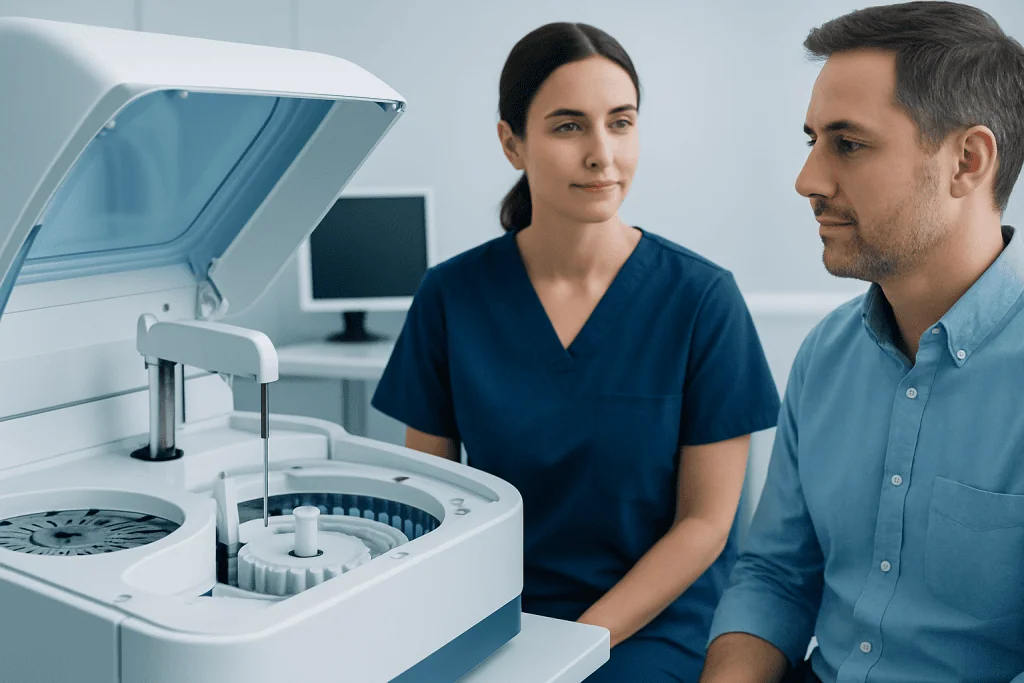
With a lab appointment, the patient usually books online, by phone, or through a hospital or clinic system. The booking process may include choosing the test location, selecting a time, and reviewing instructions such as fasting, medication questions, or bringing a referral. This structure can make the visit feel smoother from the start.
Appointments are often helpful for tests that require careful timing. Examples include blood glucose tests performed after fasting, hormone tests that may be drawn at a certain hour, or collections that require detailed instructions. For patients who are older, have chronic conditions, or feel unwell, reducing waiting time may also make the experience easier physically and emotionally.
Another advantage is planning. Patients can arrange transport, childcare, work leave, or interpreter support in advance. This is particularly useful if the visit is part of a broader medical evaluation that may also involve an MRI scan or a CT scan on the same day.
Still, an appointment does not always guarantee an immediate test. Delays can happen if urgent cases arise, paperwork is incomplete, or preparation instructions were not followed. Even so, scheduled visits usually provide more predictability than a fully unscheduled visit.
How Walk-In Testing Works

Walk-in testing gives patients flexibility. They can visit the laboratory when it suits them, without booking ahead. For straightforward blood tests, urine samples, or follow-up checks, this can be a practical solution, especially if the person has an unpredictable schedule.
This option may be useful after a same-day doctor consultation, when new symptoms need prompt investigation, or when a patient missed a scheduled slot. It can also be convenient for people who live close to a testing center and do not mind waiting if the lab is busy.
However, walk-in testing has some limits. The patient may arrive during a crowded period and wait longer than expected. Some laboratories prioritize booked patients, while others see people in order of arrival or by urgency. Certain tests may not be available to walk-in patients if they require special staff, limited collection hours, or preparation that has not been completed.
Walk-in visits work best when the test is simple, the patient is prepared, and timing is flexible. If the person is unsure whether a test can be done without an appointment, contacting the laboratory first can prevent an unnecessary trip.
When an Appointment May Be the Better Choice
A scheduled lab visit is often the better option when the patient needs a more organized experience. This includes situations where fasting is required, multiple samples are needed, or the doctor has asked for testing at a specific time. In these cases, booking ahead can help avoid delays that might affect the accuracy or usefulness of the test.
Appointments can also be preferable for children, older adults, pregnant patients, and people who become anxious around needles or medical settings. Knowing when the test will happen may reduce stress and support a calmer visit. If a patient has had fainting episodes during blood draws, a quieter planned visit may be especially helpful.
Some diagnostic pathways involve more than one service, such as laboratory work followed by an ultrasound or specialist review. In these cases, appointments can help coordinate the day more efficiently and reduce repeated travel.
Patients may also benefit from appointments if they need administrative support, such as insurance verification, a printed report, or language assistance. Although walk-in access can be convenient, planned scheduling often works better when the visit is medically or logistically more complex.
When Walk-In Testing May Be the Better Choice
Walk-in testing may be the better choice when speed and flexibility matter more than a fixed schedule. For example, a patient who has just seen a doctor and received a request for routine blood work may prefer to complete it right away instead of booking another day. This can be practical for time-sensitive but non-emergency checks.
It can also suit patients with variable work hours, travel demands, or family responsibilities that make scheduled attendance difficult. For someone who cannot confidently predict when they will be free, a walk-in option may increase the likelihood that the test is completed promptly.
In some cases, walk-in access helps support faster clinical decisions. A doctor may want blood counts, inflammation markers, or kidney function assessed before choosing a next step. If symptoms suggest a condition that needs closer evaluation, timely testing can guide whether additional assessment for issues such as anemia or thyroid disease is needed.
Even so, patients should remember that walk-in does not mean every test can be performed immediately. Special collections, imaging-related preparation, and some laboratory procedures still need advance arrangements. Calling ahead remains a sensible step when there is any doubt.
Factors Patients Should Consider Before Choosing
Before deciding between a lab appointment and walk-in testing, patients should think about the test type, preparation needs, and urgency. Some tests require fasting, avoiding certain medicines, collecting a first-morning urine sample, or arriving at a precise time. If any preparation is needed, an appointment may help the process go more smoothly.
Practical considerations matter too. These include distance to the laboratory, parking, mobility, childcare, and time away from work. A patient who values certainty may prefer an appointment, while someone who needs same-day flexibility may favor walk-in testing. Insurance or payment arrangements can also affect the decision, especially if preauthorization or a physician’s order is required.
Patients should also check whether the laboratory offers all needed services on-site. Some centers provide only routine sample collection, while others can coordinate imaging and specialist diagnostics such as PET-CT when part of a broader workup. Knowing this in advance can prevent delays.
A simple checklist can help before the visit:
- Confirm whether a doctor’s order is needed.
- Ask if fasting or timing instructions apply.
- Bring identification, insurance information, and medication lists if relevant.
- Check expected waiting times and opening hours.
- Ask how and when results will be shared.
How to Prepare for Either Type of Visit
Whether attending by appointment or as a walk-in, preparation can make the laboratory visit easier. Patients should read all instructions carefully and ask questions in advance if anything is unclear. Drinking enough water, unless told otherwise, may help with blood draws and urine testing.
It is helpful to bring the test request form, identification, and a list of current medicines and supplements. Some medicines can influence results, but patients should not stop prescribed treatment unless their doctor specifically advises it. If fasting is required, the patient should confirm how many hours this means and whether water is allowed.
Patients who tend to feel dizzy during blood collection can mention this to staff before the sample is taken. Wearing loose sleeves and having a light snack afterward, if fasting is no longer needed, may help them feel better. For parents, preparing children with calm, age-appropriate explanations can also reduce distress.
Near the end of the process, patients should ask when results will be ready and who will explain them. Acibadem International’s multidisciplinary specialists and JCI-accredited hospitals diagnose and manage a wide range of conditions for international patients, and coordinated testing can help support clearer follow-up planning.
When to Seek Medical Advice Promptly
Laboratory testing can support diagnosis, but it is not a substitute for urgent medical care when serious symptoms are present. A patient should seek prompt medical attention rather than waiting for a routine lab visit if there is chest pain, severe shortness of breath, confusion, sudden weakness, heavy bleeding, high fever with worsening illness, or signs of dehydration.
It is also important to contact a doctor if symptoms are getting worse even after testing has been arranged. Delaying assessment may not be safe when pain is severe, a new neurological symptom appears, or infection is suspected. In these situations, the right next step may be urgent evaluation rather than choosing between appointment and walk-in options.
Patients should also ask for medical advice if they are unsure which test has been ordered, how to prepare, or what the results mean. Laboratory reports can be difficult to interpret without clinical context. A qualified healthcare professional can explain whether findings are normal, whether repeat testing is needed, and what follow-up care is appropriate.
In short, both lab appointments and walk-in testing have clear benefits. The best choice is the one that allows the test to be completed correctly, safely, and without unnecessary delay.
Frequently asked questions
Is a lab appointment always faster than walk-in testing?
Not always, but appointments are often more predictable. They usually reduce waiting time, especially in busy laboratories, although delays can still happen if urgent cases or paperwork issues arise.
Which option is better for fasting blood tests?
A lab appointment is often better for fasting tests because timing and preparation matter. Booking ahead can help the patient arrive at the right hour and avoid longer waits after fasting.
Can patients do all lab tests as walk-ins?
No. Some tests need advance scheduling because they require special preparation, limited collection times, or specific staff and equipment. It is sensible to check with the laboratory before arriving.
Are walk-in lab visits suitable for urgent symptoms?
Walk-in testing may help with prompt routine checks, but it is not the right choice for medical emergencies. Severe symptoms such as chest pain, breathing difficulty, sudden weakness, or heavy bleeding need urgent medical assessment.
What should patients bring to a lab visit?
Patients should usually bring identification, a doctor’s order if required, insurance or payment information, and any preparation instructions. A list of current medicines can also be useful if the doctor or lab asks about them.
How can patients decide between booking and walking in?
The decision depends on urgency, test type, preparation needs, and personal schedule. If the test is complex or time-specific, an appointment is usually best; if it is simple and flexibility matters most, walk-in testing may be suitable.
This article is for general information only and is not a substitute for professional medical advice. Please consult a qualified doctor about your individual situation.
Explore treatments in Turkey — costs, top hospitals & a free quote
JCI-accredited · board-certified surgeons · reply within 24h
Add us as a Preferred Source to see more of our trusted health content across Google Search, AI Overviews and Discover.

More from the Health Library

CT Scan: Uses, Radiation Dose, Contrast, and Result Timing

Diagnostic Ultrasound vs CT Scan: Which Test Answers What?

Male Breast Imaging: What to Expect From Mammogram and Ultrasound

How to Prepare for a Diagnostic Test: Fasting, Medications, and Timing

How Long Do Lab and Imaging Results Take to Come Back?