Laser eye surgery Before & After: What Realistic Results Look Like

Laser vision correction reshapes the cornea to improve how light focuses on the retina. Suitability depends on stable prescription, corneal health, eye surface health, age and overall eye examination findings.
Key Takeaways
- Laser vision correction reshapes the cornea to improve how light focuses on the retina.
- Suitability depends on stable prescription, corneal health, eye surface health, age and overall eye examination findings.
- Vision may improve quickly, but dryness, glare and fluctuating clarity can occur during healing.
- Many people reduce their need for glasses or contacts, but some still need them for reading, night driving or certain tasks.
- A detailed preoperative assessment is the best way to understand likely results and individual risks.
Laser eye surgery before and after changes are usually gradual rather than instant: many people see clearly enough for daily activities soon after treatment, while stable vision and comfort may take weeks or months. A realistic outcome is reduced dependence on glasses or contact lenses, not a guarantee of perfect vision in every situation or for life.
Laser Eye Surgery Before and After: What Changes Realistically
When considering laser eye surgery before and after results, the most realistic expectation is usually clearer uncorrected distance vision and less reliance on glasses or contact lenses. Some people notice a marked improvement within a day or two, while others experience temporary blur, dryness or changing vision as the cornea heals. The final result depends on the original prescription, the chosen procedure, the eye’s anatomy and the healing response.
Laser eye surgery is a broad term for procedures that reshape the clear front surface of the eye, called the cornea. This can correct common refractive errors such as short-sightedness (myopia), long-sightedness (hyperopia) and astigmatism. LASIK, PRK and SMILE are examples; they differ in how the surgeon accesses and reshapes the cornea.
“Before” also includes practical changes that are easy to overlook. Contact lens wearers may need to stop using lenses before measurements, because contacts can temporarily alter corneal shape. “After” may include using prescribed drops, avoiding eye rubbing and allowing time before swimming, contact sports or eye makeup. For an overview of procedures and assessment, see laser eye surgery.
How Laser Vision Correction Works
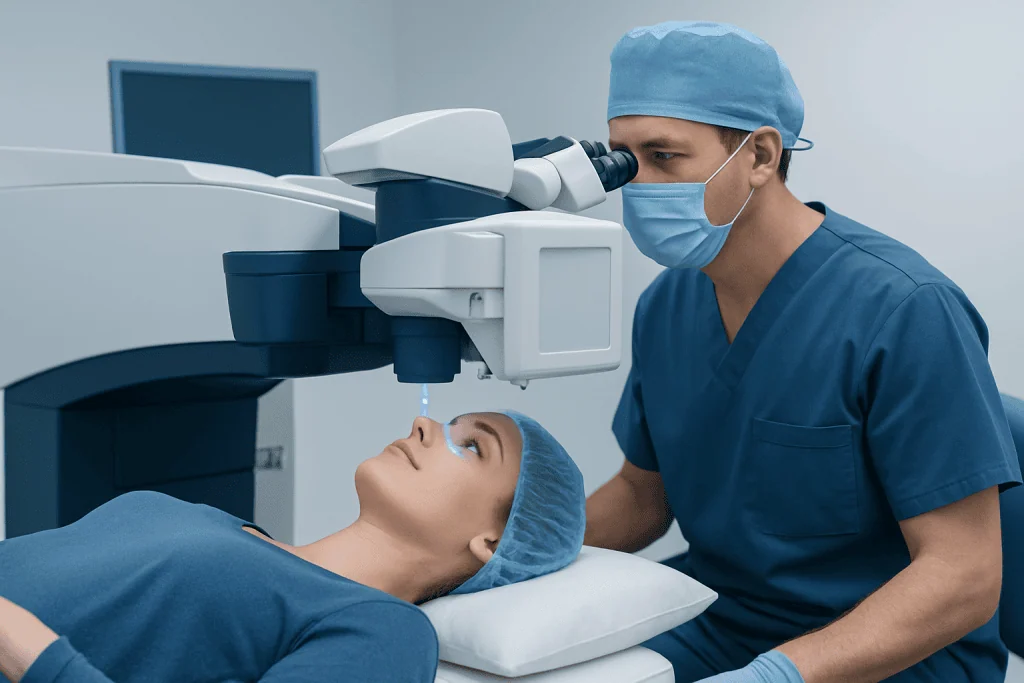
Clear vision depends on light passing through the cornea and lens and focusing precisely on the retina at the back of the eye. In refractive errors, the eye’s focusing system directs light slightly in front of, behind or unevenly across the retina. This creates blur that glasses or contact lenses can correct.
Laser procedures use highly controlled energy to remove microscopic amounts of corneal tissue and adjust its curvature. For example, a flatter central cornea can help correct myopia, while a different reshaping pattern may address hyperopia or astigmatism. The treatment plan is based on detailed measurements of prescription, corneal thickness, curvature and surface shape.
The laser does not treat the retina, optic nerve or age-related changes in the eye’s natural lens. This is why laser correction cannot prevent future presbyopia, cataracts or other eye conditions. It is also important to understand that visual quality includes more than reading an eye chart: night-time halos, contrast sensitivity and dry-eye symptoms may affect how a person experiences the result.
Who May Be a Suitable Candidate
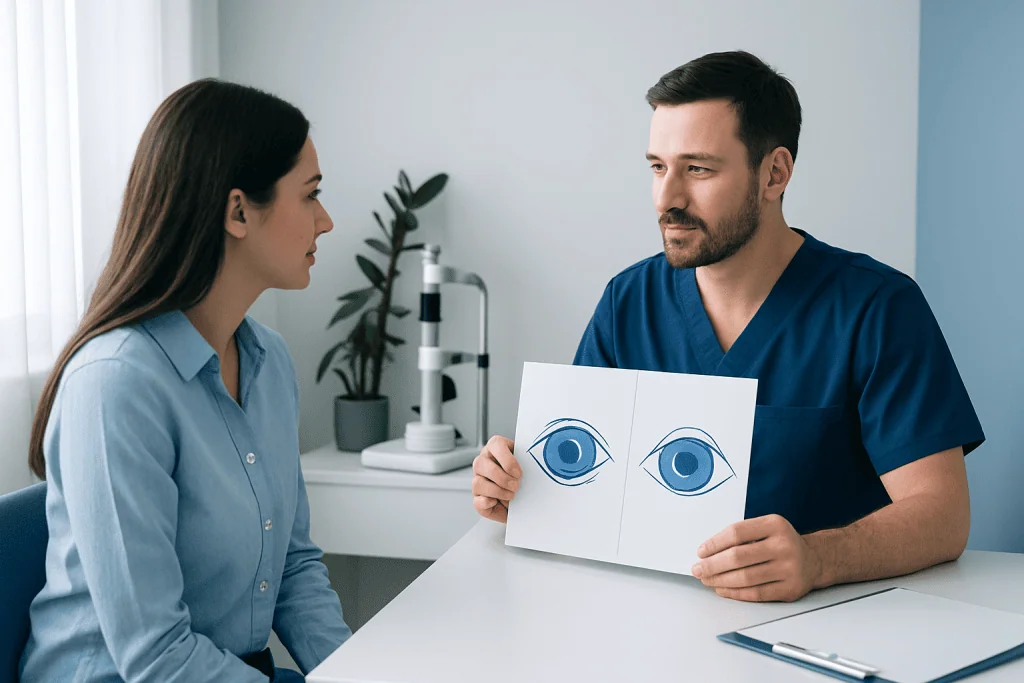
Suitability is determined through a comprehensive eye examination, not by prescription alone. In general, candidates need a stable refractive prescription, healthy corneas and realistic goals. The ophthalmologist will assess the corneal map, thickness, tear film, pupil size, retinal health and general eye health, as well as discuss work, hobbies and visual demands.
Some findings may mean that laser surgery should be postponed, modified or avoided. Examples include an unstable prescription, significant dry eye, active eye inflammation, certain corneal disorders, uncontrolled diabetes, pregnancy or breastfeeding, and some autoimmune conditions. Very thin or irregular corneas may not be appropriate for specific laser procedures.
Age is also relevant. Laser correction can improve distance focus, but it does not stop the normal age-related loss of near focusing ability. Many adults begin to need reading glasses in their 40s, including people who previously had laser surgery. In selected cases, a doctor may discuss monovision, where one eye is targeted more for distance and the other more for near tasks, often after a contact lens trial.
- Stable prescription over time supports more predictable planning.
- Healthy tear production and eyelids support comfort and healing.
- Corneal measurements help determine which procedure, if any, is appropriate.
- Realistic expectations are essential, particularly for night vision and reading needs.
What Happens on the Day of the Procedure
Laser eye surgery is usually performed as an outpatient procedure. Before treatment, the team confirms the planned correction and applies numbing eye drops. Patients remain awake, and a device gently helps keep the eyelids open. They are asked to look at a fixation light while the surgeon and laser tracking system monitor eye position.
In LASIK, a thin corneal flap is created and lifted before laser reshaping; the flap is then repositioned. In PRK, the surface cell layer is removed before reshaping, and a protective contact lens is placed while the surface heals. SMILE uses a laser to create a small lens-shaped piece of tissue within the cornea, which is removed through a small incision. The appropriate option depends on clinical findings and the surgeon’s assessment.
The laser portion itself is brief, although the total time in the treatment room is longer because of preparation and safety checks. Mild pressure, watering eyes, light sensitivity or temporary blurred vision can occur immediately afterward. Patients normally need someone else to take them home and should follow the postoperative instructions closely.
Recovery Timeline: What Before-and-After Photos Cannot Show
Before-and-after images can illustrate reduced dependence on glasses, but they cannot show the day-to-day healing experience. Recovery speed differs by procedure. After LASIK or SMILE, many people have functional vision relatively quickly, though vision may fluctuate during the first days or weeks. PRK generally has a longer early recovery because the corneal surface needs time to regenerate.
During the first days, temporary dryness, scratchiness, tearing, light sensitivity, glare or halos may occur. Prescribed antibiotic and anti-inflammatory drops help protect the eye and support healing, while lubricating drops are commonly used for comfort. The care team will advise when it is safe to resume screen work, driving, exercise, eye makeup and water activities.
Visual clarity often continues to refine over weeks. In some cases, especially with higher prescriptions or dry eye, stabilization takes longer. Follow-up appointments are important because they allow the ophthalmologist to check corneal healing, eye pressure, vision and symptoms. A person should not judge the final outcome from the first day alone.
Recovery also includes protecting the eyes. Patients should avoid rubbing their eyes, follow advice about protective shields while sleeping if recommended, and attend scheduled reviews. Sunglasses can improve comfort outdoors, particularly after surface-based procedures such as PRK.
Benefits, Limits and Possible Risks
The potential benefit of laser eye surgery is freedom from, or reduced reliance on, glasses and contact lenses for many daily activities. This may make sports, travel and routine tasks more convenient. However, the aim is improved functional vision rather than an identical outcome for every person. Some people may still use glasses for detailed work, low-light driving or reading.
Like all procedures, laser vision correction has risks. Temporary dry eye and night-time visual symptoms, such as glare, starbursts or halos, are among the more common concerns during recovery. Less commonly, there may be undercorrection, overcorrection, regression of the prescription, infection, inflammation, corneal healing problems or a need for further treatment. Serious loss of vision is uncommon but should be part of an informed discussion.
A careful preoperative evaluation helps reduce avoidable risk by identifying eyes that may not be suitable. It is important to report previous eye surgery, eye injuries, infections, medications and medical conditions. An ophthalmologist can explain which risks are most relevant to the individual procedure and whether an alternative approach would be safer.
Acibadem International’s multidisciplinary specialists and JCI-accredited hospitals assess and treat refractive eye conditions for international patients, with treatment decisions based on individual eye findings and clinical suitability.
When to Seek Medical Care
Urgent contact with the eye surgeon or an emergency eye service is appropriate after laser surgery if there is severe or increasing pain, a sudden reduction in vision, increasing redness, thick discharge, significant light sensitivity, injury to the eye or a new curtain-like shadow in the field of vision. These symptoms do not always indicate a serious problem, but they need prompt assessment.
Less urgent but important reasons to arrange a review include persistent dryness despite recommended drops, ongoing blurred vision beyond the expected recovery period, troubling glare at night or concerns about returning to work, driving or sport. Patients should not use unprescribed eye drops or rub the eye in response to discomfort.
Anyone considering surgery should seek an assessment from a qualified ophthalmologist rather than relying on another person’s before-and-after story. Two people with similar glasses prescriptions can have different corneal measurements, eye surface health and visual needs, leading to different recommendations and outcomes.
Frequently asked questions
How long does it take to see results after laser eye surgery?
Many people notice improved vision within a day or two after LASIK or SMILE, although vision can fluctuate during early healing. PRK generally has a slower recovery because the corneal surface must heal first. Full visual stabilization may take weeks and sometimes longer, depending on the procedure and the individual eye.
Will laser eye surgery give perfect vision?
Laser eye surgery can substantially reduce dependence on glasses or contact lenses, but perfect vision cannot be guaranteed. Some people still need glasses for reading, night driving or precise visual tasks. The likely outcome should be discussed after detailed eye measurements.
Can laser eye surgery results change over time?
Yes. The cornea usually remains stable after healing, but natural changes in the eye can affect vision later. Presbyopia, which commonly affects near vision with age, and cataracts are examples of changes that laser surgery does not prevent.
Is laser eye surgery painful?
Numbing drops are used during the procedure, so pain during treatment is usually minimal. Some discomfort, watering, light sensitivity or a gritty sensation can occur afterward, particularly with PRK. The eye care team provides specific instructions and medicines to support comfort and healing.
Who should not have laser eye surgery?
People with unstable prescriptions, significant dry eye, certain corneal conditions, active eye disease or some uncontrolled medical conditions may not be suitable. Pregnancy and breastfeeding can also be reasons to delay assessment or treatment. A comprehensive ophthalmic examination is needed to make an individual recommendation.
What are common night-vision changes after laser eye surgery?
During early recovery, some people notice halos, glare, starbursts or reduced comfort in low light. These effects often improve as the cornea heals and the eye surface stabilizes, but they may persist in some people. Preoperative testing and discussion of night-driving needs are important parts of planning.
References
- American Academy of Ophthalmology
- National Eye Institute
- U.S. Food and Drug Administration
- Royal College of Ophthalmologists
This article is for general information only and is not a substitute for professional medical advice. Please consult a qualified doctor about your individual situation.
Eye Surgery in Turkey — costs, top hospitals & a free quote
JCI-accredited · board-certified surgeons · reply within 24h
Add us as a Preferred Source to see more of our trusted health content across Google Search, AI Overviews and Discover.

Ophthalmology
Comprehensive eye care from laser vision correction to retina, cornea and cataract surgery.
75 specialists in this unitMore from the Health Library



Related Specialists

Prof. Dr. Şahin Şenay
Cardiovascular Surgery
Dr. Mehmed Fatih Yumrutaş
Inpatient Clinic Physicians Clinical Service
Dr. Jamila Ebrahimi
Emergency Service
Assoc. Prof. Dr. Mustafa Özbayrak
Radiology