

Lip Flip Before and After: Results and Safety
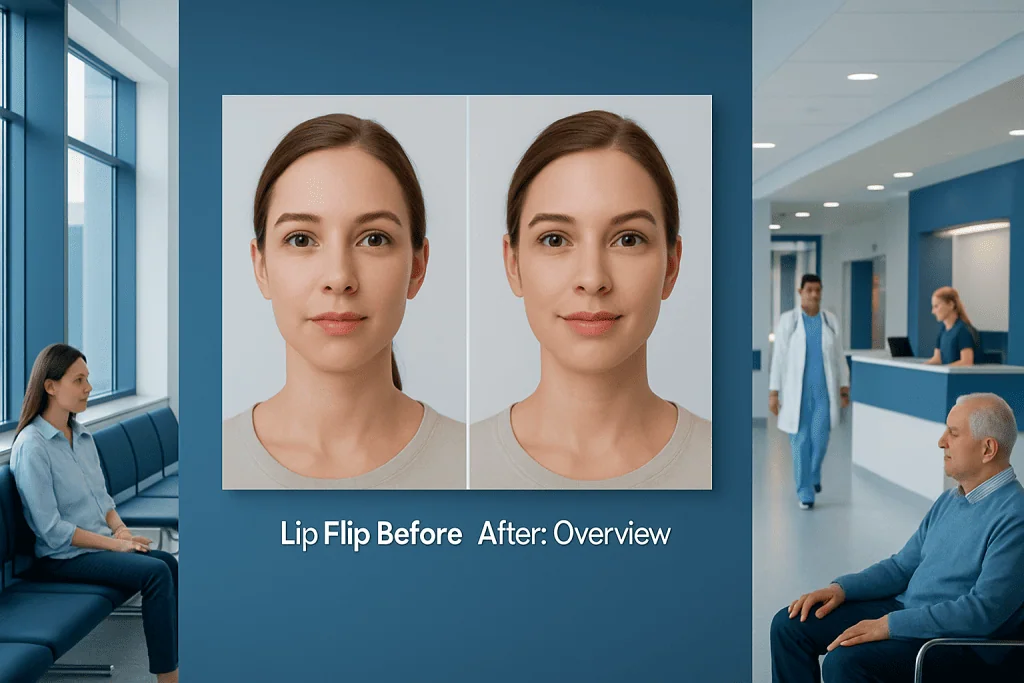
A lip flip changes the position of the upper lip rather than adding volume to it. Results usually begin gradually over several days and are temporary.
Key Takeaways
- A lip flip changes the position of the upper lip rather than adding volume to it.
- Results usually begin gradually over several days and are temporary.
- The outcome is generally subtle and depends on lip shape, muscle activity and injector technique.
- Temporary difficulty with pursing the lips, drinking through a straw or pronunciation can occur.
- A qualified medical professional should assess whether a lip flip or lip filler better matches the person’s goals.
A lip flip is a non-surgical cosmetic procedure that uses carefully placed botulinum toxin injections to relax the upper-lip muscles. Before-and-after changes are usually subtle, making the upper lip appear to roll slightly outward and show more when smiling.
Lip Flip Before and After: Overview
A lip flip is a minimally invasive aesthetic procedure designed to make the upper lip look slightly more visible, particularly during a smile. It uses small injections of botulinum toxin into selected muscles around the upper lip. These injections temporarily reduce the pull of the muscle that draws the lip inward, allowing the upper lip to relax and gently turn outward.
In lip flip before-and-after photographs, the usual change is not a larger lip in the same way that filler can create volume. Instead, the upper lip may look a little taller, more defined or more exposed. The effect is often most noticeable when smiling. Results should look natural when the procedure is appropriately planned and performed by an experienced clinician.
A lip flip may appeal to people whose upper lip seems to disappear when they smile, or to those seeking a subtle change without adding injectable filler. It is not suitable for every concern. A consultation can help clarify whether the expected improvement is realistic and whether another option, such as lip fillers, may be more appropriate.
What Changes to Expect Before and After a Lip Flip
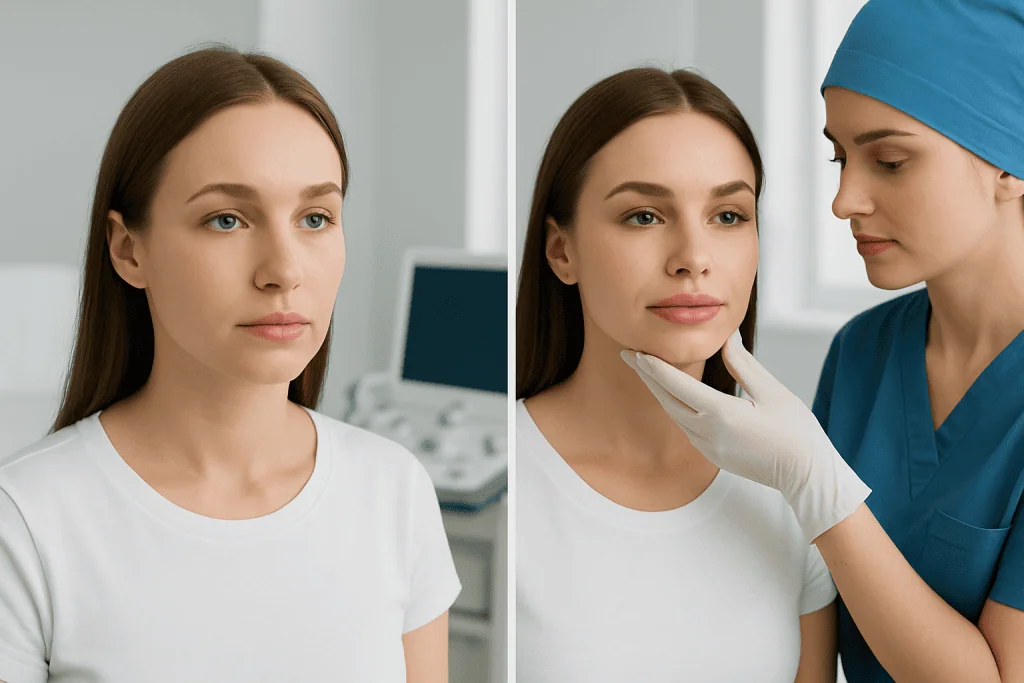
Before treatment, the clinician assesses the lip shape at rest and during facial movement. They may ask about the person’s desired look, prior cosmetic procedures, medical conditions, medicines and history of reactions to injections. Photographs may be taken for clinical documentation and to help compare changes over time.
Immediately after a lip flip, there may be tiny raised areas, redness or mild tenderness at the injection sites. These effects usually settle quickly. The visible aesthetic result does not appear right away because botulinum toxin needs time to affect nerve signals to the targeted muscle.
Many people begin to notice a change within several days, with the effect becoming clearer over approximately one to two weeks. The upper lip may curl outward slightly, revealing more of the lip surface. The result is generally modest; it does not reshape the mouth, correct marked asymmetry or create substantial fullness.
The effect commonly fades over a few months as muscle activity returns. Individual duration varies with metabolism, muscle strength, treatment technique and previous exposure to botulinum toxin. Repeat treatment may be considered only after assessment by the treating clinician.
How a Lip Flip Is Performed

A lip flip is usually carried out in a clinical setting and takes only a short time. After examining the facial anatomy and discussing the treatment plan, the clinician cleans the skin and uses a fine needle to place very small amounts of botulinum toxin in carefully selected points around the upper lip.
The goal is to relax a small portion of the muscle around the mouth without overly weakening normal lip movement. Precision matters because this area is involved in speaking, eating, drinking and facial expression. The number and position of injections vary according to the person’s anatomy and goals.
Most people tolerate the procedure well. They may feel a brief pinching sensation with each injection. Topical numbing cream is not always necessary, but it may be discussed when appropriate. The clinician will provide individualized aftercare instructions and explain what temporary effects to watch for.
Botulinum toxin is also used for other facial aesthetic concerns, including expression lines. However, a lip flip requires a different treatment plan from procedures intended for the forehead or eye area, such as botulinum toxin treatment.
Who May Be a Good Candidate
A suitable candidate is generally an adult in good overall health who understands that a lip flip produces a subtle, temporary effect. People may consider it when the upper lip rolls inward with smiling, when they prefer not to add lip volume, or when they want to explore a conservative aesthetic option.
It may not be the best choice for someone seeking significant lip enlargement, correction of substantial volume loss, pronounced lip asymmetry or a long-lasting result. In these situations, other options may be discussed. The right approach depends on the lip structure, skin quality, dental and facial proportions, and the person’s expectations.
A clinician may advise delaying or avoiding treatment in certain situations, such as pregnancy or breastfeeding, active skin infection near the injection area, known allergy to product ingredients, or specific neuromuscular conditions. People should also tell the clinician about all medicines, supplements and previous aesthetic treatments.
Assessment by an appropriately trained doctor or licensed injector is important. They can explain likely benefits, limitations and alternatives, and they can help ensure that the treatment plan supports balanced facial movement rather than an overtreated appearance.
Risks, Side Effects and Safety Considerations
When performed by a qualified professional, a lip flip is generally a low-risk procedure, but no injection treatment is risk-free. Common short-term effects include mild swelling, redness, tenderness, bruising or a small amount of bleeding at the injection sites. These usually improve without specific treatment.
Because the muscles around the mouth are involved in many everyday actions, some people temporarily notice changes in lip control. They may find it harder to purse the lips, drink through a straw, whistle, pronounce certain sounds, apply lipstick or keep food and liquid in the mouth. These effects are typically temporary but can be bothersome.
Less commonly, the result may look uneven or may not match the person’s expectations. Excessive relaxation of the muscle can make the upper lip feel less responsive. Choosing an experienced clinician, using a conservative approach and discussing goals clearly can help reduce the likelihood of unwanted outcomes.
Anyone who develops concerning symptoms after injections, such as widespread muscle weakness, trouble swallowing, speaking or breathing, should seek urgent medical care. Although these reactions are uncommon with cosmetic use, prompt evaluation is important.
Aftercare and Looking After the Treatment Area
Aftercare instructions differ between clinicians and products, so the treating professional’s guidance should always take priority. In general, people are often advised not to rub, massage or press firmly on the treated area immediately after injections. This helps avoid unnecessary irritation and supports accurate treatment placement.
It may also be sensible to avoid strenuous exercise, excessive heat exposure and alcohol for the period advised by the clinician. If mild swelling or bruising occurs, a cool compress may be used gently. Makeup should only be applied when the injection sites are clean and any immediate bleeding has stopped.
People should allow time for the effect to develop rather than judging the result on the day of treatment. A follow-up review may be offered after the effect has settled. It is helpful to contact the clinic if there is increasing pain, marked swelling, signs of infection or a concern about lip function.
Good general skin care, sun protection and avoiding smoking can support overall lip and skin health, although they do not prolong the muscle-relaxing effect of botulinum toxin. A lip flip does not replace sun protection, hydration, dental care or treatment for underlying skin conditions.
Lip Flip Compared With Lip Filler
A lip flip and lip filler can both change the appearance of the lips, but they work differently. A lip flip relaxes muscle movement to reveal more of the upper lip. Lip filler, usually made with hyaluronic acid, is placed within or around the lips to add or restore volume, improve contour and sometimes address asymmetry.
For a person with a thin upper lip that disappears during smiling but has adequate natural volume at rest, a lip flip may be considered. For someone who wants more fullness, clearer lip borders or a more substantial change, filler may be a better fit. In selected cases, clinicians may discuss combining approaches, but this should be individualized.
Neither procedure should be chosen solely from online before-and-after images. Lighting, facial expression, lip position and image editing can affect how results appear. A face-to-face consultation allows for safer planning based on the person’s own anatomy and goals.
Acibadem International’s multidisciplinary specialists and JCI-accredited hospitals provide assessment and aesthetic treatment options for international patients. A qualified clinician can explain whether a lip flip, filler or another approach is appropriate for the individual.
When to Seek Professional Advice
A consultation is appropriate before any cosmetic injection, especially for people with medical conditions, a history of facial surgery, previous complications from injectables or concerns about abnormal lip movement. It is also important to seek professional advice when expectations involve major changes that a lip flip is unlikely to provide.
After treatment, mild local effects can be expected, but medical review is recommended for worsening redness, warmth, swelling, significant pain, discharge or fever. These symptoms may suggest a complication that needs assessment, even though infection is uncommon with properly performed injections.
Urgent medical attention is needed if a person experiences difficulty breathing, swallowing or speaking, severe allergic symptoms, or weakness beyond the treated area. These symptoms are not typical and should not be managed at home.
Choosing a licensed, experienced practitioner and having treatment in an appropriate clinical environment are practical steps toward safer care. People should feel comfortable asking about the clinician’s qualifications, the product being used, expected outcomes and the plan for follow-up.
Frequently asked questions
How long does a lip flip take to work?
A lip flip usually develops gradually rather than appearing immediately. Some people notice early changes within a few days, while the full effect is often easier to assess after about one to two weeks. Timing can vary between individuals.
How long do lip flip results last?
The effect is temporary because the treated muscle gradually regains normal activity. Results often last for a few months, although the duration differs according to the person, the muscles treated and the product used. A clinician can advise when reassessment may be appropriate.
Does a lip flip make the lips bigger?
A lip flip does not add physical volume to the lips. It can make the upper lip appear more visible by allowing it to relax and turn outward slightly. Lip filler is generally considered when a person wants additional fullness or structure.
Is a lip flip painful?
Most people describe brief, mild discomfort similar to a small pinch during the injections. There can be temporary tenderness, redness or minor bruising afterward. A qualified clinician can discuss ways to maximize comfort during treatment.
Can a lip flip affect speaking or drinking?
It can temporarily affect actions that require pursing or sealing the lips, such as drinking through a straw, whistling or forming certain words. These effects are usually mild and temporary, but they should be discussed before treatment. A conservative, well-planned injection approach is important.
Can a lip flip be reversed?
Unlike hyaluronic acid filler, botulinum toxin effects cannot usually be immediately dissolved or reversed. If the result feels too strong, it generally improves as the medicine wears off over time. This is one reason why careful assessment and conservative dosing are important.
References
- American Academy of Dermatology Association
- U.S. Food and Drug Administration
- American Society of Plastic Surgeons
- Mayo Clinic
- Cleveland Clinic
This article is for general information only and is not a substitute for professional medical advice. Please consult a qualified doctor about your individual situation.
Explore treatments in Turkey — costs, top hospitals & a free quote
JCI-accredited · board-certified surgeons · reply within 24h
Add us as a Preferred Source to see more of our trusted health content across Google Search, AI Overviews and Discover.

Related Treatments
Related Conditions
More from the Health Library



Related Specialists

Assoc. Prof. Dr. Erdem Güven (m)
Aesthetic Plastic & Reconstructive Surgery
Prof. Dr. Şükrü Yazar
Aesthetic Plastic & Reconstructive Surgery
Prof. Dr. Hakan Ağır
Aesthetic Plastic & Reconstructive Surgery
Prof. Dr. Bülent Saçak
Aesthetic Plastic & Reconstructive Surgery