Lung lung cancur: A Complete Medical Guide for Patients

Lung lung cancur is not one single disease; it includes different types that behave and are treated differently. Common warning signs include a persistent cough, coughing up blood, chest pain, unexplained weight loss, and shortness of breath.
Key Takeaways
- Lung lung cancur is not one single disease; it includes different types that behave and are treated differently.
- Common warning signs include a persistent cough, coughing up blood, chest pain, unexplained weight loss, and shortness of breath.
- Smoking is the leading risk factor, but lung cancer can also occur in people who have never smoked.
- Diagnosis usually involves imaging, tissue biopsy, and tests to determine the cancer type and stage.
- Treatment may include surgery, radiation therapy, chemotherapy, targeted therapy, or immunotherapy, depending on the case.
- Prompt medical review is important for ongoing respiratory symptoms or new symptoms that do not improve.
Lung lung cancur refers to cancer that begins in the lung tissue, usually in the airways or air sacs. Early evaluation of persistent symptoms can help guide timely diagnosis and treatment, and care often involves a team of chest, cancer, imaging, and surgical specialists.
Overview
Lung lung cancur is a common way people may search for lung cancer, a disease in which abnormal cells grow in the lungs and can form a tumor. It usually starts in the lining of the airways or in lung tissue and may spread to nearby lymph nodes or other parts of the body if not treated.
This condition is not a single illness. The two main categories are non-small cell lung cancer and small cell lung cancer. These types differ in how quickly they grow, how they are staged, and which treatments are most effective.
Many people think lung cancer only affects smokers, but it can also develop in people who have never smoked. Because symptoms may be mild or mistaken for other chest conditions at first, a careful medical assessment is important when symptoms persist.
Modern care focuses on accurate diagnosis, staging, and personalized treatment planning. In practice, this often means combining chest imaging, biopsy, laboratory pathology, and specialist review to choose the safest and most effective next step.
Symptoms and early warning signs
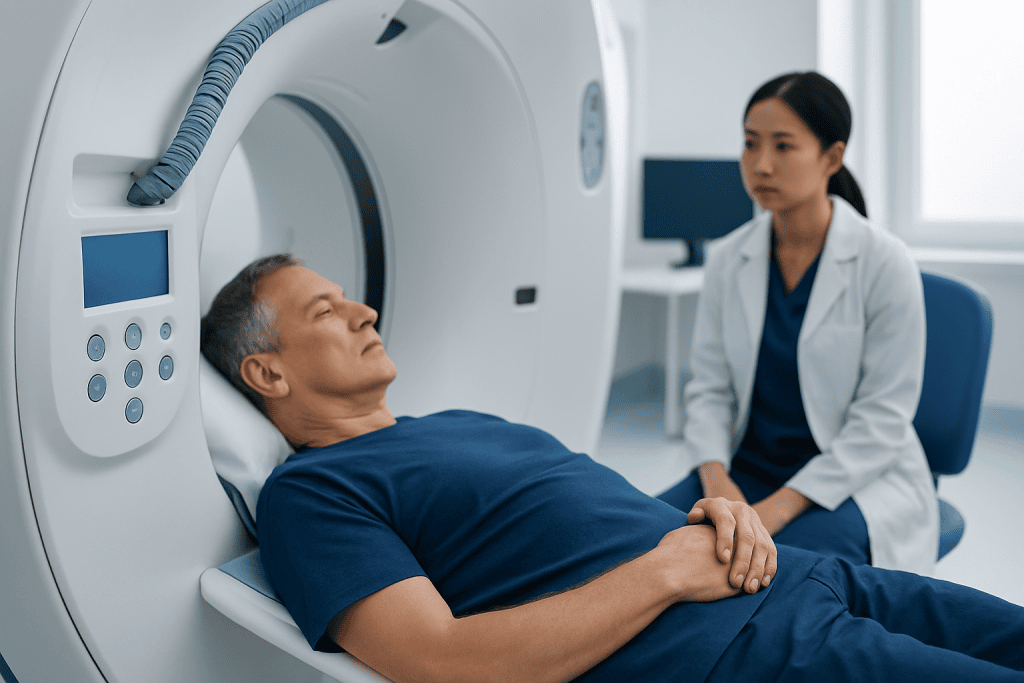
Lung cancer may cause no symptoms in its early stages, which is one reason it can be found late. When symptoms do occur, they often relate to irritation or blockage in the lungs, changes in breathing, or the spread of disease beyond the chest.
Possible symptoms include:
- A cough that does not go away or changes from usual
- Coughing up blood, even in a small amount
- Shortness of breath
- Chest pain that may worsen with deep breathing or coughing
- Hoarseness
- Repeated chest infections such as bronchitis or pneumonia
- Unexplained weight loss or loss of appetite
- Unusual fatigue
Some people develop symptoms because the cancer affects structures near the lungs. This may lead to shoulder pain, swelling in the face or neck, or trouble swallowing. If cancer has spread, symptoms can also involve the bones, liver, brain, or adrenal glands.
These symptoms do not always mean cancer. They can also occur with infections, chronic lung disease, or other conditions. Still, symptoms that are new, persistent, or worsening deserve medical attention, especially in adults over time or in those with known risk factors.
Causes and risk factors
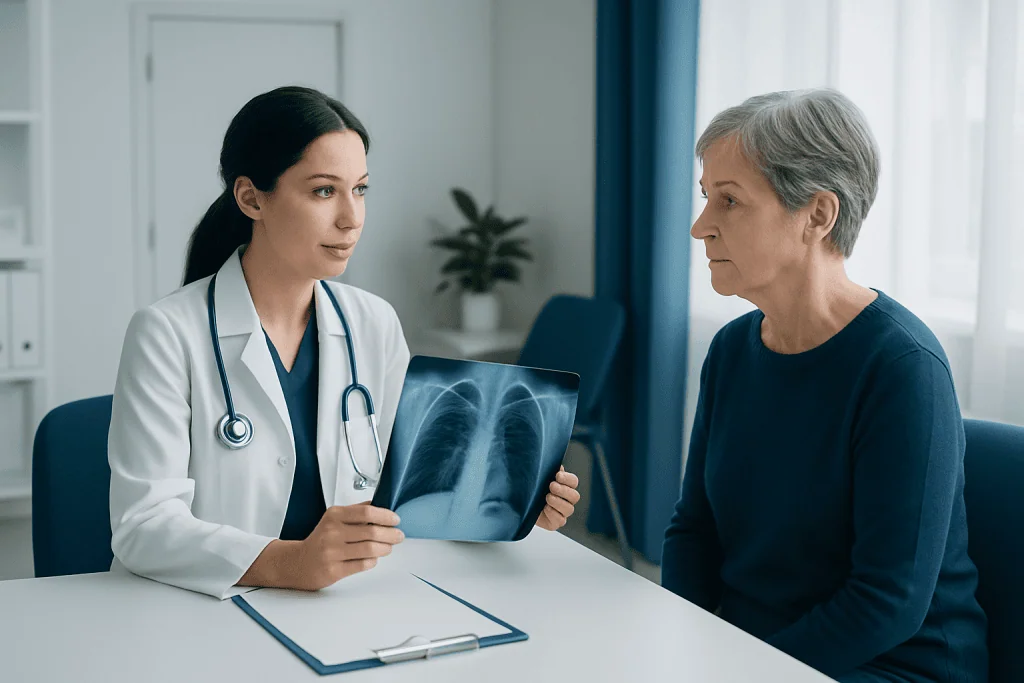
The exact cause of lung cancer in one person is not always clear, but the disease develops when genetic changes allow lung cells to grow abnormally. The strongest known risk factor is tobacco smoke, including long-term cigarette use and exposure to secondhand smoke.
Other important risk factors include exposure to radon gas, asbestos, air pollution, diesel exhaust, and certain workplace chemicals. A personal history of radiation to the chest and a family history of lung cancer may also increase risk. Chronic lung conditions can sometimes make symptoms harder to recognize early.
Lung cancer in people who have never smoked is increasingly recognized. In these cases, the biology of the tumor may differ, and testing for specific gene changes can be especially important. This helps guide the use of precision medicines in selected patients.
Risk is influenced by a combination of exposure, age, overall health, and genetics. Having one or more risk factors does not mean a person will definitely develop cancer, but it does support closer attention to symptoms and, for some people, discussion of screening.
How lung cancer is diagnosed and staged
Diagnosis usually starts with a medical history, physical examination, and imaging. A chest X-ray may be the first test, but a chest CT scan gives much more detail and is commonly used to assess a suspicious area. If needed, further imaging may help determine whether the disease has spread.
A biopsy is required to confirm lung cancer. This means taking a tissue sample so a pathologist can identify the exact type of cancer. Depending on the location of the abnormality, the sample may be taken during bronchoscopy, with a needle guided by imaging, or through a surgical procedure. Doctors may also use PET-CT imaging to help define the extent of disease and choose the most appropriate biopsy site.
After diagnosis, staging shows how far the cancer has spread. Staging influences treatment choices and outlook. Doctors may combine CT, PET-CT, brain imaging in selected cases, and lymph node assessment with endobronchial ultrasound (EBUS) when nearby lymph nodes need evaluation.
Laboratory analysis of the biopsy may include molecular and biomarker testing. These tests can identify gene alterations or immune markers that help determine whether targeted therapy or immunotherapy may be suitable. This step is now an important part of planning care for many patients with advanced disease.
Treatment options
Treatment depends on the cancer type, stage, symptoms, molecular test results, and the person’s general health and lung function. The main options are surgery, radiation therapy, chemotherapy, targeted therapy, and immunotherapy. Some people receive one treatment, while others benefit from a planned combination.
For some early-stage non-small cell lung cancers, surgery offers the best chance of removing the disease completely. Operations may remove a small part of the lung, a lobe, or in some cases a larger section. Minimally invasive approaches may be possible for selected patients, and lung cancer treatment planning often includes pulmonary evaluation before surgery.
Radiation therapy may be used alone, after surgery, or together with chemotherapy. Chemotherapy can treat cancer cells throughout the body and is still an important option in many stages of disease. Targeted therapies are used when tumor testing shows a specific mutation, while immunotherapy may help the immune system recognize and attack cancer cells.
Supportive care is also part of treatment. It may address breathlessness, pain, fatigue, cough, nutrition, and emotional stress. Palliative care does not mean treatment has stopped; it is an added layer of support that can improve comfort and quality of life at any stage.
Prevention, screening, and self-care
The most effective way to lower the risk of lung cancer is not smoking or stopping smoking if a person currently smokes. Avoiding secondhand smoke and reducing exposure to workplace or home hazards such as radon and asbestos are also important. For people who smoke, quitting at any age can still provide meaningful health benefits.
Screening may help find some lung cancers earlier, before symptoms appear. In many guidelines, annual low-dose CT screening is recommended for people at high risk based on age and smoking history. Screening is not for everyone, so the decision should be made with a qualified doctor who can explain possible benefits and limitations.
General self-care supports lung health and overall resilience during diagnosis or treatment. Helpful steps include staying physically active as tolerated, eating regular balanced meals, keeping up with vaccinations when advised, and attending follow-up appointments. People with new respiratory symptoms should avoid assuming they are caused only by smoking, aging, or a common infection.
Some symptoms of lung cancer can overlap with other chest diseases such as COPD or pneumonia. While these conditions are different, persistent or unusual symptoms should be checked rather than self-treated for long periods without evaluation.
When to seek medical care
A person should seek medical care if a cough lasts more than a few weeks, breathing becomes more difficult, or there is chest pain that does not improve. Medical review is also important for coughing up blood, repeated chest infections, unexplained weight loss, or ongoing fatigue without a clear reason.
Urgent attention is needed for severe shortness of breath, sudden chest pain, confusion, seizures, or significant bleeding. These symptoms are not always caused by cancer, but they should never be ignored.
People with a history of smoking, occupational exposure, prior chest radiation, or a strong family history should be especially mindful of persistent symptoms. If there is concern about a lung mass or abnormal scan, early referral to a chest or oncology specialist can help speed up diagnosis and planning.
At centers such as Acibadem International, multidisciplinary specialists and JCI-accredited hospitals provide diagnosis and treatment for international patients with suspected or confirmed lung cancer. Coordinated evaluation by pulmonology, radiology, pathology, thoracic surgery, and oncology teams can help clarify the next steps.
Frequently asked questions
What is lung lung cancur?
Lung lung cancur is a misspelled search term people use when looking for information about lung cancer. Lung cancer is a disease in which abnormal cells grow in the lungs and can form tumors that may spread if not treated.
Can lung cancer happen in someone who never smoked?
Yes. Although smoking is the biggest risk factor, lung cancer can also occur in people who have never smoked. Other contributors may include radon, air pollution, occupational exposures, genetics, and certain biological changes in the tumor.
Is a persistent cough always a sign of lung cancer?
No. A persistent cough is common and often caused by infections, asthma, reflux, smoking-related irritation, or chronic lung disease. However, a cough that lasts, worsens, changes in character, or is accompanied by blood or weight loss should be assessed by a doctor.
How do doctors confirm lung cancer?
Doctors usually begin with imaging such as a chest CT scan and then confirm the diagnosis with a biopsy. The tissue sample is examined under a microscope and may also be tested for gene changes or biomarkers that help guide treatment.
What are the main treatments for lung cancer?
Treatment may include surgery, radiation therapy, chemotherapy, targeted therapy, immunotherapy, or a combination of these. The best approach depends on the cancer type, stage, molecular test results, and the person's overall health.
Can lung cancer be treated successfully?
Many lung cancers can be treated, and some can be cured, especially when found at an earlier stage. Even when cure is not possible, treatment may help control the disease, relieve symptoms, and support quality of life.
References
- World Health Organization
- National Cancer Institute
- American Cancer Society
- National Comprehensive Cancer Network
- Centers for Disease Control and Prevention
This article is for general information only and is not a substitute for professional medical advice. Please consult a qualified doctor about your individual situation.
Oncology care in Turkey — second opinion and treatment plan
JCI-accredited · board-certified surgeons · reply within 24h
Add us as a Preferred Source to see more of our trusted health content across Google Search, AI Overviews and Discover.

More from the Health Library



Related Specialists

Dr. Bahruz Zamanov
Pediatrics
Assoc. Prof. Dr. Burak Özturan
Orthopedic Surgery & Traumatology
Dr. Alp Mustafa Günay
Gastroenterology
Dr. Serap Sapmaz Deniz
Pediatrics