Lungs Cyst Treatment: How It Works, Results and What to Expect

A lung cyst is an air- or fluid-containing space in the lung, and its significance depends on its appearance, cause and effects on breathing. Not every lung cyst requires treatment; observation may be appropriate when it is small, stable and not causing symptoms.
Key Takeaways
- A lung cyst is an air- or fluid-containing space in the lung, and its significance depends on its appearance, cause and effects on breathing.
- Not every lung cyst requires treatment; observation may be appropriate when it is small, stable and not causing symptoms.
- Treatment can include managing an infection or underlying disease, draining selected fluid collections, or removing a localized cyst or affected lung area.
- CT imaging, lung function testing and sometimes blood tests, bronchoscopy or tissue sampling help guide decisions.
- Sudden chest pain or shortness of breath needs urgent assessment because it can signal a collapsed lung or another serious problem.
Lungs cyst treatment is individualized: many harmless, stable cysts only need imaging follow-up, while symptomatic, enlarging, infected or uncertain cysts may need treatment of the cause or surgical removal. Care begins with confirming whether the finding is a true lung cyst and understanding why it developed.
Lungs cyst treatment: an answer-first overview
Lungs cyst treatment depends on what the cyst is, what caused it, whether it is changing over time and whether it is affecting breathing or causing complications. Some cysts found incidentally on a scan are monitored with repeat imaging, while others require treatment for infection, an underlying lung disorder, or—less commonly—removal by surgery.
A lung cyst is a rounded or irregular space with a defined wall that contains air, fluid or both. It is not the same as every “spot,” cavity, blister or nodule seen on chest imaging. Because similar-looking findings can have different causes, a respiratory specialist and radiologist usually review the scans before recommending a treatment plan.
The aim of care is not automatically to remove every cyst. Instead, the clinical team focuses on relieving symptoms, preventing complications, preserving healthy lung tissue and addressing the condition responsible for the cystic change where possible.
How serious is a cyst on your lung?
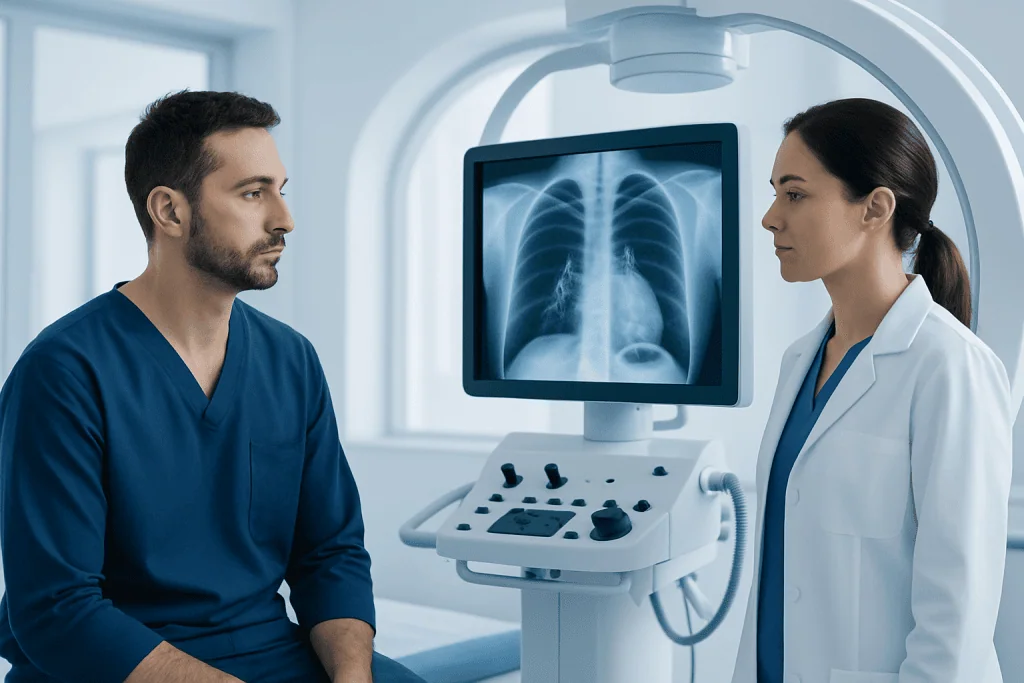
A cyst on the lung can be harmless, but it can also be a clue to an infection, inflammation, inherited condition, smoking-related lung disease or, rarely, another medical problem needing prompt attention. Its seriousness cannot be judged by size alone. The number of cysts, wall thickness, surrounding lung changes, symptoms and whether the finding is new or growing all matter.
A single thin-walled cyst in a person without symptoms may have little immediate impact and may only require follow-up. In contrast, multiple cysts, recurrent chest infections, coughing blood, unexplained weight loss, worsening breathlessness or repeated collapsed lungs require a more detailed assessment.
Most people can take reassurance from the fact that modern imaging helps clinicians characterize lung findings carefully. A diagnosis should be based on the complete clinical picture rather than on a scan report in isolation.
Causes of lung cysts and cystic lung disease

Lung cysts may be congenital, meaning present from birth, or acquired later in life. A localized cyst can occur after prior infection, injury or airway obstruction. Some fluid-filled lesions near the lungs may arise from developmental abnormalities or infections. In some regions, parasitic infection can produce hydatid cysts, which need specialist assessment because treatment differs from that for simple air-filled cysts.
Multiple air-filled cysts can occur in a group of conditions called cystic lung diseases. Examples include lymphangioleiomyomatosis, Birt-Hogg-Dubé syndrome, pulmonary Langerhans cell histiocytosis and lymphoid interstitial pneumonia. Smoking is strongly associated with some forms of cystic lung disease and can also cause emphysema, which may resemble cysts on imaging.
Doctors also consider whether a cavity from an infection, abscess, tuberculosis, fungal illness, autoimmune disease or cancer could be mistaken for a simple cyst. This distinction is important because the underlying cause, rather than the visible space itself, may determine the best treatment.
- Relevant factors include smoking or vaping exposure, previous chest infections and immune system health.
- Family history can be important when multiple cysts or recurrent collapsed lungs occur.
- Travel history and animal exposure may be relevant when a parasitic infection is possible.
Diagnosis and candidacy for lungs cyst treatment
Before deciding on lungs cyst treatment, clinicians first establish the diagnosis. A chest X-ray may identify an abnormality, but a high-resolution CT scan usually provides more detail about the cyst wall, contents, location and surrounding lung tissue. Earlier scans are valuable because stability over time can support a less invasive approach.
Assessment may also include lung function tests, oxygen measurement, blood tests and tests for infection or inflammatory disease. Depending on the imaging appearance and symptoms, a doctor may recommend bronchoscopy, genetic counseling, or a biopsy. Tissue sampling is not needed for every cyst and is considered carefully when the result would change management.
Candidates for active treatment may include people with persistent symptoms, repeated infection, bleeding, a cyst that is enlarging, an uncertain diagnosis, complications such as pneumothorax, or a lesion suspicious for a serious cause. People with widespread cystic disease are often managed with medical treatment and monitoring rather than surgery for every cyst.
How lungs cyst treatment works: monitoring, medicine and procedures
Monitoring is often the most appropriate option for an uncomplicated cyst that has a benign appearance and is not causing symptoms. This usually involves planned clinical review and repeat imaging at an interval chosen by the treating team. The purpose is to check for stability while avoiding unnecessary procedures.
If a cyst is linked to infection, treatment targets the infection. This may involve antimicrobial medicines selected according to the suspected cause and test results. For certain cystic lung disorders, specialists may recommend disease-specific medicines, smoking cessation support, vaccination planning, pulmonary rehabilitation or treatment for associated conditions.
When removal is necessary, thoracic surgeons commonly use video-assisted thoracoscopic surgery (VATS), a minimally invasive approach performed under general anesthesia. Small incisions allow the surgeon to insert a camera and instruments, remove the cyst or a limited section of affected lung, and send tissue for laboratory analysis. Some cases need a larger incision, known as thoracotomy, if the lesion is complex, large or difficult to access.
A typical procedure pathway includes preoperative imaging and fitness checks, anesthesia, careful examination of the lung, removal or repair of the targeted area, and placement of a temporary chest drain if needed. The team aims to preserve as much functioning lung as possible. Surgery is generally reserved for a clear clinical reason, not simply because a cyst is present.
Can cysts be removed from the lungs?
Yes. A localized lung cyst can sometimes be removed when it causes symptoms, recurs after complications, becomes infected, grows, has an uncertain diagnosis or carries a meaningful risk of future problems. The operation may remove only the cyst, a small wedge of lung tissue, or occasionally a larger section if the surrounding tissue is significantly affected.
Whether removal is suitable depends on the cyst’s location, its relationship to blood vessels and airways, the amount of healthy lung available, and the person’s overall health and lung function. In diffuse cystic lung disease, surgery is usually not a cure for the underlying condition and may be used only for selected complications.
The potential benefits of surgery include obtaining a definite diagnosis, relieving symptoms, reducing repeated infection risk and treating a problematic localized lesion. Risks can include bleeding, infection, air leak, pain, blood clots, anesthesia-related complications and reduced breathing reserve, although the individual level of risk varies. A thoracic surgeon explains the expected benefits and alternatives before any procedure.
Recovery, follow-up and self-care
Recovery depends on the cause of the cyst and the treatment used. People monitored without surgery can usually continue normal activities unless their clinician advises otherwise, while attending scheduled scans and reporting new symptoms. Treatment for an infection or chronic lung condition may require follow-up appointments to confirm improvement and adjust the care plan.
After minimally invasive lung surgery, hospital stay and return to usual activity vary with the extent of surgery, lung function and any complications. Early walking, breathing exercises, adequate pain control and following instructions for incision and drain care can support recovery. Heavy lifting and strenuous activity are usually resumed gradually after approval from the surgical team.
Stopping smoking and avoiding inhaled tobacco products are among the most important steps for protecting lung health, especially when cystic changes are associated with smoking. Keeping recommended vaccinations up to date, staying physically active within personal limits and seeking early advice for respiratory infections may also be helpful.
Acibadem International’s multidisciplinary respiratory, radiology, infectious disease and thoracic surgery specialists can assess and treat lung cyst conditions for international patients at JCI-accredited hospitals, with care plans based on the individual diagnosis.
When to seek medical care
Anyone told they have a lung cyst should arrange follow-up with the clinician who requested the scan or a respiratory specialist. They can explain whether the finding needs observation, further tests or treatment. New or persistent cough, fever, chest discomfort, worsening breathlessness, coughing blood or recurrent chest infections should be assessed without delay.
Urgent medical care is important for sudden sharp chest pain, sudden shortness of breath, fainting, bluish lips or face, severe breathing difficulty, or a rapid decline in general condition. These symptoms can occur with a collapsed lung and other conditions that need prompt evaluation.
People with multiple cysts, a family history of recurrent pneumothorax or kidney tumors, or repeated episodes of collapsed lung may benefit from specialist review and, in selected cases, genetic counseling. Bringing prior scan images and reports to the appointment can help the team compare changes accurately.
Frequently asked questions
Do lung cysts go away on their own?
Some cyst-like changes related to a temporary infection or inflammation may improve when the underlying problem resolves. However, many true structural lung cysts do not disappear on their own. Follow-up imaging helps determine whether a finding is stable, improving or changing.
What disease causes cysts in the lungs?
Several conditions can cause lung cysts, including lymphangioleiomyomatosis, Birt-Hogg-Dubé syndrome, pulmonary Langerhans cell histiocytosis and lymphoid interstitial pneumonia. Infections, prior lung injury and smoking-related disease may also contribute. The CT pattern, medical history and additional tests help identify the cause.
Is a lung cyst the same as lung cancer?
No. A lung cyst is not automatically cancer, and many cysts are benign. However, some cyst-like or cavitary lesions require careful investigation because infection, inflammation and, less commonly, cancer can have overlapping appearances on scans.
Will a lung cyst affect breathing?
A small isolated cyst often does not affect breathing. Larger cysts, multiple cysts, infection, collapse of part of the lung or an underlying diffuse lung disease can cause shortness of breath. Lung function tests can help measure any impact.
What tests are used before lung cyst surgery?
Evaluation commonly includes CT imaging, a review of previous scans and lung function testing. Blood tests, heart assessment, bronchoscopy or additional imaging may be used when appropriate. These tests help confirm the diagnosis and assess whether surgery can be performed safely.
Can a lung cyst cause a collapsed lung?
Some air-filled cysts can rupture and allow air to collect around the lung, causing pneumothorax, or a collapsed lung. Sudden chest pain and shortness of breath require urgent medical evaluation. People with recurrent pneumothorax may need specialist preventive treatment.
References
- American Thoracic Society
- European Respiratory Society
- National Heart, Lung, and Blood Institute
- Radiological Society of North America
- National Organization for Rare Disorders
This article is for general information only and is not a substitute for professional medical advice. Please consult a qualified doctor about your individual situation.
Explore treatments in Turkey — costs, top hospitals & a free quote
JCI-accredited · board-certified surgeons · reply within 24h
Add us as a Preferred Source to see more of our trusted health content across Google Search, AI Overviews and Discover.

More from the Health Library



Related Specialists

Assoc. Prof. Dr. Ahmet Küçükçelebi
Aesthetic Plastic & Reconstructive Surgery
Assoc. Prof. Dr. Eser Çolak
Vitro Fertilization and Reproductive Medicine Center
Dr. Ökkeş Baz
Ophthalmology
Assoc. Prof. Dr. Mustafa Kaplangöray
Cardiology